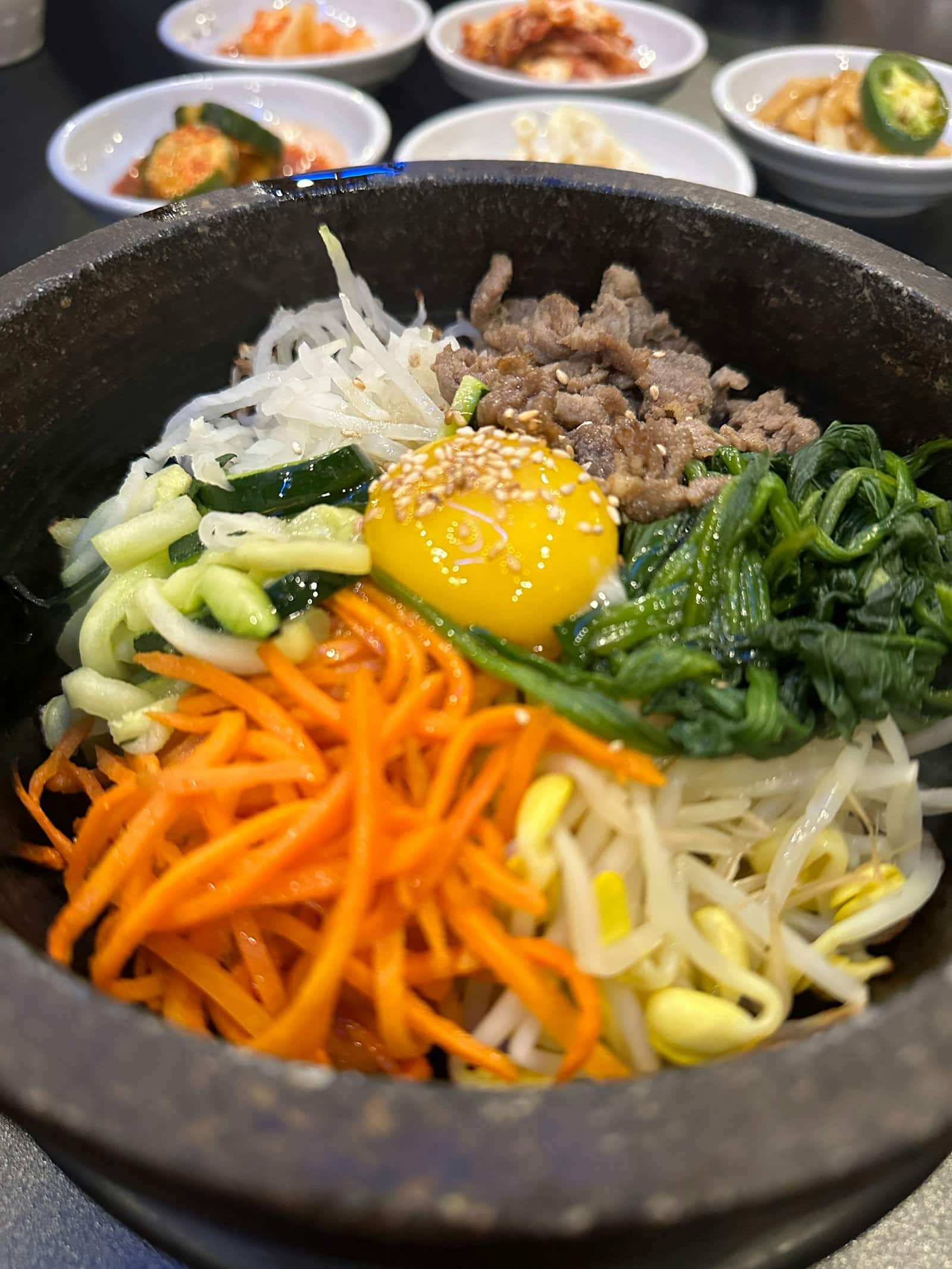
Rice & Noodles
Bibimbap, japchae, and the noodle dishes that turn a fridge clean-out into an actual meal.
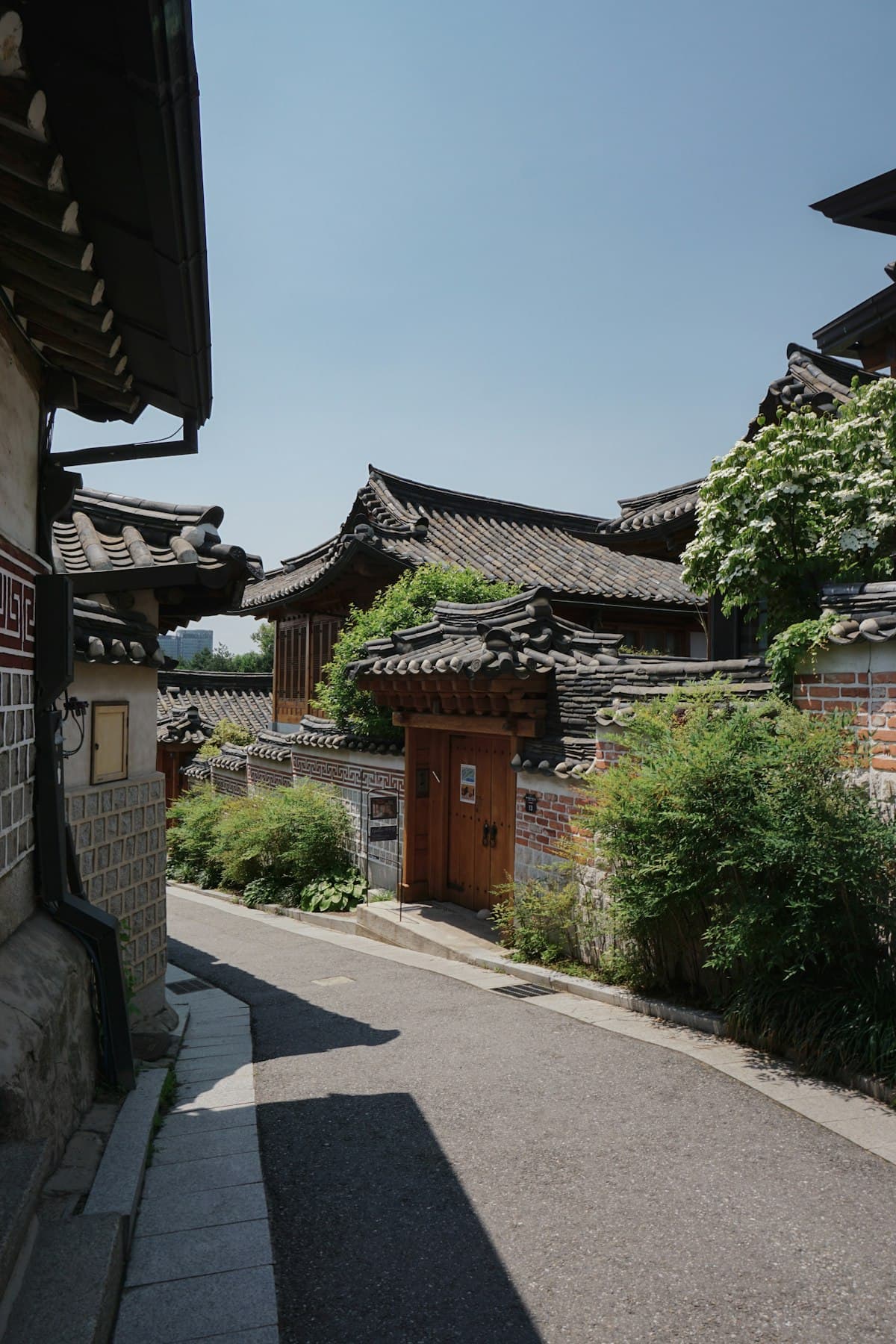
Did you know — Korean culture
Nobody actually knows who invented bibimbap. One theory says it started as a New Year's Eve trick — mixing up all the leftover side dishes before midnight so nothing carried bad luck into the new year. Jeonju, a city now recognized by UNESCO for its food, has served its version since the 1800s, with rice cooked right in beef bone broth.
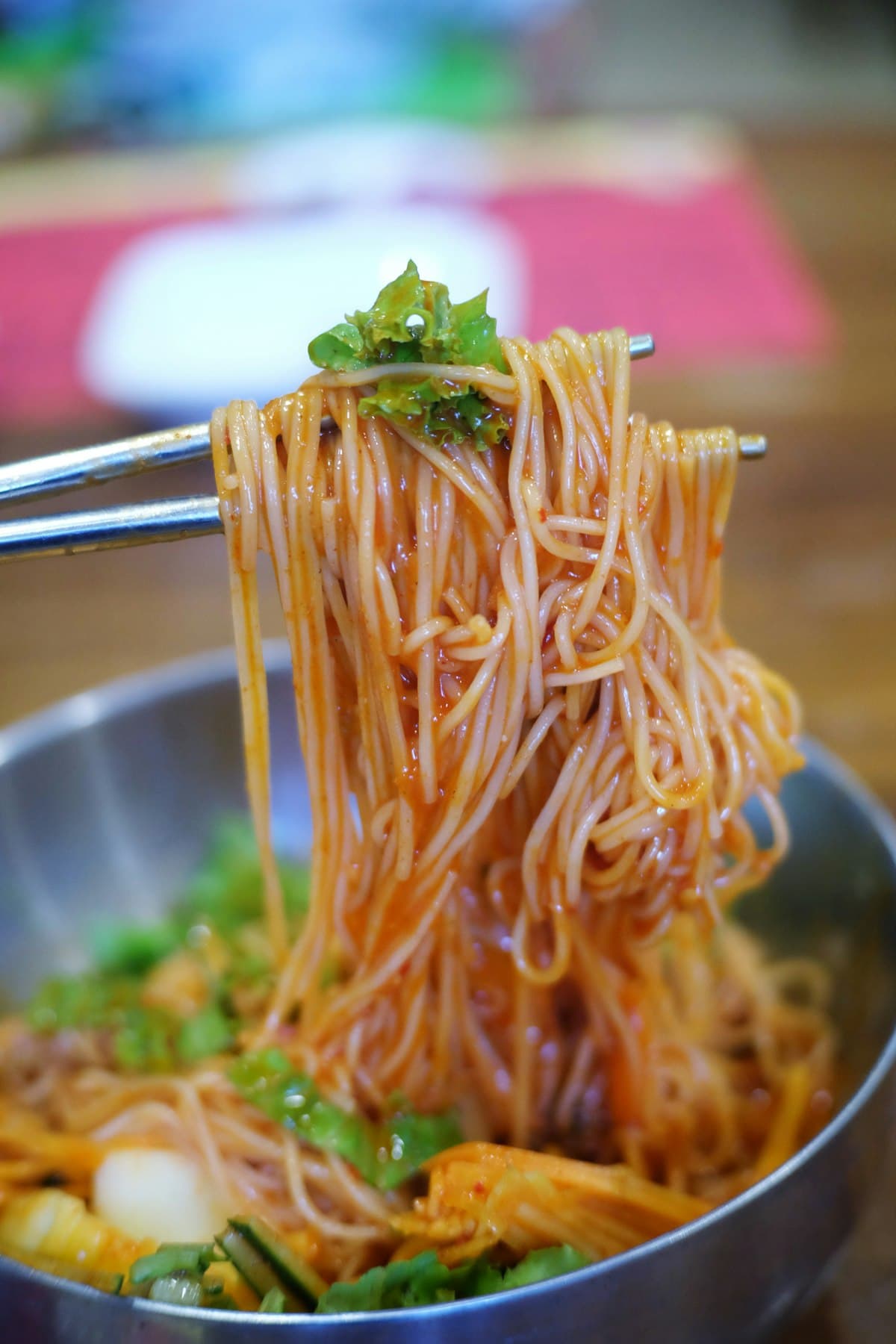
Bibim Guksu (Spicy Cold Noodles)
The thin-noodle, no-cook sauce technique behind bibim guksu, and why rinsing matters more than any other step.
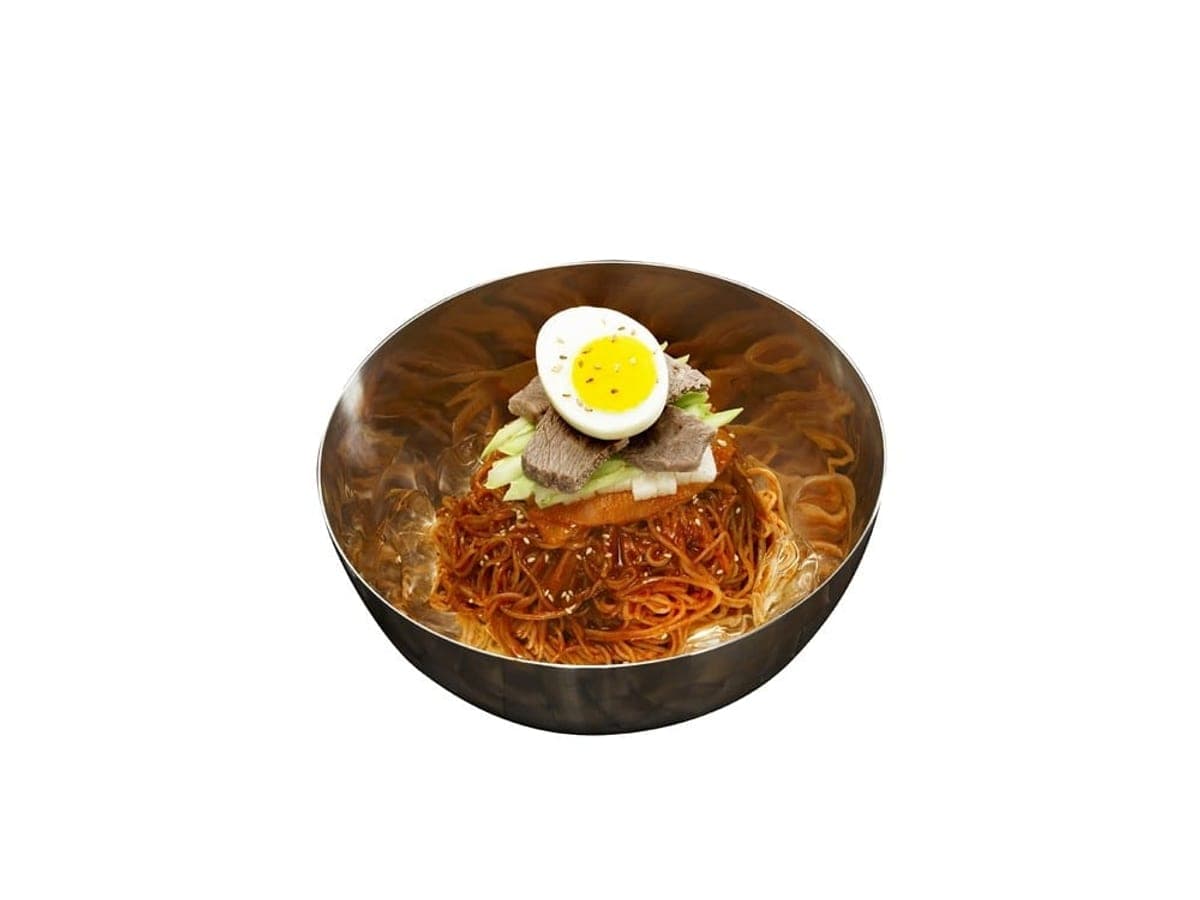
Bibim Naengmyeon (Spicy Cold Buckwheat Noodles)
Why bibim naengmyeon noodles need a hard cold-water scrub rather than a rinse, and how the sauce is built thick enough to coat noodles that carry no broth.
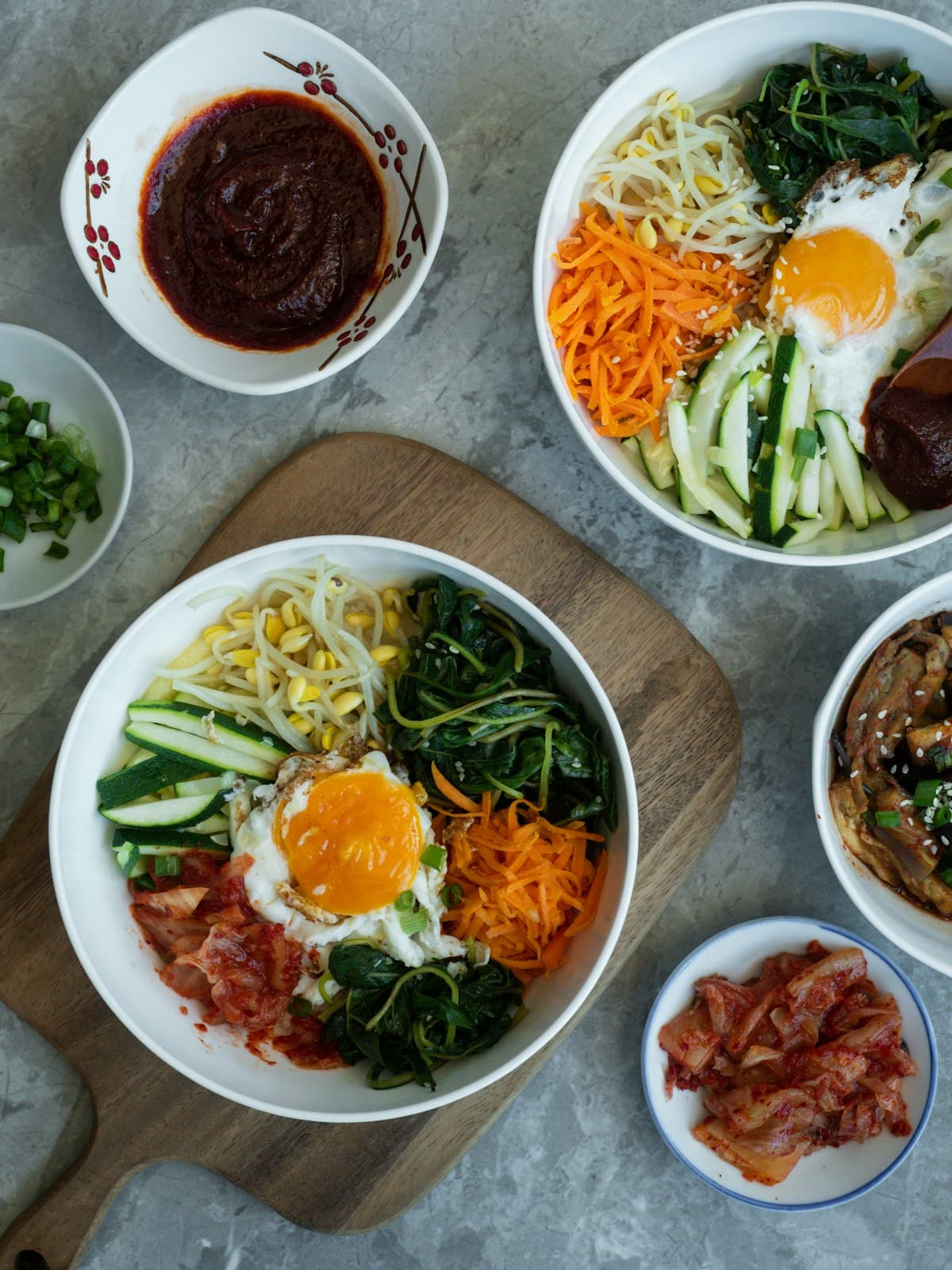
Bibimbap (Korean Mixed Rice Bowl)
The real technique behind bibimbap — five namul cooked separately, a gochujang sauce that actually balances, and the color logic most recipes skip.
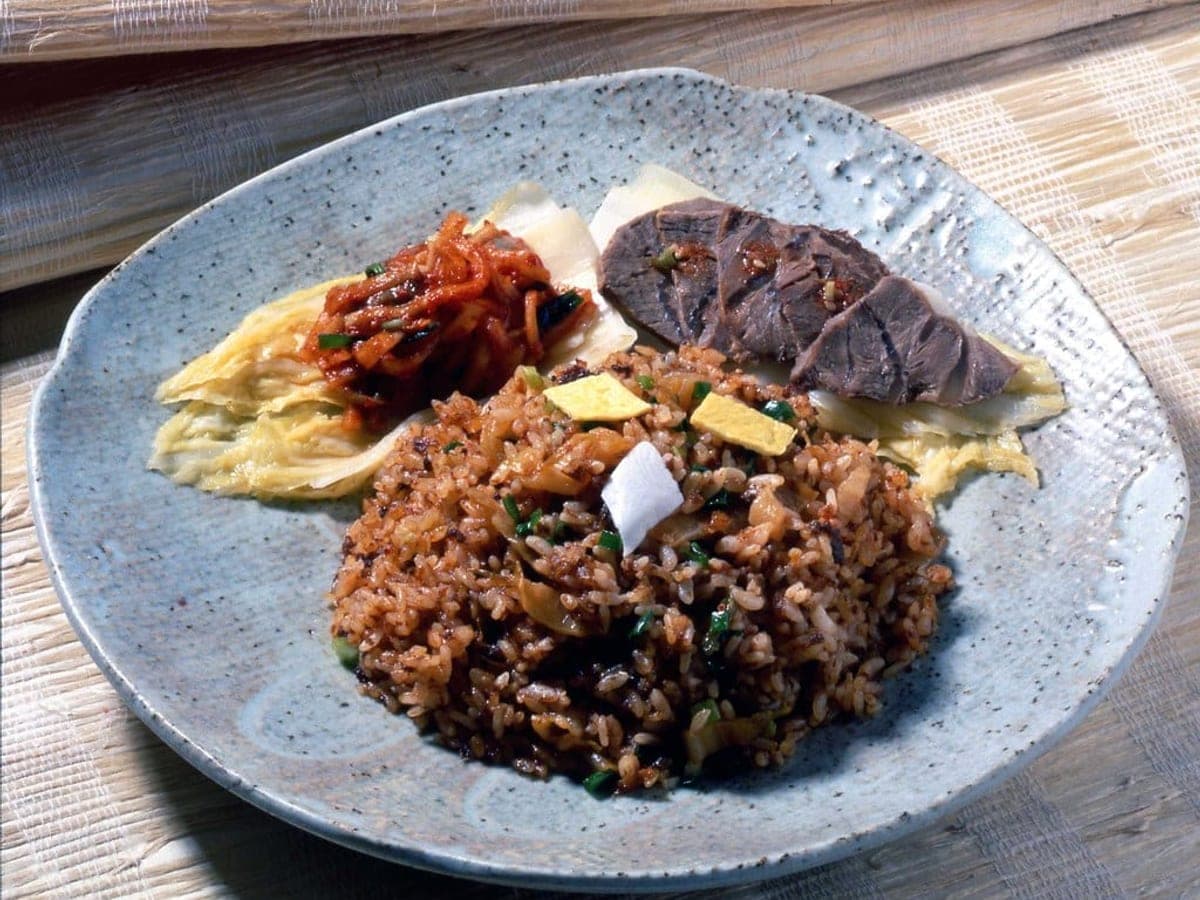
Bokkeumbap (Korean Fried Rice)
Why day-old refrigerated rice fries and fresh rice steams, and the order ingredients hit the pan so nothing ends up soggy.
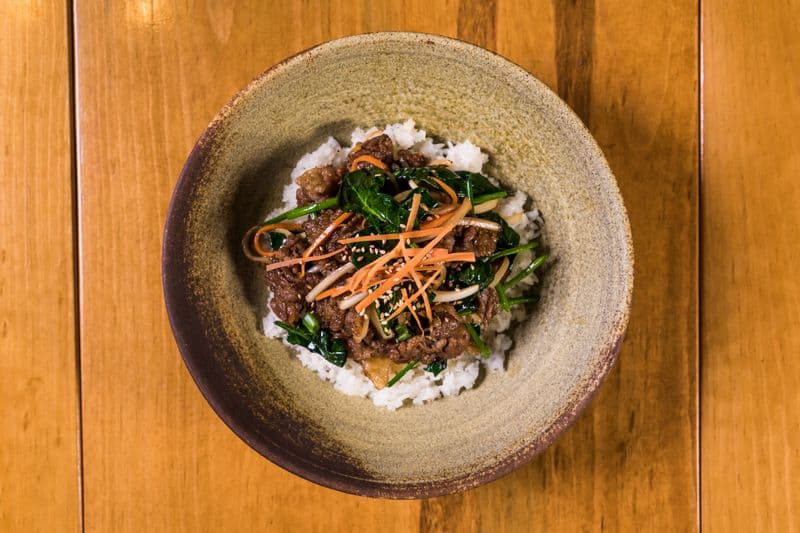
Bulgogi Deopbap (Bulgogi Rice Bowl)
Why a screaming-hot pan for the final sear, after a long marinade, is what separates real bulgogi deopbap from just beef and rice.
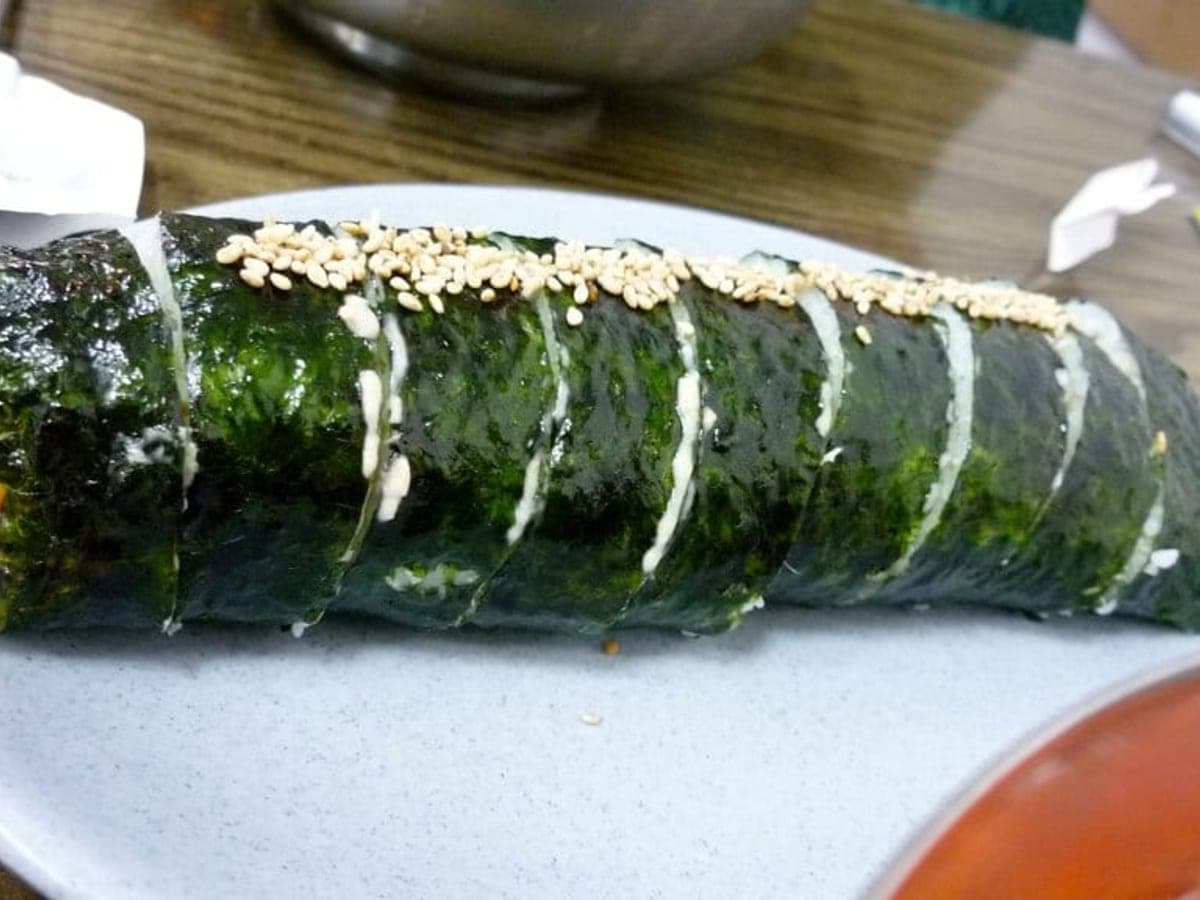
Chamchi Kimbap (Tuna Seaweed Rolls)
Why the tuna filling has to be squeezed dry and bound with mayonnaise, and how to roll kimbap tightly enough that the slices hold together.
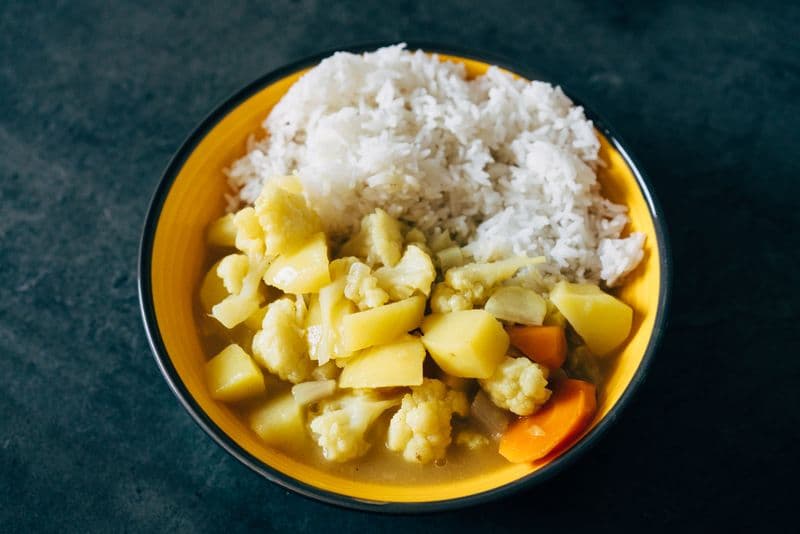
Curry Rice (Korean-Style Curry)
Why Korean curry roux gets built with browned aromatics before the powder goes in, and how simmering time — not spice level — is what develops real depth.
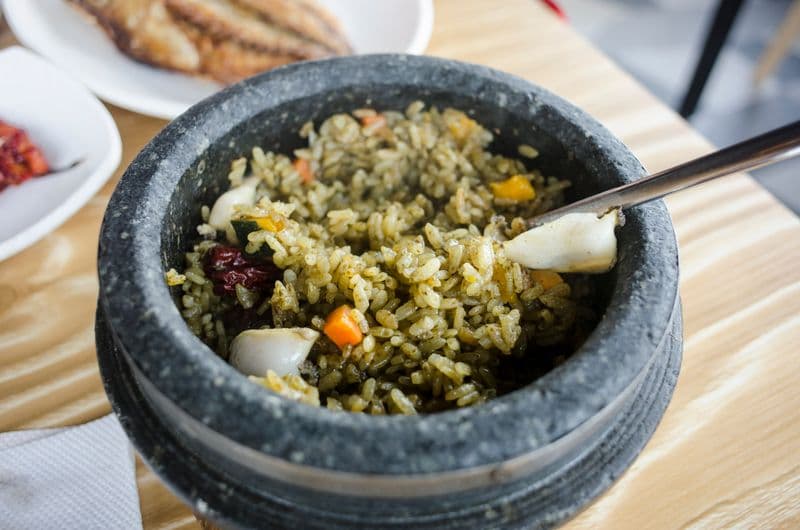
Dolsot Bap (Stone Pot Rice)
Why the stone pot has to be preheated before the rice goes in, and how the last few minutes untouched is what builds the crisp nurungji crust.
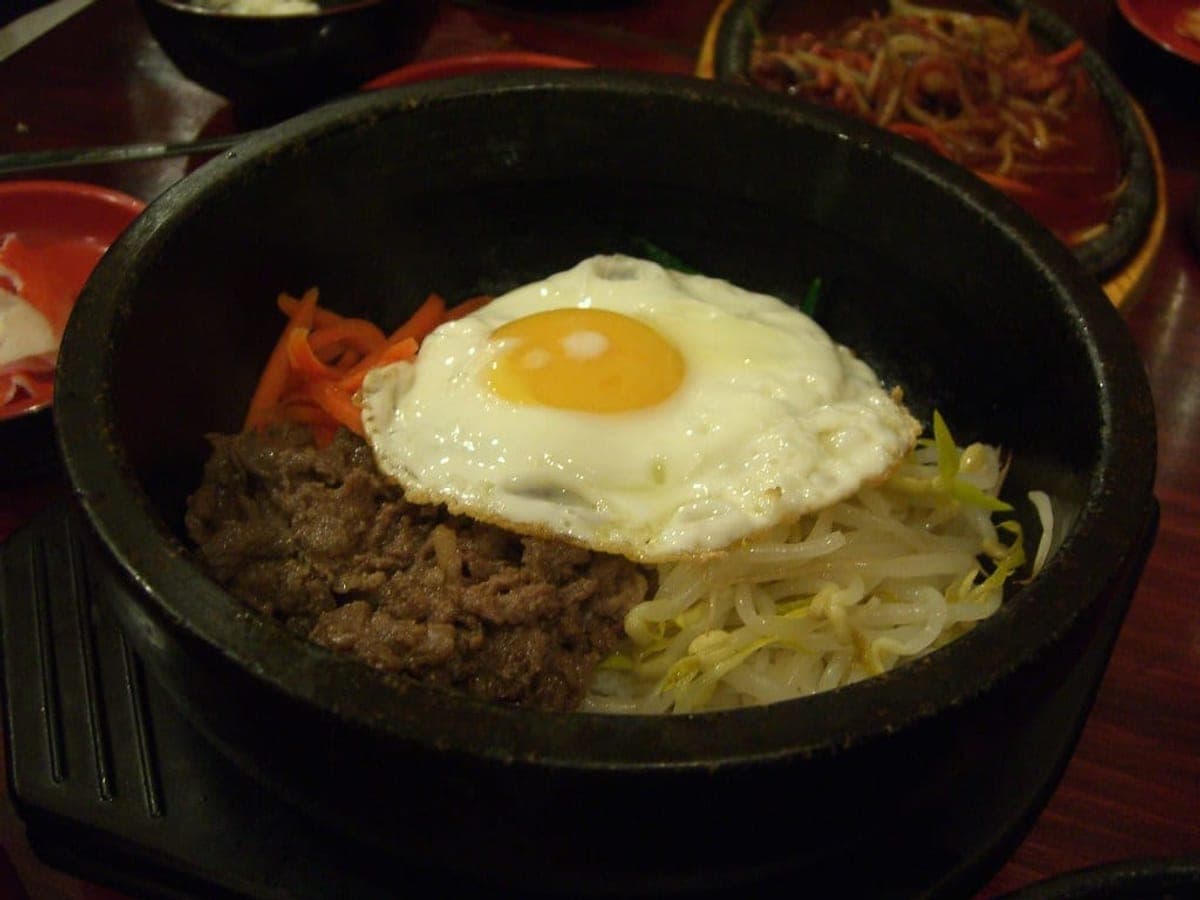
Dolsot Bibimbap (Stone Pot Bibimbap)
How to preheat a dolsot properly so the rice crusts instead of sticking, and why the egg goes in raw at the table rather than cooked in the kitchen.
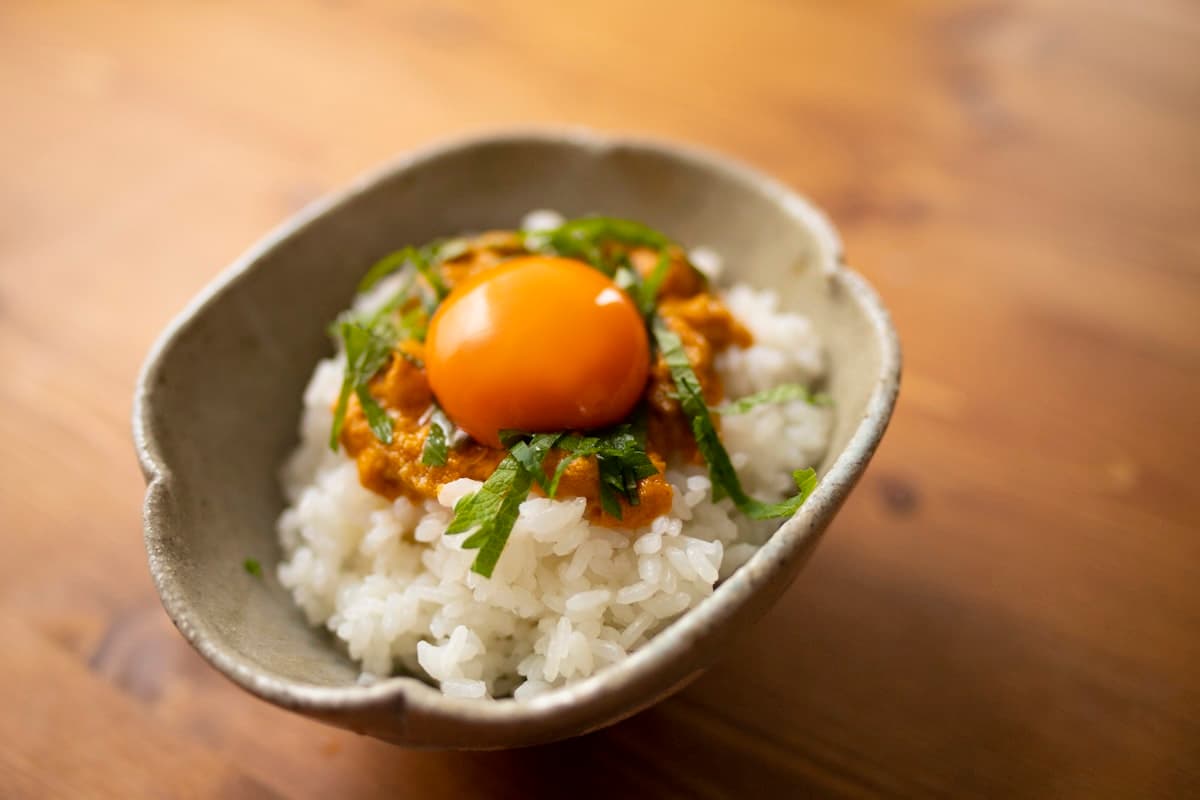
Gyeranbap (Soy-Butter Egg Rice)
The residual-heat technique behind gyeranbap's soft-set egg, and why the rice temperature matters more than the recipe suggests.
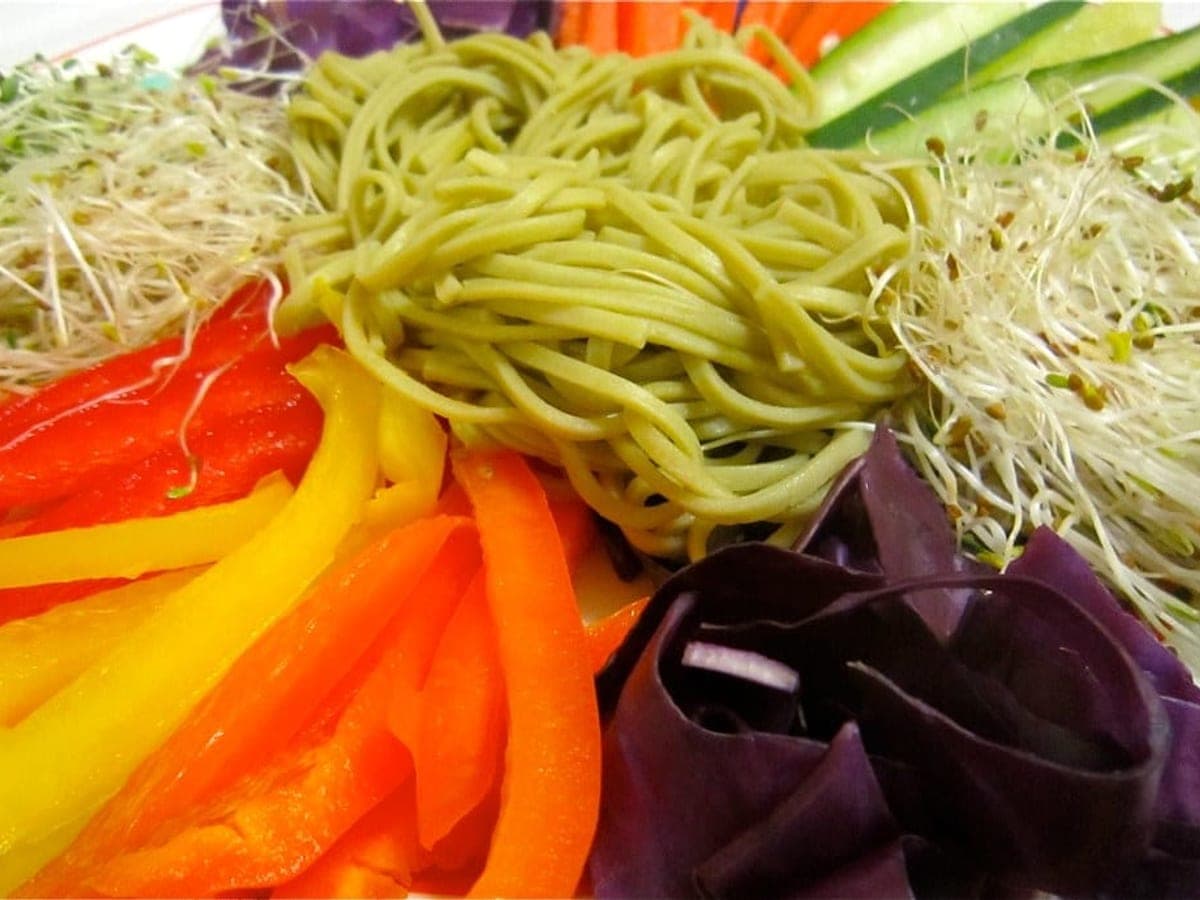
Jaengban Guksu (Platter Noodles)
Why jaengban guksu is served on a wide platter rather than in bowls, and how the sauce goes on at the table so the vegetables stay crisp until the last second.
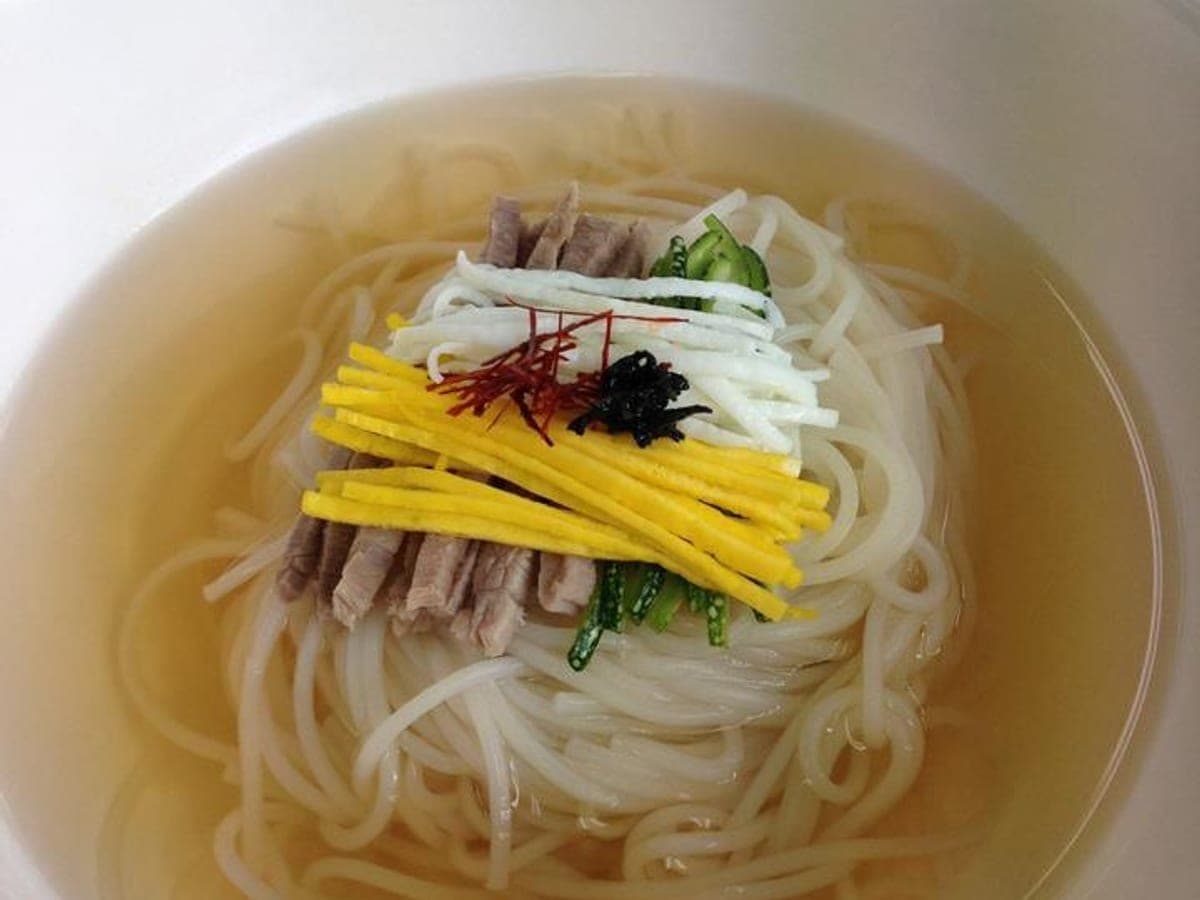
Janchi Guksu (Banquet Noodles)
Why janchi guksu noodles are cooked and rinsed separately from the broth, and how a clear anchovy stock keeps this celebration dish light rather than heavy.
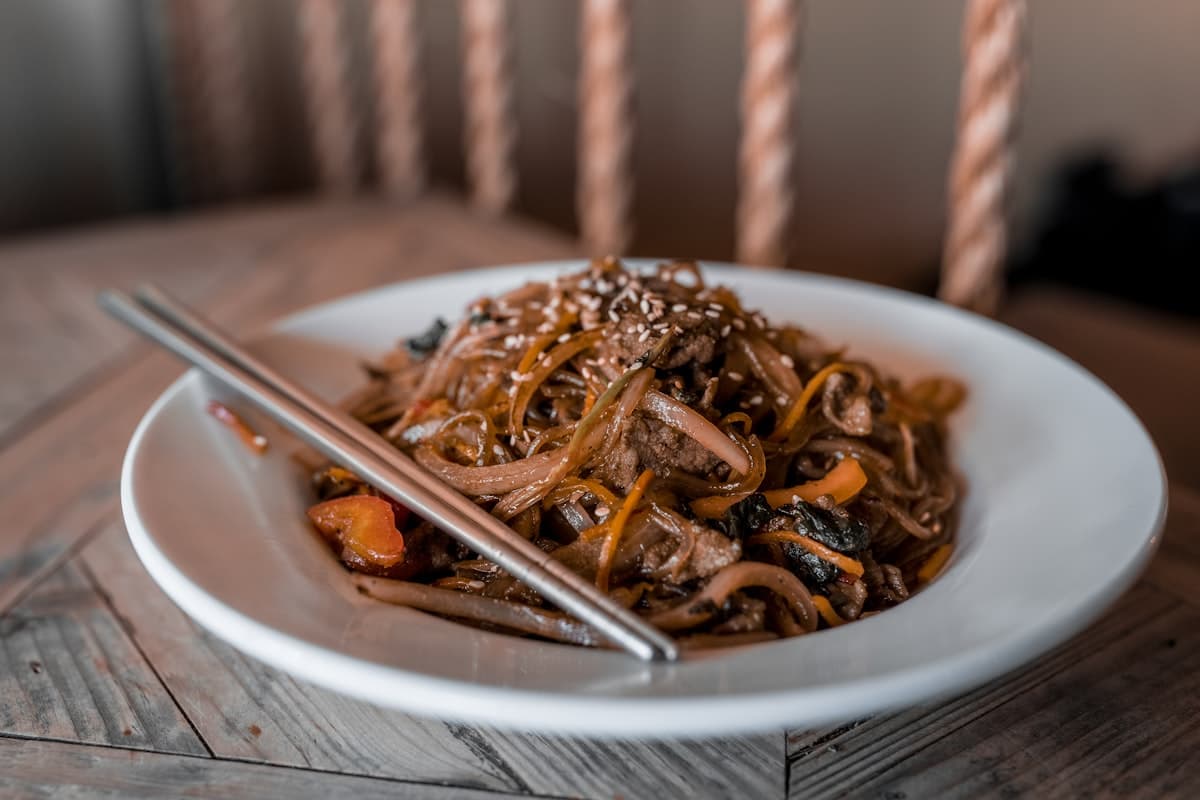
Japchae (Korean Glass Noodle Stir-Fry)
The separate-pan technique behind restaurant-quality japchae, and the one noodle mistake — overcooking dangmyeon — that ruins the texture every time.
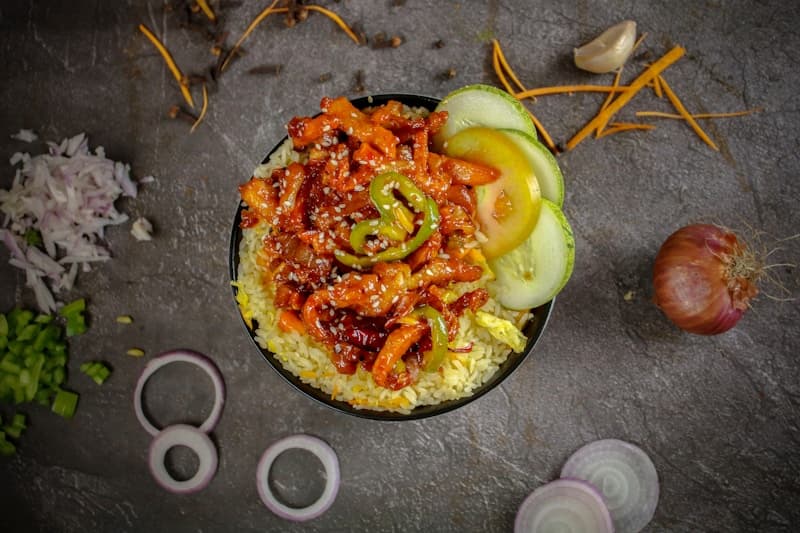
Jeyuk Deopbap (Spicy Pork Rice Bowl)
Why thin-slicing the pork and marinating it briefly, not overnight, is what keeps jeyuk deopbap tender instead of tough on a hot pan.
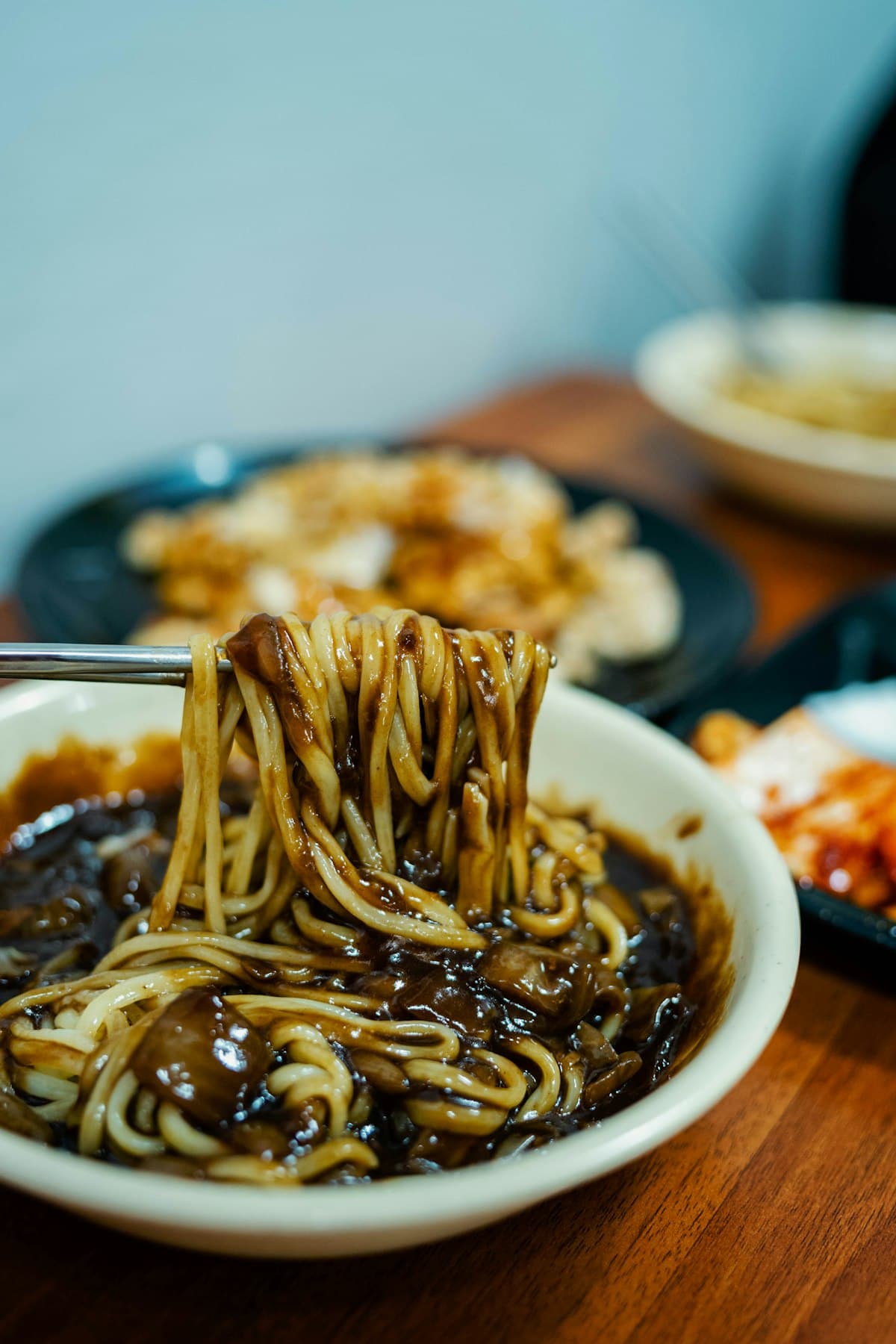
Jjajangmyeon (Black Bean Noodles)
The caramelized chunjang technique and starch-slurry thickening that makes real jjajangmyeon glossy instead of gritty.
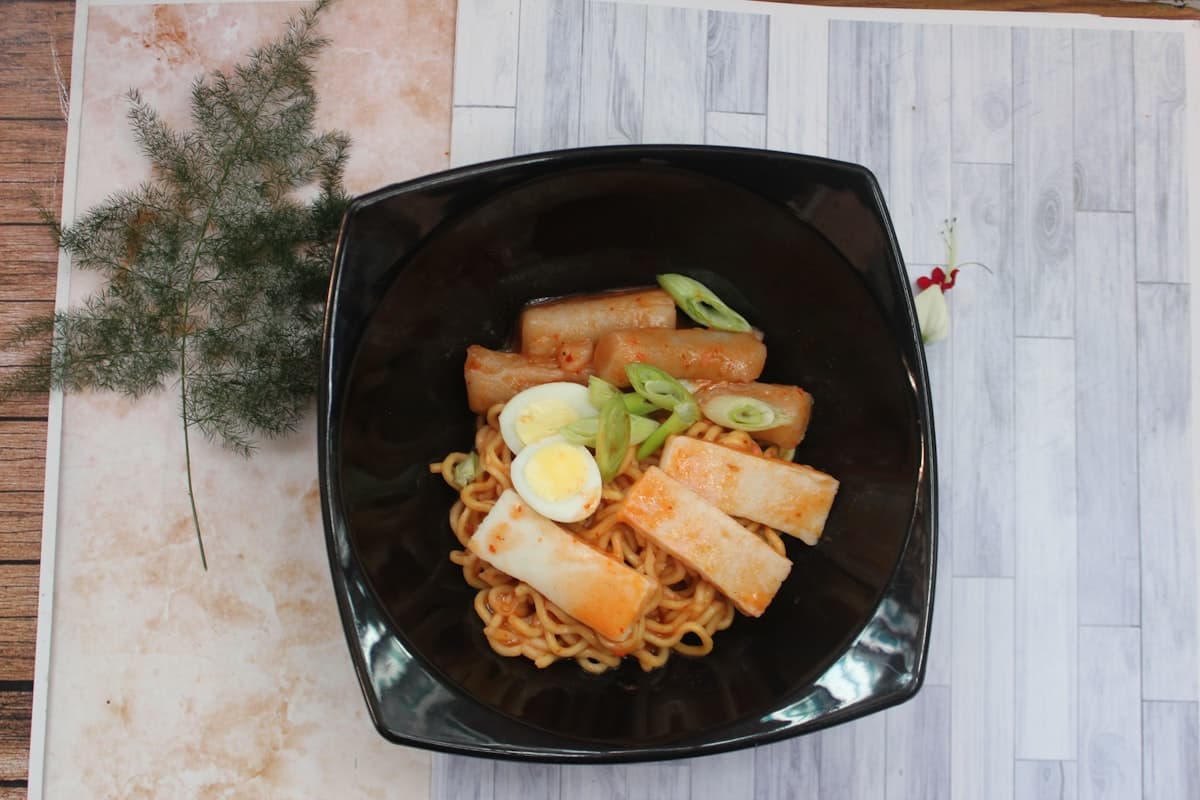
Jjolmyeon (Chewy Spicy Cold Noodles)
The rinse-and-toss technique behind jjolmyeon's signature chew, and why these noodles need a harder cold-water shock than most.
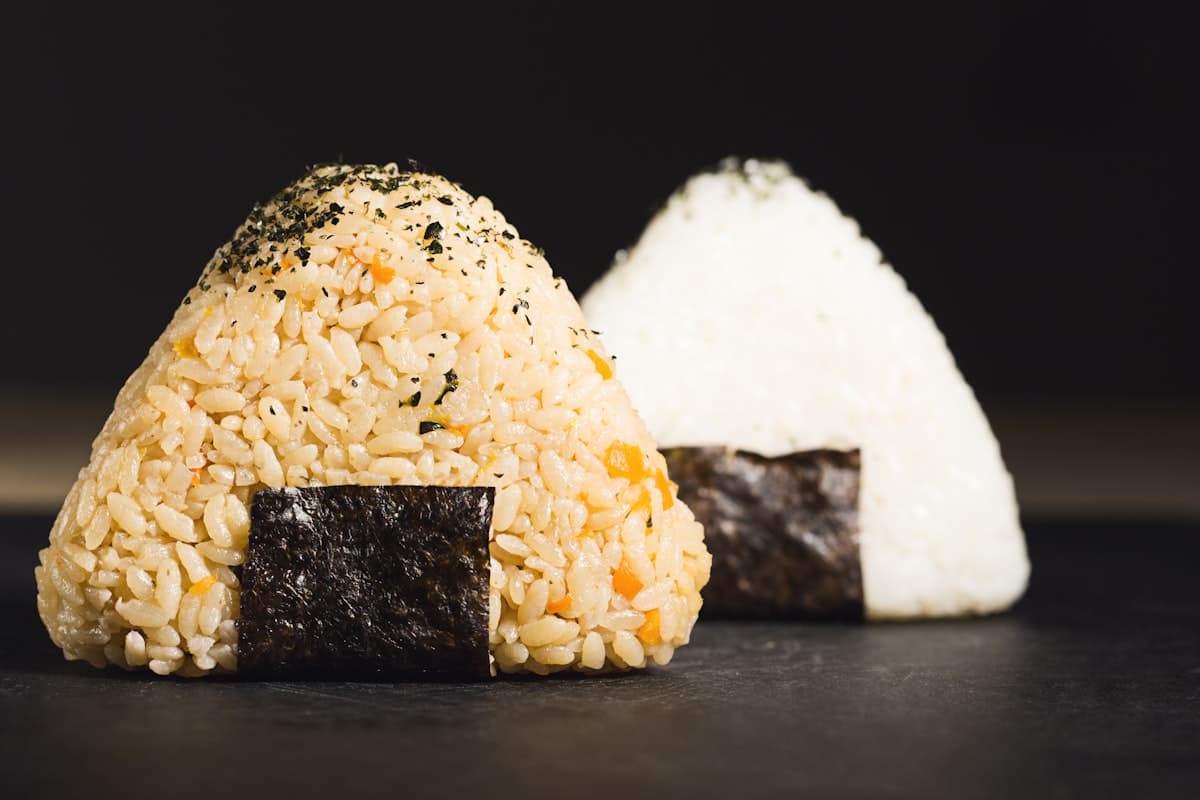
Jumeokbap (Seasoned Rice Balls)
The warm-rice mixing technique behind jumeokbap, and why packing it while hot matters more than any specific filling choice.
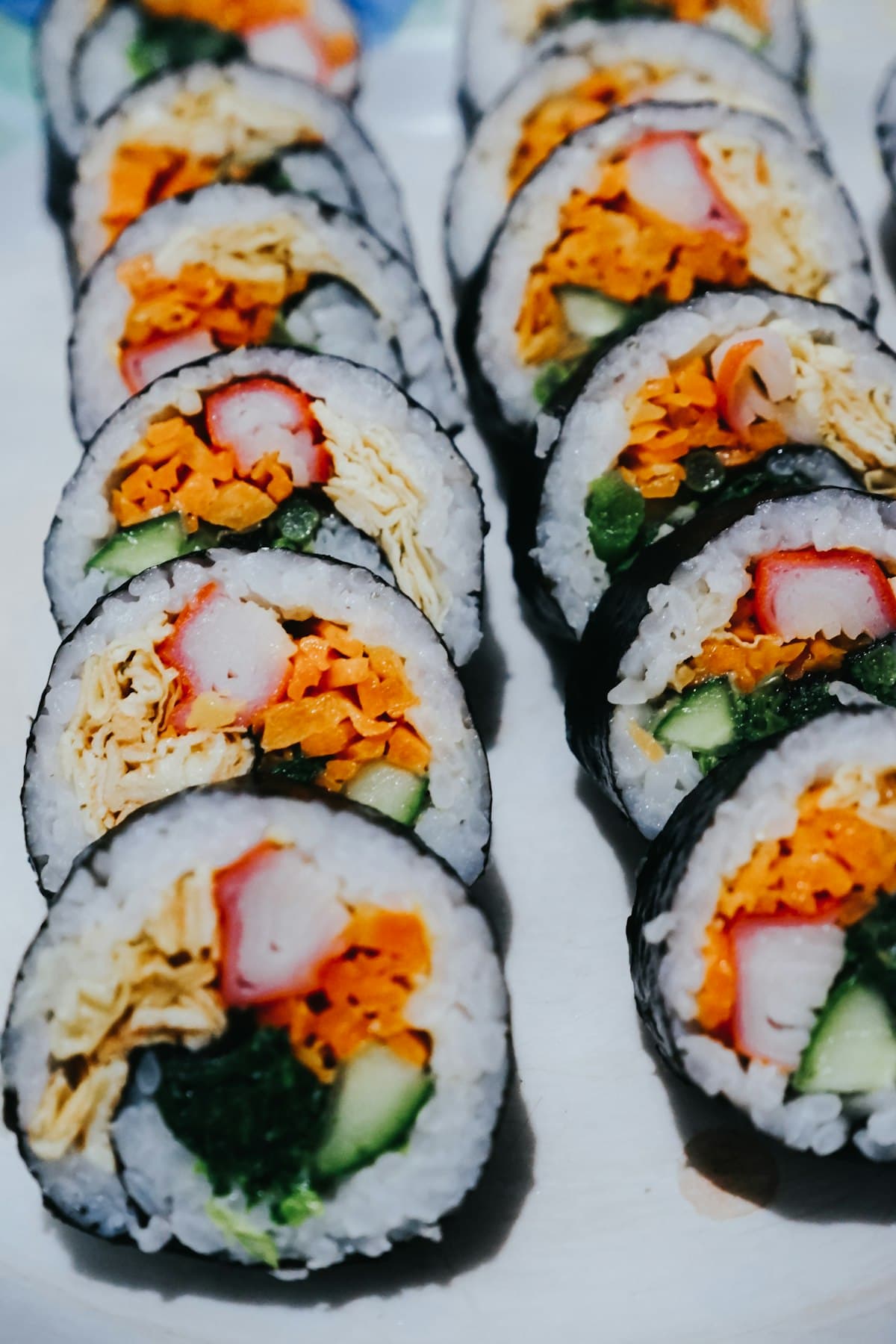
Kimbap (Korean Seaweed Rice Rolls)
Why kimbap isn't 'Korean sushi' — the sesame-seasoned rice, the cooked fillings, and the rolling technique that keeps every slice tight.
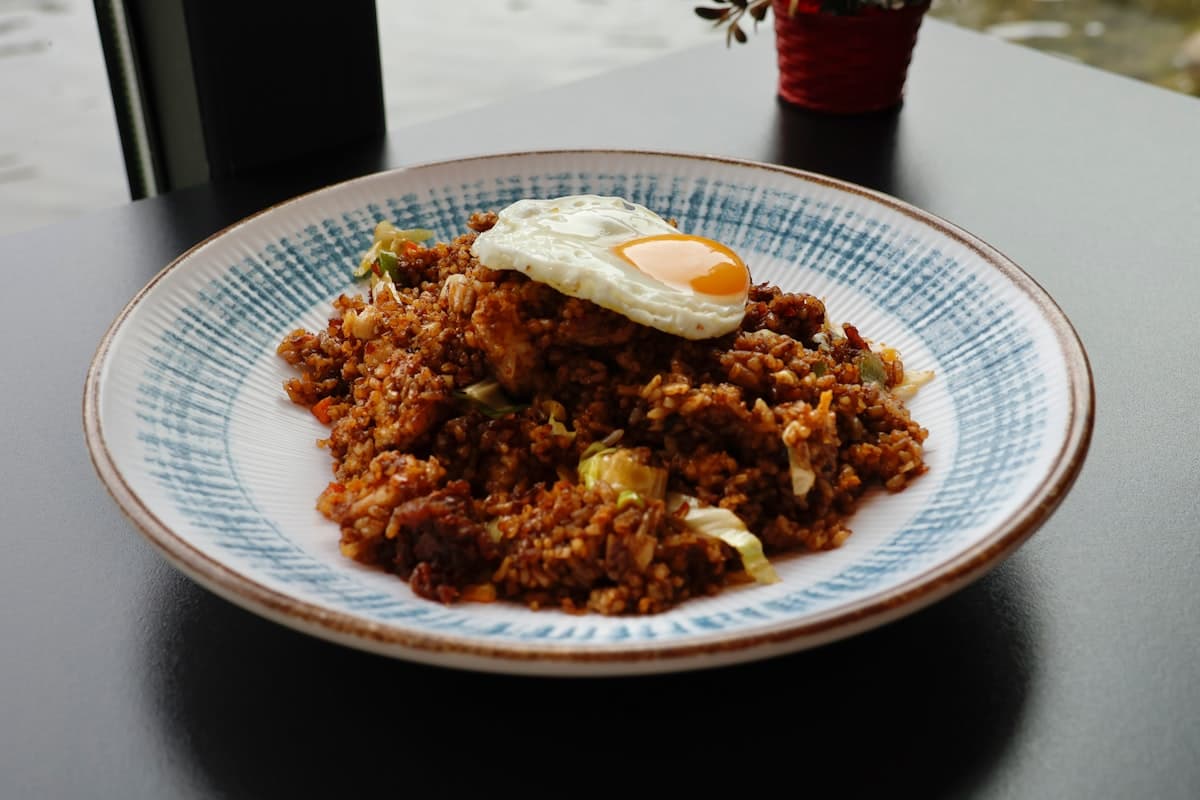
Kimchi Bokkeumbap (Kimchi Fried Rice)
Why kimchi bokkeumbap wants old, over-fermented kimchi specifically, and the high-heat technique that keeps the rice from turning mushy.
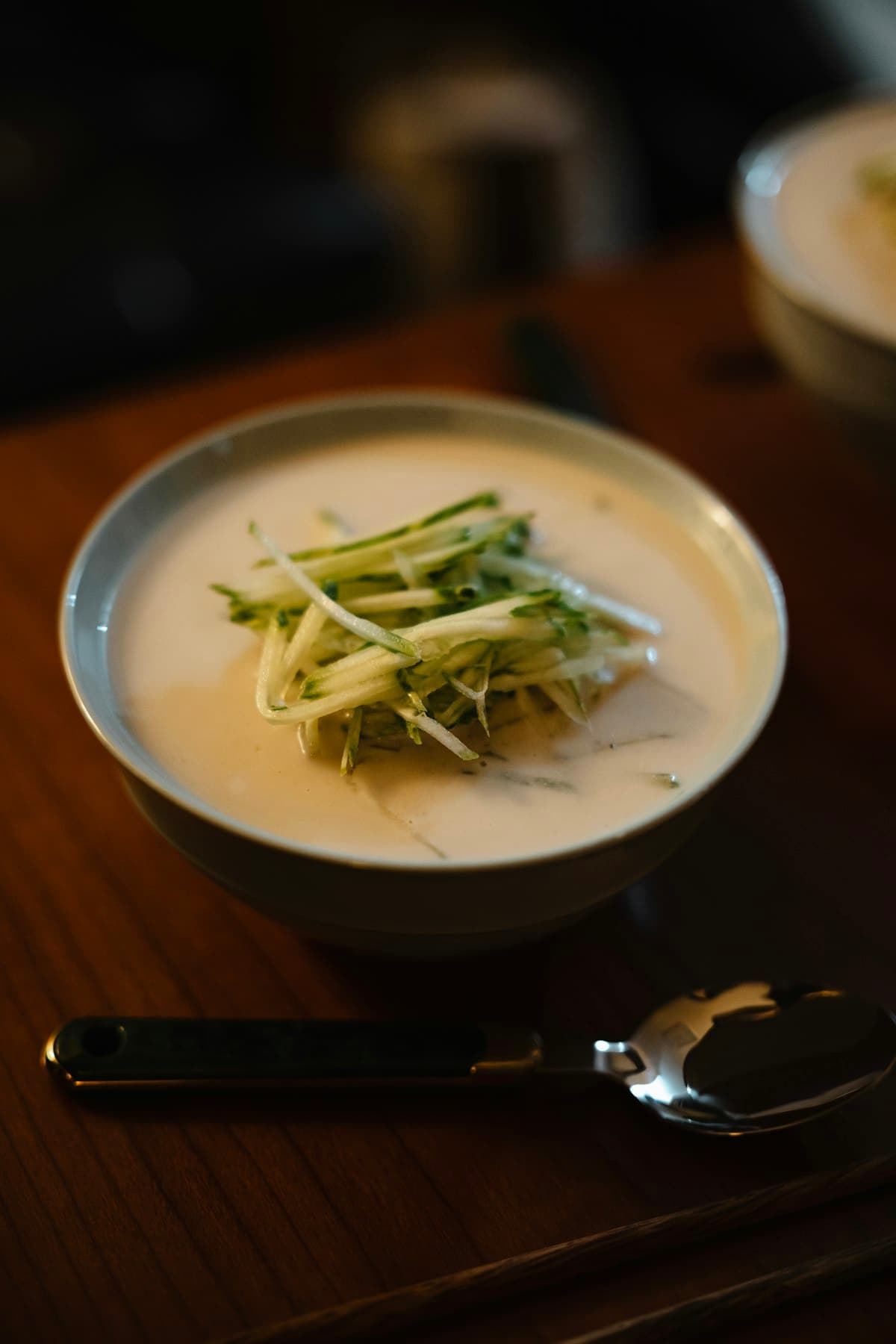
Kongguksu (Cold Soy Milk Noodle Soup)
The soybean-blending technique behind kongguksu's creamy broth, and why the beans need a real soak, not a shortcut.
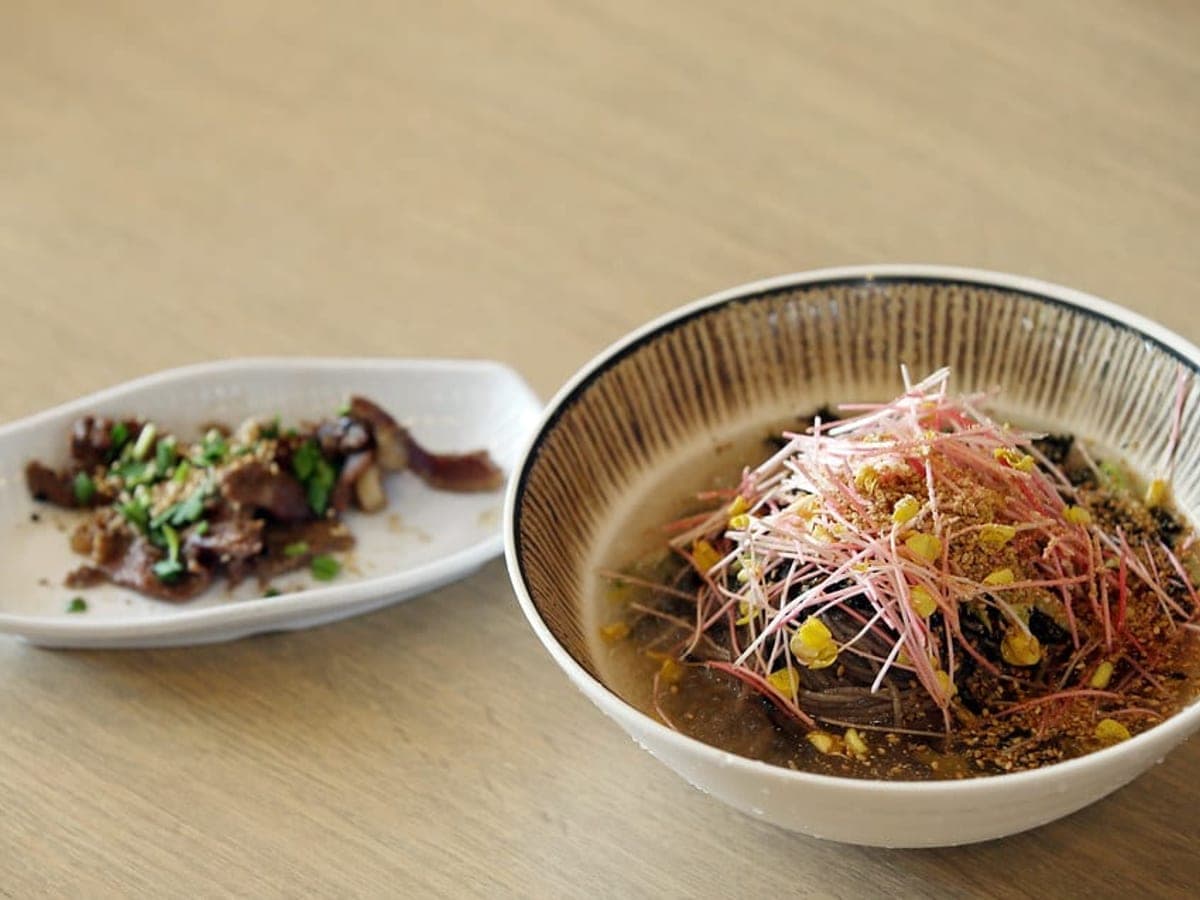
Makguksu (Chilled Buckwheat Noodles)
Why makguksu is dressed rather than drowned, and how the buckwheat noodles are rinsed hard so the sauce clings instead of sliding straight off.
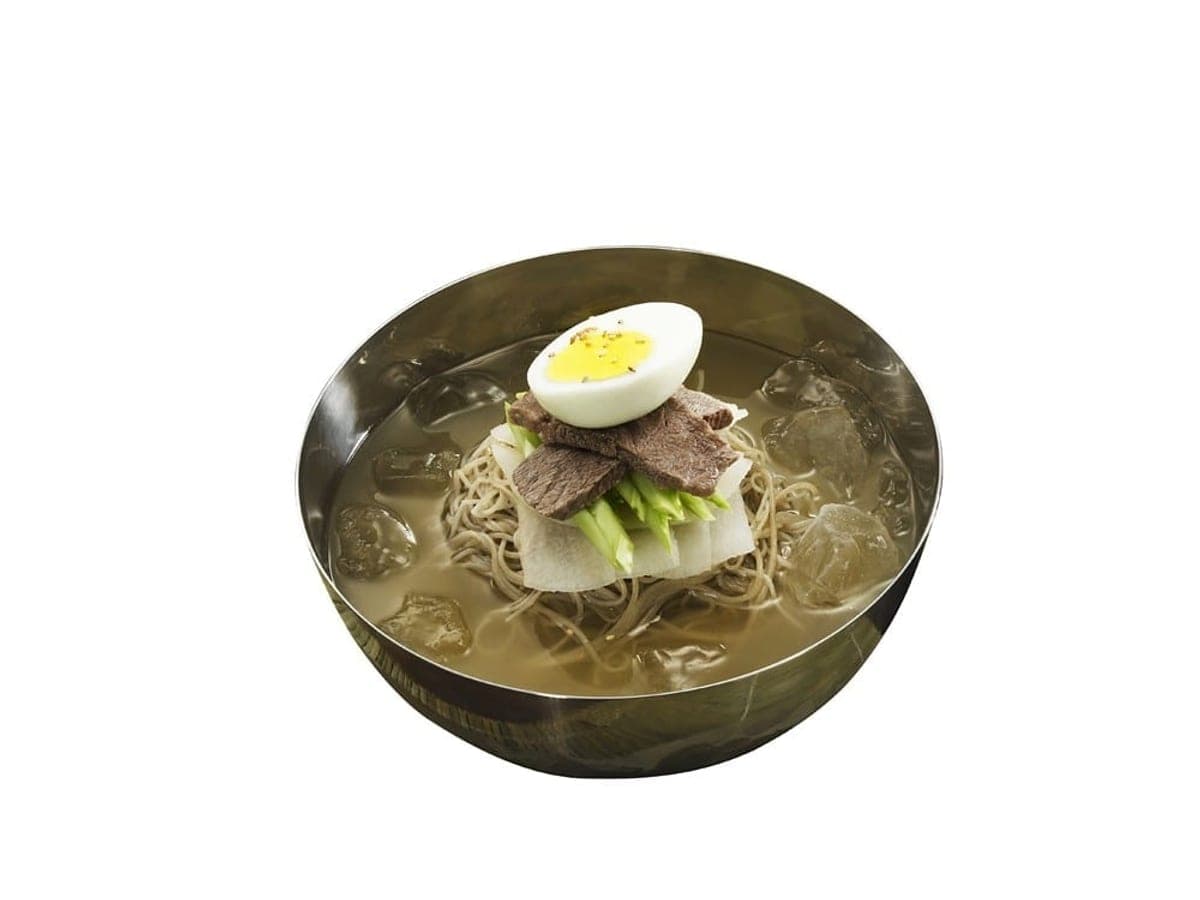
Mul Naengmyeon (Chilled Buckwheat Noodle Soup)
How the broth for mul naengmyeon is chilled to a slush rather than merely cold, and why the noodles are cut at the table instead of before serving.
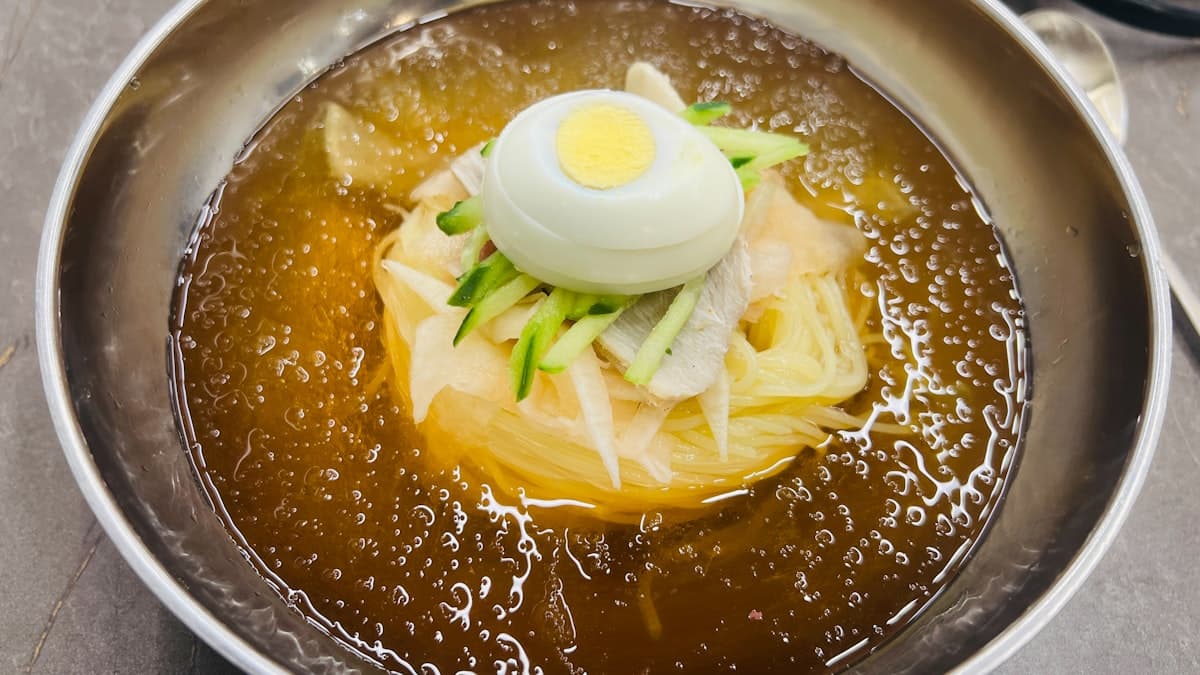
Naengmyeon (Korean Cold Noodles)
Why buckwheat noodles only work cold, not hot, and the icy broth technique behind Pyongyang-style naengmyeon.
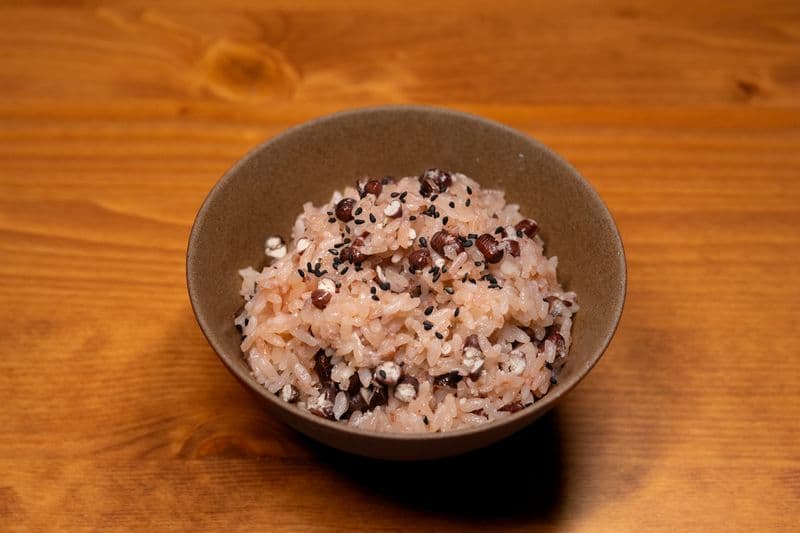
Ogokbap (Five-Grain Rice)
Why each grain needs its own soak time before they ever meet in the same pot, and how skipping that step leaves some grains raw and others mushy.
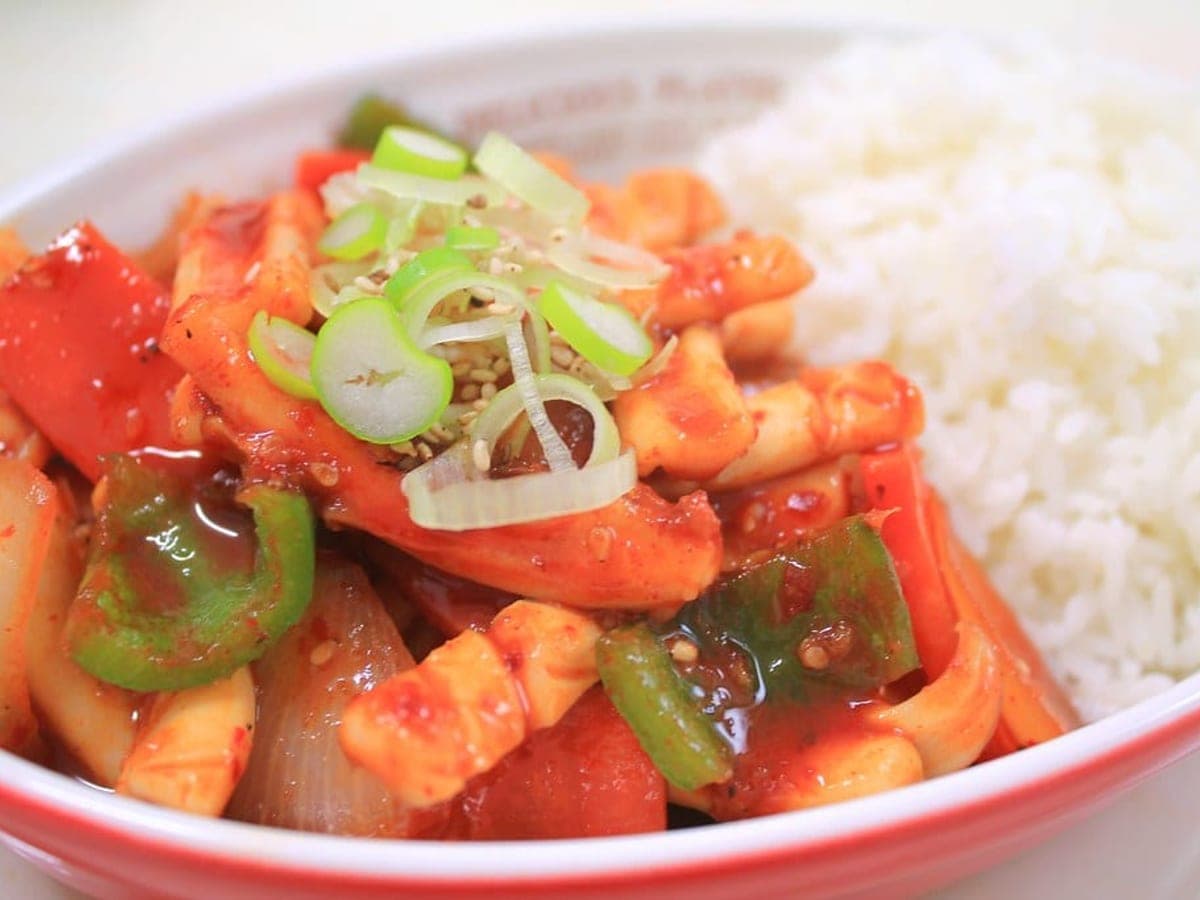
Ojingeo Deopbap (Spicy Squid Rice Bowl)
Why squid for a deopbap is scored and cooked in under three minutes, and how the sauce is thickened in the pan so it sits on the rice instead of soaking in.
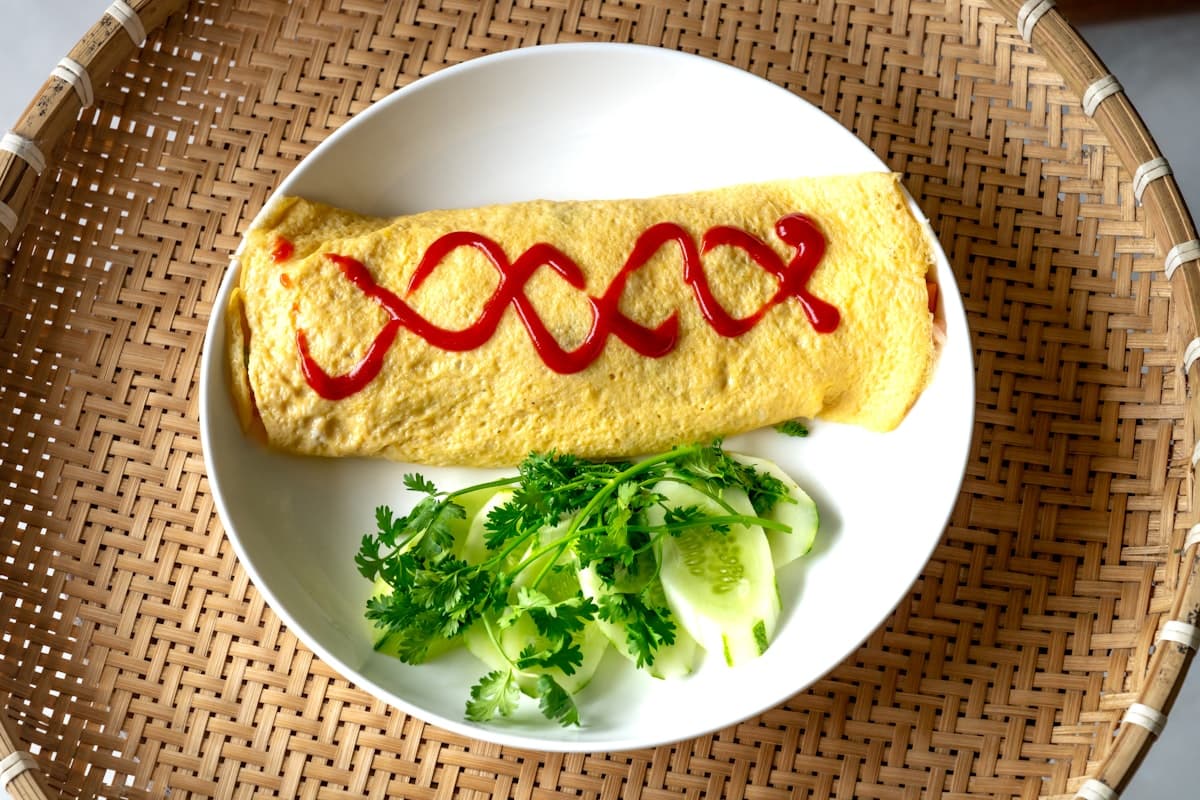
Omurice (Korean-Style Omelette Rice)
The soft-set omelette technique behind omurice, and why the rice gets fried before the egg ever touches the pan.
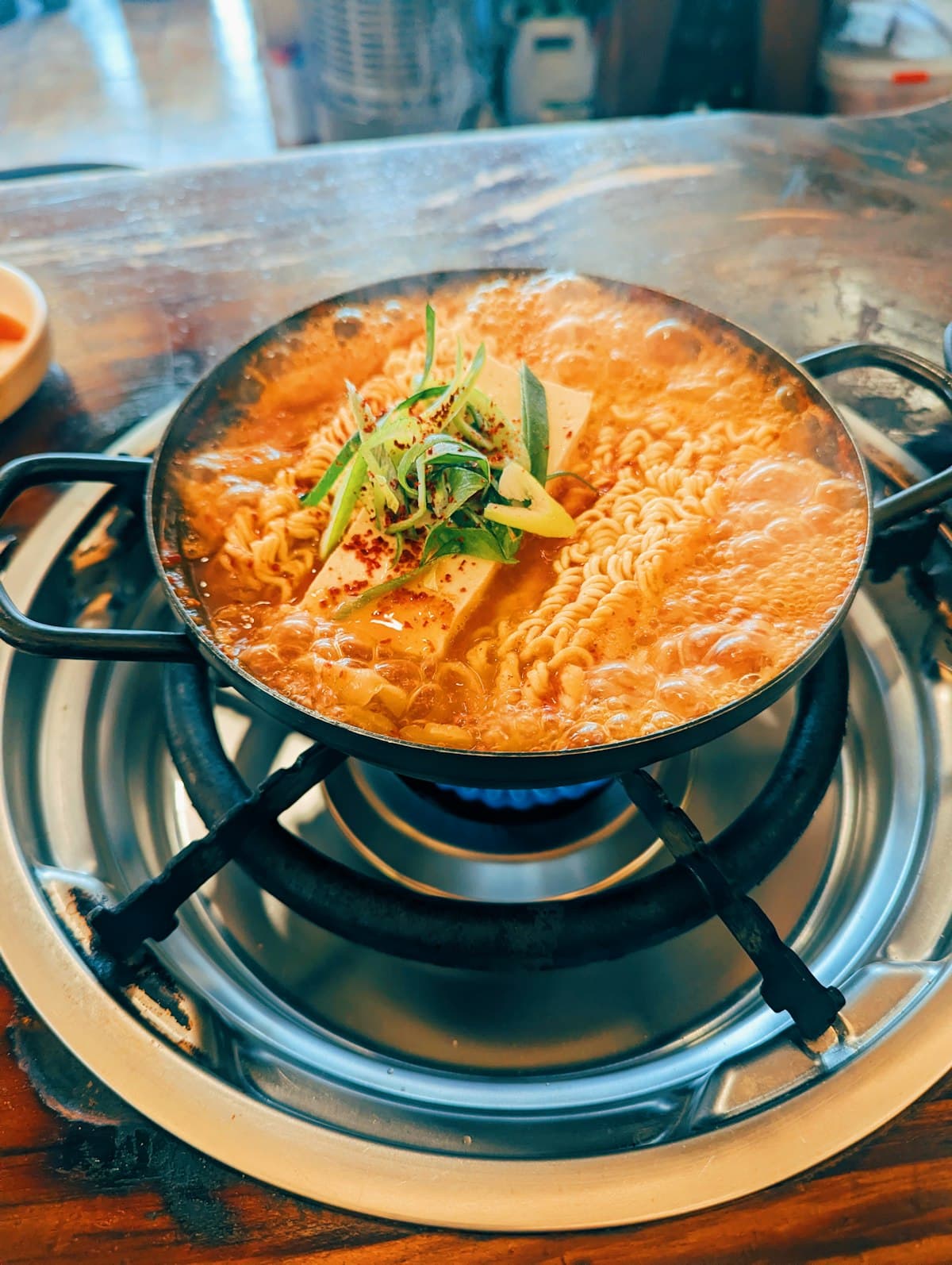
Ramyeon (Doctored-Up Korean Instant Noodles)
The add-in order and timing that actually improves instant ramyeon, instead of just dumping extra ingredients into the pot.
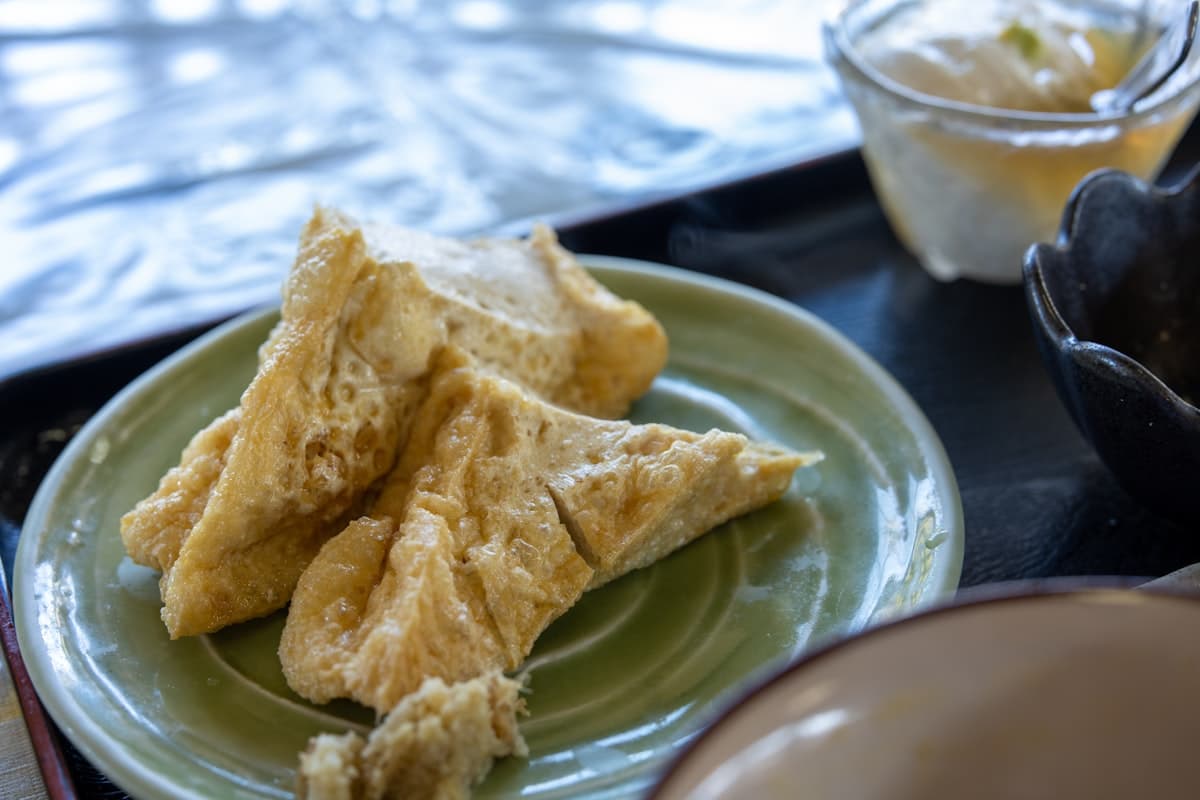
Yubu Chobap (Stuffed Tofu Pouch Sushi)
The rice-seasoning and stuffing technique behind yubu chobap, and why overfilling the pouches is the most common mistake.