Rice & Noodles
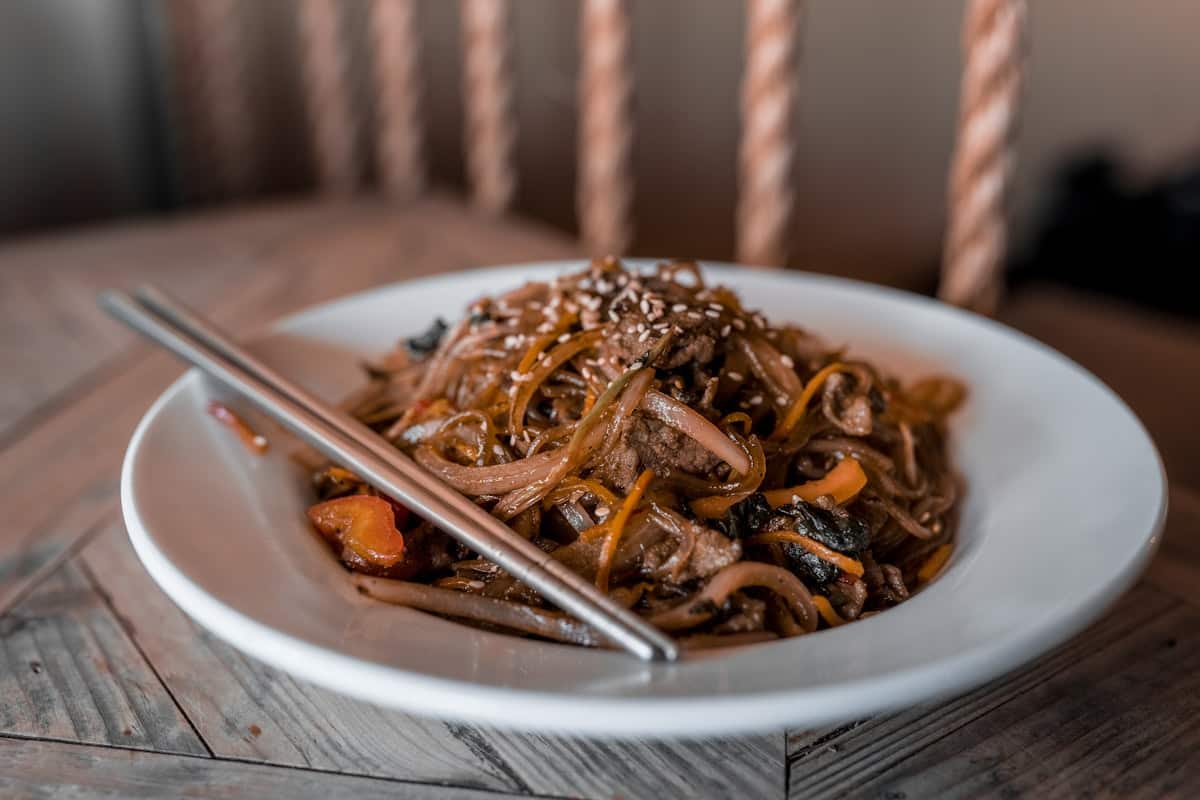
Japchae (Korean Glass Noodle Stir-Fry)
By Suku · · Updated
Prep
40 min
Cook
20 min
Servings
4
Steps
- 1
Soak the dangmyeon in warm water for 30 minutes to soften, then boil for 5-6 minutes until tender but still chewy.
- 2
Drain and toss immediately with a little sesame oil and soy sauce so the noodles don't clump.
- 3
Marinate the sliced beef in soy sauce, sugar, sesame oil, and garlic for 15 minutes.
- 4
Blanch the spinach 30 seconds, shock in cold water, and squeeze dry.
- 5
Stir-fry the carrot until just softened, then set aside.
- 6
Stir-fry the onion until translucent, then set aside.
- 7
Stir-fry the mushrooms until tender, then set aside.
- 8
Cook the marinated beef in a hot pan until just browned.
- 9
Toss the noodles with all the cooked components, the remaining soy sauce, sugar, and sesame oil, mixing gently so nothing breaks apart.
- 10
Finish with sesame seeds and a final drizzle of sesame oil.
Did you know — Korean culture
The original japchae had no noodles in it at all. A 17th-century court official named Yi Chung invented it for King Gwanghaegun using only vegetables — no meat, no dangmyeon — and the king liked it enough to promote him. The glass noodles everyone associates with japchae today weren't added until the early 1900s, roughly three hundred years after the dish was invented.
Every component in japchae gets cooked separately, same rule as bibimbap, and for the same reason: mix everything into one pan and the colors muddy together and the vegetables lose their individual bite. Keep them apart until the very last toss, and the dish holds its texture and looks like something a restaurant plated, not something dumped from one pot.
The noodles are the one place people consistently overcorrect. Dangmyeon goes from properly chewy to gluey and overcooked fast — a minute too long in boiling water and the whole dish turns mushy, no matter how well everything else was done.
This dish has been evolving for roughly four hundred years, which is a strange thing to think about while you're julienning a carrot. What's on the plate today would have been unrecognizable to the person who first served it.
The noodles are the whole dish
Japchae uses dangmyeon — Korean glass noodles made from sweet potato starch. They are thicker, chewier and far more resilient than the mung bean glass noodles used elsewhere in Asia, and they are what gives japchae its distinctive bounce.
Do not substitute mung bean vermicelli. It is thinner, softer, and collapses into the sauce. If a shop only has the mung bean kind, the dish still works but it is noticeably not japchae.
Cook them in plenty of boiling water, 6–8 minutes, until fully translucent with no white core. Undercooked dangmyeon stays unpleasantly hard no matter how long it sits in the pan afterwards. Then rinse briefly in cold water and cut them a few times with scissors, or they are unmanageable to eat.
Cooking the vegetables separately
The same principle as bibimbap: each vegetable is cooked on its own and combined at the end.
They release water at different rates and cook at different speeds. Thrown into one pan, the spinach is destroyed before the carrot has softened, and everything sits in a puddle.
The usual set: spinach (blanched and squeezed dry), carrot (julienned, quick stir-fry), onion, shiitake mushrooms, and often beef. Squeeze the spinach genuinely dry — wet spinach is the main reason japchae goes watery.
Substitutions
No beef: japchae is very good without it, and a mushroom-only version is common. Use a mix of shiitake and oyster for depth.
Vegan: drop the beef and egg garnish. Everything else is already plant-based.
Mushrooms: dried shiitake, rehydrated, are more flavourful than fresh, and the soaking water is worth adding to the sauce.
Sesame oil is not optional here. It is most of the aroma, and it goes in at the end, off the heat.
Timing and making it ahead
About 45 minutes, most of it prep. Julienning everything to a similar size is the slow part and it matters — japchae is eaten in mixed forkfuls.
Japchae is genuinely better slightly cooled, which makes it excellent party food. It is a standard dish at Korean celebrations for exactly this reason: it can be made hours ahead and served at room temperature without suffering.
If making well ahead, hold back a little sesame oil and soy sauce and toss it through just before serving to loosen the noodles again.
Storing and reheating
3–4 days in the fridge. The noodles firm up and clump when cold, which is normal.
To revive: a hot pan with a splash of water and a little sesame oil loosens them again in a minute. The microwave works but makes them gummy.
Do not freeze. Sweet potato starch noodles turn spongy and never recover.
What to serve with japchae
Japchae is usually a shared dish rather than a main:
- Part of a spread with bulgogi or galbi
- With rice and a soup as an everyday meal
- Alongside kimchi and a couple of banchan
- Over rice as japchae-bap, which is a legitimate meal in its own right
Troubleshooting
Noodles turned gummy and stuck together? Overcooked, or not tossed with oil immediately after draining. Dangmyeon needs to be handled the second it comes out of the water, not left to sit.
Dish tastes bland? Under-seasoned components, most likely the noodles themselves — they need their own hit of soy sauce and sugar before everything gets combined, not just seasoning added at the end.
Noodles breaking apart when tossed? They're overcooked and fragile. Pull them slightly before you think they're done — they'll finish softening as they cool and mix with the warm ingredients.
Common questions
What noodles are used in japchae?
Dangmyeon — Korean sweet potato starch noodles. They are thicker and chewier than mung bean glass noodles and hold their bounce in the pan. Mung bean vermicelli is not a good substitute; it goes soft and collapses.
Why is my japchae watery?
Almost always the spinach. It holds an enormous amount of water and needs to be squeezed genuinely dry after blanching. Cooking the vegetables together in one pan rather than separately is the other common cause.
Can japchae be made ahead?
Yes — it is one of the best Korean dishes for it, and is traditionally party food for that reason. It is good warm or at room temperature. Make it several hours ahead, then toss through a little extra sesame oil before serving to loosen the noodles.
Is japchae vegetarian?
It often contains beef, but the dish works completely without it and mushroom-only versions are common. Everything else in a standard japchae — noodles, vegetables, soy, sesame — is already plant-based.
How do you reheat japchae?
In a hot pan with a splash of water and a little sesame oil, which loosens the noodles again in about a minute. Microwaving works but leaves them gummy. Don't freeze it — the noodles turn spongy.
Recommended products
- Dangmyeon (sweet potato glass noodles)
- Wok or large stir-fry pan
More to cook
All Rice & Noodles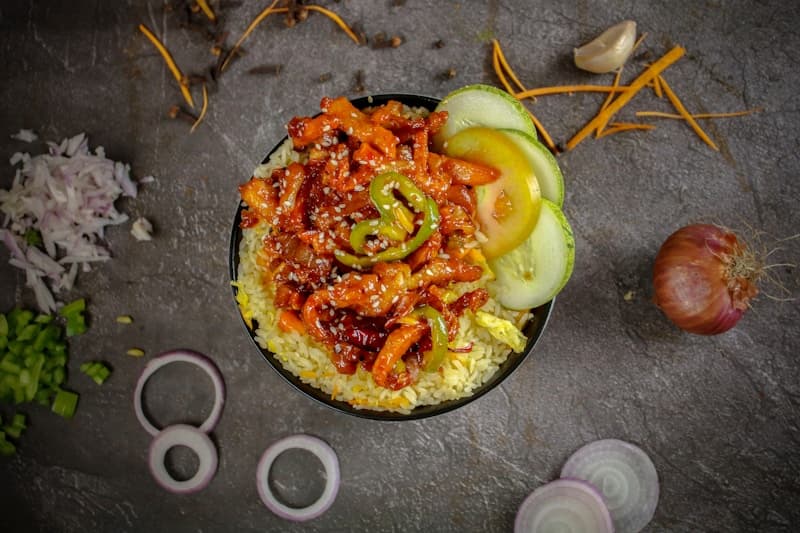
Jeyuk Deopbap (Spicy Pork Rice Bowl)
Why thin-slicing the pork and marinating it briefly, not overnight, is what keeps jeyuk deopbap tender instead of tough on a hot pan.
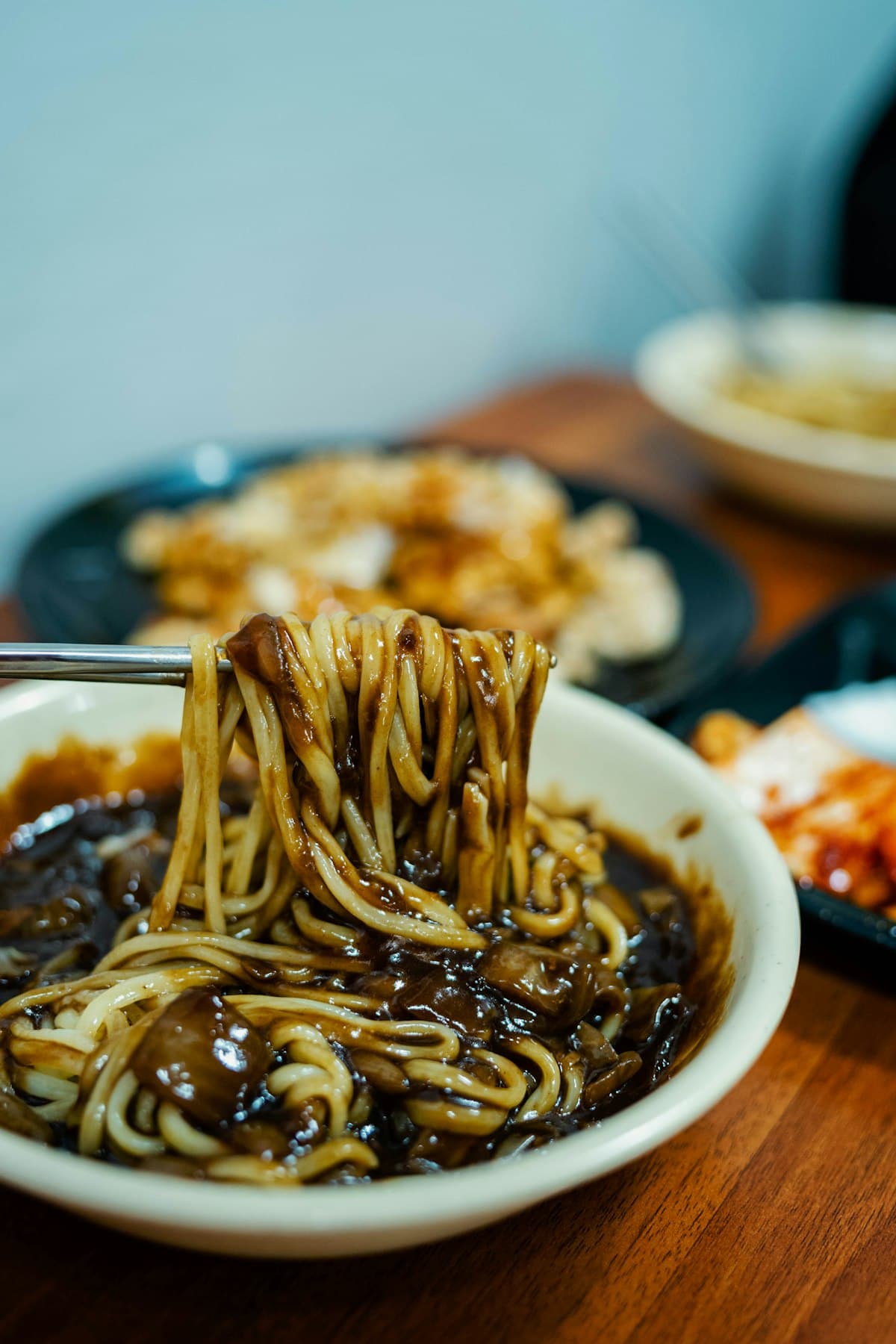
Jjajangmyeon (Black Bean Noodles)
The caramelized chunjang technique and starch-slurry thickening that makes real jjajangmyeon glossy instead of gritty.
Jjolmyeon (Chewy Spicy Cold Noodles)
The rinse-and-toss technique behind jjolmyeon's signature chew, and why these noodles need a harder cold-water shock than most.