Steps
- 1
Marinate the sliced beef in soy sauce, sugar, sesame oil, and garlic for at least 15 minutes.
- 2
Blanch the spinach 30 seconds, shock in ice water, squeeze dry, then season with salt, sesame oil, and a little garlic.
- 3
Blanch the bean sprouts 3-4 minutes until tender-crisp, drain well, season the same way as the spinach.
- 4
Stir-fry the carrot 2-3 minutes until just softened, season lightly with salt.
- 5
Stir-fry the zucchini the same way, then the mushrooms, each seasoned separately and kept apart.
- 6
Cook the marinated beef in a hot pan until just browned, a couple of minutes.
- 7
Fry the eggs sunny-side up, edges crisp, yolk runny.
- 8
Stir the gochujang sauce ingredients together and let it sit at least 15 minutes before serving.
- 9
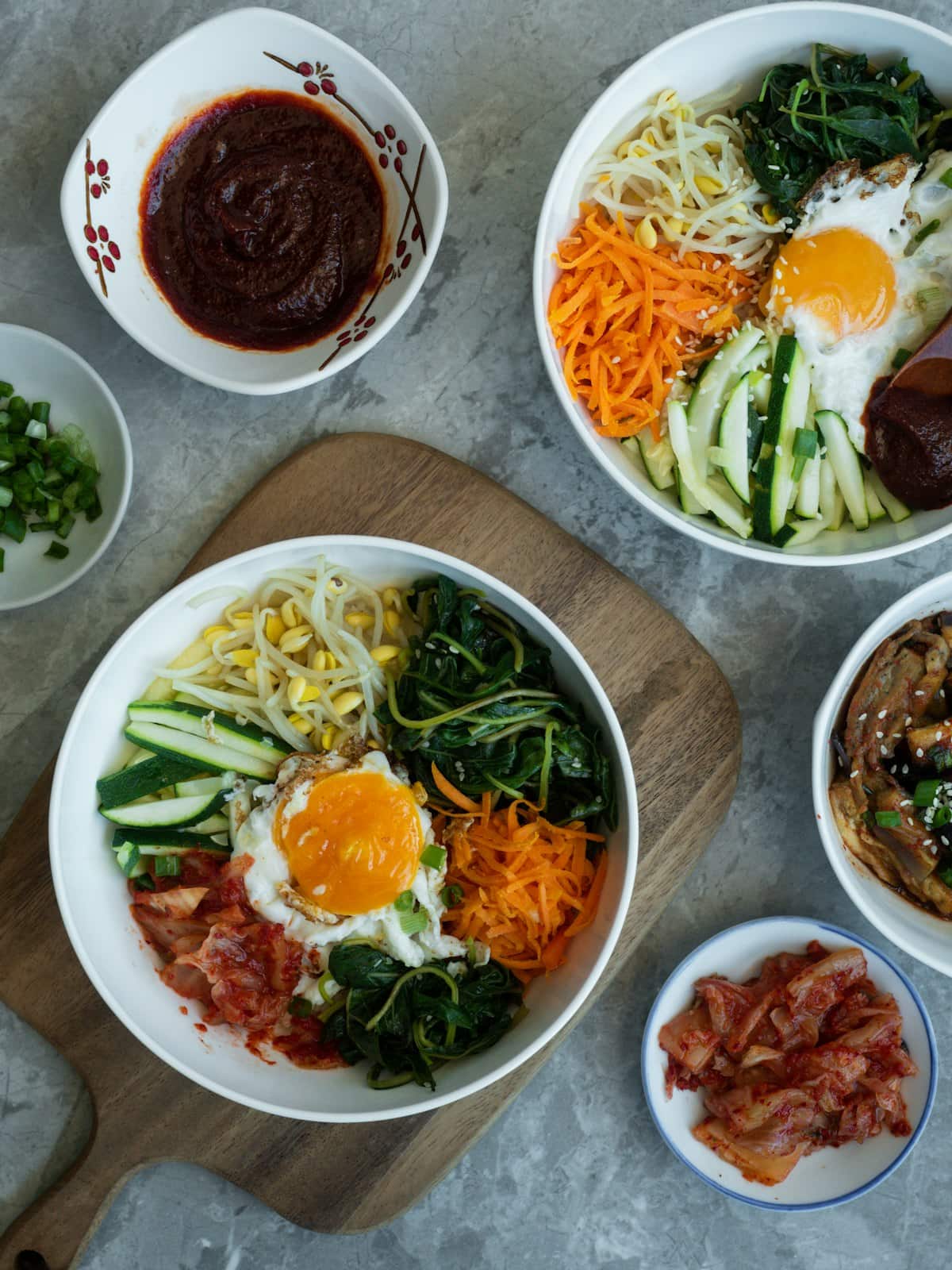
Fill each bowl with warm rice, then arrange the namul, beef, and egg in separate sections rather than piling them together.
- 10
Top with sesame seeds and a spoonful of the sauce. Mix everything together at the table, right before eating, not before.
Did you know — Korean culture
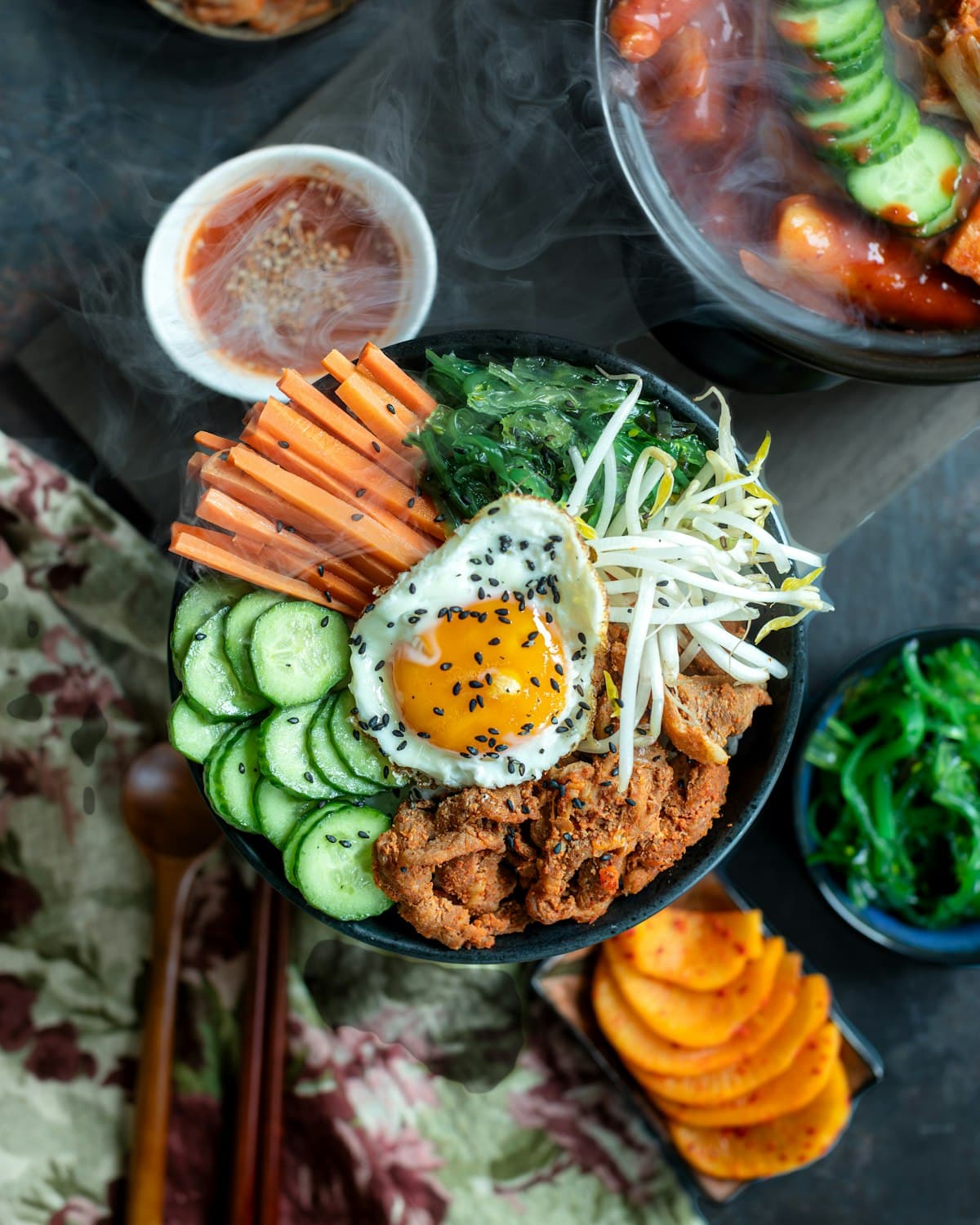
Those separated piles of color in a bibimbap bowl aren't just plating. It's obangsaek — a philosophy of five colors mapped to five directions and five elements, imported from Chinese Yin-Yang theory back in the Goguryeo and Baekje kingdoms. White rice, black mushrooms, green vegetables, red chili, yellow egg: a properly built bowl is quietly tracking a 1,500-year-old idea about balance before you've mixed a single bite.
Bibimbap looks like a salad that got ambitious. It's really a logic puzzle: five vegetables, each cooked completely separately, that only become a dish once you mix them all together at the table. Cook them together in one pan and you get a stir-fry. Keep them apart and you get bibimbap.
That separation is the whole technique. Spinach gets blanched and squeezed dry. Carrots get a quick stir-fry. Bean sprouts get blanched longer, kept crisp. Each one seasoned on its own with just salt, sesame oil, and a little garlic — not a shared sauce, not a shared pan. It's more dishes to wash, and it's non-negotiable.
The gochujang sauce is the other piece people rush. Mixed straight from the jar it tastes flat and one-note. Let it sit fifteen minutes with the sesame oil and vinegar worked in, and it rounds out into something you actually want spooned over everything.
Don't mix the bowl until you're at the table, fork or spoon in hand, ready to eat. A bibimbap mixed in the kitchen and carried to the table is already going cold and gray by the time it arrives.
Choosing the vegetables
There is no fixed set. The traditional five aim for a spread of colour, and it is worth thinking in those terms rather than following a list.
Reliable choices: spinach, mung bean or soybean sprouts, carrot, shiitake or oyster mushrooms, courgette, gosari (bracken fern), cucumber.
The rice matters more than people expect. Short-grain Korean rice holds together enough to mix without turning to paste — see which rice to buy. Long-grain rice mixes into something loose and separate.
The egg is traditionally fried with a runny yolk, which acts as part of the sauce once it is broken into the bowl. A raw yolk is also traditional, particularly with raw beef.
Substitutions and variations
No gochujang? There is no close substitute, and this is the one thing to buy. See gochujang for what it actually is. In a genuine emergency, miso plus gochugaru and a little sugar is in the right direction.
Meat: thinly sliced beef marinated like bulgogi is standard. Pork works. So does nothing — a vegetable-only bibimbap is completely legitimate and closer to how it is often eaten.
Vegan: drop the egg and beef, keep everything else. Check the gochujang label, as some contain no animal products and others do.
No stone bowl: any bowl works. You lose the crisped rice layer, not the dish. Dolsot bibimbap covers the stone-bowl version properly.
Timing and making it ahead
Roughly 45 minutes to an hour if you are cooking every namul from scratch, and most of that is the vegetables one at a time.
This is genuinely good make-ahead food. Each seasoned vegetable keeps 3–4 days in the fridge in its own container, and Korean households often have several sitting there as banchan anyway. Bibimbap is frequently what happens to leftover banchan rather than a dish planned from scratch.
Cook the rice fresh, or reheat it properly with a splash of water — the rice needs to be hot, because that is what loosens the gochujang sauce on contact.
Storing and reheating
Store the components separately, never assembled. An assembled bowl goes soggy within hours and there is no recovering it.
- Cooked namul: 3–4 days, fridge, separate containers
- Marinated raw beef: 1–2 days
- Rice: best fresh; refrigerated rice reheats fine with a splash of water and a cover
Do not freeze the vegetables — they turn watery. If you have leftovers of an assembled bowl, the honest answer is to fry it the next day rather than reheat it.
What to serve with bibimbap
Bibimbap is already a complete meal, so what goes with it is small and sharp rather than substantial:
- A clear soup on the side — kongnamul guk or a simple doenjang jjigae
- Napa cabbage kimchi and one or two other banchan
- Dongchimi if you have it — the cold radish-water pickle is a genuinely good foil for the gochujang
Troubleshooting
Rice turned mushy once mixed? Too much sauce, or rice that wasn't hot enough to start. Warm rice loosens the sauce on contact — cold rice just sits under a puddle of it.
Vegetables taste bland? Under-salted namul is the most common bibimbap mistake. Each vegetable needs its own pinch of salt while it's still warm — seasoning after everything's cooled down doesn't absorb the same way.
No stone bowl, does it matter? Not for the flavor. A dolsot (hot stone bowl) crisps the rice against the sides into a bottom layer of crunch — genuinely worth doing once you have one, but a regular bowl makes a completely legitimate bibimbap in the meantime.
Common questions
What vegetables go in bibimbap?
Traditionally five, chosen for colour as much as flavour: spinach, bean sprouts, carrot, mushrooms and courgette are the common set, often with gosari. There is no fixed list — the principle is a spread of colours and textures, each cooked and seasoned separately.
Do I need a stone bowl for bibimbap?
No. The stone bowl (dolsot) crisps a layer of rice against the sides, which is genuinely delicious but is a variation rather than the dish itself. A regular bowl makes a completely legitimate bibimbap.
Can I make bibimbap ahead of time?
The components, yes — each seasoned vegetable keeps 3–4 days refrigerated. The assembled bowl, no. Mix it only at the table, immediately before eating, or the rice goes soggy and the vegetables lose their distinctness.
What is the difference between bibimbap and dolsot bibimbap?
Only the bowl. Dolsot bibimbap is served in a preheated stone bowl that keeps sizzling at the table and crisps the bottom layer of rice into a crunchy crust. Same components, different texture.
Is bibimbap healthy?
It is a bowl of rice, vegetables and a modest amount of protein, so it holds up well as a balanced meal. Portion sizes and how much sesame oil goes into each namul are what actually vary.
Recommended products
- Dolsot (stone bowl) for serving
- Gochujang (Korean chili paste)
More to cook
All Rice & Noodles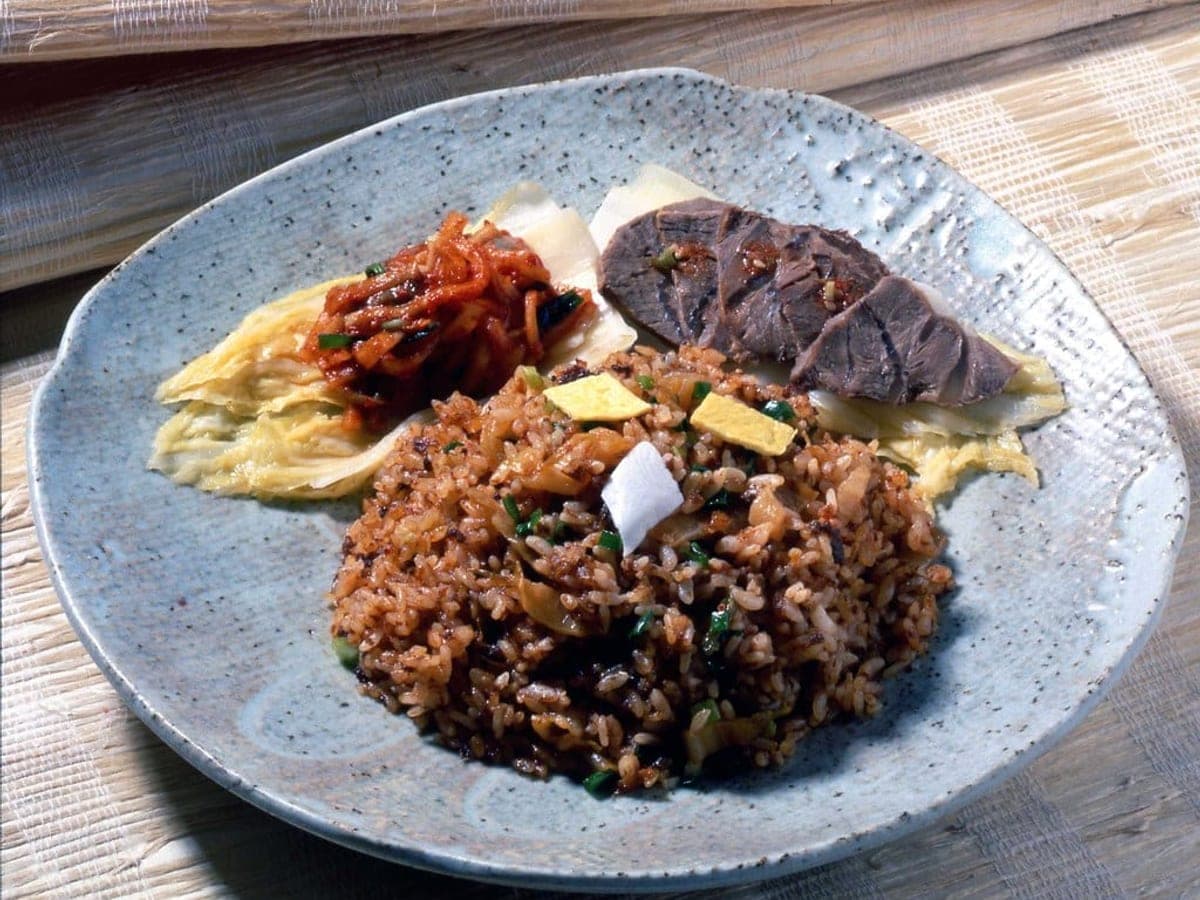
Bokkeumbap (Korean Fried Rice)
Why day-old refrigerated rice fries and fresh rice steams, and the order ingredients hit the pan so nothing ends up soggy.
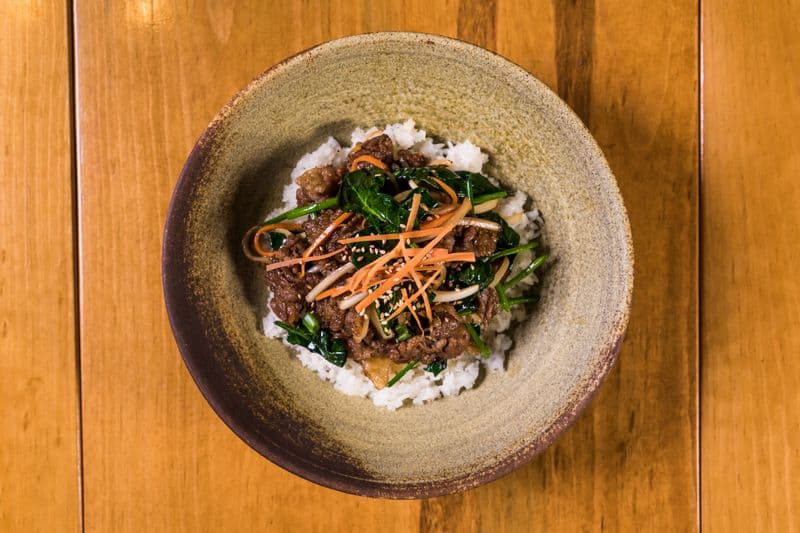
Bulgogi Deopbap (Bulgogi Rice Bowl)
Why a screaming-hot pan for the final sear, after a long marinade, is what separates real bulgogi deopbap from just beef and rice.
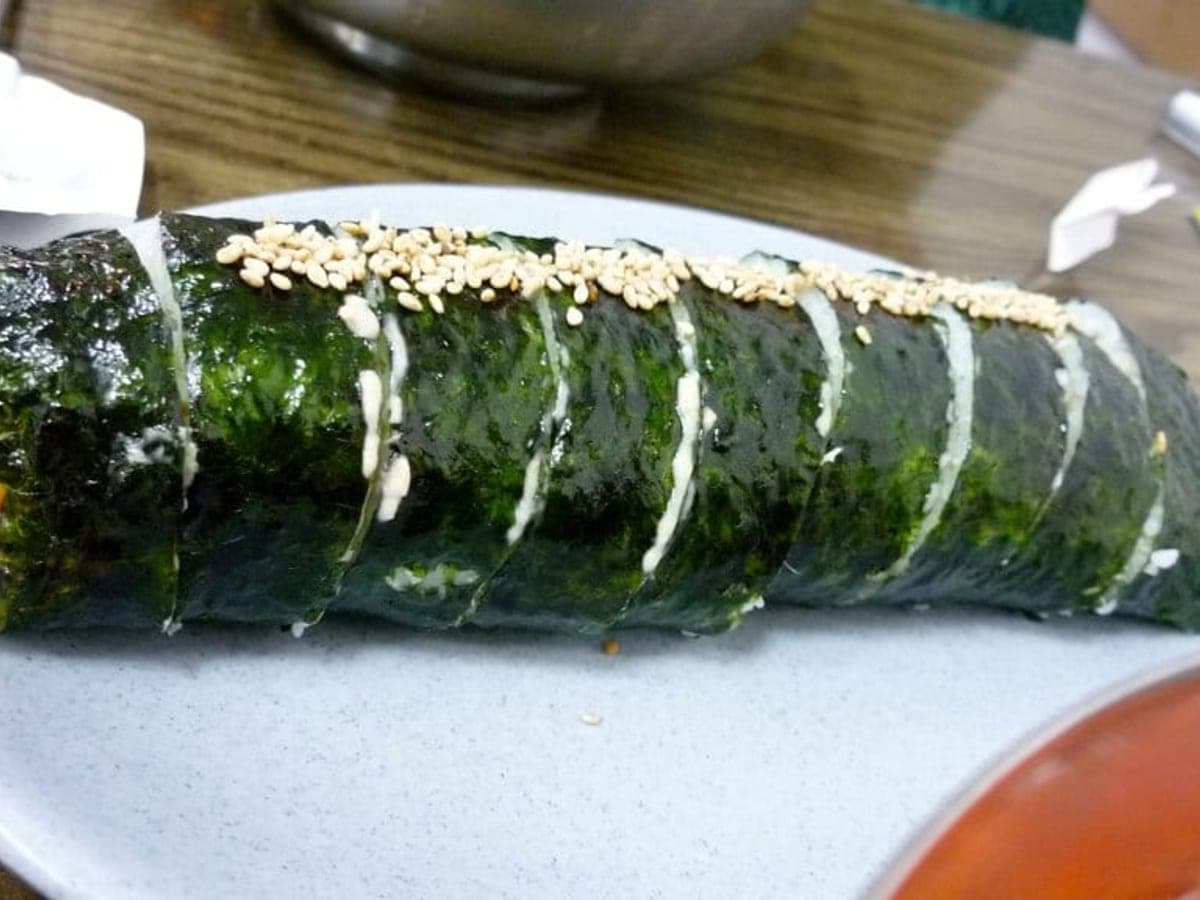
Chamchi Kimbap (Tuna Seaweed Rolls)
Why the tuna filling has to be squeezed dry and bound with mayonnaise, and how to roll kimbap tightly enough that the slices hold together.