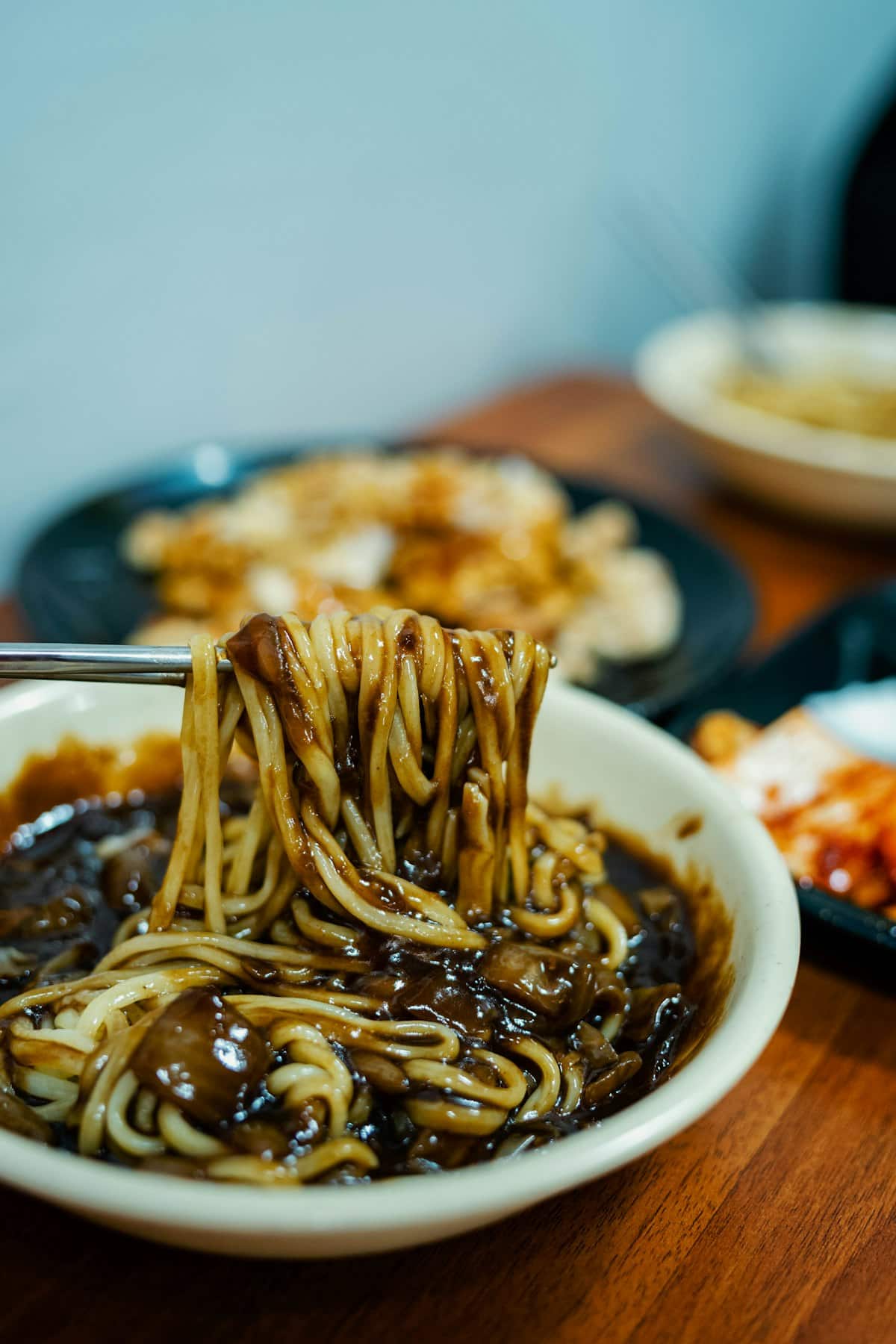
Steps
- 1
Heat the oil in a wok or deep pan and fry the chunjang on its own for 2-3 minutes — this step removes the raw bitterness and is not optional.
- 2
Remove the fried chunjang and set aside.
- 3
In the same pan, brown the pork until rendered and slightly crisp at the edges.
- 4
Add the onion, potato, and zucchini, and stir-fry a few minutes.
- 5
Pour in the water or stock and simmer until the potato is tender, about 10 minutes.
- 6
Stir the fried chunjang back in along with the sugar.
- 7
Add the cornstarch slurry and stir until the sauce thickens and turns glossy.
- 8
Finish with sesame oil.
- 9
Boil the noodles separately, drain, and top with the sauce and cucumber.
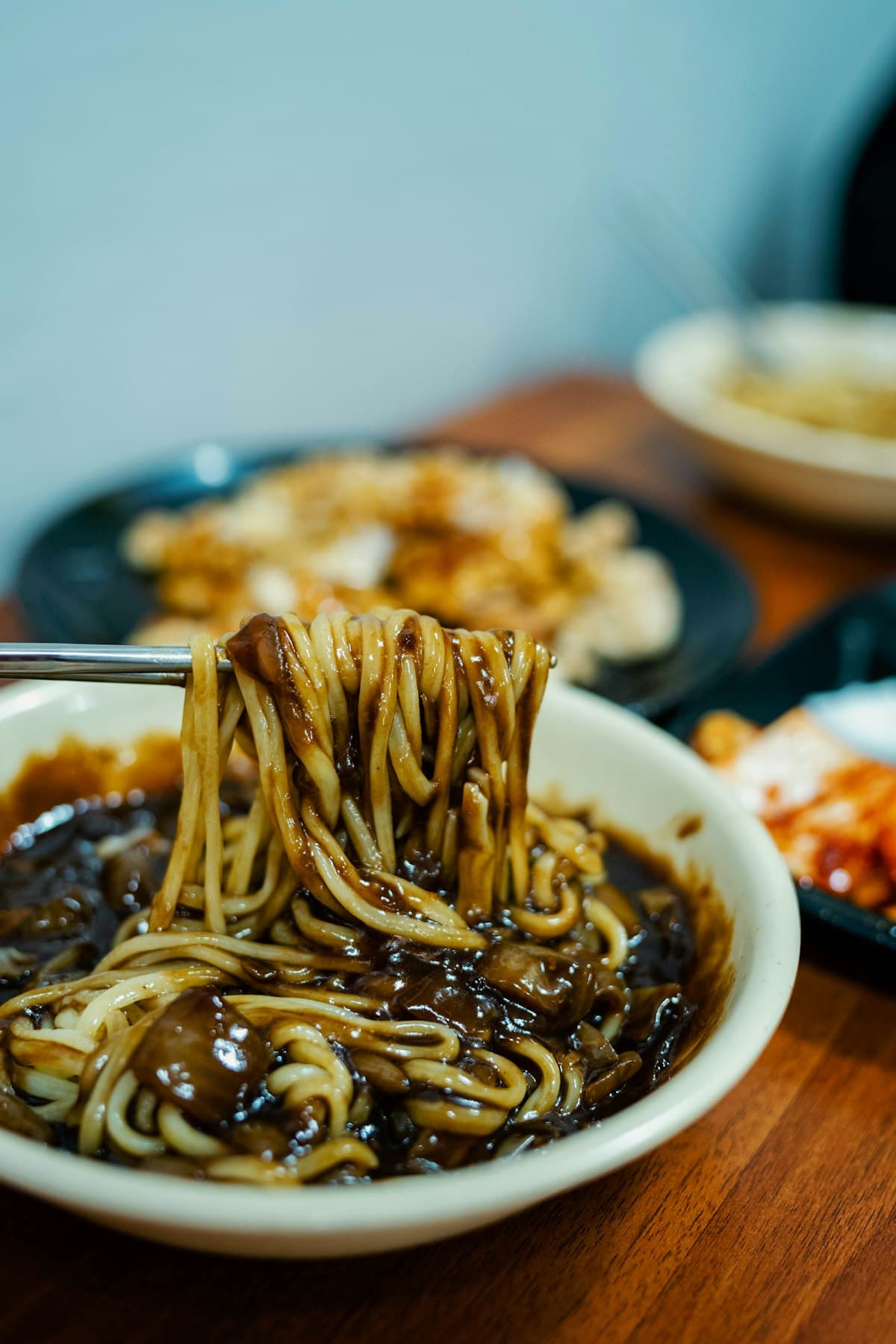
Did you know — Korean culture
Jjajangmyeon isn't from China, even though it's built on a Chinese sauce. It was developed in Incheon's Chinatown around 1905 by Chinese immigrant laborers and restaurants like Gonghwachun, who thickened and sweetened Shandong-style black bean sauce for Korean tastes. The result became so thoroughly its own dish that most Korean-Chinese restaurants today serve versions you won't find in China at all.
Frying the chunjang before anything else goes into the pan isn't a stylistic choice — raw black bean paste tastes bitter and flat, and a couple of minutes in hot oil is what turns it into the deep, slightly sweet base the whole dish depends on. Skip this step and no amount of sugar afterward fully fixes it.
Jjajangmyeon isn't actually Chinese, despite the sauce's origins. It was developed around 1905 in Incheon's Chinatown by Chinese immigrant laborers and restaurants like Gonghwachun, who thickened and sweetened Shandong-style black bean sauce specifically for Korean tastes. The dish became so distinctly its own thing that most versions served in Korea today don't exist in China at all — it's Korean-Chinese fusion food with a Korean identity, not an import.
The cornstarch slurry at the end is what gives the sauce its glossy cling instead of a watery puddle at the bottom of the bowl. Add it too early and it won't thicken properly against unreduced liquid; add it at the very end, off heat is fine, and stir until you see it turn glossy rather than cloudy.
Chunjang is not the same as the finished sauce
Chunjang is the black fermented soybean paste the dish is built on, sold in tubs and jars. Raw, it is intensely bitter and slightly harsh.
It must be fried in oil first. Three to four minutes in a generous amount of neutral oil transforms it — the bitterness goes, the colour deepens to glossy black, and it turns sweet and round. This is the single step that separates jjajangmyeon that tastes like a restaurant's from jjajangmyeon that tastes wrong.
Use more oil than feels reasonable. The paste needs to fry, not stick.
Some brands are sold pre-fried and labelled as such. Most are not.
The rest of the ingredients
Pork belly or shoulder, diced small. Fat matters; this is a rich dish.
Onion, and a lot of it. Onion is not a background aromatic here — it is the bulk of the sauce and its sweetness balances the chunjang. Dice it and cook it until genuinely soft.
Korean radish or potato, diced, for texture and body.
Cabbage and courgette are common.
Noodles — thick, chewy wheat noodles. Fresh jjajangmyeon noodles from a Korean grocer are noticeably better than dried, and udon is a decent stand-in. Thin noodles do not hold the heavy sauce.
Cornstarch slurry at the end. The sauce is thickened, not reduced.
Timing and preparing ahead
About 40 minutes.
The sauce keeps and improves; the noodles do not. Make the sauce ahead — up to 4 days refrigerated — and cook noodles fresh when you eat. This is how Korean-Chinese restaurants operate and it is the right approach at home.
The sauce also freezes well for 2 months, which makes a double batch worth doing.
Storing and reheating
Sauce: 4 days refrigerated, 2 months frozen. Reheat in a pan; it will have thickened, so loosen with a splash of water.
Assembled bowls: do not keep. The noodles absorb the sauce and turn into a solid mass within an hour.
Noodles alone: best fresh. If you must hold them, toss with a little oil and keep them separate.
Variations and relatives
Jjajangbap — the same sauce over rice instead of noodles.
Gan-jjajang — the sauce served separately and unthickened, fried harder, so it stays looser and more intense.
Samseon jjajang — with seafood instead of, or alongside, the pork.
Jjajang tteokbokki — the sauce with rice cakes.
Its constant companion on a Korean-Chinese menu is jjamppong, the spicy seafood noodle soup. Ordering one of each and splitting them is standard practice.
What to serve with jjajangmyeon
The accompaniments are fixed and unusually specific:
- Danmuji — the yellow pickled radish, non-negotiable. Its sharp sweetness cuts the heavy sauce.
- Raw onion wedges with a little chunjang to dip them in
- Tangsuyuk — sweet and sour pork, the standard third order
- Jjamppong if there are two of you
Troubleshooting
Sauce tastes bitter or flat? The chunjang almost certainly wasn't fried long enough on its own before the rest of the ingredients went in.
Sauce won't thicken? Make sure the slurry is fully dissolved (no dry lumps) before adding it, and give it a minute of active simmering afterward — it thickens on heat, not immediately on contact.
Noodles clumping in the bowl? Toss them with the sauce immediately after draining — noodles sitting bare for even a couple minutes stick together fast.
Common questions
Why is my jjajangmyeon bitter?
The chunjang was not fried long enough, or not in enough oil. Raw black bean paste is genuinely bitter, and three to four minutes of frying in a generous amount of oil is what converts it into something sweet and glossy. This is the most common mistake with the dish.
What noodles are used for jjajangmyeon?
Thick, chewy wheat noodles. Fresh ones from a Korean grocer are best; udon is a reasonable substitute. Thin noodles do not stand up to the weight of the sauce.
Can I make the jjajang sauce ahead?
Yes, and you should. The sauce keeps four days refrigerated and freezes for two months, improving slightly in the fridge. Cook the noodles fresh each time — assembled bowls turn into a solid mass within an hour.
Is jjajangmyeon Korean or Chinese?
Korean-Chinese — it developed in Korea, in Incheon's Chinese community, from a Chinese dish and evolved into something distinctly Korean. It is now one of the most-eaten noodle dishes in Korea and tastes noticeably different from its Chinese ancestor.
What do you eat with jjajangmyeon?
Danmuji, the yellow pickled radish, is essentially mandatory — the sauce is rich and the pickle cuts it. Raw onion wedges with a little chunjang for dipping are standard, and tangsuyuk is the usual companion order.
Recommended products
- Chunjang (black bean paste)
- Wok or deep frying pan
More to cook
All Rice & Noodles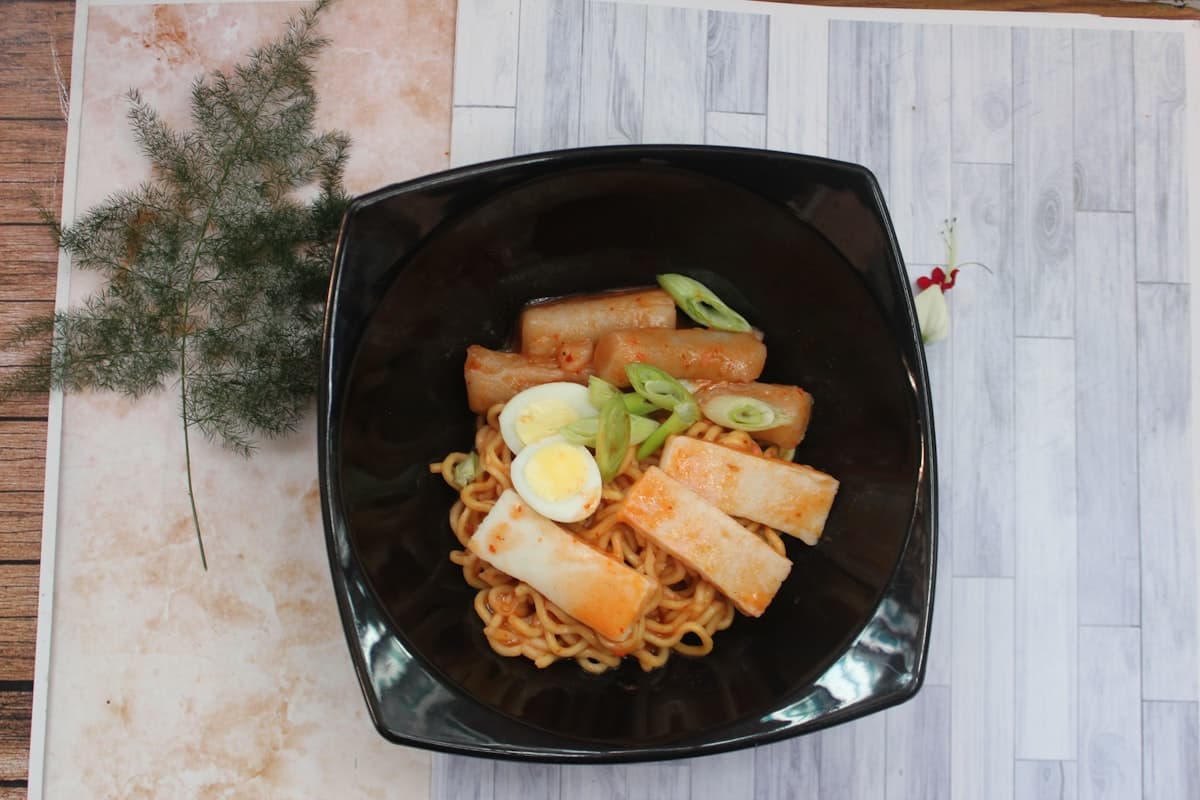
Jjolmyeon (Chewy Spicy Cold Noodles)
The rinse-and-toss technique behind jjolmyeon's signature chew, and why these noodles need a harder cold-water shock than most.
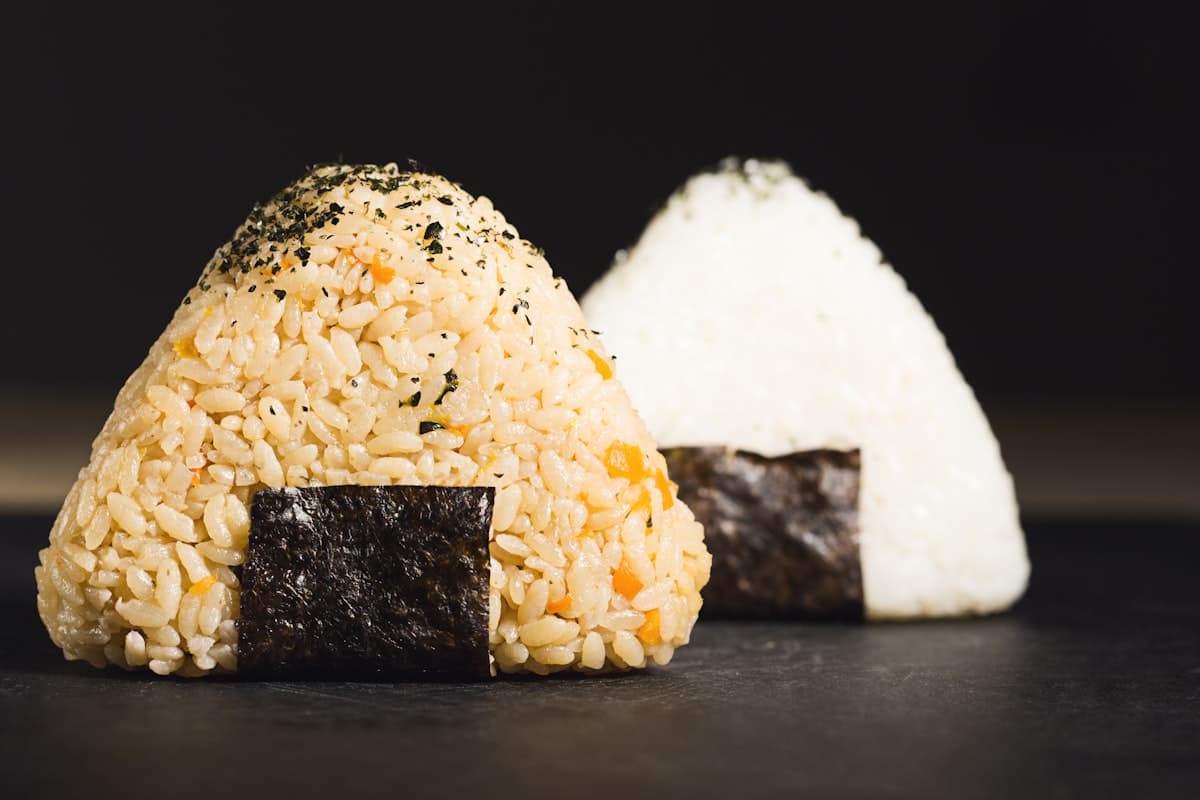
Jumeokbap (Seasoned Rice Balls)
The warm-rice mixing technique behind jumeokbap, and why packing it while hot matters more than any specific filling choice.
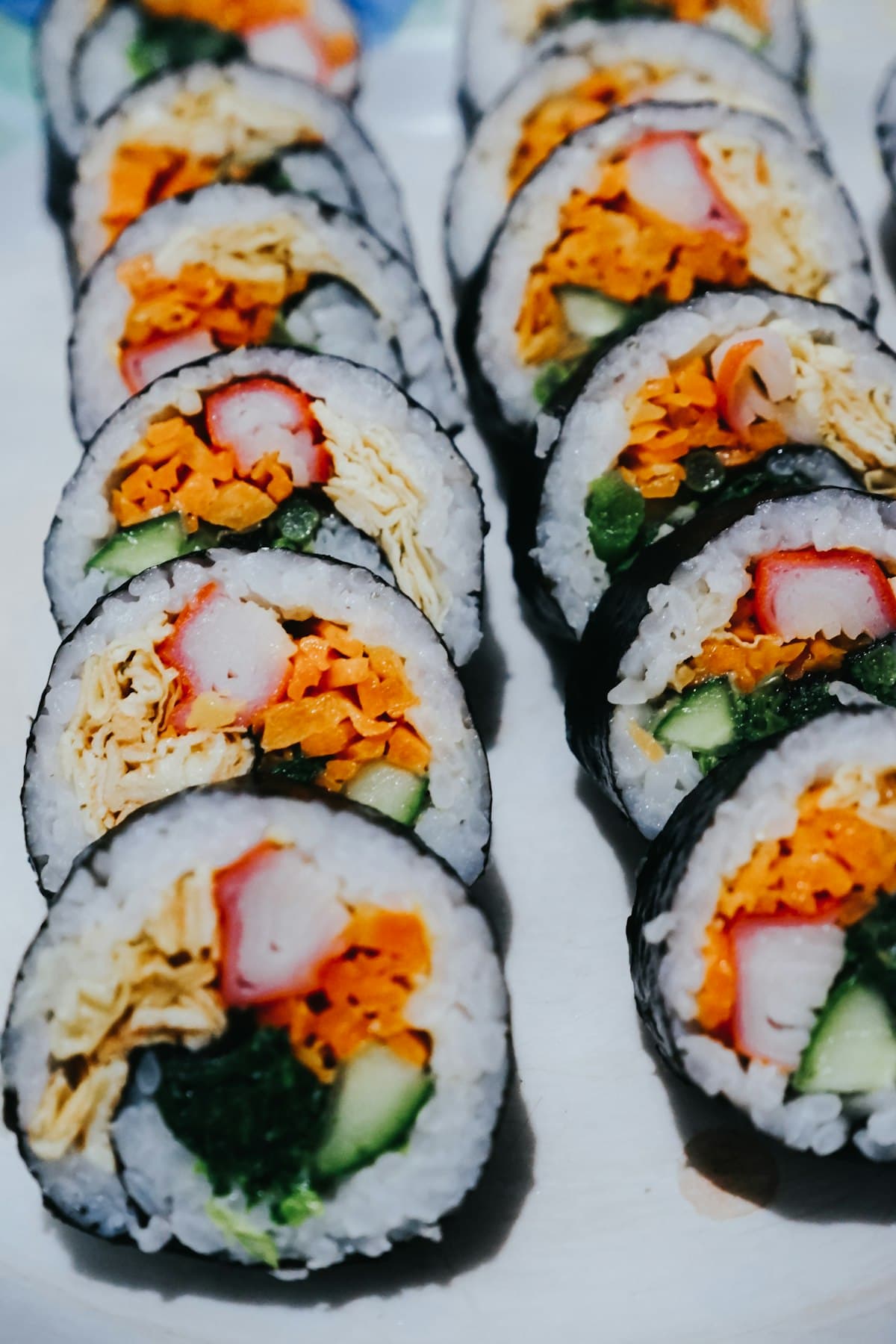
Kimbap (Korean Seaweed Rice Rolls)
Why kimbap isn't 'Korean sushi' — the sesame-seasoned rice, the cooked fillings, and the rolling technique that keeps every slice tight.