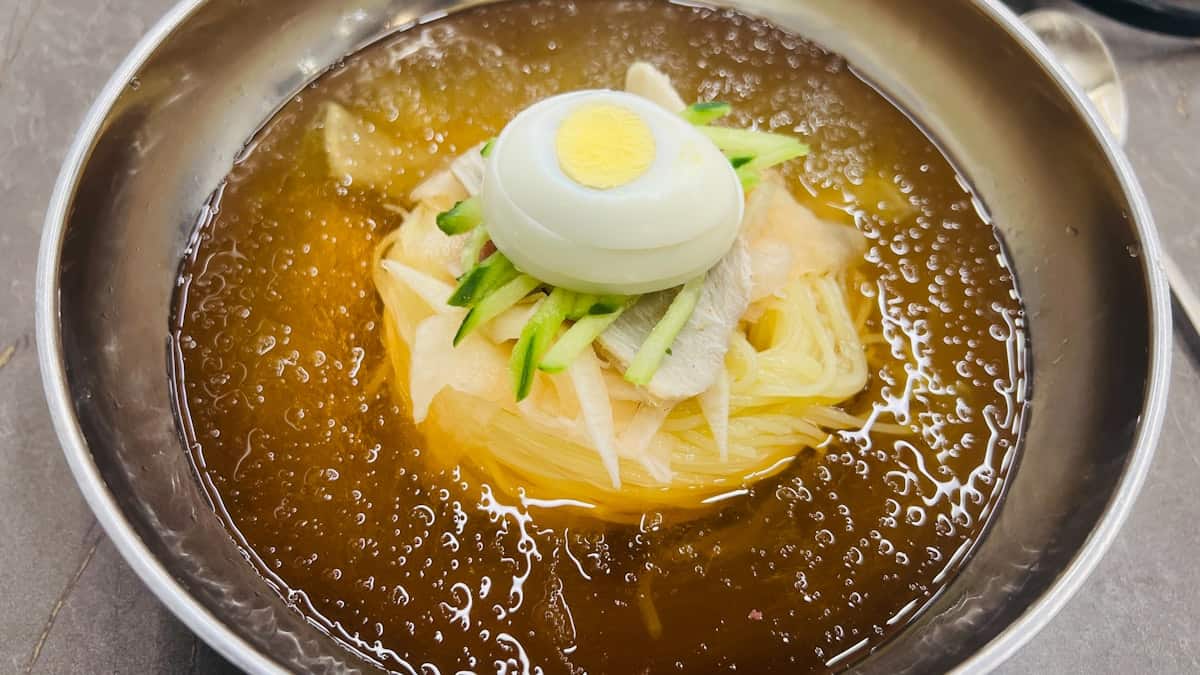
Steps
- 1
Chill the broth thoroughly — it needs to be genuinely cold, ideally with ice already in it.
- 2
Boil the noodles according to the package time, usually just a couple minutes.
- 3
Rinse the cooked noodles immediately under cold running water, rubbing them gently to remove surface starch.
- 4
Rinse again in ice water until completely cold.
- 5
Divide the noodles between two bowls.
- 6
Pour the icy broth over the noodles.
- 7
Top with cucumber, pear, egg, and beef if using.
- 8
Add a splash of vinegar and a little sugar to the broth, and serve with mustard on the side.
Did you know — Korean culture
Naengmyeon is originally a North Korean dish — specifically from Pyongyang, where it developed as 19th-century winter food built around dongchimi, the tangy radish water-kimchi that gives the broth its distinctive edge. The now-standard version wasn't written down until 1911, when the Pyongyang Korean Noodle Association codified the recipe for the first time.
Naengmyeon only works because buckwheat noodles have almost no gluten. That sounds like a limitation until you realize it's the whole point — a noodle that's too fragile to hold together in warm broth turns out to be exactly right in a cold one, since it doesn't need the same structure.
The dish is originally from Pyongyang, in what's now North Korea, developed as a winter food in the 19th century around the same time families were making dongchimi — the watery, tangy radish kimchi that gives Pyongyang-style naengmyeon its distinctive cold broth. The version most people know today was actually written down and standardized in 1911, when the Pyongyang Korean Noodle Association put the recipe on paper for the first time.
Rinsing the noodles isn't a garnish step, it's the difference between naengmyeon and a bowl of mush. Boiled noodles carry a layer of surface starch that turns the broth cloudy and gluey if it's not rinsed off — cold water, twice, is what keeps the broth clean and the noodles properly springy.
Mul or bibim — two different dishes
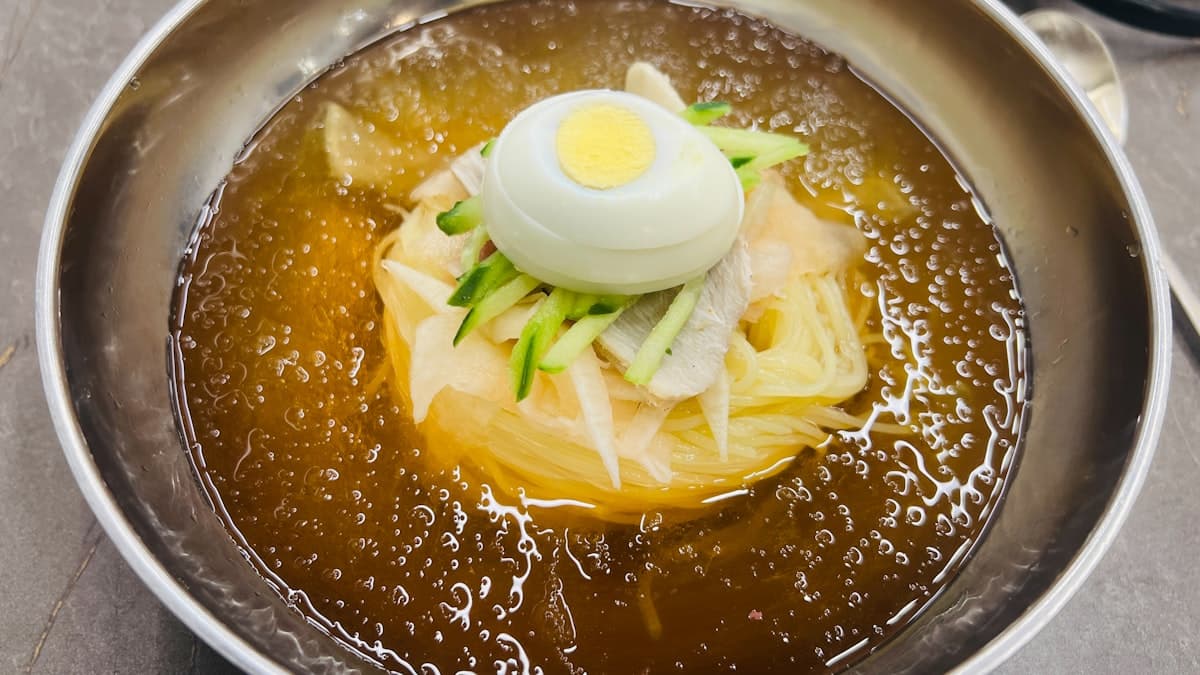
Mul naengmyeon is the cold-broth version: noodles in an icy, faintly sour beef-and-radish broth. Restrained, refreshing, and the one people mean by default. See mul naengmyeon.
Bibim naengmyeon has no broth at all — the noodles are tossed in a fierce gochujang sauce. See bibim naengmyeon.
They share noodles and garnishes and nothing else. Ordering one expecting the other is a common disappointment.
The noodles
Naengmyeon noodles are made from buckwheat with sweet potato or potato starch, which gives them their grey colour and their distinctive springy, almost rubbery chew. That chew is the point, not a flaw.
Cook them fast — usually 2–3 minutes, and they go from right to overcooked quickly. Follow the packet, and taste rather than trusting the clock.
Rinse them hard in cold water, rubbing between your hands until the water runs clear and the noodles squeak. This strips surface starch and firms them up. Under-rinsed noodles clump into a single mass.
Then ice them. A final plunge into ice water is what makes them properly cold and taut.
The broth, and why it is slushy
Mul naengmyeon broth is beef stock and dongchimi radish-water brine, seasoned with vinegar and a little sugar, then chilled until half-frozen.
It should have ice crystals in it. Restaurants keep it in a slush machine. At home, put the broth in the freezer for a couple of hours and break it up with a fork before serving.
That slush is not presentation — a broth served merely cold tastes flat and salty by comparison, because cold suppresses the perception of salt and the melting ice keeps diluting it as you eat.
Make it a day ahead. It needs the time to chill properly and the flavours to settle.
Garnishes, and the mustard and vinegar
Sliced beef brisket, boiled and chilled. Cucumber, julienned. Korean pear, sliced thin — its sweetness against the sour broth is characteristic. Half a boiled egg. Pickled radish.
Yeongyeoja mustard and vinegar are added at the table, not in the kitchen. Regulars taste the broth first, then adjust. That Korean mustard is sharp in a sinus-clearing way quite unlike Western mustards, and it needs mixing fresh — its heat fades within the hour.
Timing and making it ahead
The broth is the make-ahead component and genuinely needs a day. Beef stock, chilled, skimmed of fat, mixed with dongchimi brine, then frozen partway.
Everything else happens in the last ten minutes. Noodles cooked, rinsed, iced; garnishes sliced; assembled and eaten immediately.
Do not assemble ahead. The noodles absorb broth and soften, and the whole appeal is the contrast between taut noodles and icy liquid.
What to serve it with
Naengmyeon's traditional place is after Korean BBQ — the cold, sour noodles cutting through the richness of grilled meat. That sequence is standard in a Korean grill restaurant and worth replicating.
- After samgyeopsal or galbi
- With mandu on the side
- On its own in summer, which is when most of it is eaten
Troubleshooting
Noodles clumped together? Not rinsed enough, or rinsed with water that wasn't cold enough. Keep rinsing under running water until it runs clear, then finish in ice water.
Broth tastes watery? It needs the vinegar and sugar balance to actually taste like something — plain broth on its own reads as bland even if it's flavorful beef stock.
No dongchimi on hand? A good beef broth with a splash of extra vinegar gets you most of the way to the right tang, though it won't be quite as complex as the real radish-kimchi version.
Common questions
What is the difference between mul naengmyeon and bibim naengmyeon?
Mul naengmyeon is served in an icy, tangy broth; bibim naengmyeon has no broth and is tossed in a spicy gochujang sauce. Same noodles and garnishes, completely different dishes.
Why is naengmyeon broth slushy?
Because it is served half-frozen, with ice crystals through it. A broth that is merely cold tastes flat by comparison — cold dulls saltiness, and the melting ice keeps the balance shifting as you eat. Freeze it for a couple of hours and break it up with a fork.
Why are naengmyeon noodles chewy?
They are made from buckwheat with potato or sweet potato starch, which produces a springy, almost rubbery texture. That chew is characteristic of the dish rather than a sign of overcooking — Korean restaurants provide scissors precisely because the noodles are hard to bite through.
What do you add to naengmyeon at the table?
Korean mustard (yeongyeoja) and vinegar, both adjusted to taste. Taste the broth first — restaurants season it differently, and the point is to adjust rather than dose it blindly.
When do Koreans eat naengmyeon?
In summer above all, and after grilled meat year-round. The cold, sour noodles are a deliberate counterweight to rich barbecue, which is why they appear at the end of a Korean BBQ meal.
Recommended products
- Naengmyeon noodles
- Large mixing/serving bowls
More to cook
All Rice & Noodles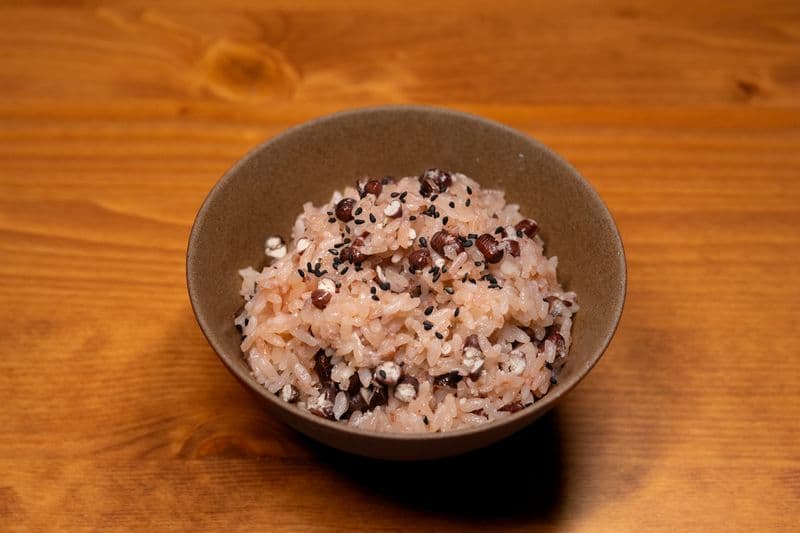
Ogokbap (Five-Grain Rice)
Why each grain needs its own soak time before they ever meet in the same pot, and how skipping that step leaves some grains raw and others mushy.
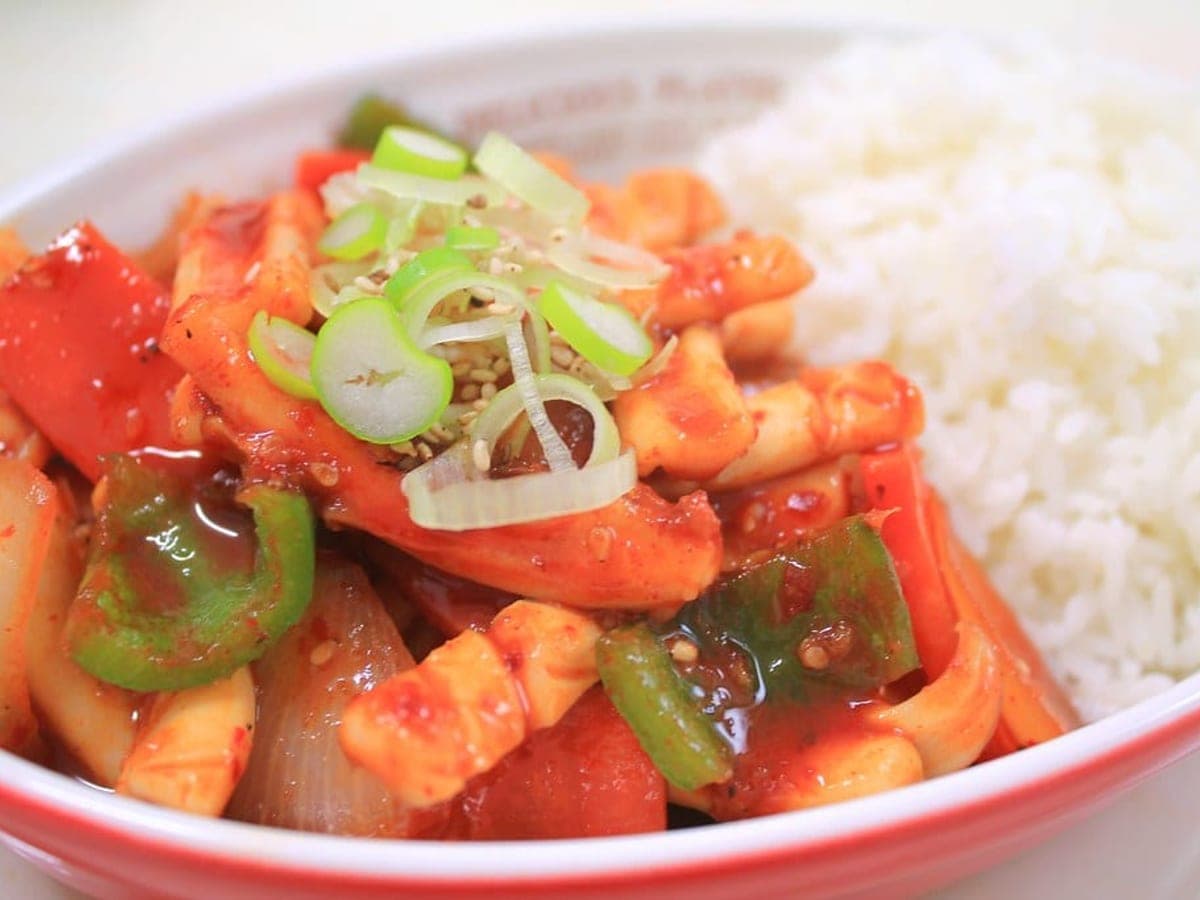
Ojingeo Deopbap (Spicy Squid Rice Bowl)
Why squid for a deopbap is scored and cooked in under three minutes, and how the sauce is thickened in the pan so it sits on the rice instead of soaking in.
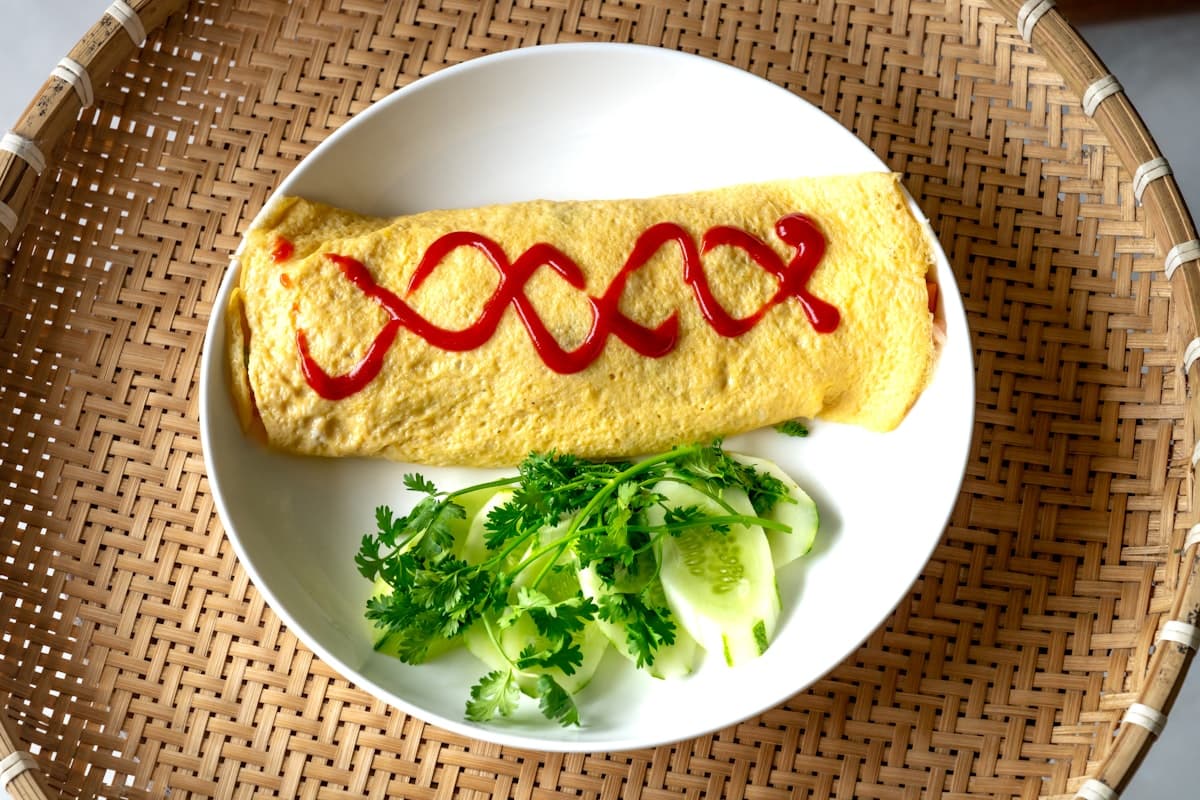
Omurice (Korean-Style Omelette Rice)
The soft-set omelette technique behind omurice, and why the rice gets fried before the egg ever touches the pan.