Steps
- 1
While the rice is still warm, mix in the sesame oil and salt. Let it cool to room temperature before rolling — hot rice tears the seaweed.
- 2
Prepare every filling separately and have them all ready before you start rolling.
- 3
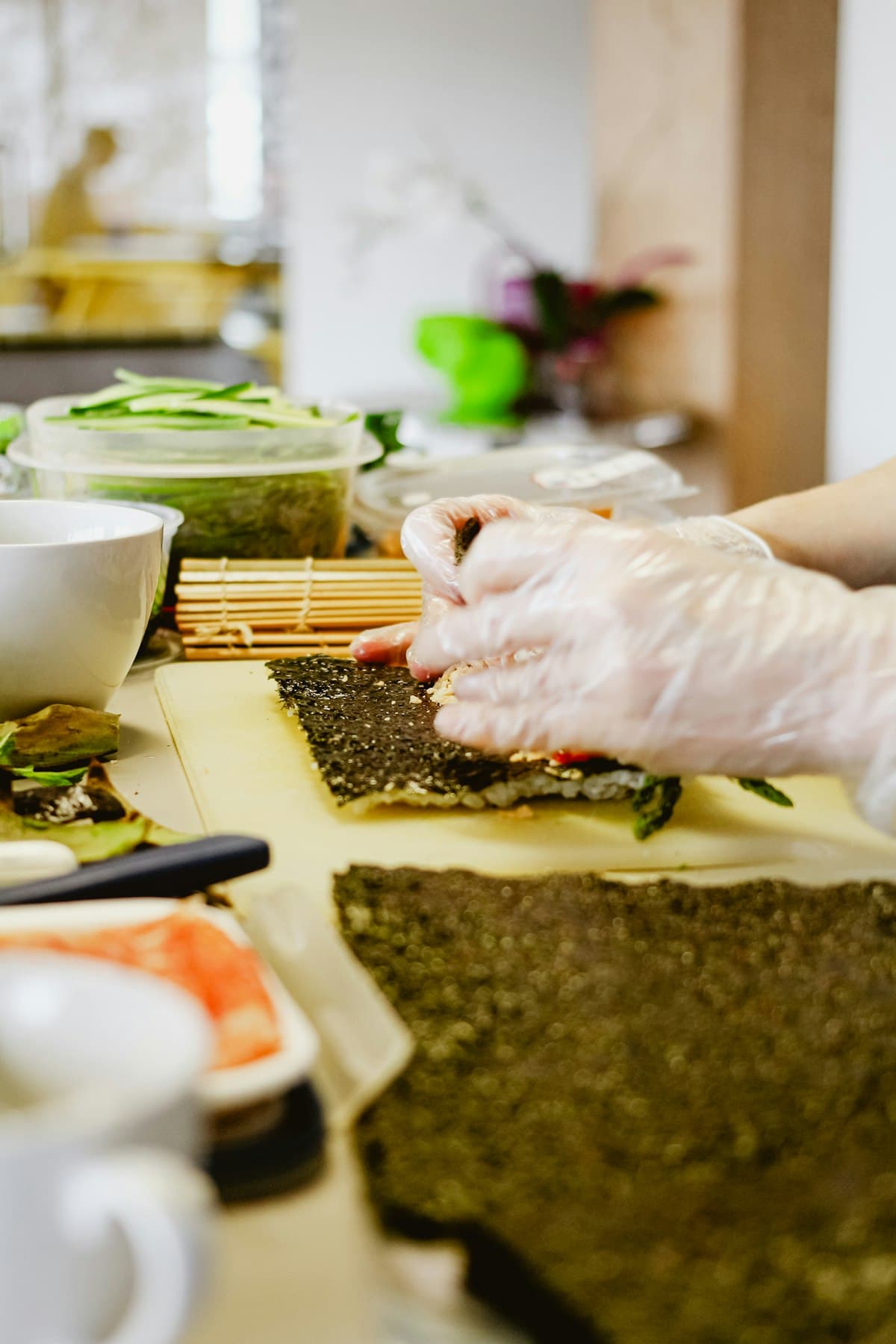
Lay a sheet of gim shiny-side down on a bamboo mat.
- 4
Spread a thin, even layer of rice over about three-quarters of the sheet, leaving the top edge bare.
- 5
Line up the fillings in a row across the center — don't overfill, or the roll won't close.
- 6
Roll firmly using the mat, applying even pressure the whole way, tucking as you go.
- 7
Let the roll sit seam-side down for a minute before slicing.
- 8
Slice with a sharp knife, wiping the blade between cuts so it doesn't drag.
Did you know — Korean culture
Whether kimbap descended from Japanese sushi or from an older, independent Korean tradition of wrapping rice in seaweed is a real, ongoing argument, not settled food trivia. What's not disputed: the word "kimbap" itself first appeared in print in a Korean newspaper in 1935 — which makes today's cooked-fillings, no-raw-fish version considerably older than most people assume.
Kimbap gets called "Korean sushi" constantly, and it's close enough to be confusing but wrong enough to matter if you're actually making it. Sushi rice is seasoned with vinegar and sugar; kimbap rice gets sesame oil and salt. Sushi can hold raw fish; kimbap fillings are always cooked or pickled. No wasabi, no soy-sauce dip — kimchi does that job here instead.
Whether kimbap grew out of Japanese-occupation-era sushi or descended independently from a much older Korean tradition of wrapping rice in seaweed is still genuinely debated. Either way, the word itself only shows up in print for the first time in a 1935 newspaper — recent, as far as food history goes.
The real technique isn't the roll, it's the prep before it. Every filling gets made and seasoned on its own, cooled, and lined up before a single sheet of seaweed comes out. Rolling is the fast part; getting six components ready is where the time actually goes.
Seasoning the rice
Kimbap rice is seasoned with sesame oil and salt, not vinegar. This is the clearest difference from sushi, and using seasoned sushi rice makes it taste immediately wrong.
Season while the rice is still warm and fold rather than stir, so the grains stay intact.
Use short-grain rice — see which rice to buy. It needs to hold together under pressure without turning to paste.
Let it cool to just above room temperature before rolling. Hot rice steams the seaweed limp; cold rice will not compact.
Fillings, and the rules that actually apply
Almost anything goes in, but three constraints matter:
Everything must be cooked or cured — kimbap contains no raw fish. It is picnic and lunchbox food, built to travel.
Everything must be dry. Wet fillings are the main cause of a soggy roll. Squeeze the spinach, drain the tuna hard, pat everything down.
Everything gets seasoned on its own before it goes in, the same principle as bibimbap.
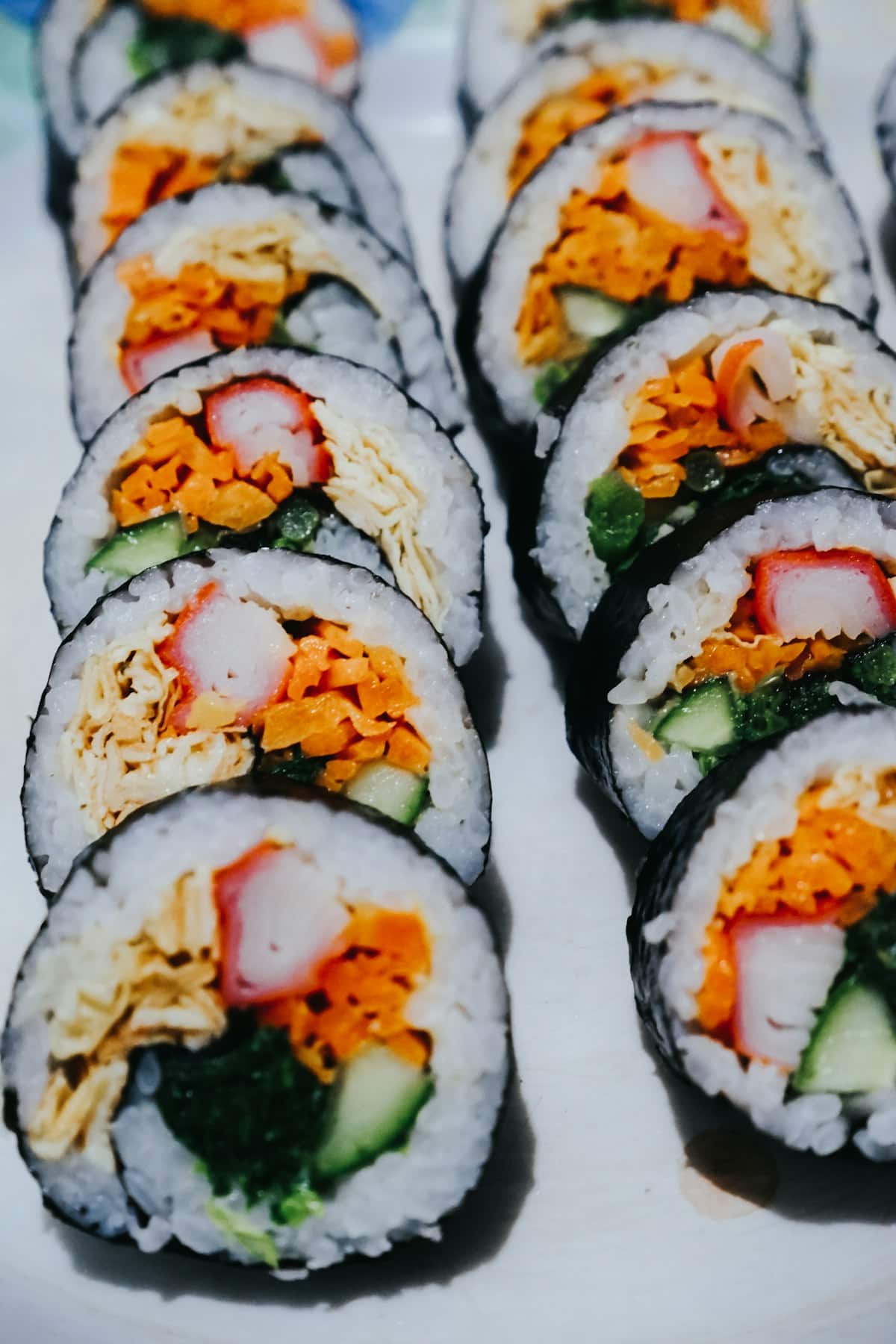
The standard set: danmuji (yellow pickled radish), spinach, carrot, egg strips, imitation crab or ham, burdock. Common variations: tuna with mayo, bulgogi, cheese, kimchi.
Rolling it tightly
Rice goes on thinner than instinct suggests — a single layer through which you can still see the seaweed — covering about three-quarters of the sheet, with the far edge left bare to seal.
Rolling is a pulling motion, not a pushing one. After each turn, pull the mat back against the roll to compress before continuing. This is the difference between a roll that survives slicing and one that collapses.
Brush the finished roll with sesame oil — it stops the seaweed drying and is also how it gets its shine.
Wet the knife and wipe it between cuts. A dry blade drags and tears.
Timing and making it ahead
About an hour for a batch, most of it preparing fillings.
Prep fillings a day ahead — cooked and seasoned vegetables keep fine. Rice and rolling should happen the same day.
Roll a few hours before eating at most. Kimbap is at its best within about four hours.
Storing — the rule people get wrong
Do not refrigerate kimbap. Cold hardens the rice into something chalky, and it never fully recovers. This is why it is sold at room temperature and eaten the same day.
Keep it wrapped, at room temperature, and eat it within the day. Cut it just before eating rather than in advance.
Leftovers the next day: the standard Korean answer is to fry it. Dip the slices in beaten egg and pan-fry them — gyeran kimbap — which is genuinely good and not a consolation prize.
What to serve with kimbap
- Tteokbokki — the classic street-food pairing, with the kimbap dipped in the sauce
- Eomuk guk — fish cake broth
- Danmuji on the side as well as inside
- Nothing at all. Kimbap is portable food and works alone.
Troubleshooting
Roll won't hold together? Usually overfilled, or the rice layer went all the way to the top edge. Leave a bare strip of seaweed at the top — that's what seals the roll shut.
Seaweed tore while rolling? The rice was probably still warm. Let it cool to room temperature first; hot rice steams the seaweed and makes it brittle.
Slices falling apart when cut? Let the roll rest a minute before slicing, and use a sharp knife with a clean, single motion per cut rather than sawing back and forth.
Common questions
What is the difference between kimbap and sushi?
The rice, mainly: kimbap rice is seasoned with sesame oil and salt, sushi rice with vinegar and sugar. Kimbap fillings are cooked or cured rather than raw, and the roll is brushed with sesame oil. They are related but taste quite different.
Why does my kimbap fall apart when I cut it?
It was rolled too loosely, or the knife was dry. Pull the mat back against the roll at every turn to compress it, and wet the blade and wipe it between each cut.
Should you refrigerate kimbap?
No. Refrigeration hardens the rice into a chalky texture that doesn't recover. Keep it wrapped at room temperature and eat it the same day — that's why it's sold that way.
What can I do with leftover kimbap?
Dip the slices in beaten egg and pan-fry them. Gyeran kimbap is a standard Korean use for day-old rolls and is genuinely good rather than a rescue job.
Why is my kimbap soggy?
Wet fillings. Squeeze spinach thoroughly, drain tuna until it stops dripping, and pat everything dry before it goes in. Too much rice is the other cause — it forces the seam open.
Recommended products
- Bamboo rolling mat
- Roasted gim (seaweed sheets)
More to cook
All Rice & Noodles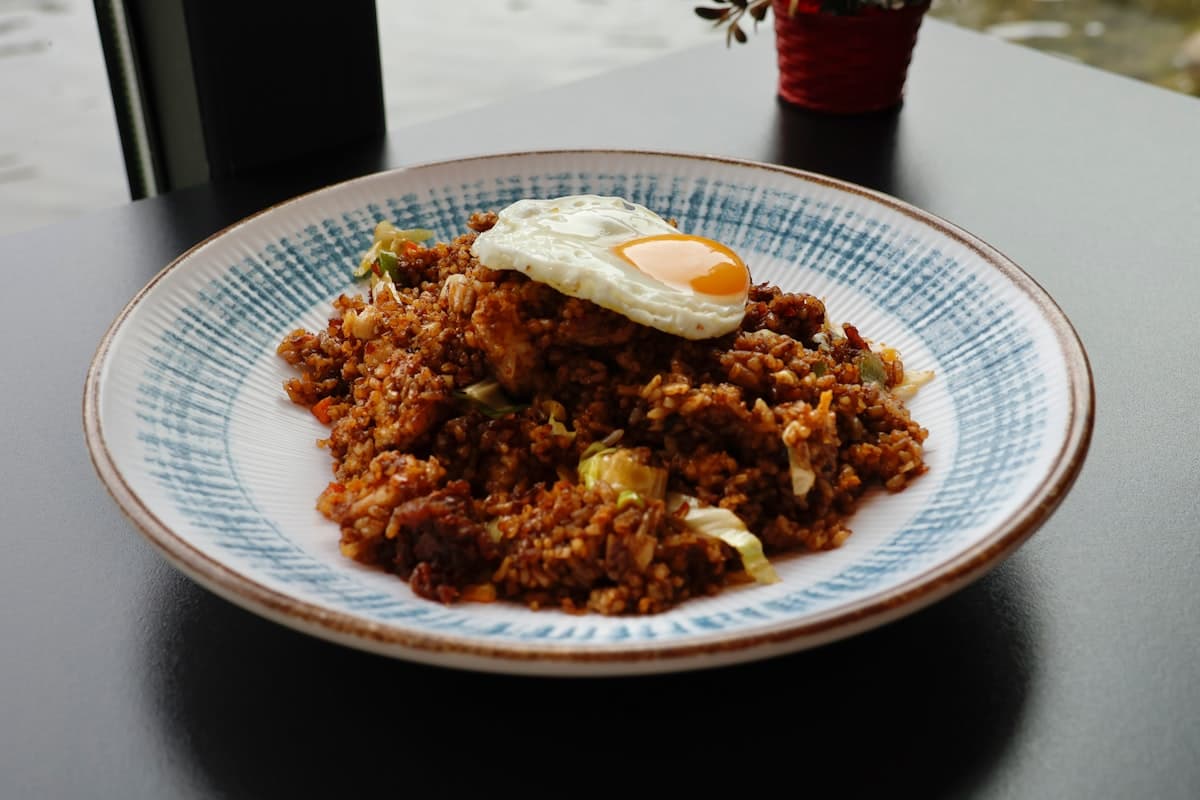
Kimchi Bokkeumbap (Kimchi Fried Rice)
Why kimchi bokkeumbap wants old, over-fermented kimchi specifically, and the high-heat technique that keeps the rice from turning mushy.
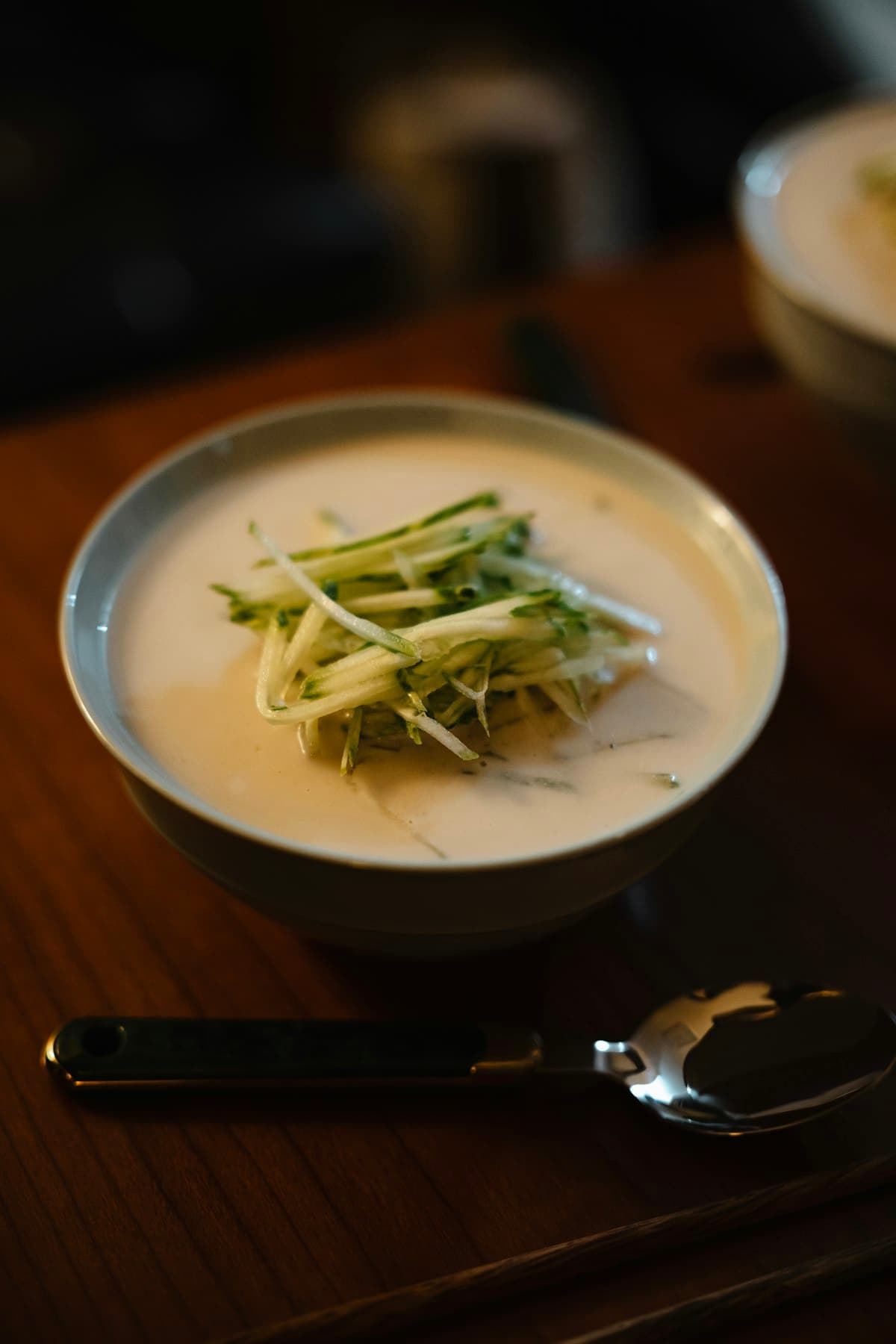
Kongguksu (Cold Soy Milk Noodle Soup)
The soybean-blending technique behind kongguksu's creamy broth, and why the beans need a real soak, not a shortcut.
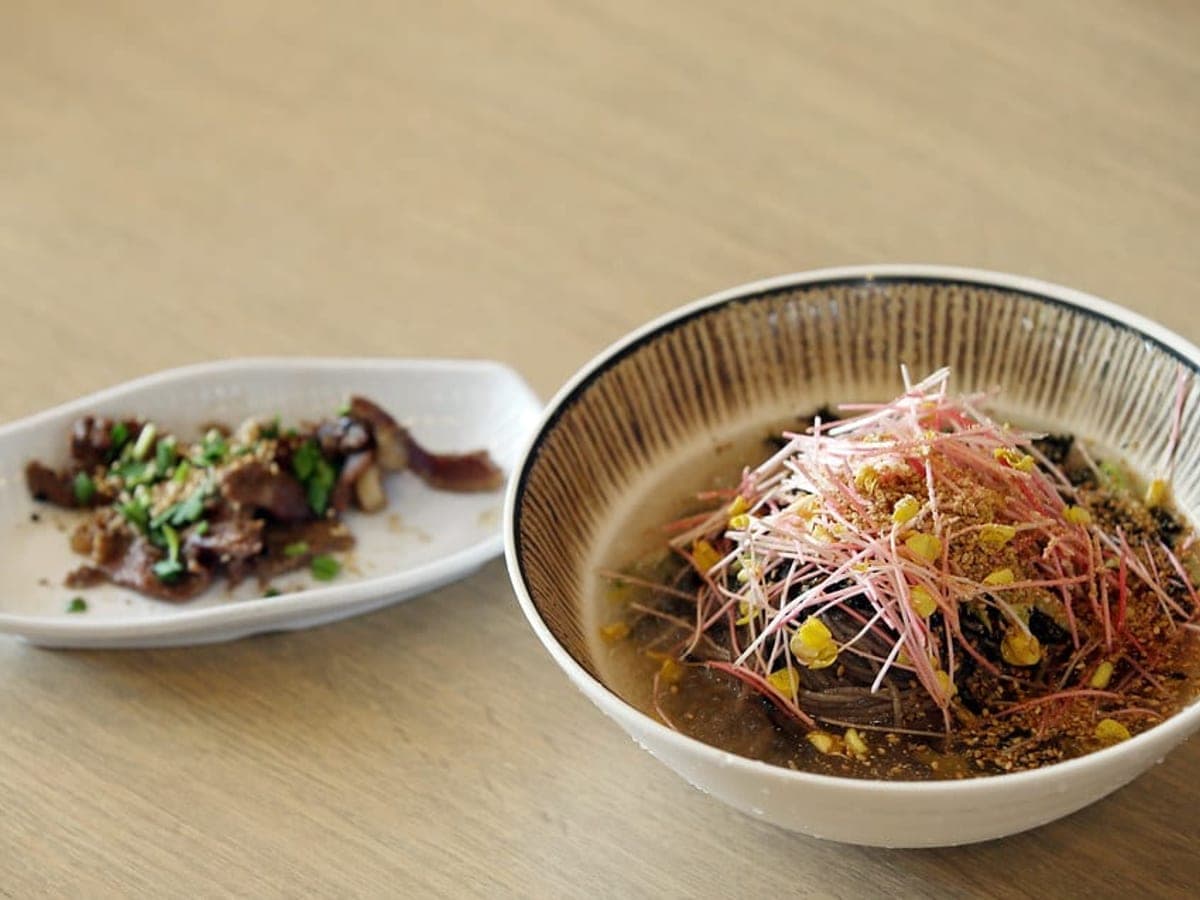
Makguksu (Chilled Buckwheat Noodles)
Why makguksu is dressed rather than drowned, and how the buckwheat noodles are rinsed hard so the sauce clings instead of sliding straight off.