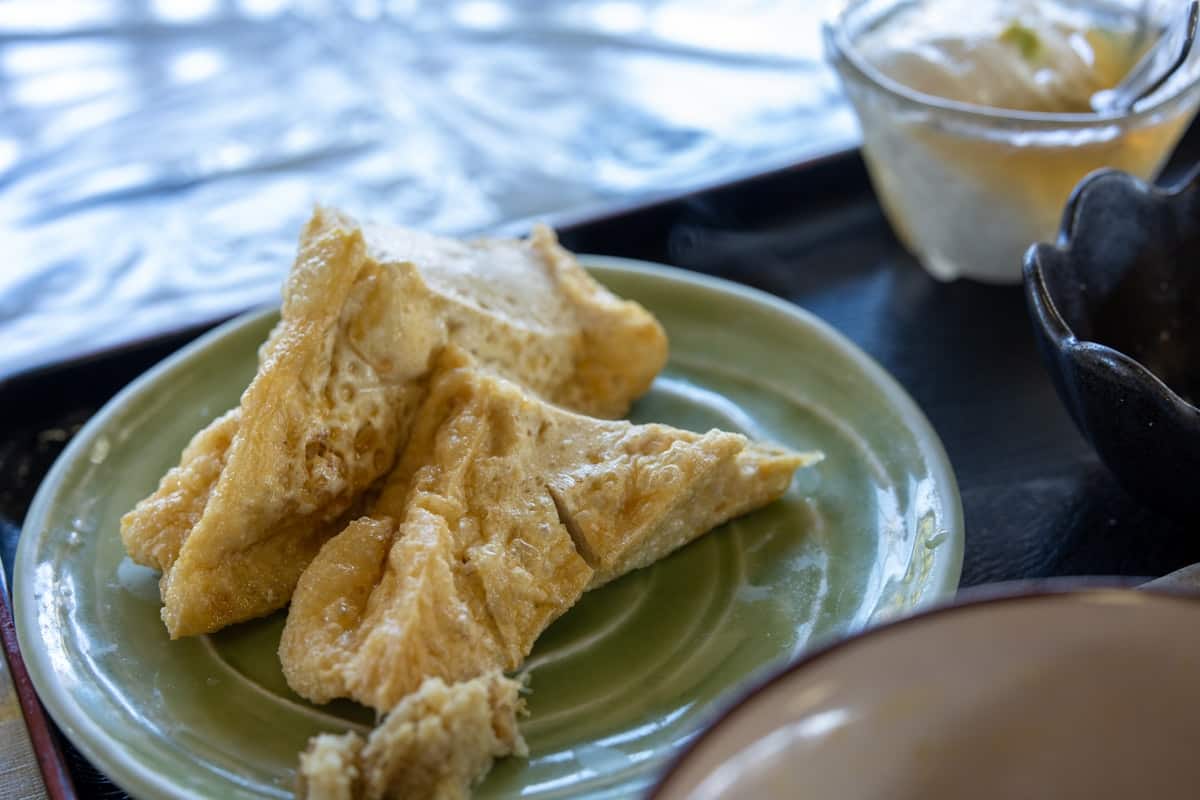
Steps
- 1
Gently squeeze excess liquid from each tofu pouch.
- 2
Whisk together rice vinegar, sugar, and salt, then fold into the warm rice.
- 3
Fold in sesame seeds and chopped pickled vegetables if using.
- 4
Let the seasoned rice cool slightly.
- 5
Open each tofu pouch and spoon in the seasoned rice, filling about three-quarters full.
- 6
Fold the top edges of the pouch over to close, or leave open depending on the pouch style.
- 7
Arrange on a plate and serve at room temperature.
Did you know — Korean culture
The fried tofu pouches used in yubu chobap (called yuba or aburaage) started as a byproduct of tofu-making, not a purpose-built ingredient — thin sheets of tofu skin or fried tofu slices that got hollowed and sweetened once cooks realized they made a convenient, edible pocket for seasoned rice.
Squeezing the excess liquid from the tofu pouches before filling them isn't a step to skip — pouches straight from the package are often soaked in a sweet soy liquid, and skipping the squeeze leaves the filled rice soggy rather than distinct from the wrapper.
Filling the pouches only about three-quarters full matters more than it looks. Overstuffing makes them prone to splitting at the seams, especially once they're handled or packed for later — a slightly looser fill holds together far better.
The fried tofu pouches used here (called yuba or aburaage) started as a byproduct of tofu-making, not a purpose-built ingredient — thin fried tofu slices that got hollowed and sweetened once cooks realized they made a convenient, edible pocket for seasoned rice.
Season the rice before it goes anywhere near the pouches. A little rice vinegar, sugar and salt folded through while the rice is still warm is what makes this taste finished rather than plain — the pouch is sweet, and unseasoned rice inside it tastes like an oversight. Fold, do not stir, or you will crush the grains into paste.
Troubleshooting
Pouches splitting when filled? They were probably overstuffed — leave a bit of room at the top rather than packing them completely full.
Rice tasting bland inside the pouch? Season the rice properly with the vinegar mixture before filling — the sweet pouch alone doesn't carry the whole dish.
Filling turning soggy? The pouches likely weren't squeezed of excess liquid first — give them a gentle press before filling.
Recommended products
- Seasoned fried tofu pouches (yubu)
- Rice vinegar
More to cook
All Rice & Noodles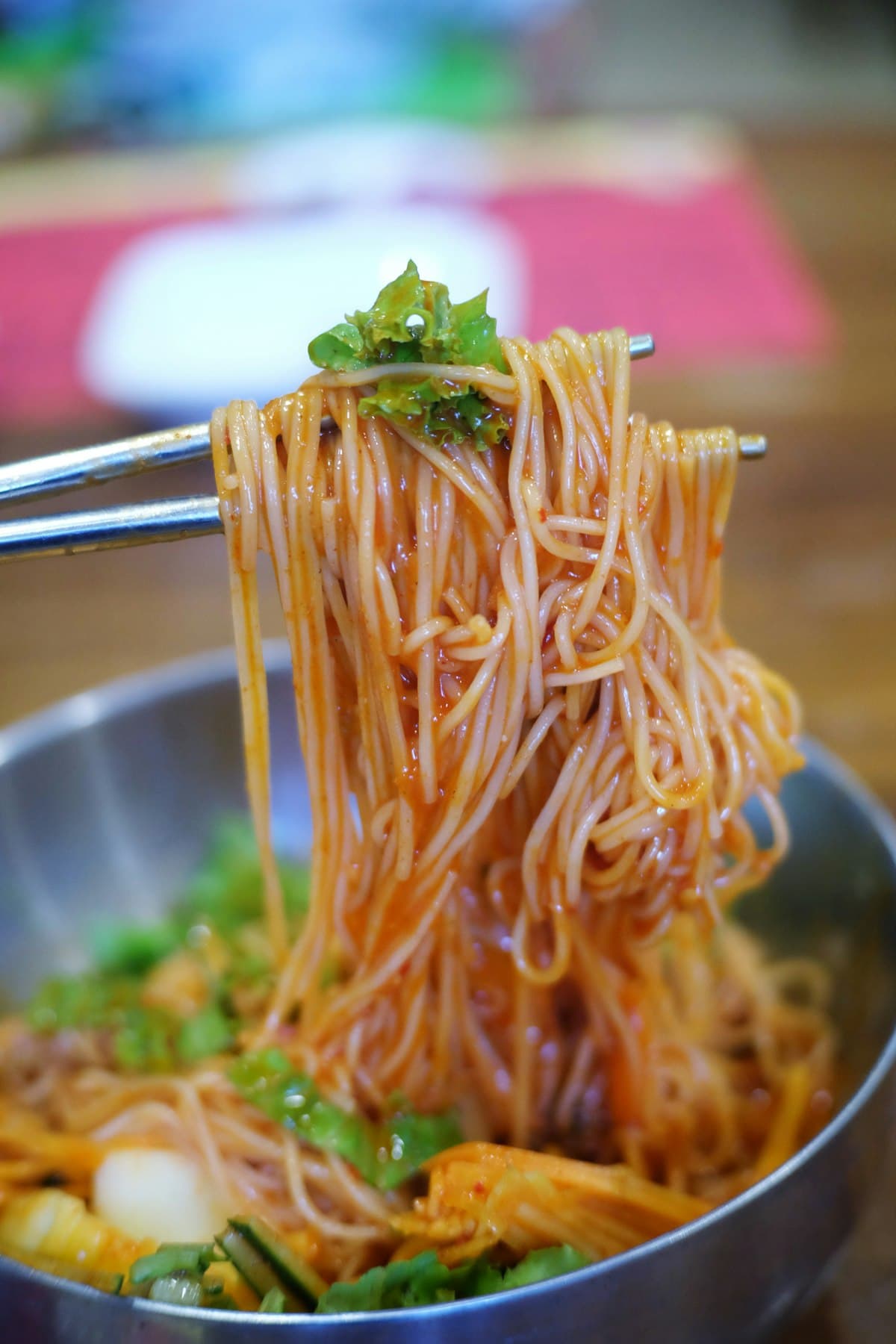
Bibim Guksu (Spicy Cold Noodles)
The thin-noodle, no-cook sauce technique behind bibim guksu, and why rinsing matters more than any other step.
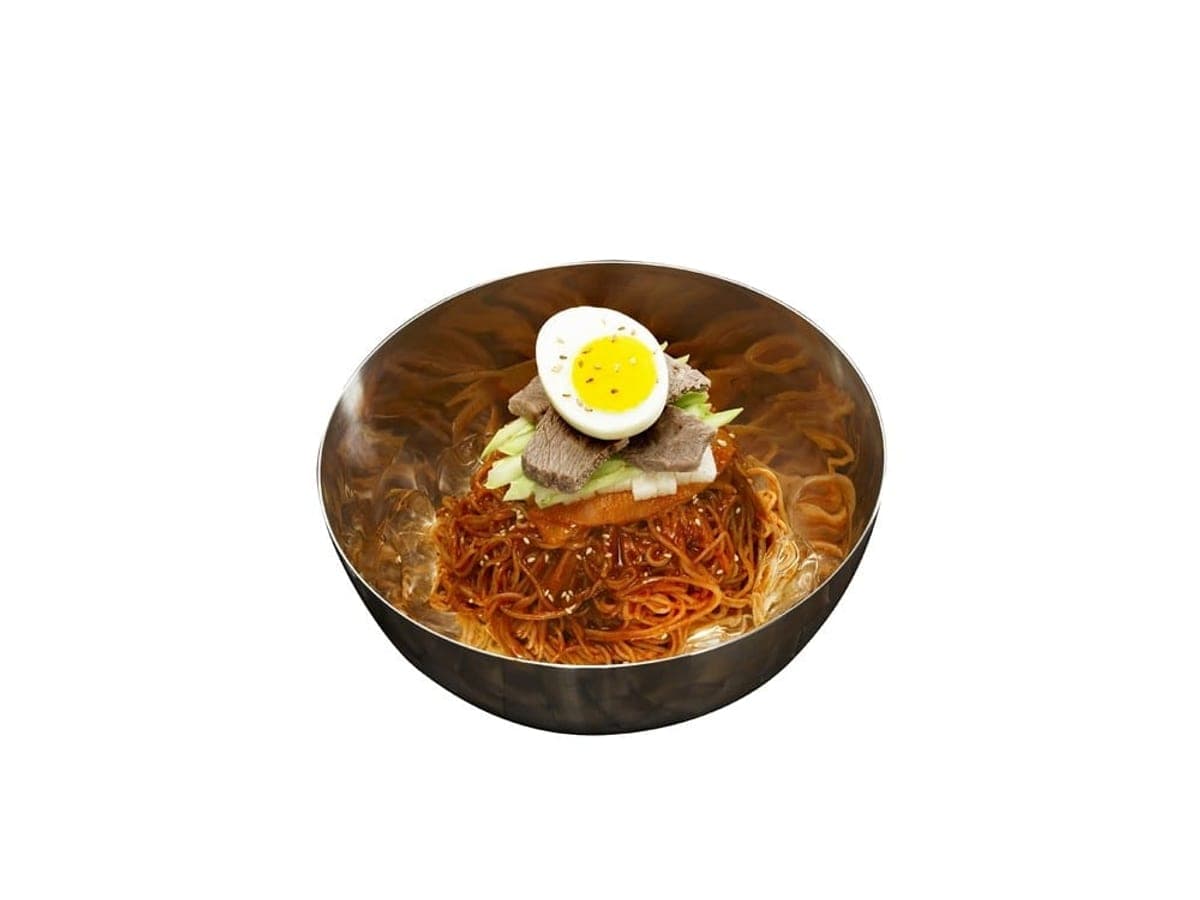
Bibim Naengmyeon (Spicy Cold Buckwheat Noodles)
Why bibim naengmyeon noodles need a hard cold-water scrub rather than a rinse, and how the sauce is built thick enough to coat noodles that carry no broth.
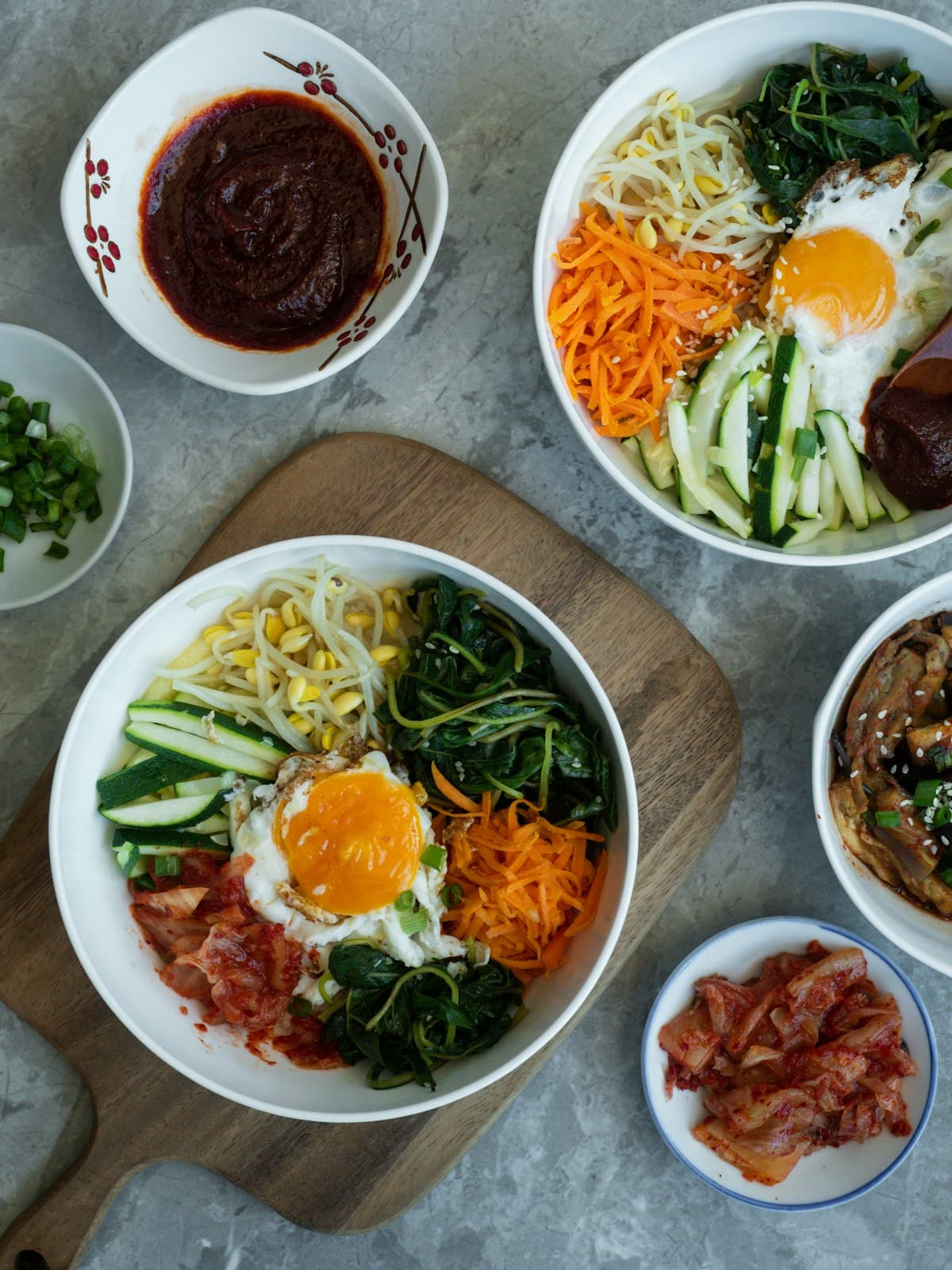
Bibimbap (Korean Mixed Rice Bowl)
The real technique behind bibimbap — five namul cooked separately, a gochujang sauce that actually balances, and the color logic most recipes skip.