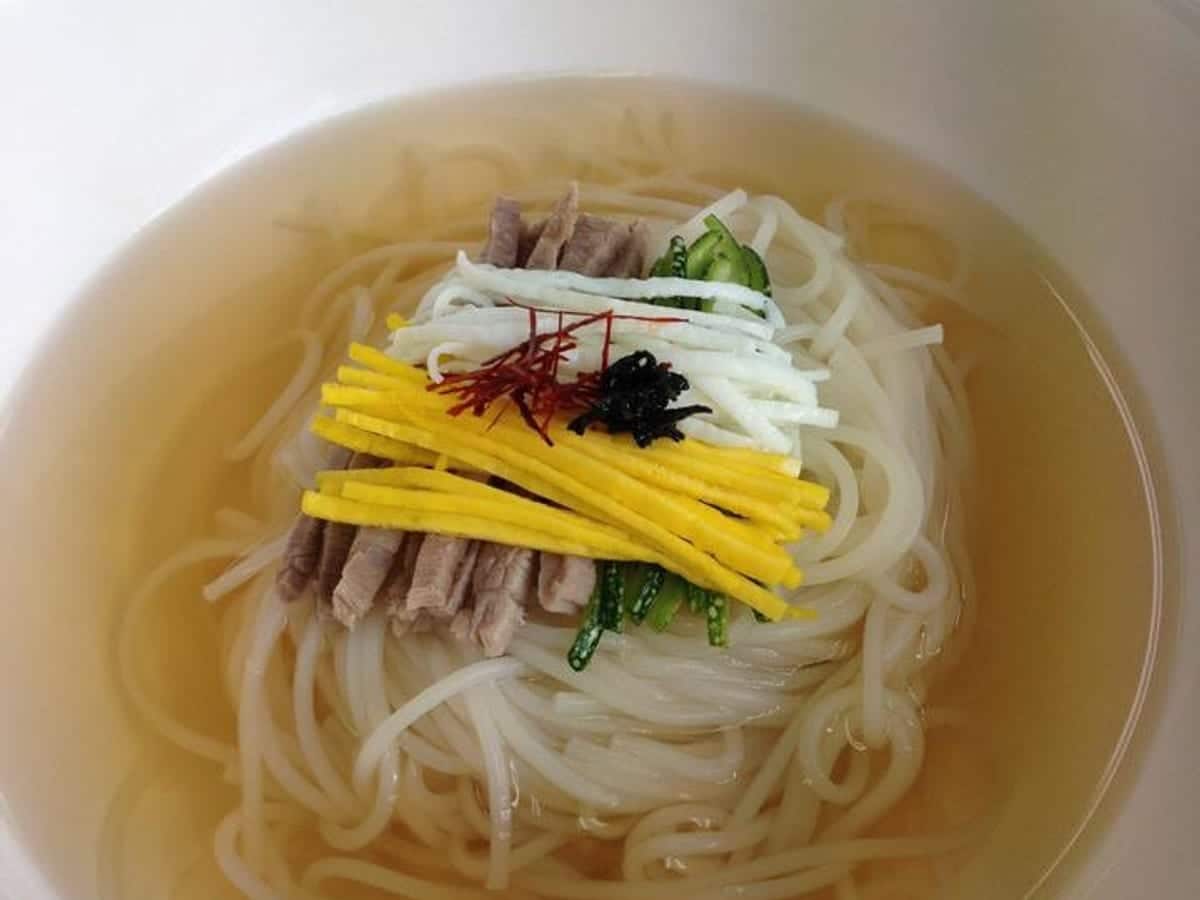
Photo: KFoodaddict · CC BY
Steps
- 1
Simmer the anchovy-kelp stock and season it with soy sauce and salt. Keep it hot.
- 2
Stir-fry the zucchini and carrot separately and briefly, so each keeps its colour.
- 3
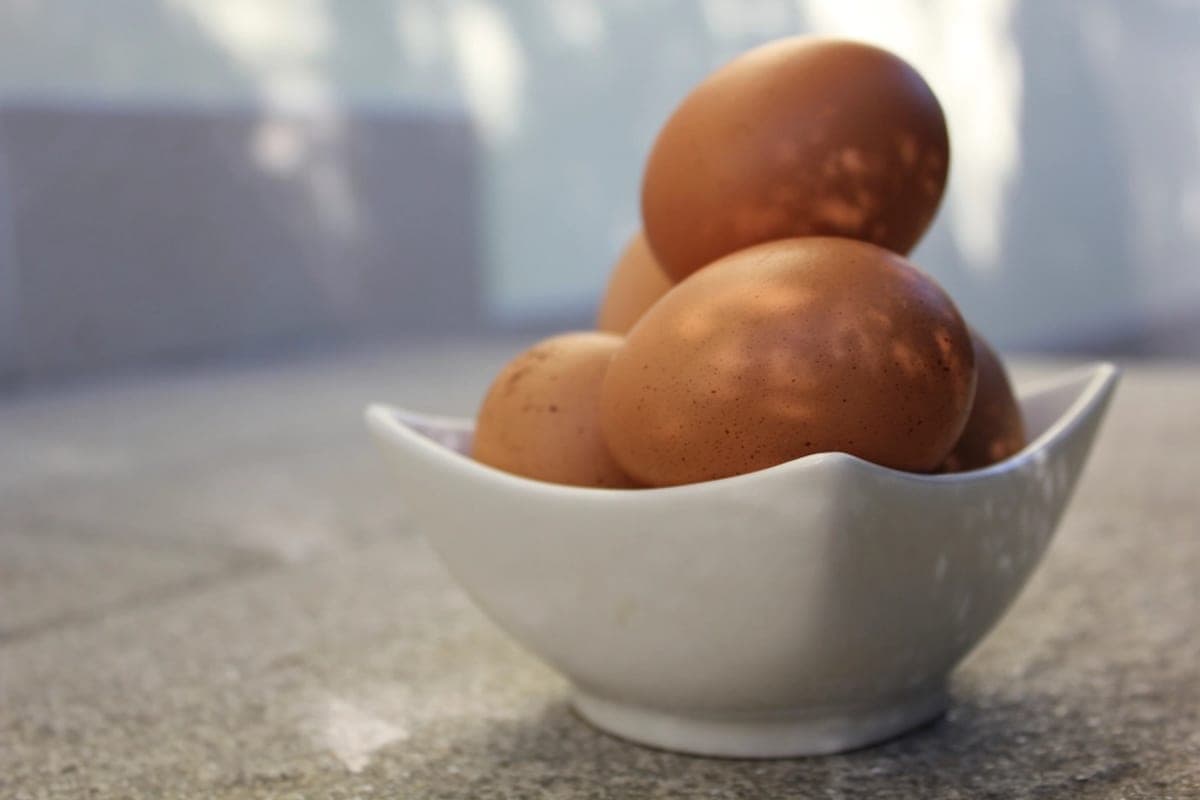
Fry the eggs into thin sheets and slice into strips.
- 4
Boil the somyeon in a separate pot of plain water for 2-3 minutes only.
- 5
Drain and rinse the noodles under cold running water until they squeak.
- 6
Divide the rinsed noodles into bowls.
- 7
Pour the hot seasoned broth over and arrange the toppings on top.
- 8
Finish with seaweed, green onion and a drop of sesame oil.
Did you know — Korean culture
Janchi means banquet, and the name is literal: these noodles were what you served at weddings and sixtieth-birthday celebrations. Long noodles symbolise long life, which is why asking an unmarried Korean when you'll get to eat their janchi guksu is a well-worn way of asking when they plan to marry.
Cooking the noodles in the broth is the single most common way to ruin this dish. Somyeon sheds a lot of starch, and boiling it in the stock turns a clear celebration soup into something cloudy and thick. Cook them in plain water, rinse them properly, and pour clean broth over at the end.
The rinse does two jobs. It strips the surface starch that would otherwise make the noodles claggy, and the cold shock firms them up so they hold their texture in hot broth rather than continuing to soften into mush.
Somyeon cooks faster than almost anything else in a Korean kitchen - two to three minutes, and it is genuinely done. Set a timer, because the window between properly springy and irretrievably soft is about ninety seconds wide.
Prepare the toppings before the noodles go anywhere near water. Egg ribbon, julienned zucchini and toasted seaweed all keep happily for half an hour; the noodles do not keep for two minutes. Cook them last, assemble fast, and carry the bowls straight to the table. A properly simmered dasima and dried anchovy stock is what separates this from noodles in salty water.
Troubleshooting
Broth gone cloudy? You cooked the noodles in it. Boil them separately in plain water.
Noodles gone soft in the bowl? They keep cooking in hot broth. Rinse them cold and assemble immediately before serving.
Soup tasting flat? The stock is doing all the work here - use a properly simmered anchovy-kelp stock, not water and soy sauce.
Recommended products
- Korean pantry staples
More to cook
All Rice & Noodles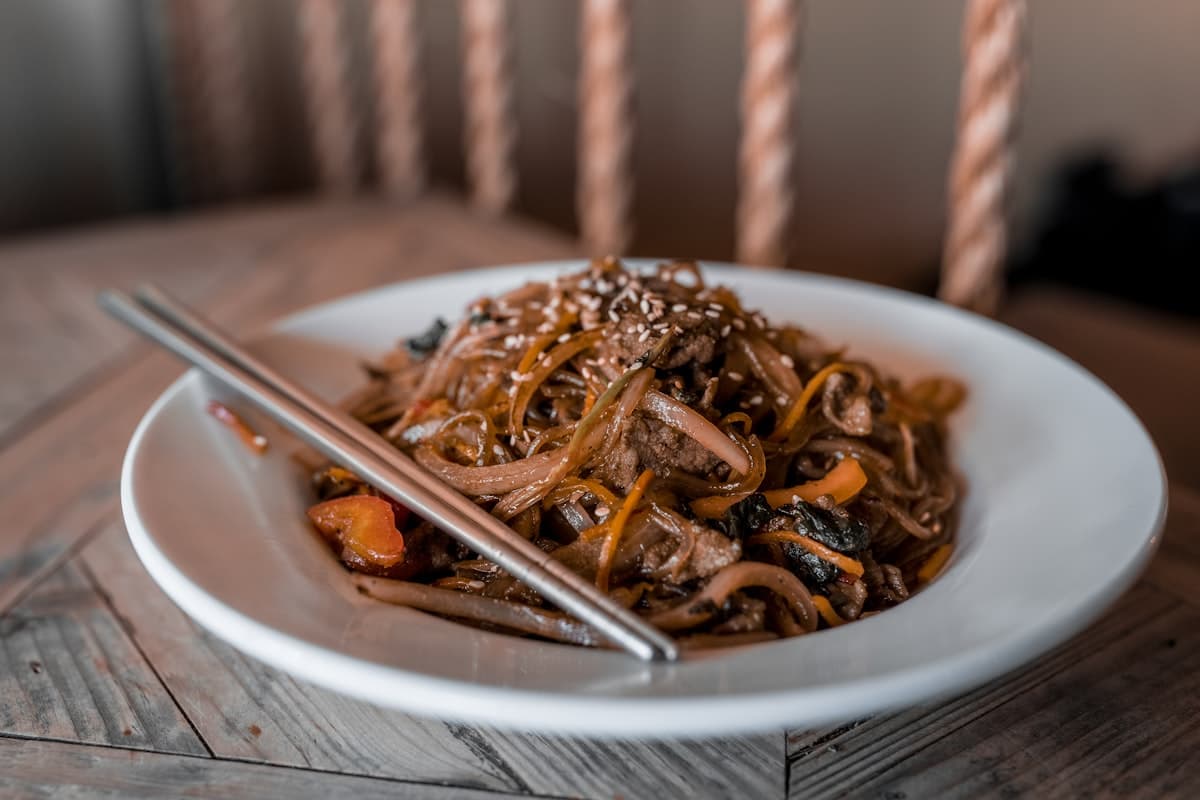
Japchae (Korean Glass Noodle Stir-Fry)
The separate-pan technique behind restaurant-quality japchae, and the one noodle mistake — overcooking dangmyeon — that ruins the texture every time.
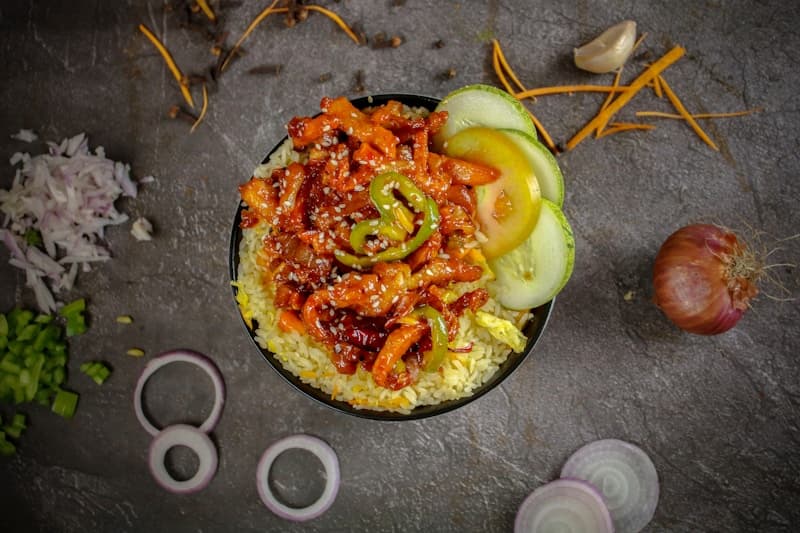
Jeyuk Deopbap (Spicy Pork Rice Bowl)
Why thin-slicing the pork and marinating it briefly, not overnight, is what keeps jeyuk deopbap tender instead of tough on a hot pan.
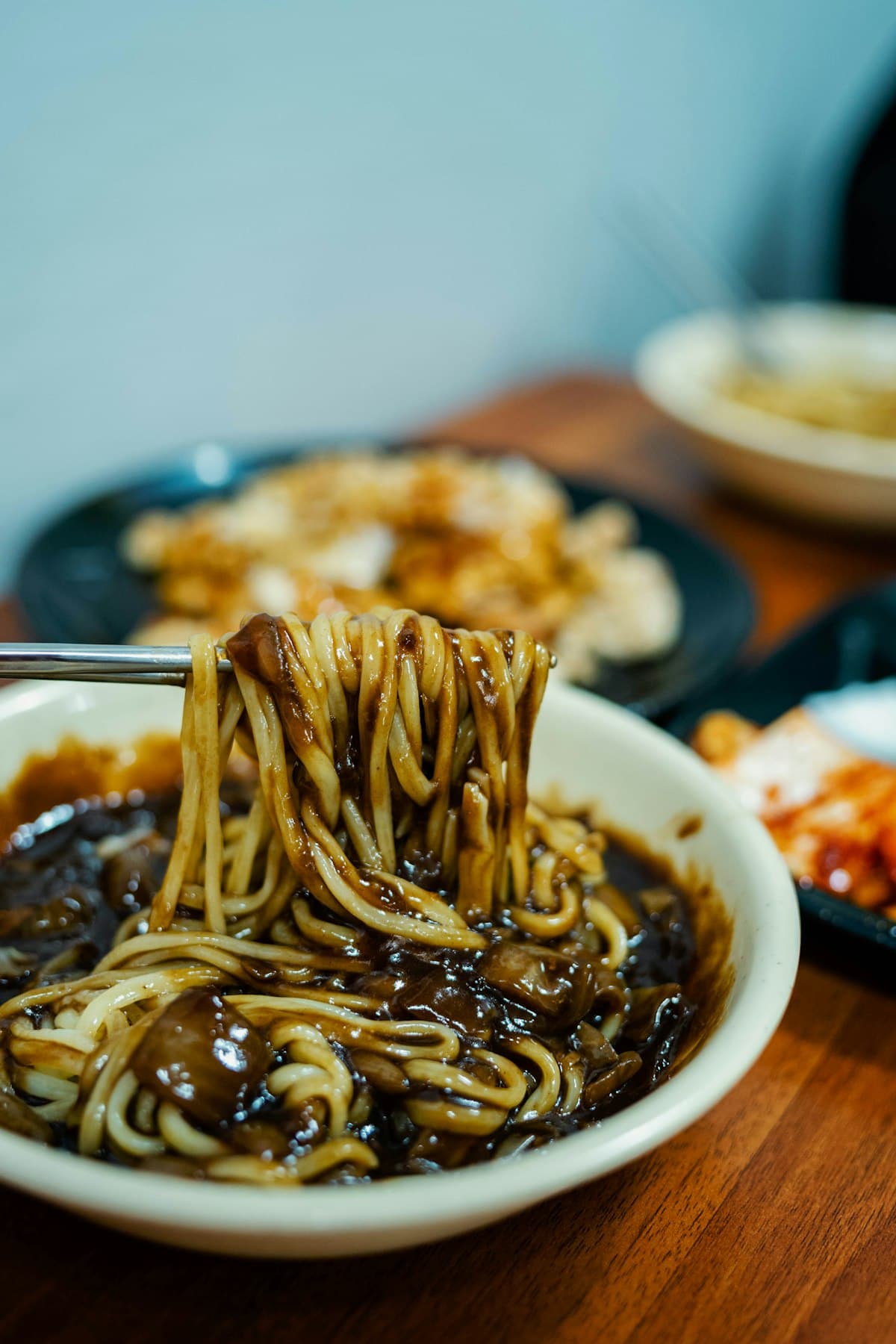
Jjajangmyeon (Black Bean Noodles)
The caramelized chunjang technique and starch-slurry thickening that makes real jjajangmyeon glossy instead of gritty.