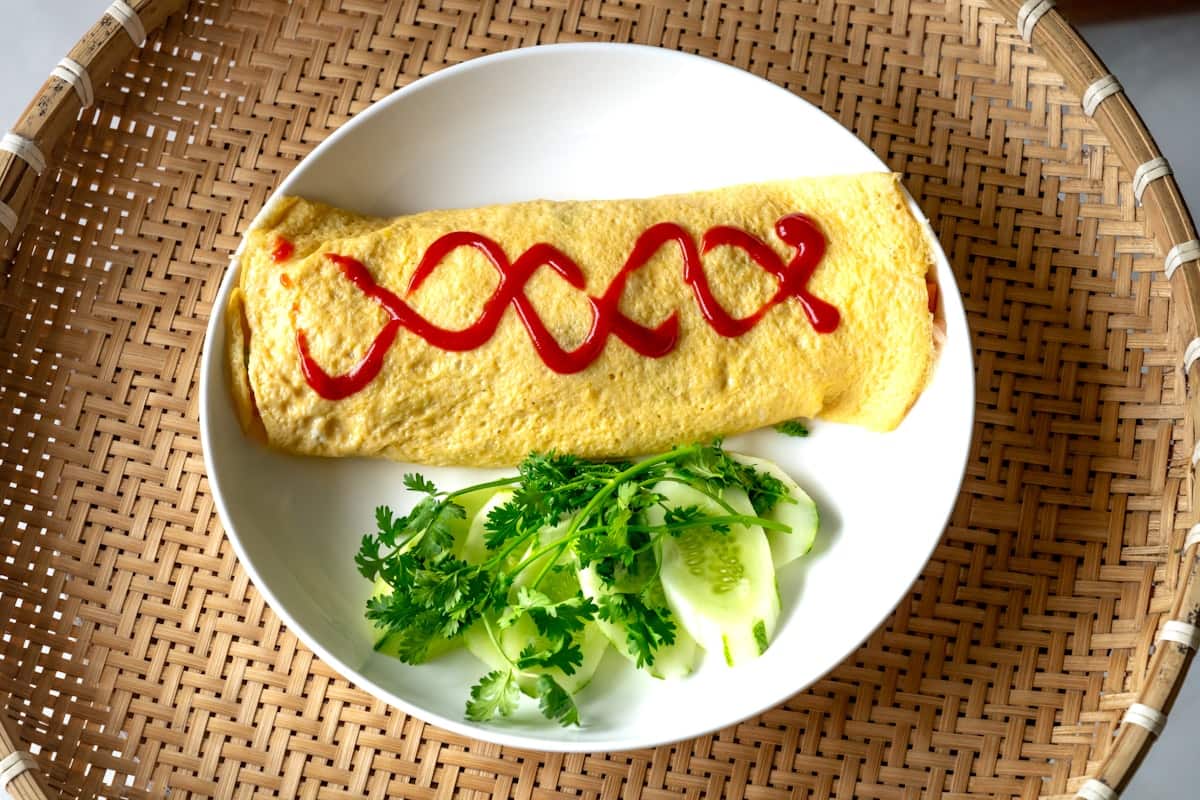
Steps
- 1
Sauté the onion and carrot in butter until softened, about 3-4 minutes.
- 2
Add the ham and peas, and stir-fry another 2 minutes.
- 3
Add the rice, breaking up any clumps, and stir-fry until evenly coated and heated through.
- 4
Stir in ketchup, soy sauce, and sugar, and cook until the rice turns an even reddish color.
- 5
Season with salt and pepper, then set the fried rice aside, shaped into an oval mound.
- 6
Whisk the eggs with milk and a pinch of salt.
- 7
Heat a separate non-stick pan over medium-low heat, add butter, and pour in the egg.
- 8
Swirl the pan so the egg spreads thin, and cook just until mostly set but still slightly wet on top.
- 9
Slide the fried rice onto the center of the egg, then fold the edges over to wrap it, using the pan or a plate to help shape it.
- 10
Invert onto a plate, seam-side down, and top with a drizzle of ketchup.

Did you know — Korean culture
Omurice isn't originally Korean — it's part of yōshoku, a category of Western-influenced dishes invented in Japan in the late 1800s and early 1900s, when Japanese cooks began adapting European ingredients like ketchup and demi-glace into distinctly Japanese comfort food. It crossed into Korea sometime in the 20th century and became its own home-cooking staple, especially for kids, to the point that a parent or older sibling drawing a face or a name in ketchup on top is practically part of the dish's identity in Korean households.
Frying the rice before the egg ever comes near the pan is what keeps the inside from turning soggy once it's wrapped. The rice needs to already be seasoned, coated in ketchup, and heated through on its own — it's not meant to finish cooking inside the egg blanket, just get wrapped and warmed a little further.
Keeping the egg on medium-low heat and pulling it while the top is still slightly wet is the same principle behind gyeran mari's rolling technique elsewhere on this site: a fully-set egg is too firm to fold and wrap cleanly around the rice mound, while a slightly underdone one drapes and seals around it without tearing.
Omurice isn't originally Korean — it's part of yōshoku, a category of Western-influenced dishes invented in Japan in the late 1800s and early 1900s, when Japanese cooks began adapting European ingredients like ketchup and demi-glace into distinctly Japanese comfort food. It crossed into Korea sometime in the 20th century and became its own home-cooking staple, especially for kids, to the point that a parent or older sibling drawing a face or a name in ketchup on top is practically part of the dish's identity in Korean households.
Troubleshooting
Egg tearing when you try to fold it over the rice? It was probably cooked too long. Pull it while the top still looks slightly underdone — it firms up the rest of the way from residual heat while wrapping.
Rice soggy on the inside? The rice needs to be dry and well-fried before it ever meets the egg — day-old rice fries better than fresh-cooked rice, which holds more moisture.
Whole thing falling apart when you flip it onto the plate? Use a plate to help invert it in one motion rather than trying to flip the pan itself, and make sure the egg fully wrapped around before attempting to move it.
Recommended products
- Non-stick omelette pan
- Rice paddle
More to cook
All Rice & Noodles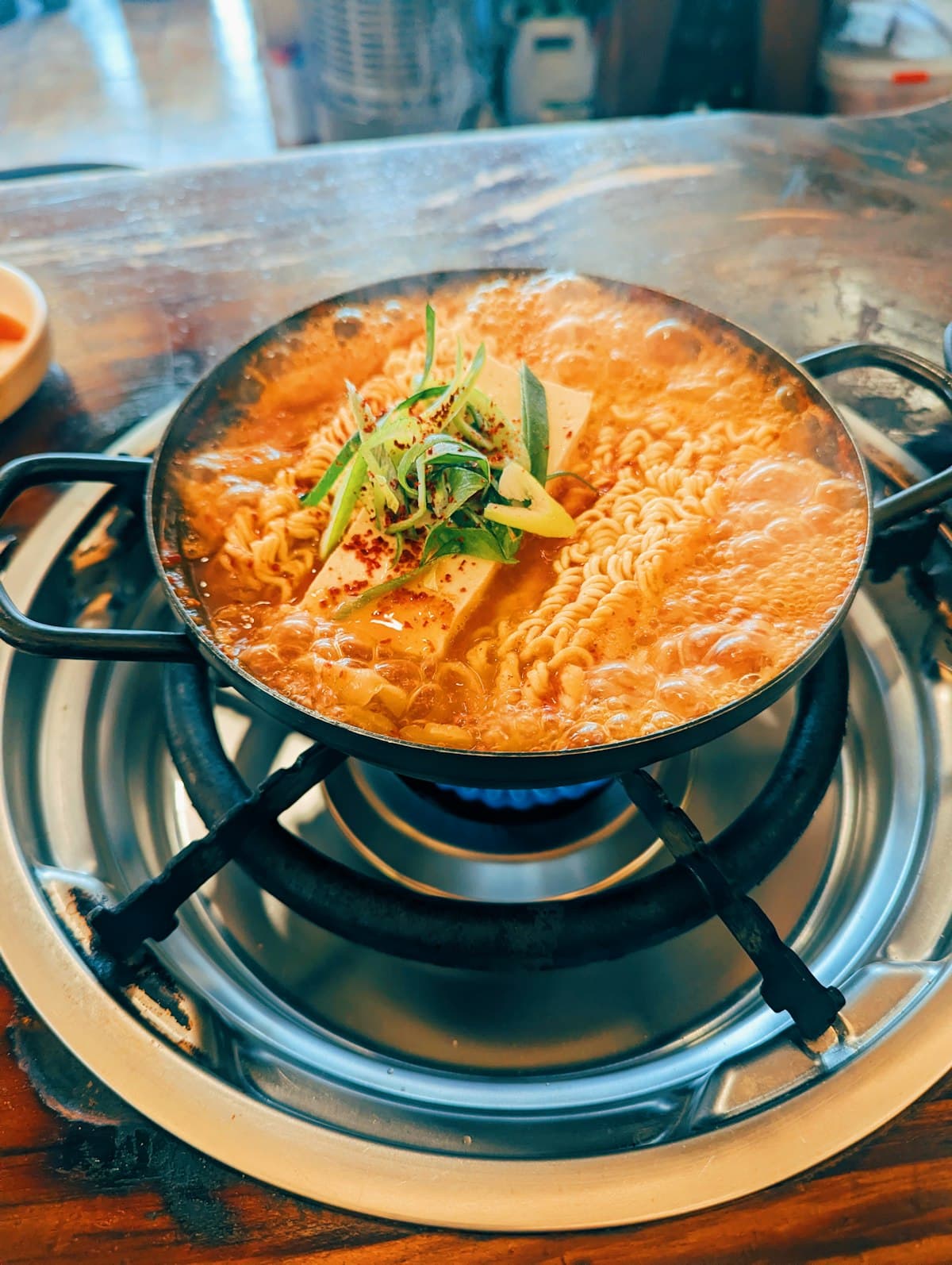
Ramyeon (Doctored-Up Korean Instant Noodles)
The add-in order and timing that actually improves instant ramyeon, instead of just dumping extra ingredients into the pot.
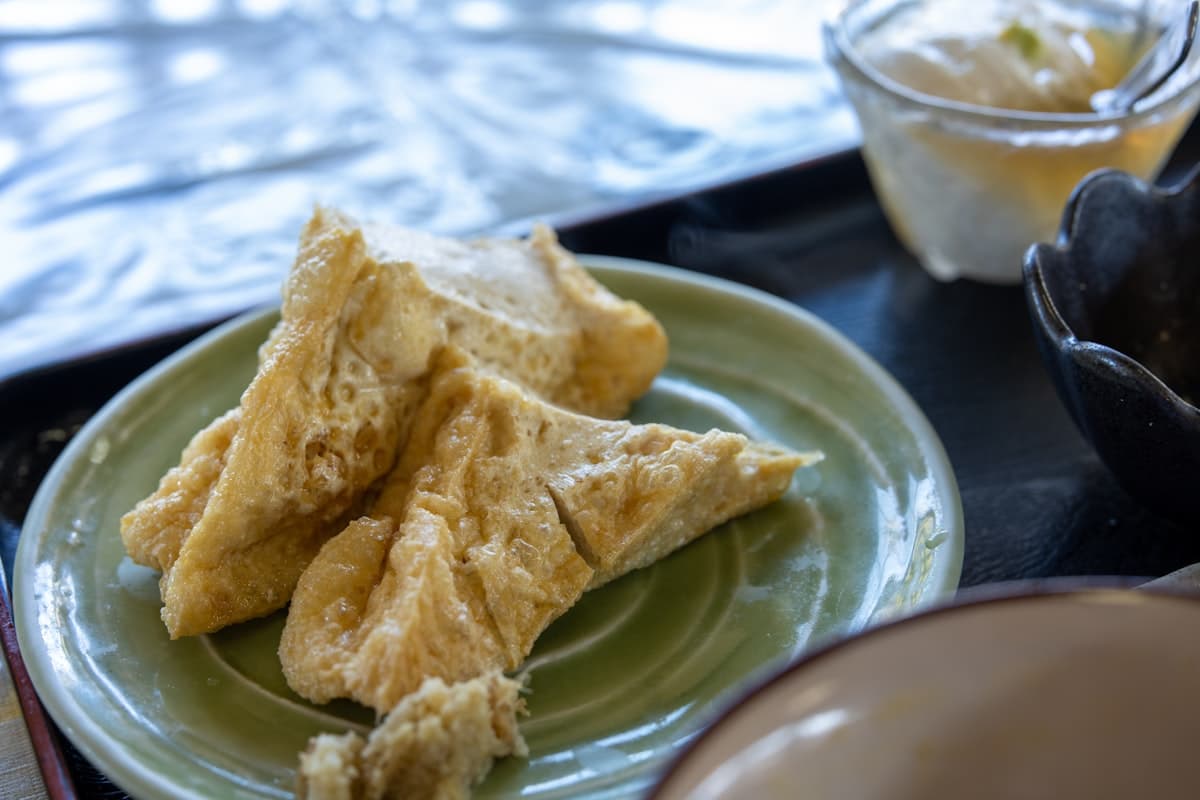
Yubu Chobap (Stuffed Tofu Pouch Sushi)
The rice-seasoning and stuffing technique behind yubu chobap, and why overfilling the pouches is the most common mistake.
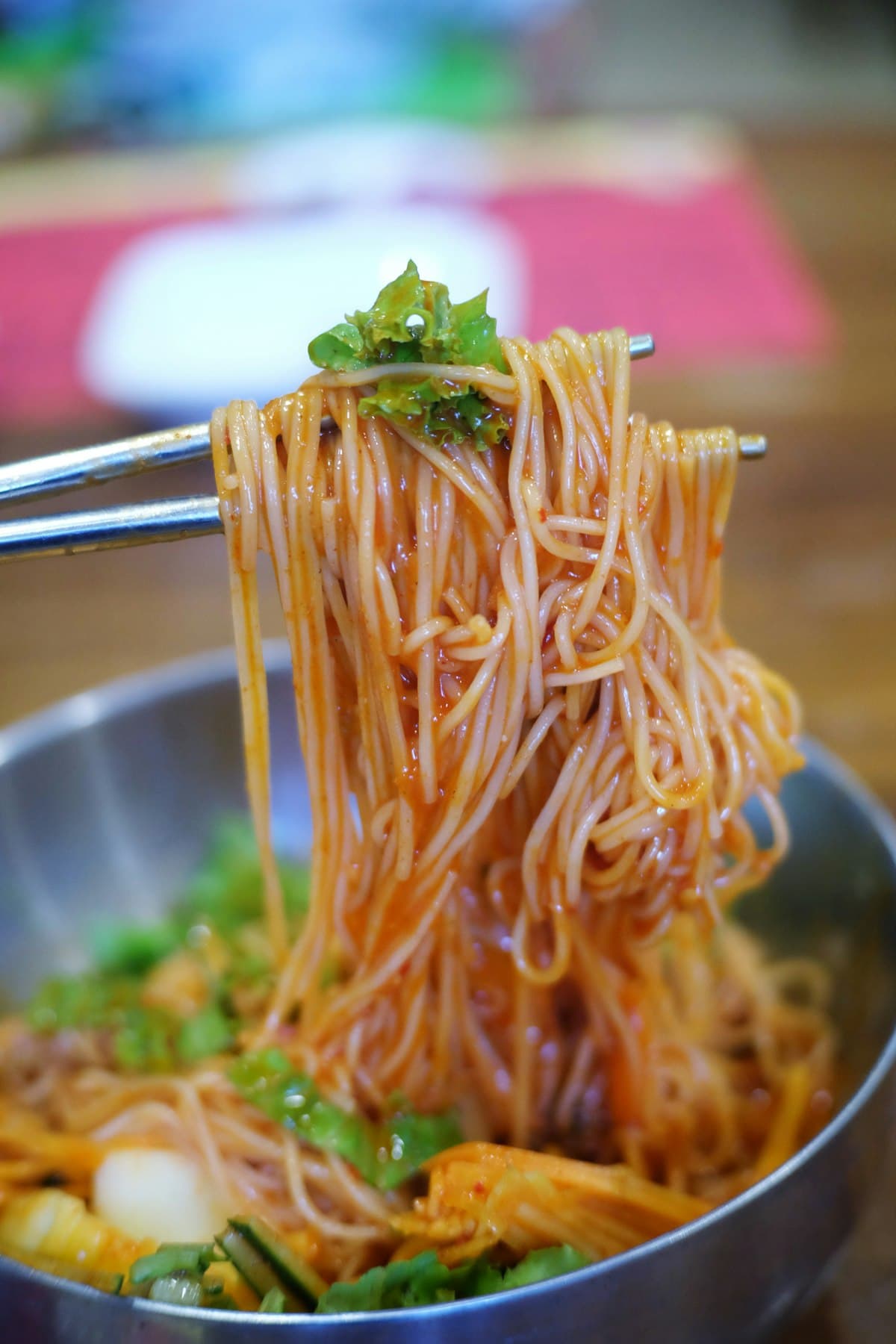
Bibim Guksu (Spicy Cold Noodles)
The thin-noodle, no-cook sauce technique behind bibim guksu, and why rinsing matters more than any other step.