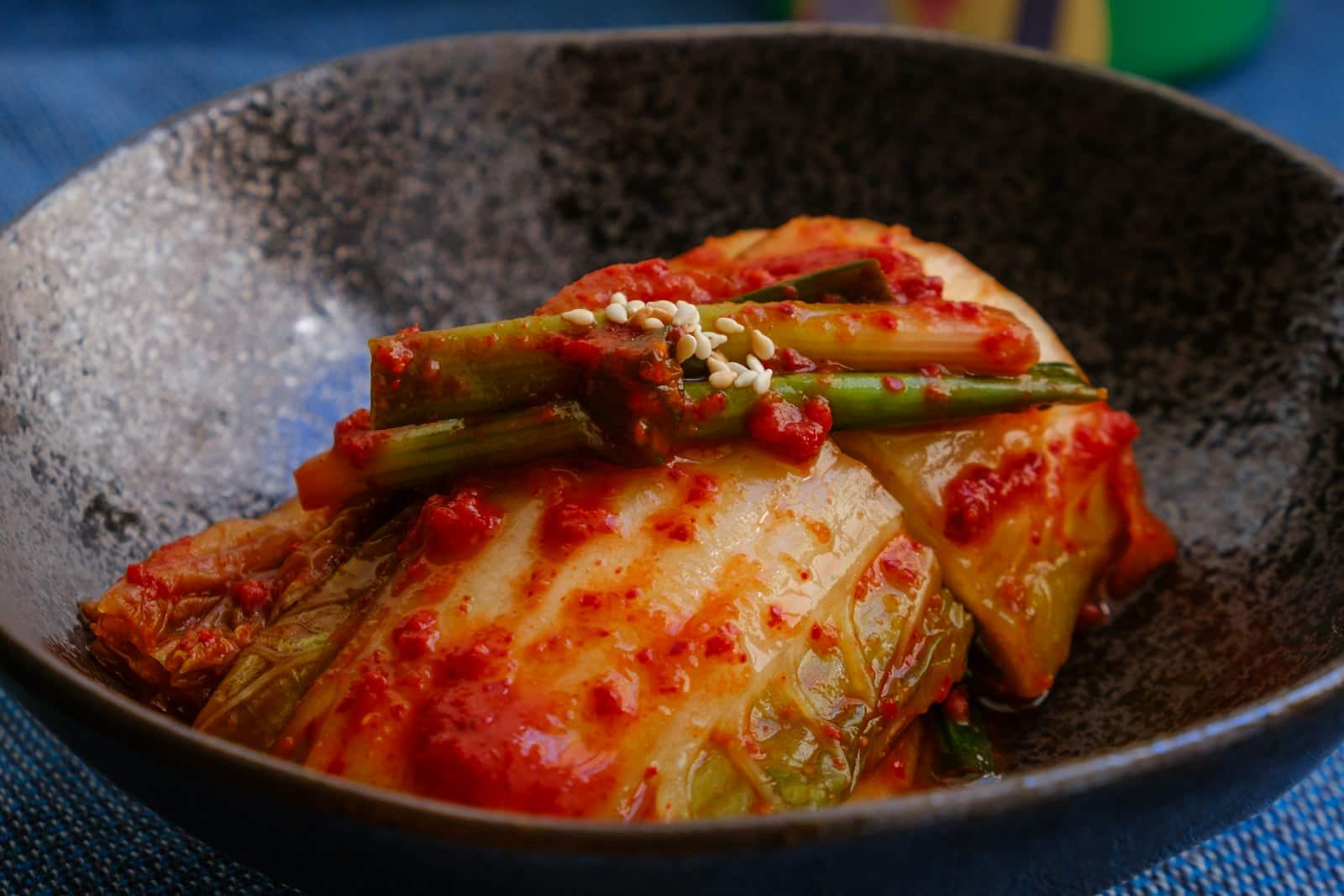
Steps
- 1
Cut the napa cabbage into quarters lengthwise, then into 2-inch pieces.
- 2
Dissolve the salt in water and soak the cabbage for 1-2 hours, tossing occasionally, until the stems bend without snapping.
- 3
Rinse the cabbage three times and drain well.
- 4
Mix gochugaru, fish sauce, garlic, ginger, and sugar into a paste.
- 5
Fold in green onions and radish.
- 6
Massage the paste into the drained cabbage, coating every piece.
- 7
Pack into a clean jar, pressing down to remove air pockets, leaving 1 inch headspace.
- 8
Leave at room temperature 1-2 days, then refrigerate. Flavor develops over 1-2 weeks.
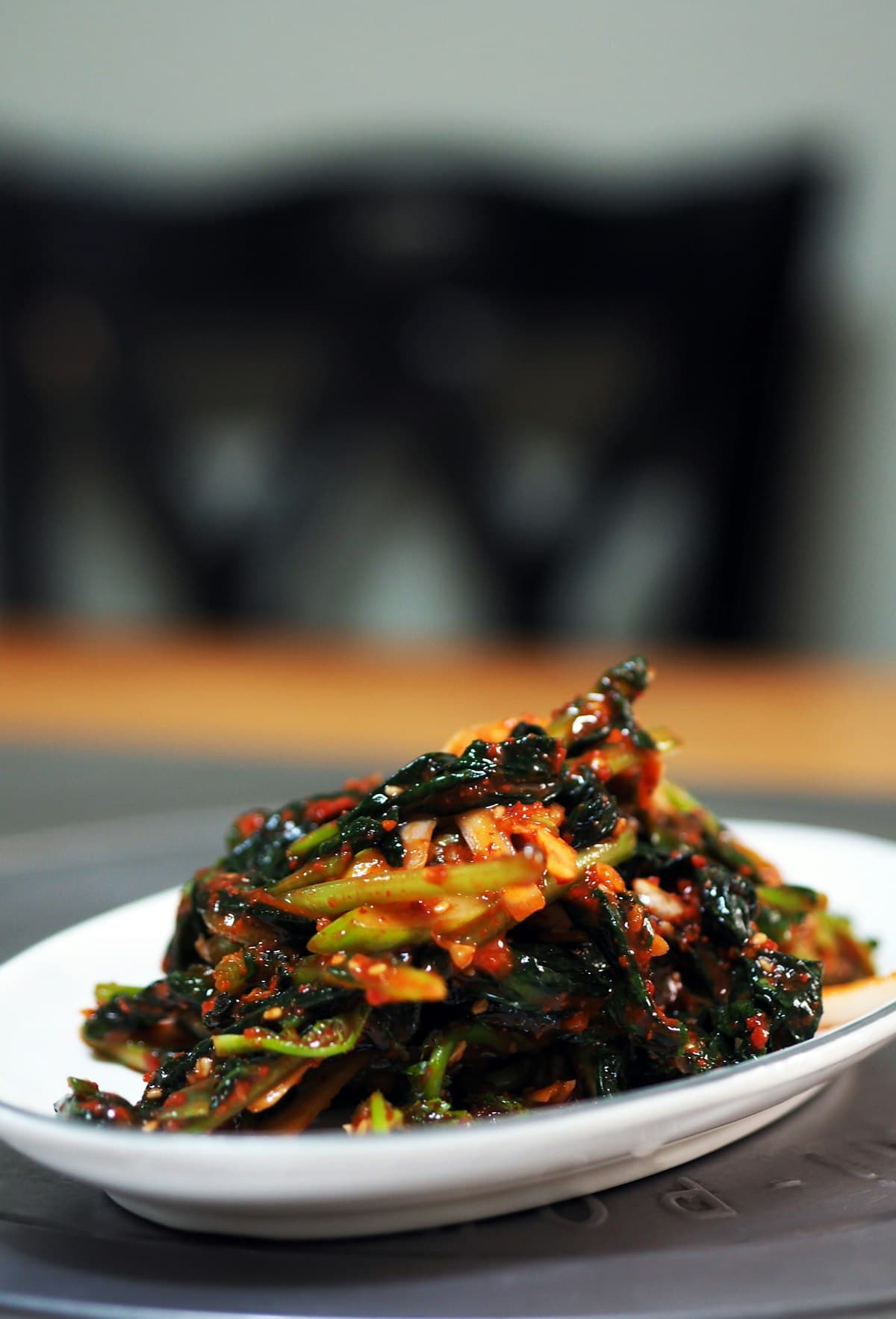
Did you know — Korean culture
There's no single "correct" kimchi — there are over 200 documented variations across Korea, and that's before counting what happens in individual households. Every region built its own version around what was actually growing nearby. The napa cabbage kind is the most iconic, but it was never the only answer.
Whole leaves, garlicky-gingery chili paste, left to sit until it turns into something better than what you started with. This is the kimchi. The one people picture the second you say the word.
It's also the one every Korean household argues about — too salty, not sour enough, whose grandmother's version was better. There's no single correct answer here, just a range that works. Get comfortable in that range and you'll never buy store kimchi again.
The stems should still have a little snap left after brining, not go limp. That's the difference between kimchi with texture and kimchi that turns to mush in the jar.
What each ingredient is doing
Napa cabbage — the whole dish rests on it being salted correctly. Look for heavy heads with tight, pale leaves; a light head is mostly air and gives you limp kimchi.
Coarse sea salt — not table salt. Fine iodised salt dissolves too fast, salts unevenly, and the iodine can interfere with fermentation. This is the one substitution that genuinely matters.
Gochugaru — Korean chili flakes, and there is no real substitute. It is mild, fruity and coarse; cayenne or paprika are neither. Buy the coarse grind for kimchi rather than the fine.
Saeujeot and fish sauce — the salted shrimp brings funk and depth, the fish sauce brings salt and umami. Together they are what make kimchi taste like kimchi rather than spicy pickled cabbage.
Glutinous rice porridge — a thin cooked paste of sweet rice flour and water. It gives the seasoning body so it clings to the leaves, and feeds the bacteria doing the fermenting.
Korean radish, garlic, ginger, scallion — the aromatics. Radish adds sweetness and crunch that survives months in the jar.
Substitutions that work, and one that doesn't
Instead of saeujeot: more fish sauce, or an equal volume of anchovy sauce. You lose a little of the deep funk, and it still works.
For a vegan kimchi: drop the shrimp and fish sauce entirely and replace with a small amount of miso or soy sauce plus a piece of dried dasima simmered into the rice porridge. It ferments perfectly well — the fish products are for flavour, not for the fermentation.
Instead of Korean radish: daikon is close enough, though it is milder and wetter. See Korean radish vs daikon.
Do not substitute the gochugaru. Every other chili is either much hotter, much smokier, or too finely ground, and the result is not kimchi that tastes slightly different — it is a different, worse dish. This is the ingredient worth a trip to a Korean grocer.
Timing: what actually takes how long
Active work is about an hour. Everything else is waiting.
- Salting: 2–4 hours dry-salted, or 4–6 hours in brine, turning once
- Rinsing and draining: 45 minutes, and do not shortcut the draining
- Mixing and packing: 30 minutes
- Room-temperature fermentation: 1–3 days depending on your kitchen
- Fridge: slow ferment from there, indefinitely
Make it in the morning and it is packed by mid-afternoon. The full method for the salting stage is in how to salt napa cabbage.
Fermenting and storing it
Pack it tight into the jar, pressing down so brine rises over the top and no leaf sits exposed to air. Leave a few centimetres of headroom — it will bubble up. Then leave it at room temperature.
Warm kitchen (24°C+): 1 day is often enough. Cool kitchen (18°C): 2–3 days.
You are looking for small bubbles, a faintly sour smell, and a tang when you taste the brine. Then it goes in the fridge, where it keeps fermenting slowly for months.
Kimchi does not spoil so much as change. At two weeks it is bright and crunchy; at two months it is properly sour and better for kimchi jjigae and kimchi bokkeumbap than for eating straight. Both are worth having. See how to store kimchi for the details, and why is my kimchi not sour if it stalls.
What to serve it with
Kimchi is a banchan, which means it belongs on the table with almost everything rather than being a course of its own. Where it earns its place:
- Alongside any grilled meat — samgyeopsal, bulgogi, galbi
- With plain rice and a soup, which is the actual everyday Korean meal
- Wrapped into ssam with ssamjang and a lettuce leaf
- Cooked, once it is properly sour — kimchi jeon, kimchi jjigae, dubu kimchi
Troubleshooting
Kimchi not sour enough? Warmer spot, more patience. 68-72°F speeds fermentation up considerably. Taste daily after day 2 — the moment it's sour enough for you, into the fridge it goes.
Too salty? Rinse the cabbage once more before mixing in the paste, next time around. Already made it? A little sugar or a spoonful of unsalted stock stirred through can take the edge off.
Looks weird, smells strong, bubbling a bit? That's fermentation, not failure. A layer of liquid pooling at the bottom of the jar is normal. Actual mold — fuzzy, not just cloudy — is the only real sign something went wrong.
Common questions
How long does homemade kimchi take to ferment?
One to three days at room temperature before it goes in the fridge, depending on how warm your kitchen is. It is ready to move when you see small bubbles and the brine tastes tangy. It then keeps developing in the fridge for months — most people find it hits its best eating window somewhere between two weeks and two months.
Can I make kimchi without fish sauce or salted shrimp?
Yes. The fermentation is driven by bacteria already on the cabbage, not by the seafood — those are there for flavour. Replace them with a spoonful of miso or soy sauce and a piece of dried kelp simmered into the rice porridge. The result is milder and cleaner-tasting, and it is genuinely good kimchi.
Why is my kimchi not sour?
Usually one of three things: your kitchen is too cold, the kimchi is too salty for the bacteria to work, or it went into the fridge too early. Leave it out longer at room temperature and taste daily.
Does kimchi go bad?
It gets sourer rather than going off, and stays safe for a very long time submerged in its own brine. What you are watching for is fuzzy mould on the surface or a smell that is genuinely rotten rather than sour. Keep the leaves under the brine and that rarely happens.
Why does my kimchi taste too salty?
The cabbage was under-rinsed after salting. Rinse three times in fresh cold water, agitating each time — this is the step most people cut short, and excess salt also suppresses the bacteria you need.
Recommended products
- Fermentation jar with airlock
- Gochugaru (Korean red pepper flakes)
More to cook
All Fermented & Pickled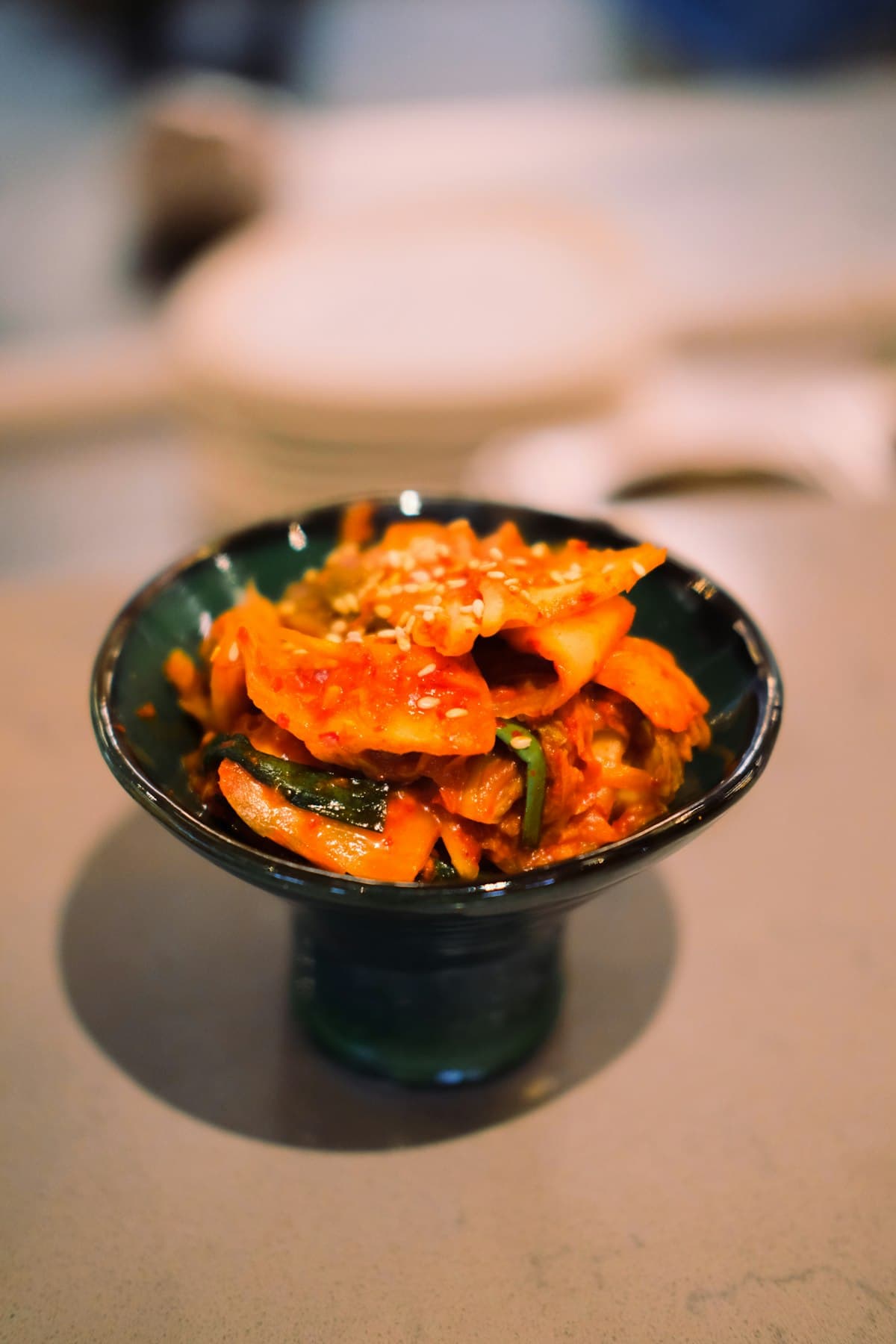
Oi Sobagi (Cucumber Kimchi)
The slit-and-stuff technique behind oi sobagi, and why this kimchi is best eaten fresh rather than long-fermented.
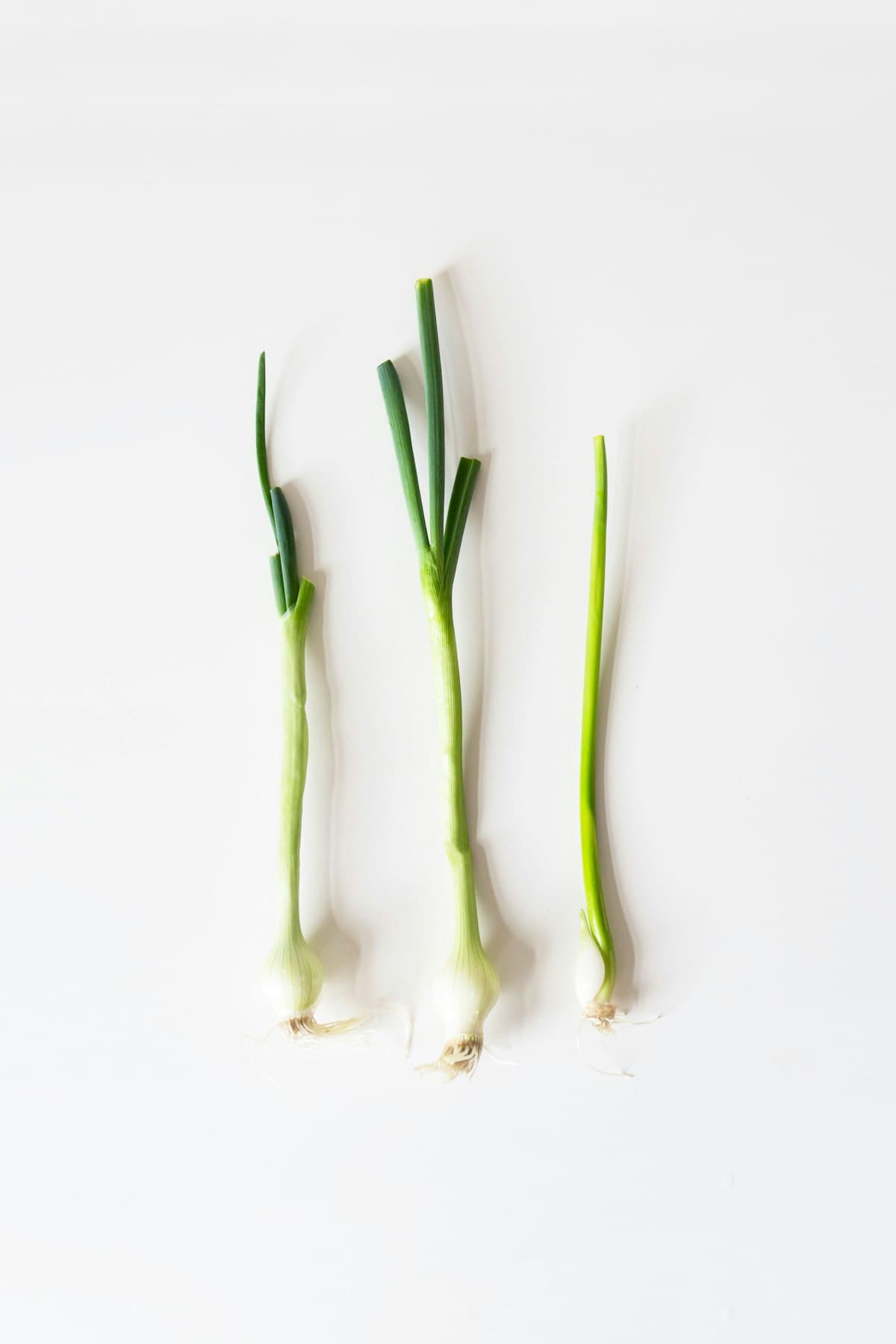
Pa Kimchi (Green Onion Kimchi)
The whole-scallion coating technique behind pa kimchi, and why thinner scallions ferment more evenly than thick ones.
Yeolmu Kimchi (Young Radish Kimchi)
The quick-ferment technique behind yeolmu kimchi, and why it's treated more like a fresh side dish than a long-aged one.