Stews & Soups
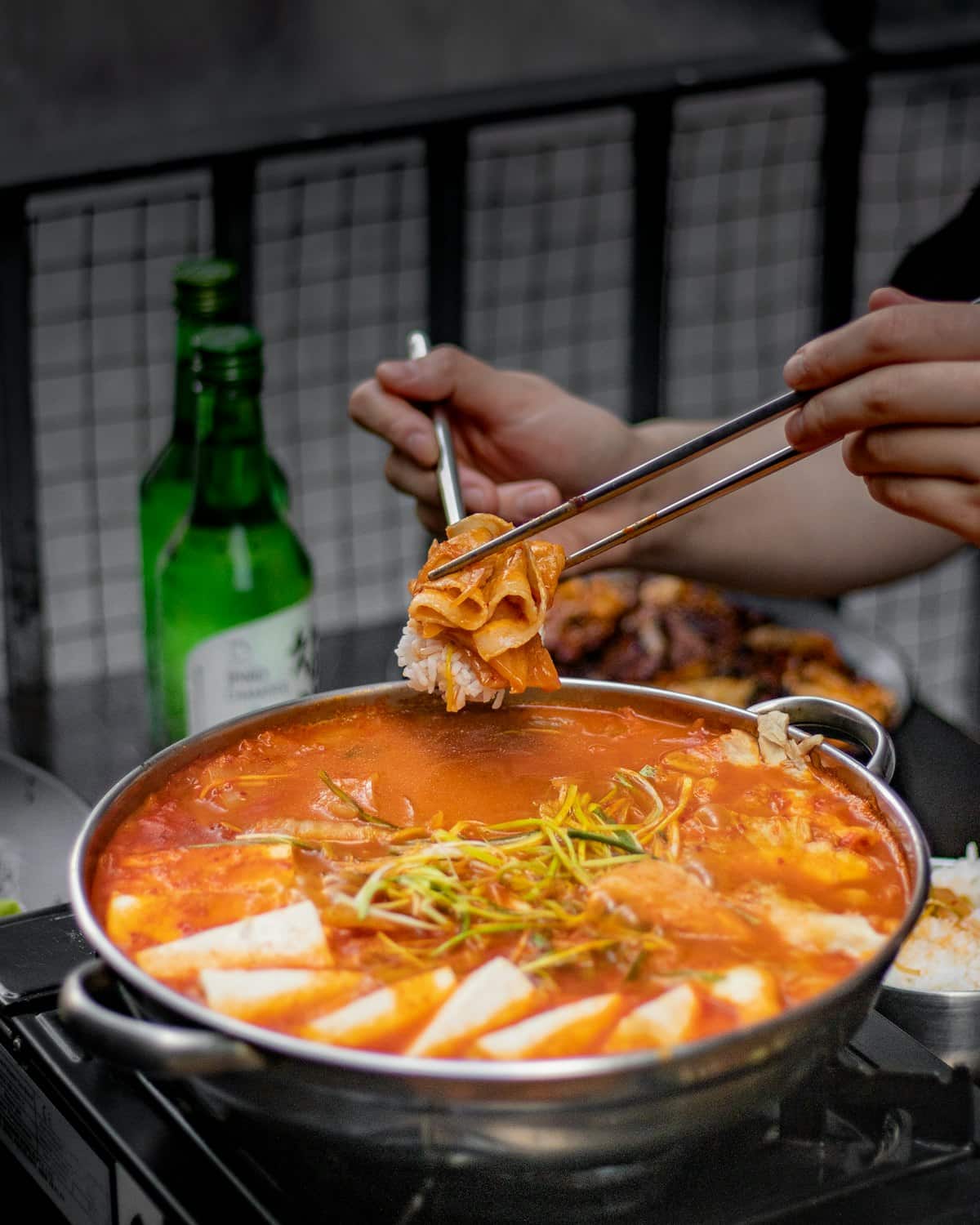
Kimchi Jjigae (Kimchi Stew with Pork Belly)
By Suku · · Updated
Prep
10 min
Cook
40 min
Servings
4
Steps
- 1
Heat the oil in a heavy pot and cook the pork belly until it's no longer pink and starting to brown, 4-5 minutes.
- 2
Add the kimchi and sugar, and sauté together for a few minutes — this softens the kimchi's texture and takes the edge off the sourness.
- 3
Add the onion, kimchi juice, water or stock, gochugaru, and soy sauce.
- 4
Bring to a boil, then reduce to a simmer.
- 5
Simmer at least 40 minutes, until the pork belly is tender and the kimchi has gone soft and deeply flavored.
- 6
Add the tofu in the last 5 minutes, just long enough to heat through without breaking apart.
- 7
Stir in the green onions and serve straight from the pot, still bubbling.
Did you know — Korean culture
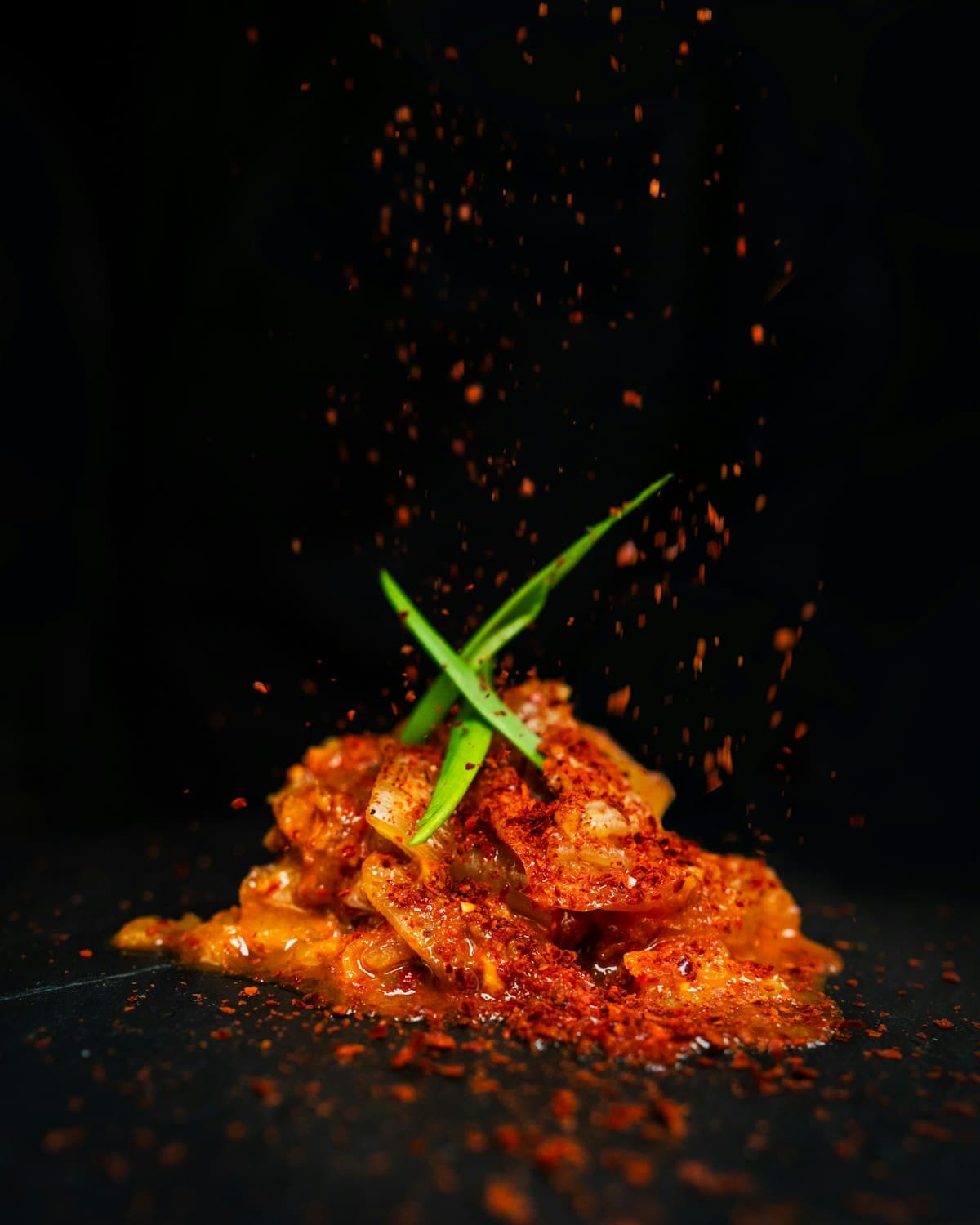
Kimchi jjigae exists because Korean cooks refuse to waste kimchi, even the batch that's turned too sour to eat straight from the jar. Kimchi's flavor gets stronger and more complex the longer it ferments — so the jar everyone else would toss is exactly the one a good kimchi jjigae is waiting for.
The kimchi you want for this is the kimchi you'd apologize for serving on its own — too sour, gone soft, sitting at the back of the fridge longer than planned. That's not a problem here. It's the entire point.
Fresh kimchi doesn't have the acidity or depth this stew is built around. Well-fermented kimchi cuts straight through the fattiness of the pork belly, which is exactly why cooks who know what they're doing don't throw out kimchi once it's "too sour" — they wait for a dish like this one.
Cut the pork into big pieces, not bite-sized ones. A long simmer needs something that won't turn to mush before the kimchi's had time to break down and the flavors have merged.
The kimchi has to be old
This is the one non-negotiable. Fresh kimchi makes a thin, sharp stew that tastes of raw chili. Kimchi at least two to three weeks old — properly sour, softened, faintly fizzy — is what gives the stew its depth.
If yours is not there yet, leave it out of the fridge for a day or two. See why is my kimchi not sour if it has stalled entirely.
Use the brine too. The liquid at the bottom of the jar is concentrated flavour and belongs in the pot. Most recipes quietly assume this and never say it.
Pork, tuna, or neither
Pork belly is the standard, and the fat is doing real work — it renders into the broth and rounds off the acidity. Shoulder works. Lean cuts do not add much.
Tuna (chamchi) is the other classic, using tinned tuna in oil, drained but not aggressively. It is faster and genuinely traditional, not a shortcut.
Tofu goes in either version, added late so it does not break up.
Vegetarian: skip both, use a dasima and dried anchovy stock — or kelp-only for fully vegan — and add mushrooms. It needs a little more sesame oil to compensate for the missing fat.
Fry the kimchi first
The step most home versions skip. Before any liquid goes in, fry the kimchi in a little sesame oil with the pork for 3–5 minutes.
This softens its raw edge and deepens the flavour, the same way frying tomato paste changes it. Kimchi dropped straight into water gives a stew that tastes thin and aggressive no matter how long it simmers.
Add a spoonful of gochugaru to the oil at this stage too — blooming it in fat draws out colour and flavour that stirring it into liquid never will.
Timing and making it ahead
25–30 minutes start to finish, which is why it is a weeknight staple.
It is better the next day, and better again the day after. The flavours settle and the sourness rounds out. This is one of the few Korean stews genuinely worth making ahead deliberately.
Add the tofu when reheating rather than in the original pot if you are making it for later — it holds its shape better that way.
Storing and reheating
4–5 days refrigerated, and the acidity of the kimchi helps here.
Reheat on the stove, not in a microwave, so it comes back to a proper simmer. Add a splash of water if it has reduced.
Freezing: it freezes acceptably for a month, but the tofu turns spongy. Freeze it before the tofu goes in if you can.
What to serve with it
- Rice, always. This stew is salty and sour and is built to be eaten with plain short-grain rice.
- Gyeran mari — the rolled omelette is the classic mild counterweight
- One or two plain banchan; the stew is already doing a lot
- Bossam if you are making a proper meal of it
Troubleshooting
Stew tastes flat, not deep? Your kimchi probably wasn't sour enough. This dish doesn't work with young kimchi — if that's all you have, add a splash of vinegar and a longer simmer to compensate.
Pork still tough after 40 minutes? Keep going. Pork belly chunks this size can want closer to an hour before they're properly tender — there's no shortcut on time here.
Too sour, even for this? A pinch more sugar balances it out without losing what makes the dish work. Don't try to mellow it by using less kimchi — that just makes a weaker stew.
Common questions
Can I make kimchi jjigae with fresh kimchi?
You can, but it will taste thin and sharp rather than deep. The stew depends on sour, fermented kimchi — at least two to three weeks old. If yours is young, leave it at room temperature for a day or two first.
What meat goes in kimchi jjigae?
Pork belly is standard, and its fat rounds out the acidity. Tinned tuna is the other traditional version and is faster. Both are authentic; it is not a case of one being a substitute for the other.
Why is my kimchi jjigae not flavourful?
Usually one of three things: the kimchi was too young, you skipped frying the kimchi in oil before adding liquid, or you used water instead of stock. The frying step matters more than people expect.
Can kimchi jjigae be vegetarian?
Yes. Use a kelp-based stock, skip the pork and tuna, and add mushrooms and tofu. Check your kimchi itself, since most contains fish sauce or salted shrimp — or make a vegan batch.
How long does kimchi jjigae keep?
Four to five days in the fridge, and it genuinely improves for the first two. The kimchi's acidity helps preserve it. Reheat on the stove rather than in the microwave.
Recommended products
- Heavy-bottomed pot or Dutch oven
- Anchovy stock packets
More to cook
All Stews & Soups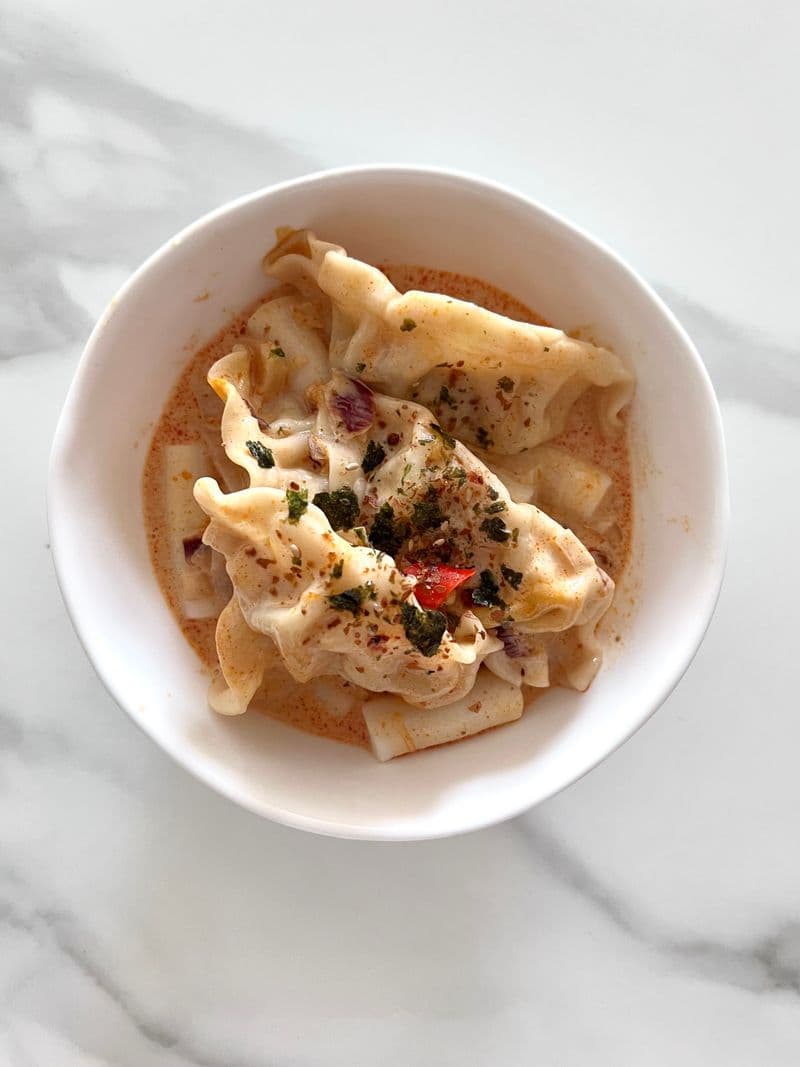
Kimchi Mandu-guk (Kimchi Dumpling Soup)
Why using well-fermented, sour kimchi in the filling changes the whole dish, and how simmering dumplings gently keeps the wrappers from splitting.
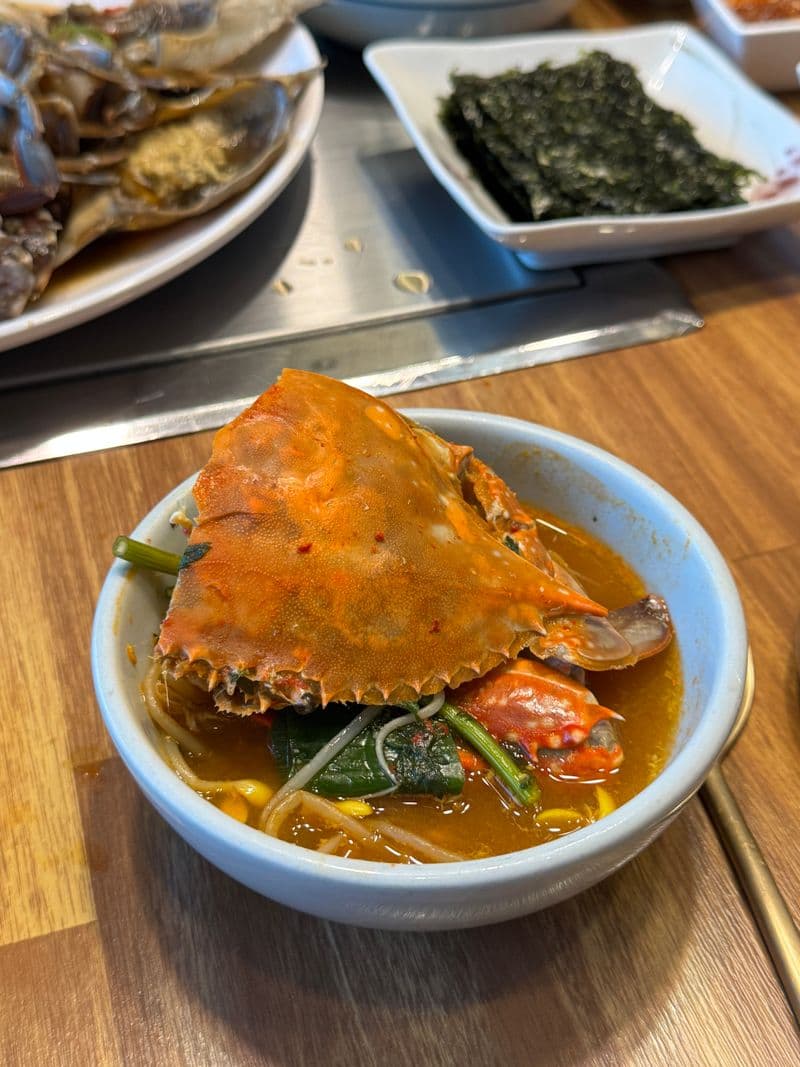
Kkotgetang (Blue Crab Stew)
Why the crab goes in at the very end, not the start, and how building the broth first is what keeps the meat from turning rubbery.
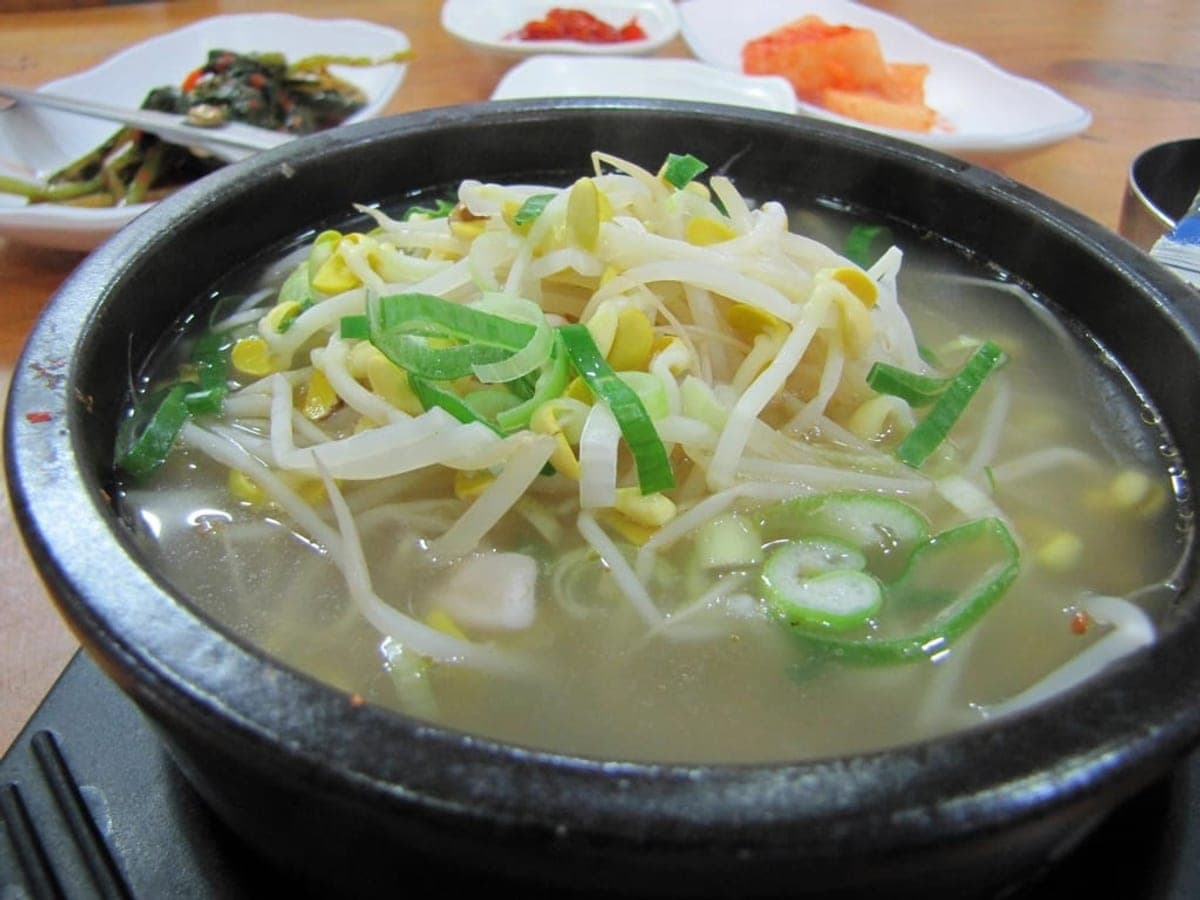
Kongnamul Gukbap (Bean Sprout Soup with Rice)
Why the lid on a pot of bean sprouts must stay either fully on or fully off, and how the rice goes into the bowl rather than being cooked in the broth.