Steps
- 1
Let the pork belly come close to room temperature before grilling — cold meat straight from the fridge cooks unevenly.
- 2
Heat a grill, grill pan, or heavy skillet until genuinely hot.
- 3
Lay the pork belly strips down without crowding the pan.
- 4
Season simply with salt and pepper — the pork's own fat is doing most of the flavor work here.
- 5
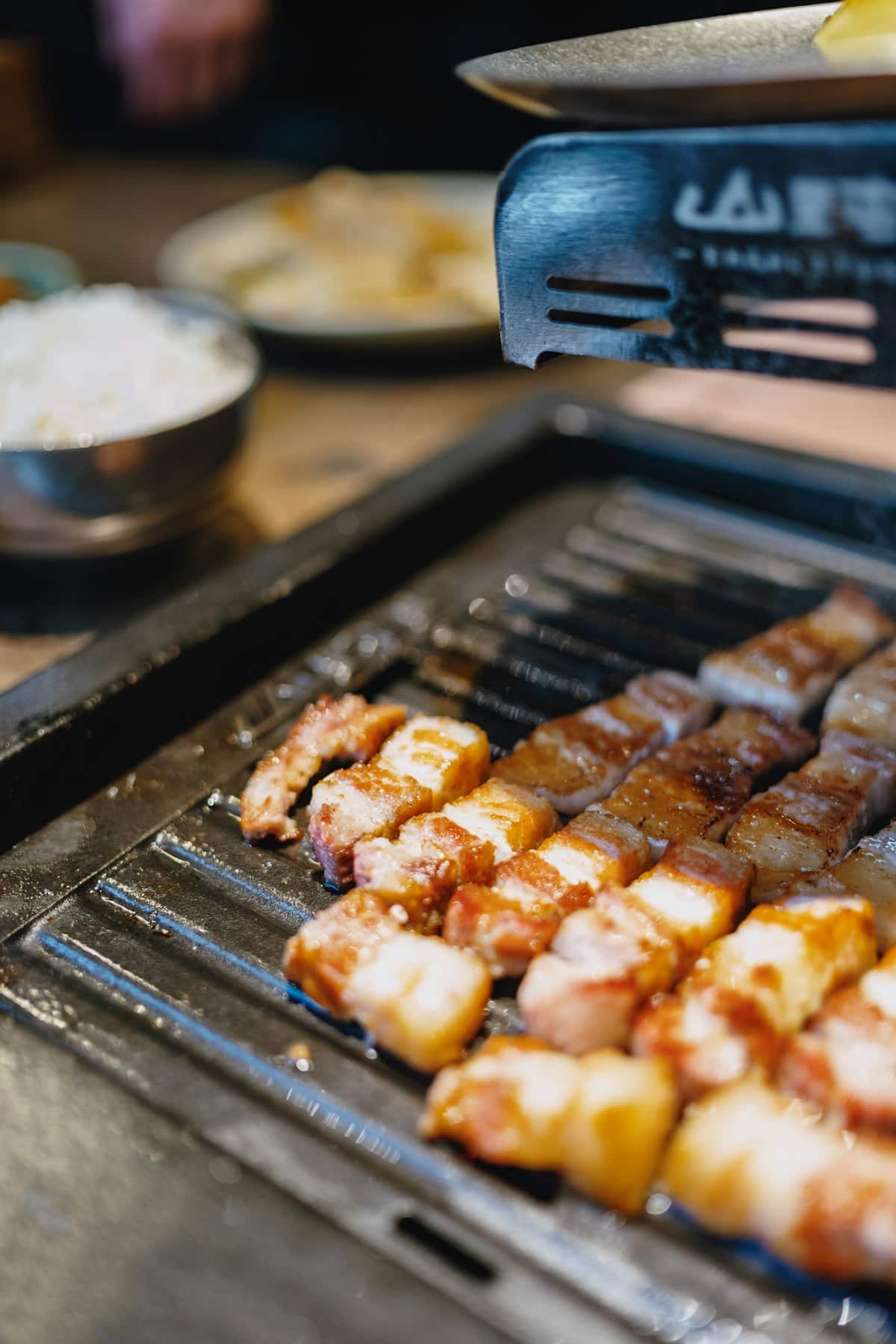
Use kitchen scissors to snip the strips into bite-sized pieces directly on the grill as they cook, rather than pre-cutting.
- 6
Grill until the edges are crisp and deeply browned, flipping once, about 8-10 minutes total depending on thickness.
- 7
Mix the ssamjang ingredients together in a small bowl.
- 8
To eat: dip a piece of pork in the sesame oil sauce, place it in a lettuce leaf with a dab of ssamjang and some garlic or green onion salad, fold, and eat in one bite.
Did you know — Korean culture
Samgyeopsal became Korea's everyday BBQ almost by accident. When pork exports to Japan favored leaner cuts, fattier pork belly piled up for the domestic market — and during the 1997 Asian Financial Crisis, it became the affordable stand-in for beef BBQ everyone could still order. It's now eaten so often that Korea has an unofficial holiday for it: March 3rd, Samgyeopsal Day, a pun on the number three.
Samgyeopsal doesn't marinate. That surprises people who assume every Korean grilled meat is bulgogi's cousin — soaked overnight in something sweet and dark. Pork belly gets salt, pepper, and heat, full stop. The fat rendering as it grills is the whole flavor strategy.
The name literally means "three-layer flesh," a nod to the alternating strips of meat and fat running through a good cut of belly. Cut it too thin and it just curls up and dries out on the grill before those layers get a chance to render properly.
The lettuce-and-ssamjang wrap isn't a garnish, it's the actual eating method: dip, wrap, fold, one bite. Building the wrap on your own plate, not the grill, keeps it from turning into a soggy mess before it reaches your mouth.
Buying the pork
Thickness is the decision that matters. Standard is about 1cm — thick enough to stay juicy, thin enough to cook through on a hot grill without burning.
Thin-cut (3–5mm) cooks in seconds and crisps more; good for a fast table.
Ask a Korean grocer for samgyeopsal and you will get exactly the right thing, usually pre-sliced. Otherwise ask a butcher for skin-off pork belly, sliced 1cm.
Do not trim the fat. It is the entire point — samgyeopsal means 'three-layer flesh', referring to the alternating fat and meat.
Do not marinate it either. Plain pork belly is the traditional form; the flavour comes from what you dip and wrap it in. Marinated versions exist but they are a different dish.
The table, not the recipe
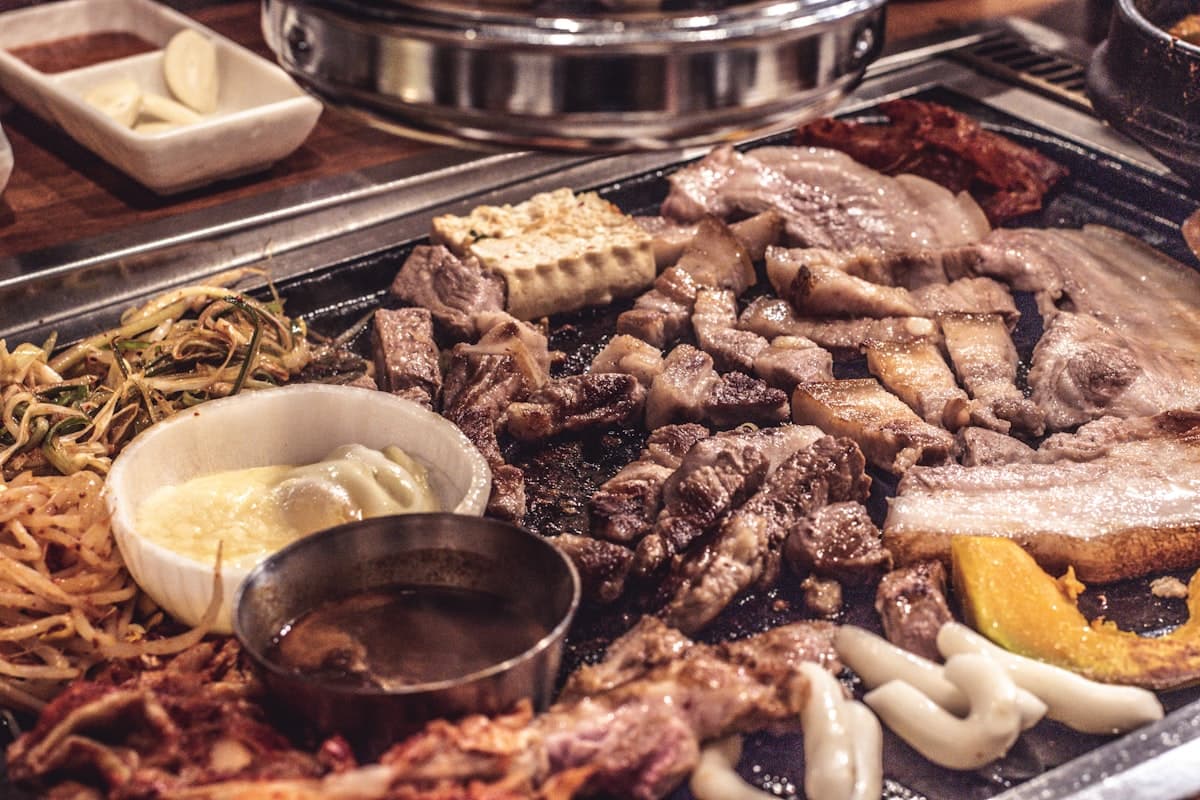
Samgyeopsal is a format more than a recipe, and getting the table right is most of it:
- Ssamjang — the wrap sauce, doenjang-forward
- Salt and sesame oil dip — a small dish of sesame oil with coarse salt and black pepper
- Lettuce and perilla leaves for wrapping
- Garlic and green chili, sliced, grilled alongside in the rendered fat
- Pa muchim — the shredded scallion salad, which cuts the fat better than anything else on the table
- Kimchi, grilled in the fat once it starts running
The grilled garlic and kimchi are not garnish. They cook in the pork fat and are half the experience.
How to actually grill it
Medium-high, and no oil. The belly renders plenty of its own within a minute.
Do not move it constantly. Lay it down, leave it until the underside is properly browned, then turn once.
Cut it with scissors on the grill after it has browned on both sides — this is standard and much easier than trying to cut it whole.
Tilt the pan or use a ridged plate so the rendered fat runs off, or the pork ends up frying in a pool of it. Korean grill plates are sloped for exactly this reason.
Cook in rounds rather than all at once. Samgyeopsal is eaten as it comes off the heat, not plated up.
Building a ssam
There is a correct order, and it is not fussiness — it stops the wrap falling apart:
- Lettuce leaf flat on your palm, perilla leaf on top
- A little rice, if you are using it
- The pork, straight off the grill
- A dab of ssamjang — less than you think
- Grilled garlic, a slice of chili, some pa muchim
- Fold, and eat in one bite
One bite is the rule. A ssam eaten in two bites falls apart on the second.
Timing, quantity and leftovers
No marinating, no prep-ahead cooking. Total time is however long you spend at the table.
Quantity: 200–250g of pork per person is generous; 150g if there is a lot else on the table.
Leftovers are rare but useful — chop cooked belly into kimchi bokkeumbap or budae jjigae. Raw pork belly keeps 2–3 days refrigerated, or freezes for 3 months.
What to serve alongside
- Doenjang jjigae — the traditional close to a samgyeopsal meal
- Naengmyeon — cold noodles after the grilling, which is a real Korean sequence
- Kimchi jjigae if you would rather stay hot
- Soju, conventionally
Troubleshooting
Pork belly staying chewy, not crisp? The grill probably wasn't hot enough to start, or the pan was too crowded and the meat steamed in its own fat instead of searing.
Ssamjang tastes one-note? Doenjang alone is heavy and salty; gochujang alone is one-dimensional sweet-spicy. The combination of both, cut with a little honey, is what makes it actually balanced.
No grill or grill pan? A regular heavy skillet works completely fine — just don't skip letting it get properly hot first.
Common questions
What cut of pork is samgyeopsal?
Pork belly, skin off, sliced about 1cm thick. The name means 'three-layer flesh', describing the alternating bands of fat and meat. Don't trim the fat — it renders out and cooks everything else on the grill.
Should samgyeopsal be marinated?
No. Traditional samgyeopsal is plain pork belly, and all the flavour comes from the dipping sauces and wraps. Marinated pork belly exists but is a separate dish rather than a variation on this one.
What do you eat with samgyeopsal?
Lettuce and perilla leaves for wrapping, ssamjang, a sesame-oil-and-salt dip, grilled garlic and chili, pa muchim scallion salad, and kimchi grilled in the rendered fat. The wrap is the dish; the pork alone is only part of it.
How much pork belly per person?
About 200–250g each for a generous meal, or 150g if there are plenty of side dishes and a stew as well.
Why is my samgyeopsal greasy rather than crisp?
The fat has nowhere to drain, so the pork is frying in it. Use a sloped Korean grill plate, tilt the pan, or pour off the fat between rounds. Also cook in batches — a crowded grill steams.
Recommended products
- Tabletop Korean BBQ grill
- Ssamjang (ready-made)
More to cook
All Meat & BBQ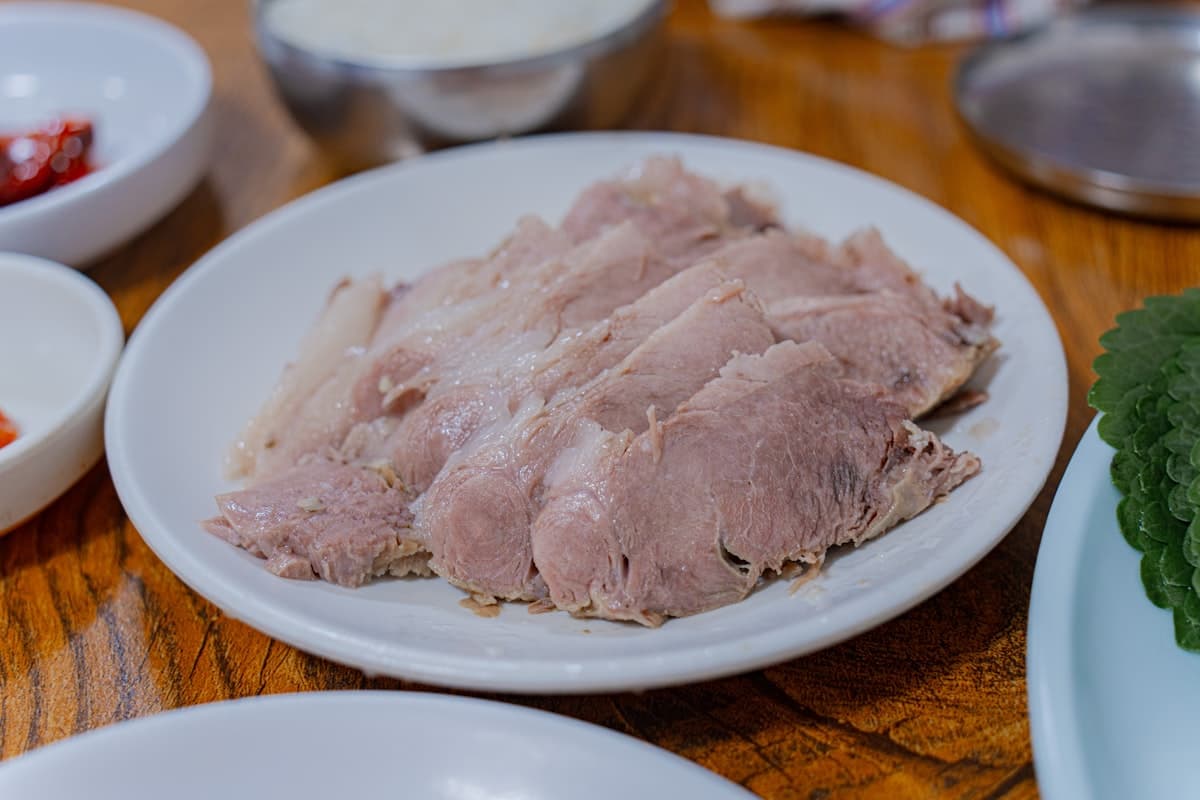
Suyuk (Korean Boiled Beef or Pork Slices)
The aromatics-in-the-water technique behind suyuk, and why chilling the meat before slicing is what keeps it from falling apart.
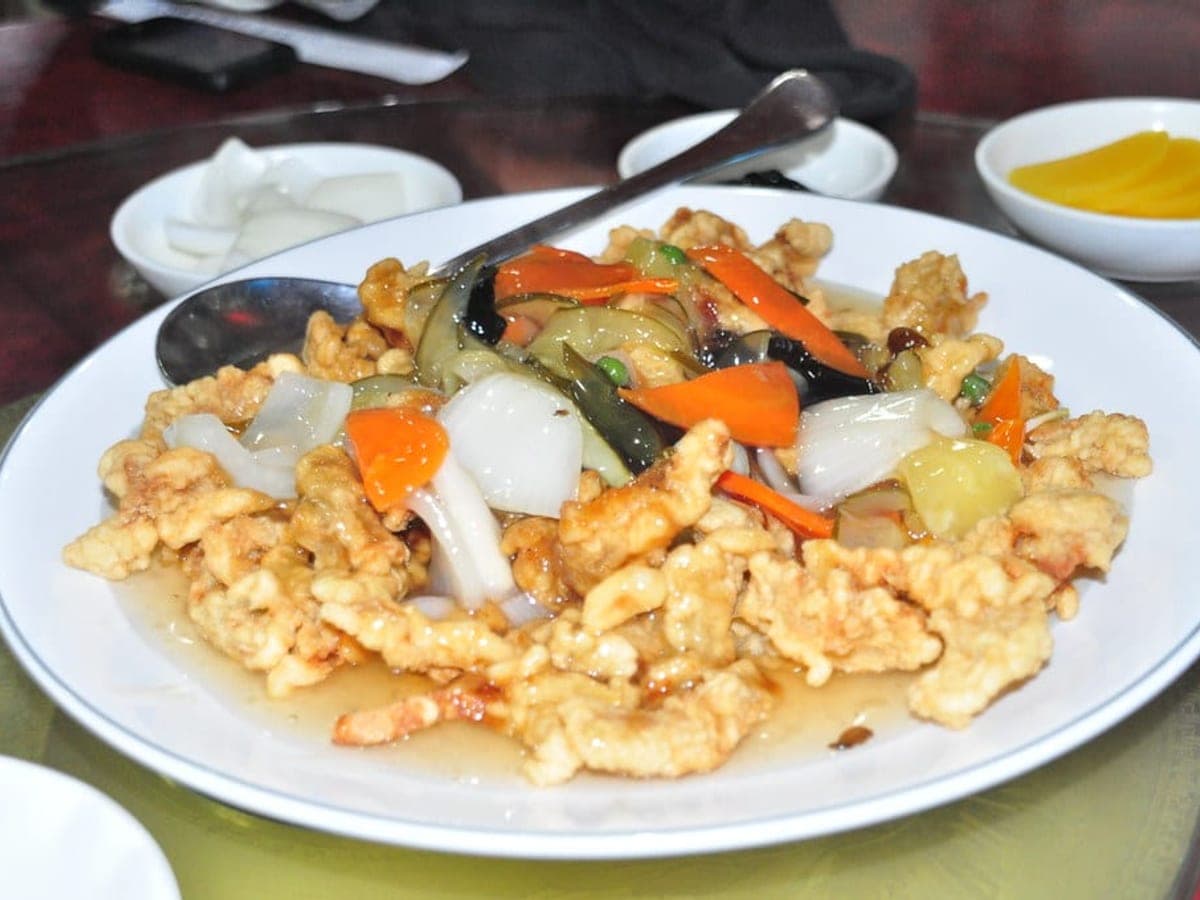
Tangsuyuk (Sweet and Sour Pork)
The potato-starch batter and double fry behind tangsuyuk's glassy, shattering crust, and why the sauce is kept off the pork until the moment it is served.
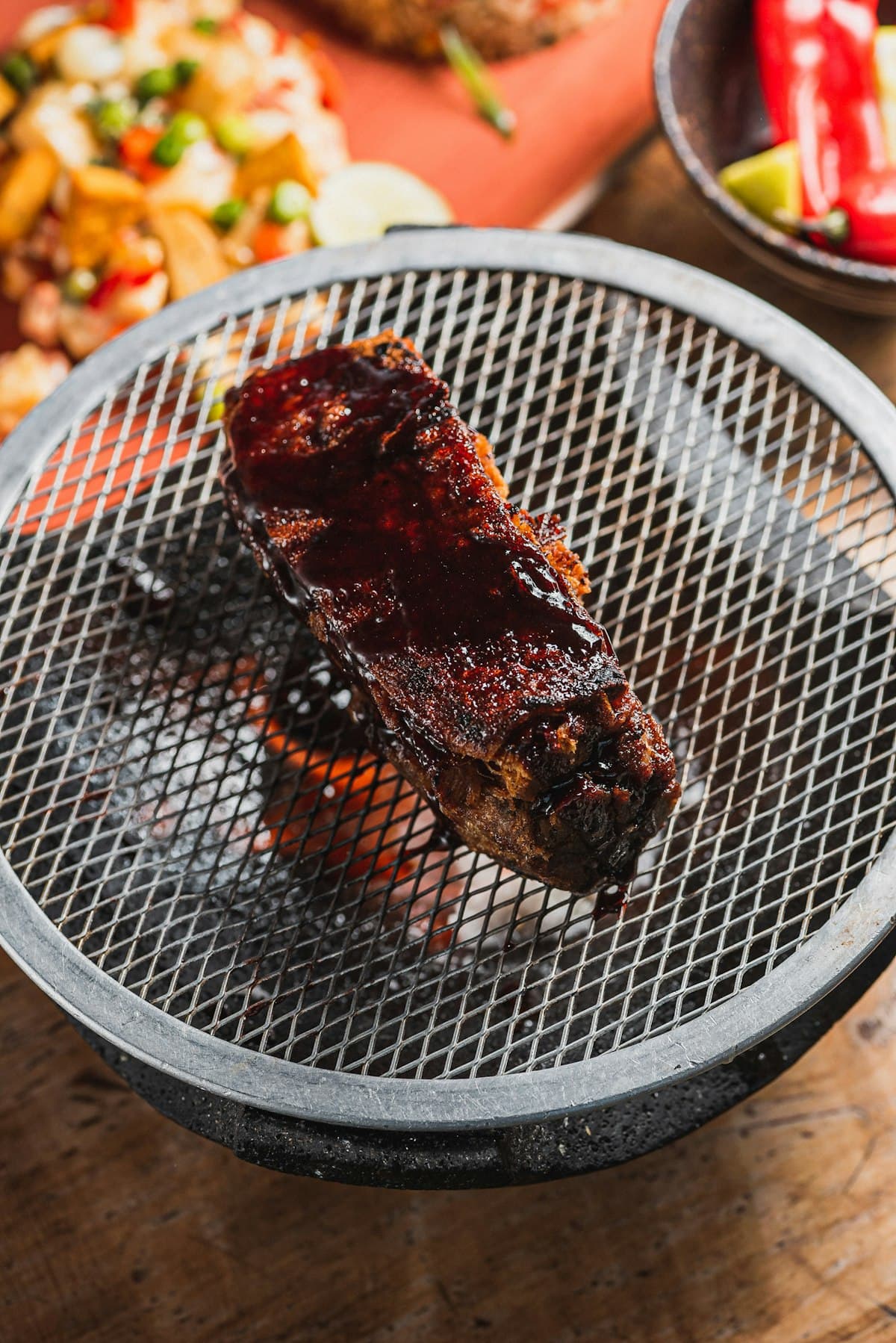
Yangnyeom Galbi (Marinated Grilled Short Ribs)
The pear-and-soy marinade timing behind yangnyeom galbi, and why over-marinating ruins the texture just as fast as under-marinating.