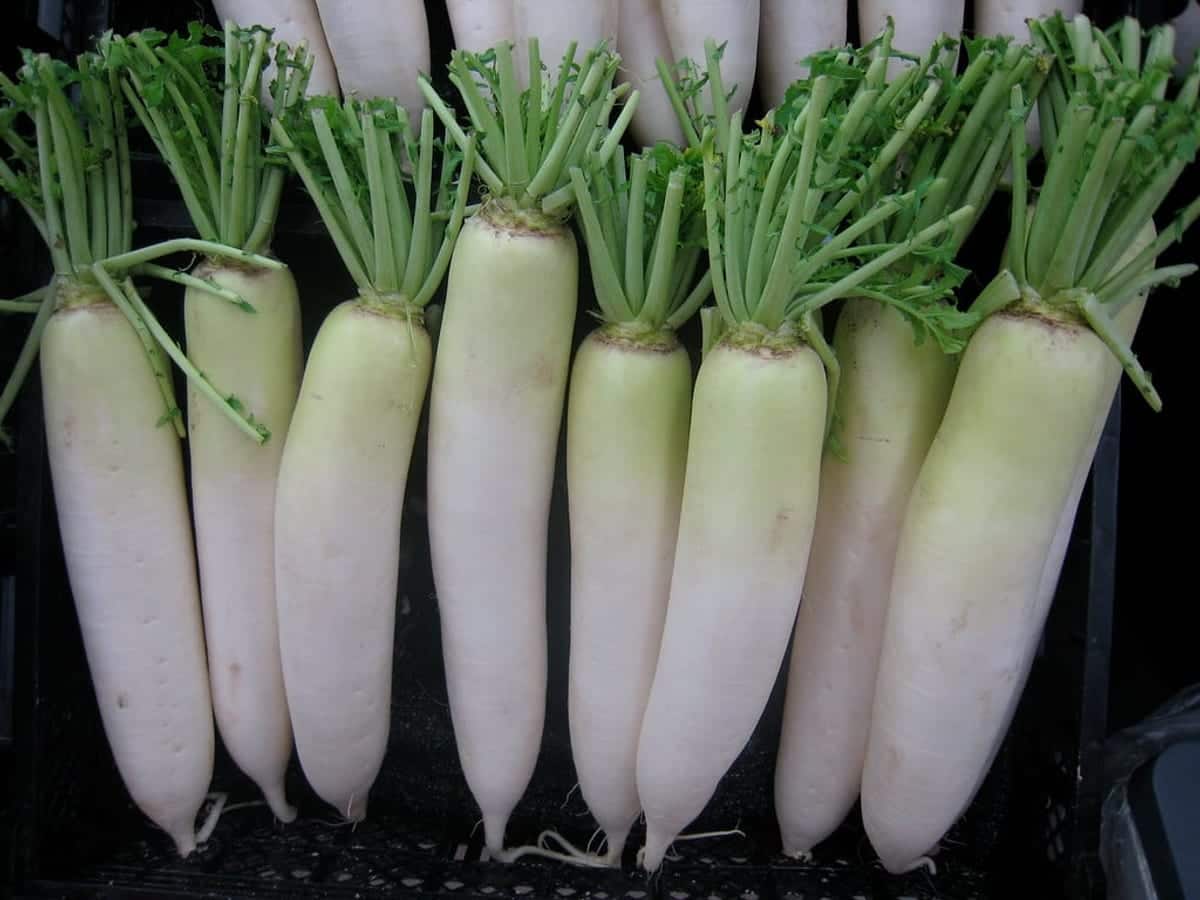
Photo: Globalism Pictures · CC BY

Did you know — Korean culture
Before refrigeration, Korean households stored radish and cabbage through winter in a pit dug into the ground, lined and covered with straw. The earth held a steady temperature just above freezing — cold enough to slow spoilage, stable enough to keep kimchi fermenting slowly rather than stopping. Modern kimchi refrigerators are built to reproduce exactly that, and are sold on how closely they match it.
Korean radish (mu) and Japanese daikon look close enough on a shelf that they get used interchangeably, and for a lot of dishes that is fine. But they are different vegetables, and the difference shows up most in the two places Korean cooking leans on radish hardest: kimchi and long-simmered soups.
Mu is shorter, fatter and noticeably denser, usually with a pale green shoulder where it pushed above the soil. Daikon is longer, thinner and holds more water. That density is the whole story — it is why mu holds its shape through a two-hour simmer and why it ferments into kkakdugi with a crunch that daikon struggles to match.
When the swap is fine
For quick pickles, salads and anything where the radish is raw and julienned, daikon substitutes without complaint. Musaengchae made with daikon is slightly milder and wetter but recognisably the same dish.
When it is not
In kkakdugi the extra water in daikon dilutes the brine and the cubes go soft faster, so drain them harder and expect a shorter fridge life.
In long-simmered soups like galbitang or seolleongtang, daikon collapses where mu would still be intact. If daikon is what you have, add it later — the last 20 minutes rather than the first.
How to pick one
Weight is the useful test. A good mu feels heavy for its size, with taut skin and no give when squeezed. Lightness means it has been sitting and losing water, and a radish that has gone spongy will not crisp up again.
The green shoulder should be firm and bright rather than yellowing. That green portion is also the sweeter end — cooks often reserve it for raw preparations and use the white end for soup.
Storing it
Whole and unwashed in the fridge, wrapped loosely, a mu keeps for weeks. Cut surfaces dry out fast, so press cling film directly against the cut face rather than leaving it exposed.
Do not store it near apples or pears — the ethylene they give off accelerates softening.
Using one where the recipe wants the other
Daikon for Korean radish — workable, with adjustments. Daikon is milder, more watery and less dense.
- In soups, it will break down faster. Add it later than the recipe says.
- In kkakdugi, expect a softer, wetter kimchi. Salt it a little longer to draw out more water.
- In stews, it contributes less sweetness — a small pinch of sugar closes some of the gap.
Korean radish for daikon — generally fine, and often better. It holds its shape and brings more flavour.
How to buy and store it
Choose heavy for its size with tight, unwrinkled skin. A light radish is dehydrated and will be spongy inside.
Firm all over. Any soft patch means it is going, and radish rots from the inside where you cannot see it.
The green shoulder is a good sign in Korean radish — that is where the sweetness concentrates, and the greener the top, the sweeter the radish.
Storage: whole and unwashed in the fridge, wrapped, for 2–3 weeks. Cut radish goes off much faster — wrap the cut face and use within a week.
Do not store it near apples or pears; the ethylene makes it go soft and bitter.
Where each one shows up
Korean radish (mu):
- Kkakdugi — cubed radish kimchi, where its density is the point
- Dongchimi — the cold brine kimchi whose liquid goes into naengmyeon
- In napa cabbage kimchi paste, julienned
- Soups and stews — galbitang, seolleongtang, where it sweetens the broth
- Namul — julienned and lightly cooked
Daikon is the everyday Japanese and Chinese radish, and outside Korean shops it is usually what is available. It is a good vegetable; it is just a different one.
Common questions
Can I use daikon instead of Korean radish?
Yes, with adjustments. Daikon is milder, wetter and less dense, so it breaks down faster in soups — add it later — and makes a softer kkakdugi. A pinch of sugar helps replace the sweetness you lose.
What is the difference between Korean radish and daikon?
Korean radish (mu) is shorter, fatter, denser and sweeter, usually with a green shoulder. Daikon is longer, thinner, more watery and milder. The density is what matters in cooking — Korean radish holds its shape far better.
Why is my Korean radish bitter?
Usually age, or storage near ethylene-producing fruit like apples and pears. A radish that's light for its size has dehydrated and will taste sharper and spongier. Bitterness also concentrates toward the tail end, so use the green-shouldered top for anything eaten raw.
How long does Korean radish keep?
Two to three weeks whole and unwashed in the fridge. Once cut, wrap the cut face and use it within a week — it deteriorates from the inside, where you can't see it.
More to cook
All Ingredient & Substitute Guides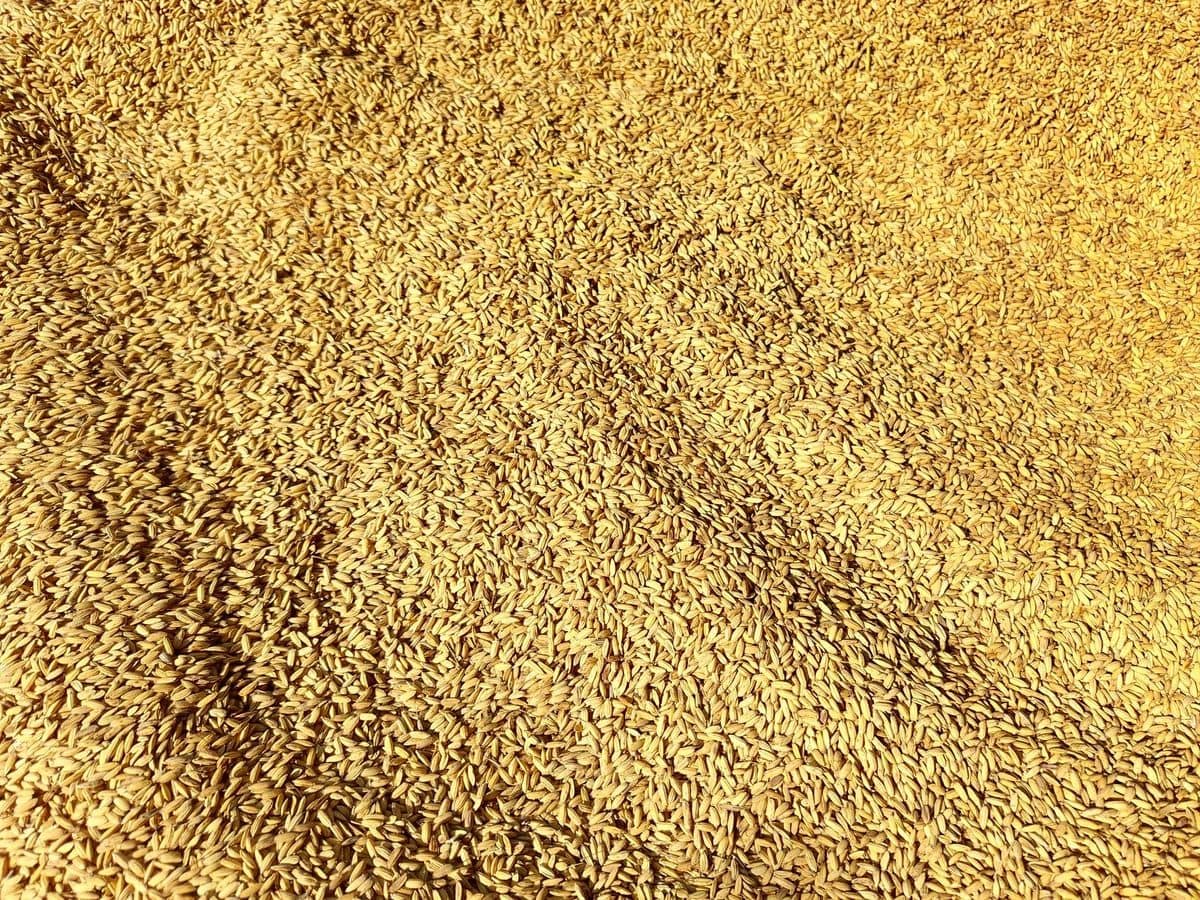
Which Rice to Buy for Korean Cooking
Why Korean cooking needs short-grain rice specifically, how it differs from sushi rice and jasmine, and when glutinous rice is required instead.
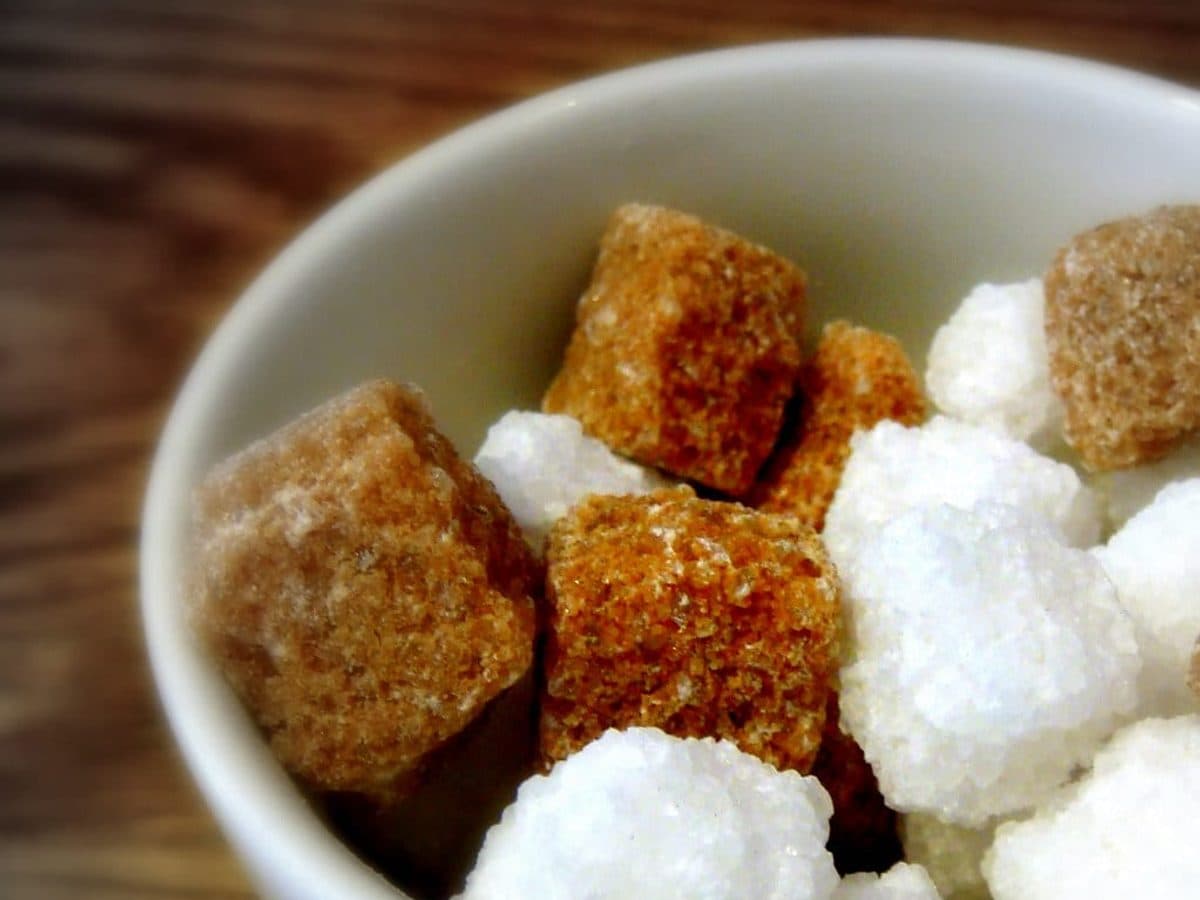
Sweeteners in Korean Cooking
When Korean recipes call for jocheong, mullyeot, honey or plain sugar, why they are not interchangeable, and which one gives you the glossy finish.
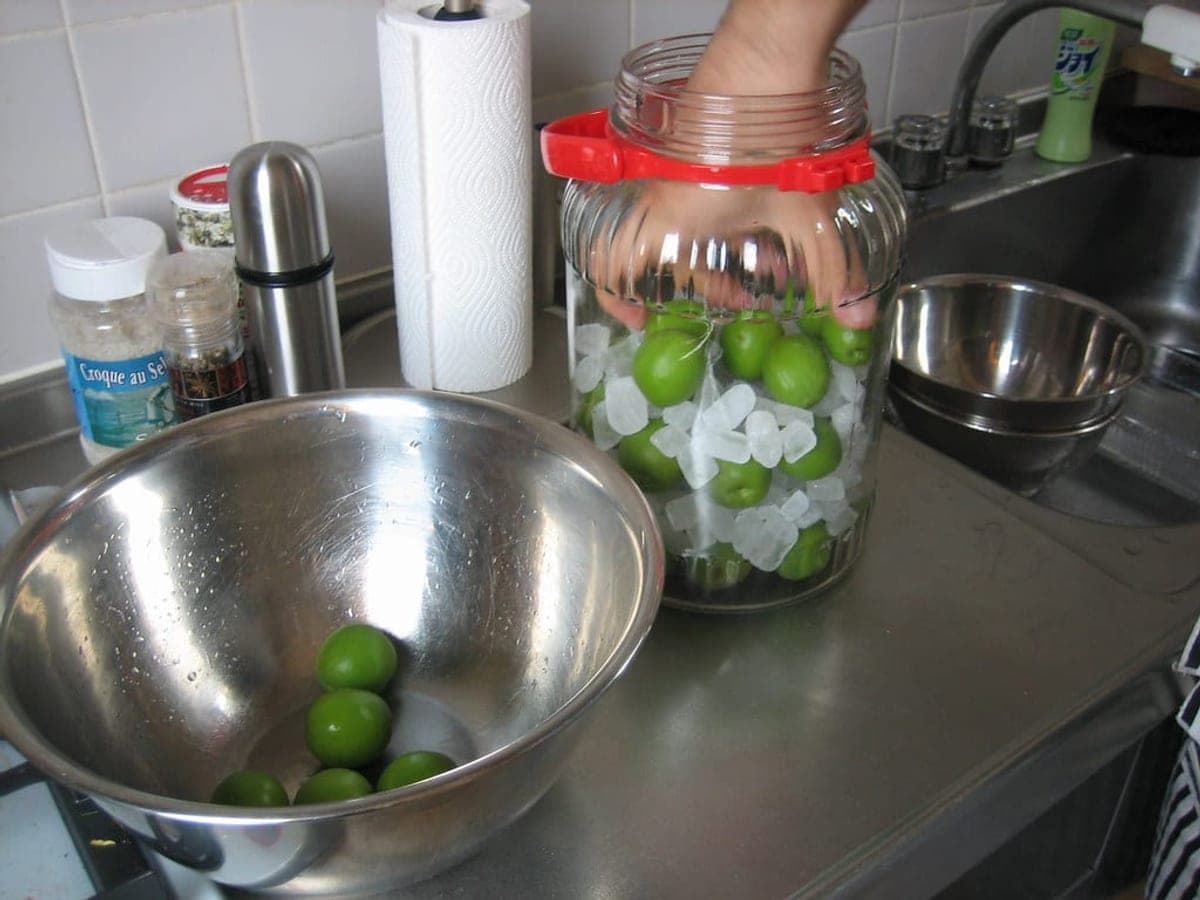
Maesil-cheong (Green Plum Syrup)
What maesil-cheong is used for in savoury Korean cooking, why the plums must be removed after 100 days, and what to substitute if you don't have a jar.