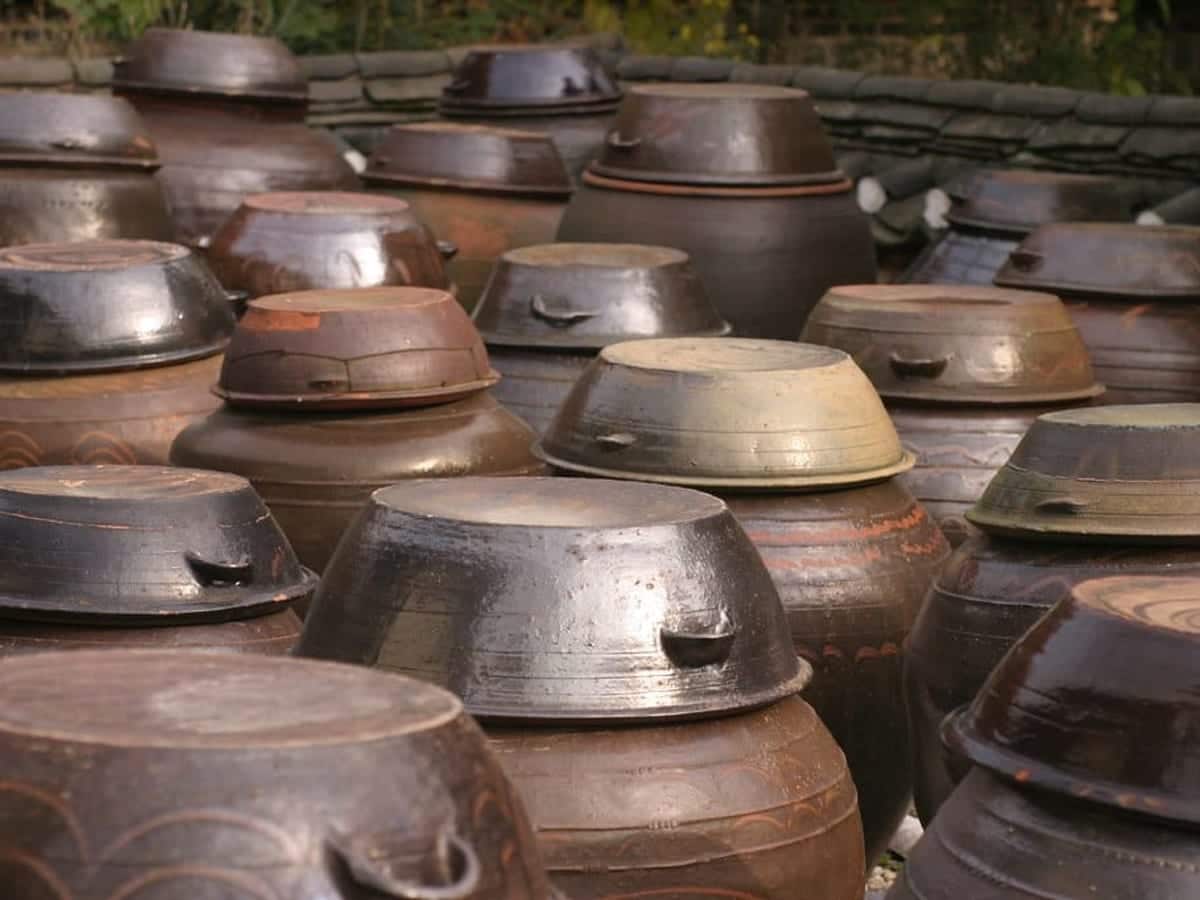
Photo: Drab Makyo · CC BY
Did you know — Korean culture
The dedicated kimchi refrigerator is a genuinely large Korean appliance category, and it exists because ordinary fridges are bad at this. A standard fridge cycles its temperature by several degrees as the compressor runs; kimchi fridges hold a much tighter band and cool from the walls rather than by blowing air, which keeps the kimchi from drying. They were introduced commercially in the mid-1990s and are now in a majority of Korean households.
Kimchi is alive, and storage is really a question of controlling how fast it keeps changing rather than stopping it. Nothing in a home fridge halts fermentation — it only slows it.
That is not a defect. Kimchi has a use for every stage of its life: crisp and barely sour for eating fresh, medium for kimchi jjigae, and thoroughly sour for kimchi bokkeumbap. Storage is about deciding when you want each.
Keep it submerged
The single most useful habit. Press the kimchi down so the brine covers it, every time you take some out.
Exposed to air, the top layer dries, discolours and can grow surface mould — while the submerged kimchi below is fine. A small weight, a clean plate, or a sheet of cling film pressed onto the surface all work.
Cold slows it, warmth speeds it
Fresh kimchi left at room temperature ferments in one to two days; in the fridge the same change takes one to two weeks.
If your kimchi is souring faster than you can eat it, the answer is almost always that the container is in the fridge door — the warmest and most temperature-unstable spot. Move it to the back of a lower shelf.
Use a proper container
Glass or food-grade plastic with a tight lid. Kimchi stains, smells, and reacts with bare metal, so avoid uncoated aluminium.
Leave headspace. Fermentation produces gas, and a container filled to the brim will push brine out past the seal — which is why kimchi containers are sold with a slight dome and why Korean kitchens keep them on a tray.
When to stop trusting it
Sour, fizzy, strongly pungent kimchi is normal and usable. What is not: fuzzy mould of any colour on the surface, a slimy rather than brine-like liquid, or a smell that reads as rotten rather than sharp.
White film on the surface is usually kahm yeast — harmless, skim it — but fuzzy growth means the batch goes.
Containers, and why glass or Korean plastic
Glass jars — the default. Non-reactive, easy to clean, and you can see the brine level. The downside is weight and the fact that kimchi stains nothing but smells travel through a poor seal.
Korean kimchi containers — designed for this, with a proper gasket and often an inner press-down lid that holds the vegetables under the brine. Worth buying if you make kimchi regularly.
Avoid metal. The acid reacts, and it can affect flavour over months.
Avoid thin, cheap plastic. It absorbs smell and colour permanently, and it will never be anything but the kimchi container afterwards.
Leave headroom. A third of the container, at least, for the first week. Kimchi bubbles up as it ferments, and an overfilled jar will push brine out onto your shelf.
Keeping it under the brine
This is the single most important storage rule and the one that prevents almost every problem.
Anything above the brine line is exposed to air, and air is where mould and off-flavours come from. The brine itself is a preservative.
Press it down each time you take some out. A clean inner lid, a small plate, or a folded piece of the outer cabbage leaf laid on top all work.
Use clean utensils, always. A spoon that has been in your mouth or another dish introduces organisms that the brine was keeping out. This is the most common cause of a batch going strange.
Top up with a little salted water if the brine level genuinely drops below the vegetables.
How the smell question actually works
Kimchi smells, and it will scent a fridge through a mediocre seal.
A double container — a sealed jar inside a larger sealed box — is the practical home fix and works well.
A dedicated kimchi fridge exists in a large share of Korean households, holding a steady low temperature that slows fermentation without freezing. Not necessary, but it explains why Korean kimchi keeps its texture longer than most home batches abroad.
Do not freeze kimchi. The cell walls rupture and it thaws limp. If you have far too much, the answer is to cook it — kimchi jjigae and kimchi bokkeumbap both want it old.
Common questions
How long does kimchi last in the fridge?
Months, and it keeps changing rather than going off. It's brightest in the first two to three weeks, properly sour by about two months, and past that it's better cooked than eaten raw. Kept under its brine it stays safe far longer than most people expect.
Should kimchi be fully submerged in brine?
Yes. Anything above the brine line is exposed to air, which is where mould and off-flavours come from. Press it down each time you take some out.
Can you freeze kimchi?
You can, but you shouldn't. Freezing ruptures the cell walls and it thaws limp. If you have too much, cook it — kimchi jjigae and kimchi fried rice both want old kimchi anyway.
Why does my kimchi have white film on top?
Usually kahm yeast, which is harmless — skim it off and press the kimchi back under the brine. Fuzzy or coloured mould is different and means discarding the batch.
More to cook
All Ingredient & Substitute Guides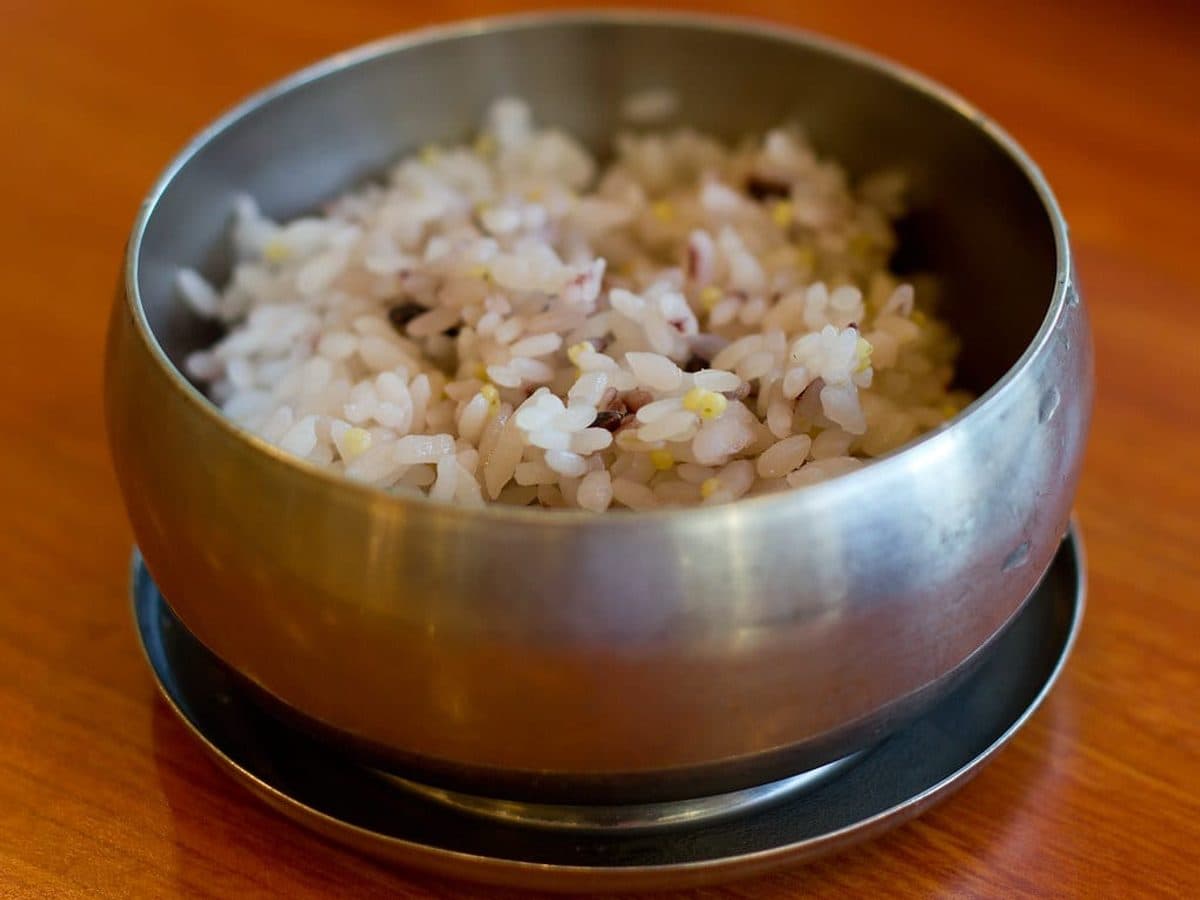
Japgokbap (Korean Multigrain Rice)
Which grains go into Korean multigrain rice, why each needs a different soak time, and the ratio that keeps it from turning heavy.
Jocheong (Korean Rice Syrup)
What jocheong does that sugar cannot, how it differs from clear corn syrup (mullyeot), and why it goes into a glaze at the end rather than the start.

Kimchi 101: A Complete Guide
What kimchi actually is, the main types beyond the red cabbage one, how fermentation works, and what to do when a batch goes wrong.