Did you know — Korean culture
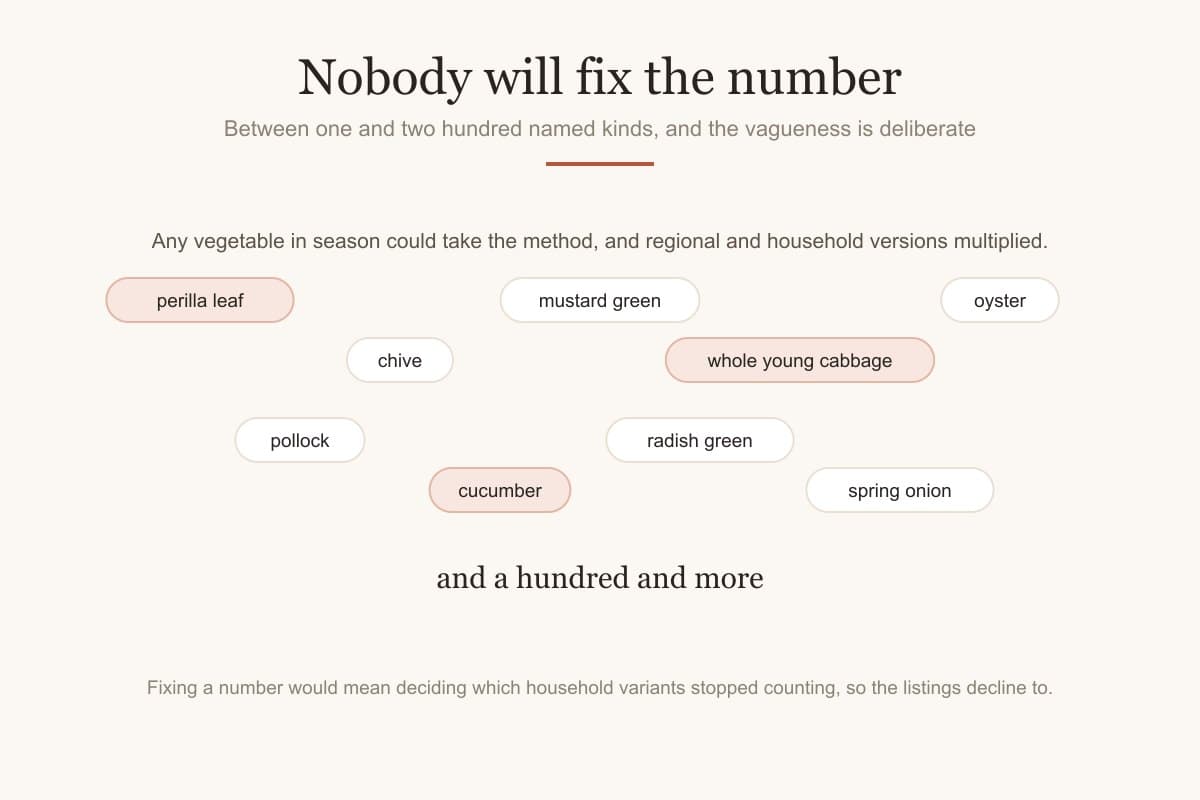
The number of named kimchi usually given is somewhere between one and two hundred, and the vagueness is the interesting part. Kimchi is a method rather than a recipe, so any vegetable in season could take it, and regional and household versions multiplied accordingly — kimchi made from perilla leaf, from chive, from mustard green, from whole young cabbage, from oyster, from pollock. The Korean government's own cultural listings decline to fix a number, because fixing one would mean deciding which household variants stopped counting.
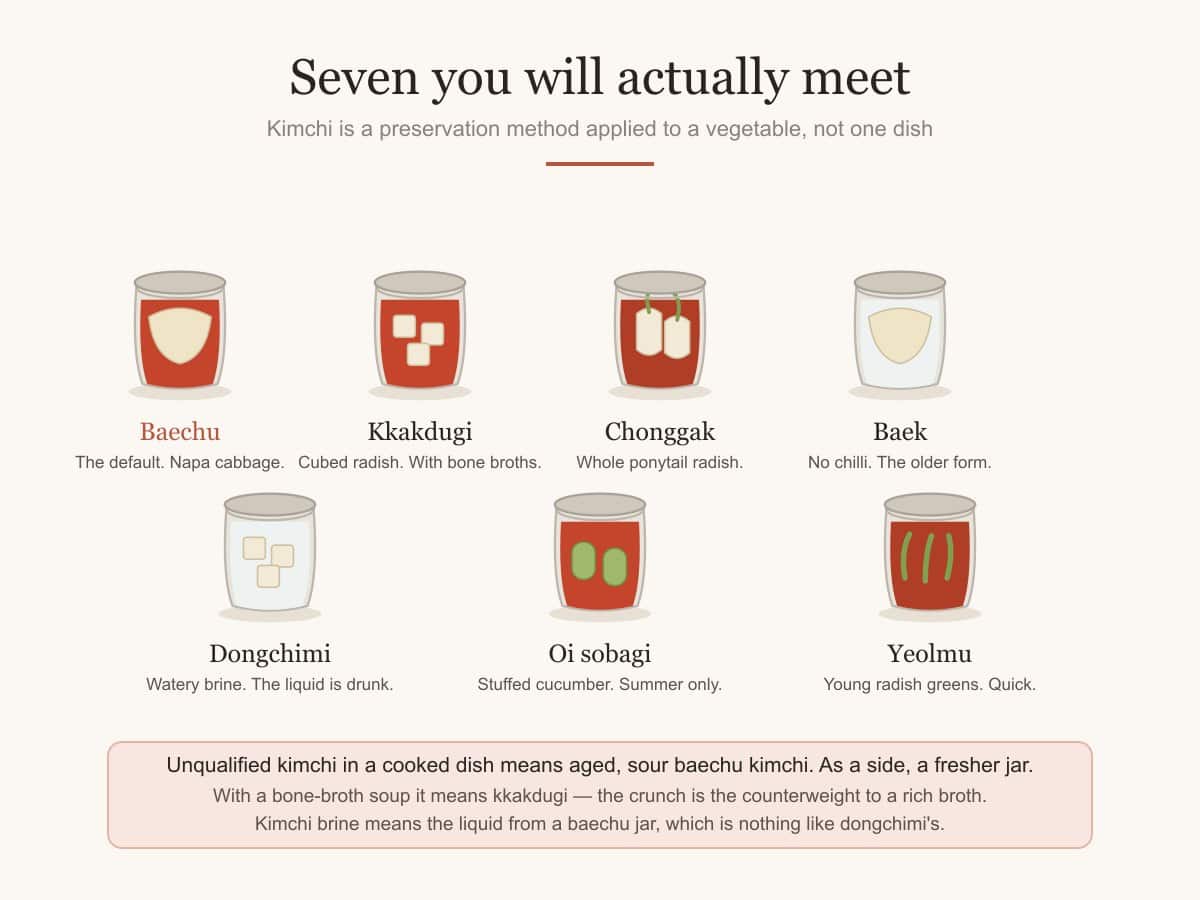
There are well over a hundred named kimchi, and a recipe that says kimchi almost always means one specific kind. These seven cover nearly everything you will meet.
Kimchi is a preservation method applied to a vegetable, which is why the names are mostly just the vegetable plus a word.
The default: baechu kimchi
Napa cabbage kimchi is what an unqualified kimchi means, in a recipe or on a table. Whole or quartered cabbage, salted, rinsed, coated in a chilli paste.
It is the one that ages into jjigae and bokkeumbap, and the one gimjang produces in bulk every November.
Geotjeori is the same cabbage dressed and eaten immediately, unfermented — a fresh salad rather than a preserve, and what a bossam restaurant serves.
The radish kimchi
Kkakdugi is Korean radish cut into cubes. Crunchy, usually a little sweeter, and the standard accompaniment to seolleongtang and other bone broths.
Chonggak kimchi is small whole ponytail radishes, greens attached, left in one piece. The name means bachelor kimchi, after the topknot the greens resemble.
Dongchimi is the watery one: radish in a clear, barely spiced brine, no chilli. Its liquid is drunk, and it is the traditional broth base for mul naengmyeon.
The white one, and the summer ones
Baek kimchi is napa cabbage with no chilli — pear, jujube, chestnut, a mild brine. It is not a modern concession to mild palates; it is what kimchi was before chilli arrived.
Oi sobagi is cucumber, scored and stuffed, made fresh in summer and eaten within days. It does not keep.
Yeolmu kimchi is young summer radish greens, thin and quick-fermenting, and the usual topping for cold noodles.
Which one a recipe means
Unqualified kimchi in a cooked dish: aged baechu kimchi. Jjigae, jeon, bokkeumbap, mandu filling all want it sour.
Unqualified kimchi as a side: fresh baechu kimchi, two to four weeks old.
With a bone-broth soup: kkakdugi. The crunch is the point against a soft, rich broth.
And if a recipe calls for kimchi brine, it means the liquid from a baechu jar, not dongchimi — they are not interchangeable, since one is a thick seasoned liquid and the other is nearly water.
Common questions
What does kimchi mean without a qualifier?
Napa cabbage kimchi — baechu kimchi. In a cooked dish it means aged, sour kimchi; as a side dish it means a fresher two-to-four-week jar.
What is the difference between kkakdugi and chonggak kimchi?
Both are radish. Kkakdugi is Korean radish cut into cubes; chonggak kimchi is small whole ponytail radishes with their greens still attached.
Is white kimchi a modern mild version?
No. Baek kimchi is what kimchi was before chilli reached Korea in the sixteenth century, and it has been made continuously ever since.
Which kimchi goes with seolleongtang?
Kkakdugi. The crunch of cubed radish is specifically the counterweight to a soft, rich bone broth, and it is the standard pairing.
More to cook
All Ingredient & Substitute Guides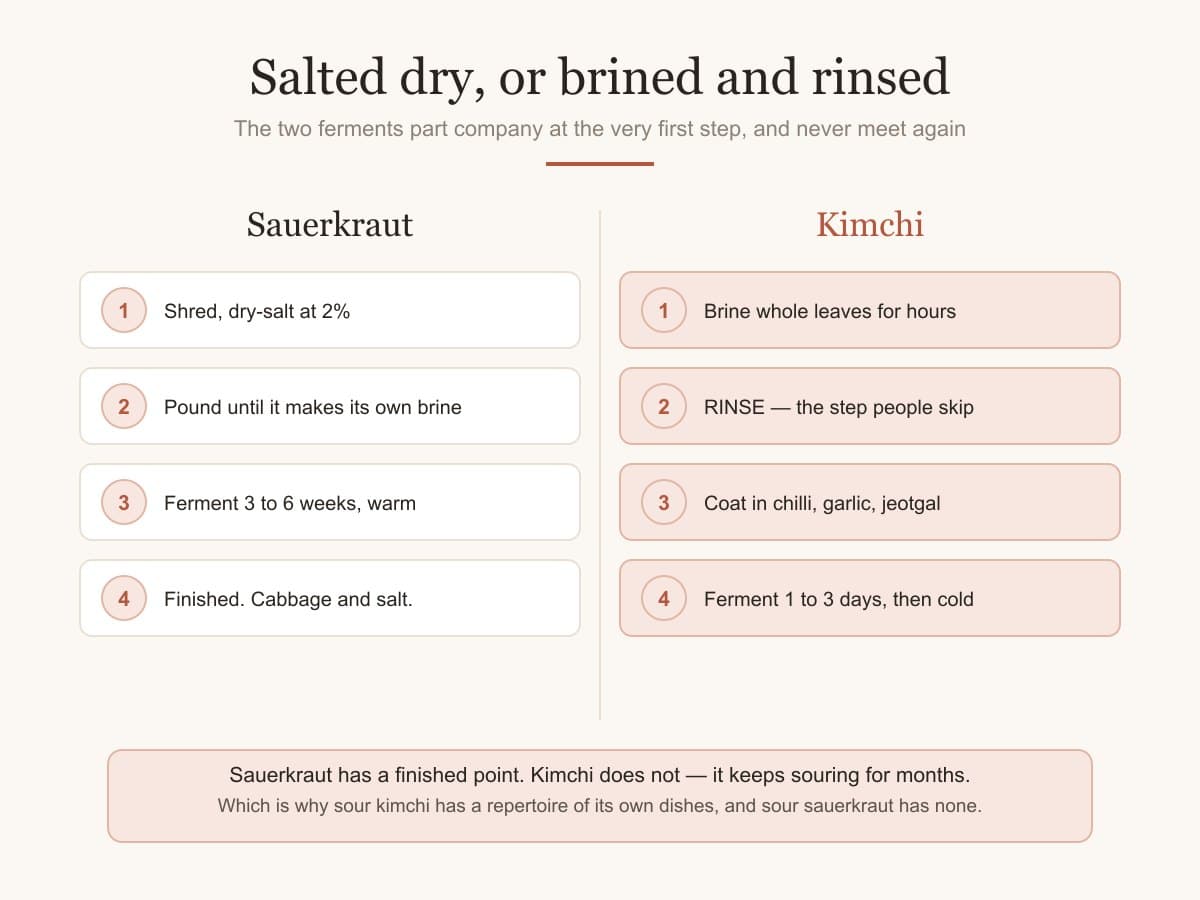
Kimchi vs Sauerkraut
Both are lacto-fermented cabbage and that is where the resemblance stops. Salt method, seasoning, timing and what each one does in cooking.
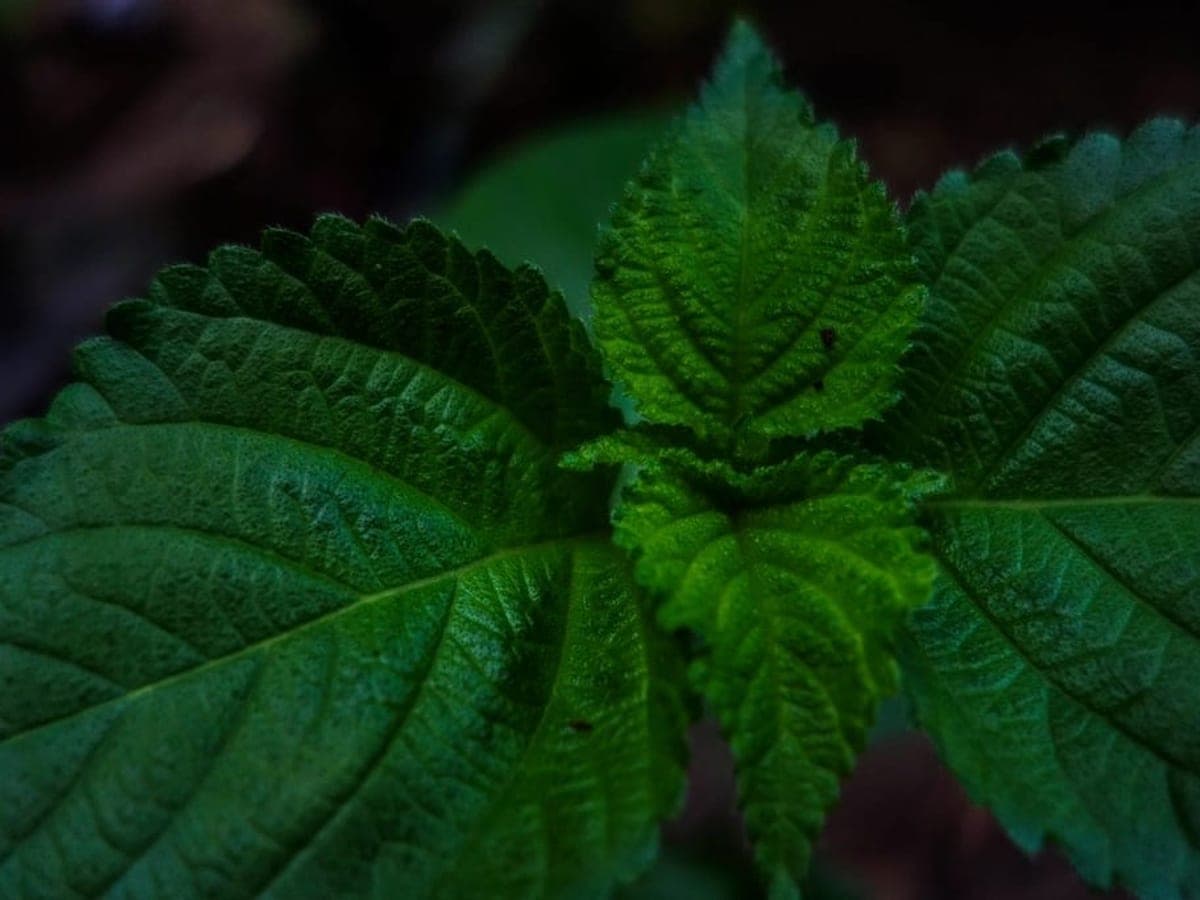
Kkaennip (Perilla Leaves)
Why Korean perilla leaves are not shiso despite looking similar, how they're used in ssam and jangajji, and what to do if you can't find them fresh.
Korean Banchan: A Complete Guide
What banchan actually are, how many a Korean meal needs, which ones keep for weeks, and how to build a table without cooking all day.