Did you know — Korean culture
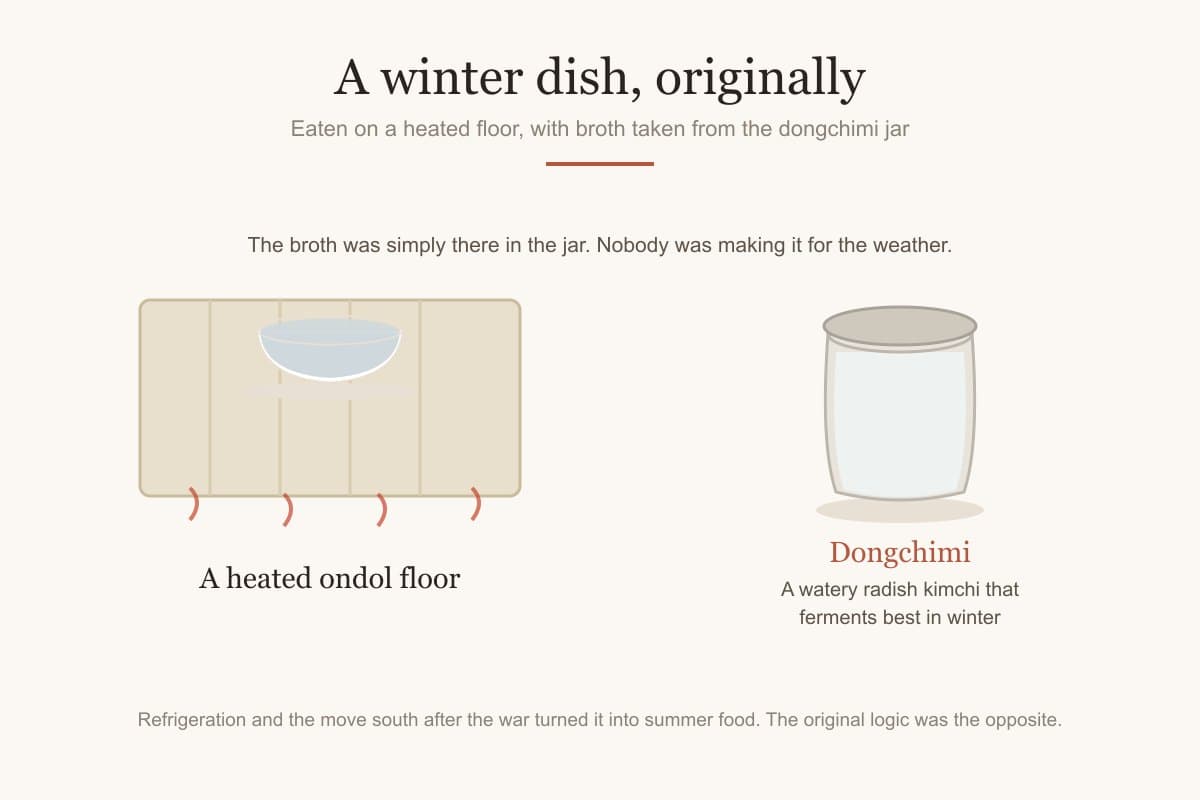
Naengmyeon was a winter dish before it was a summer one. In the north it was eaten in cold weather, on heated ondol floors, with the broth taken from dongchimi — a watery radish kimchi that ferments best in winter and was simply there in the jar. The shift to summer eating came with refrigeration and with the dish's move south after the war, where a bowl of ice-cold noodles answered a different need entirely. The original logic was the opposite of the modern one.
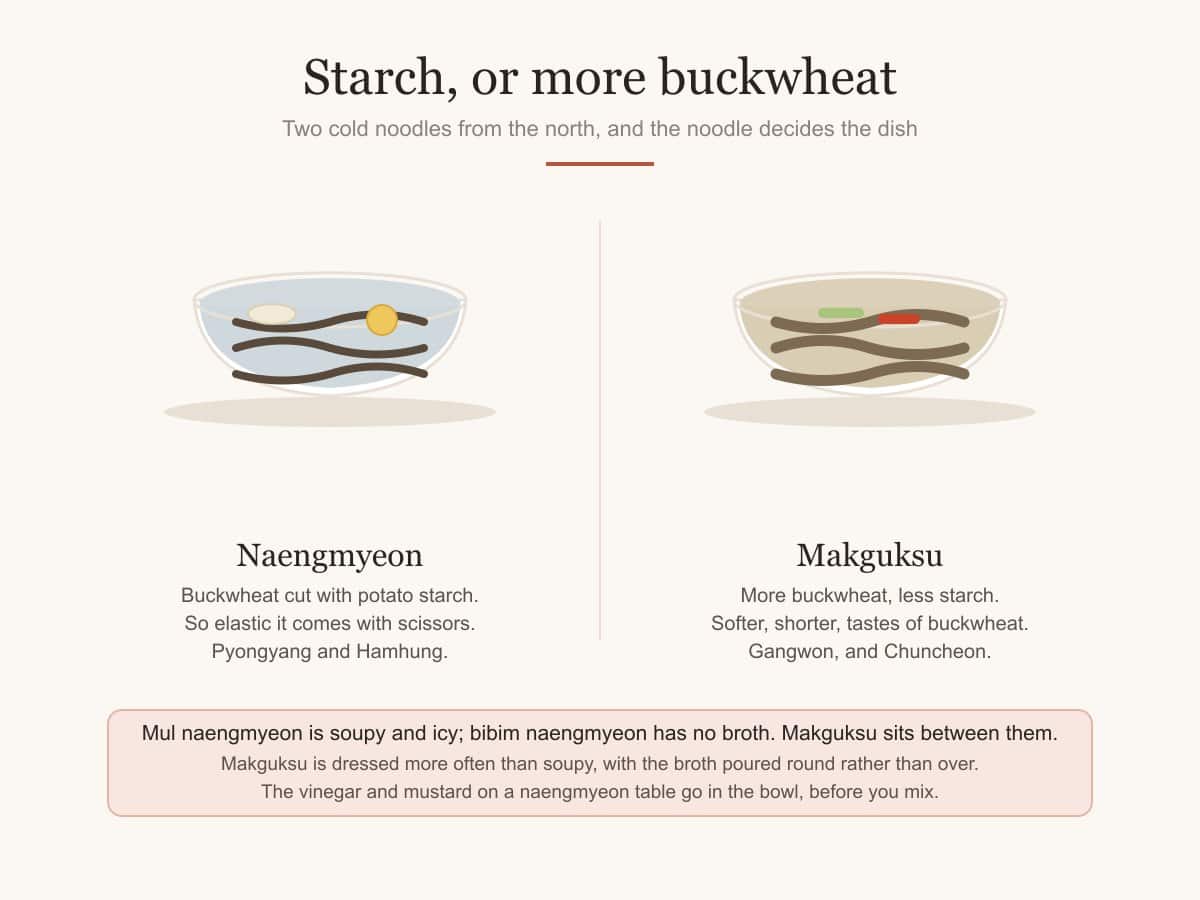
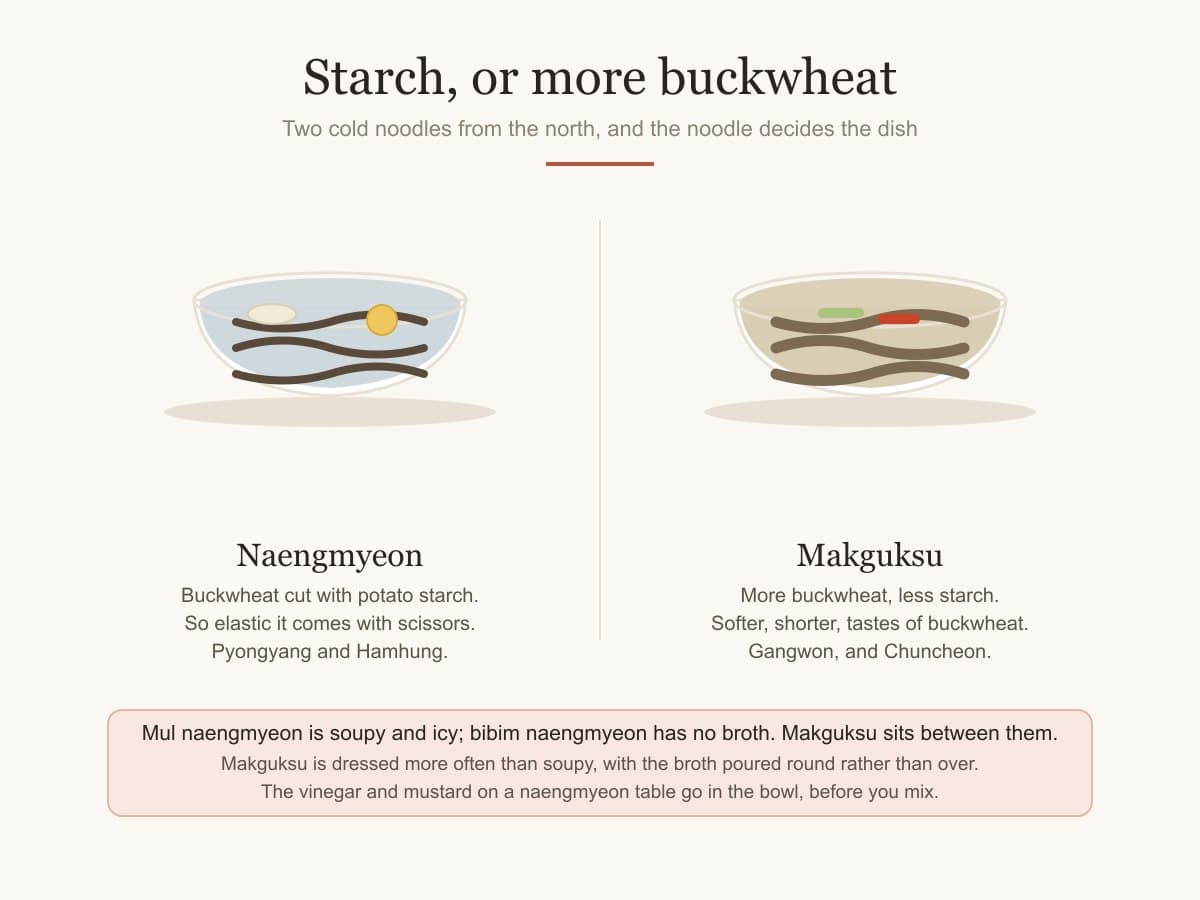
Two cold buckwheat noodle dishes, both from the northern half of the peninsula, often confused and genuinely different.
Naengmyeon's noodle is chewy and elastic. Makguksu's is softer and more buckwheat-forward. The dishes follow from the noodle.
The noodle
Naengmyeon noodles are buckwheat cut with sweet potato or potato starch, which is what makes them so elastic they are traditionally cut at the table with scissors.
Makguksu noodles are a higher proportion of buckwheat and less starch, so they are softer, shorter and break more readily. They taste more of buckwheat.
The word mak means roughly, carelessly — made in a hurry, from whatever buckwheat was to hand. The name is about the method.
The broth, or the absence of one
Mul naengmyeon is served in an icy beef-and-radish broth, sometimes with dongchimi brine, and the broth is the dish. Bibim naengmyeon has no broth at all and is dressed with a gochujang sauce.
Makguksu is more often dressed than soupy — a sauce of gochujang, vinegar and sugar, with a little broth poured round it rather than over it.
So the pairing is: mul naengmyeon against makguksu's soupy versions, and bibim naengmyeon against its dressed ones. The two dishes overlap in the middle.
Where each comes from
Naengmyeon is Pyongyang and Hamhung. The Pyongyang style is the mul version, mild and clear; the Hamhung style is the bibim version, spicy, made with sweet potato starch noodles and often topped with raw skate.
Makguksu is Gangwon province, and specifically Chuncheon, where buckwheat grew on ground too poor and too mountainous for rice.
Both travelled south with refugees after the Korean War, which is why both are now eaten nationally.
How each is served
Naengmyeon arrives genuinely cold — the broth half-frozen into slush in good restaurants — with sliced pear, cucumber, half a boiled egg and cold beef.
Makguksu is cool rather than iced, and usually comes with shredded vegetables, a sheet of gim and sesame.
And the vinegar and mustard on a naengmyeon table go in the bowl, not on the side — a splash of each before you mix, which is what the small bottles are for.
Common questions
What is the difference between naengmyeon and makguksu?
Naengmyeon noodles are cut with potato or sweet potato starch and are famously chewy; makguksu is a higher proportion of buckwheat, softer and more buckwheat-flavoured. Naengmyeon is more often soupy, makguksu more often dressed.
Which is spicier?
Bibim naengmyeon is the spiciest of the group. Makguksu's dressed version is moderately spicy, and mul naengmyeon is not spicy at all.
Why are naengmyeon noodles cut with scissors?
They are extremely elastic because of the starch in them, long by tradition, and genuinely difficult to bite through. The scissors arrive with the bowl.
Where does makguksu come from?
Gangwon province, and Chuncheon in particular, where buckwheat grew on mountainous ground too poor for rice. It travelled south after the Korean War.
More to cook
All Ingredient & Substitute Guides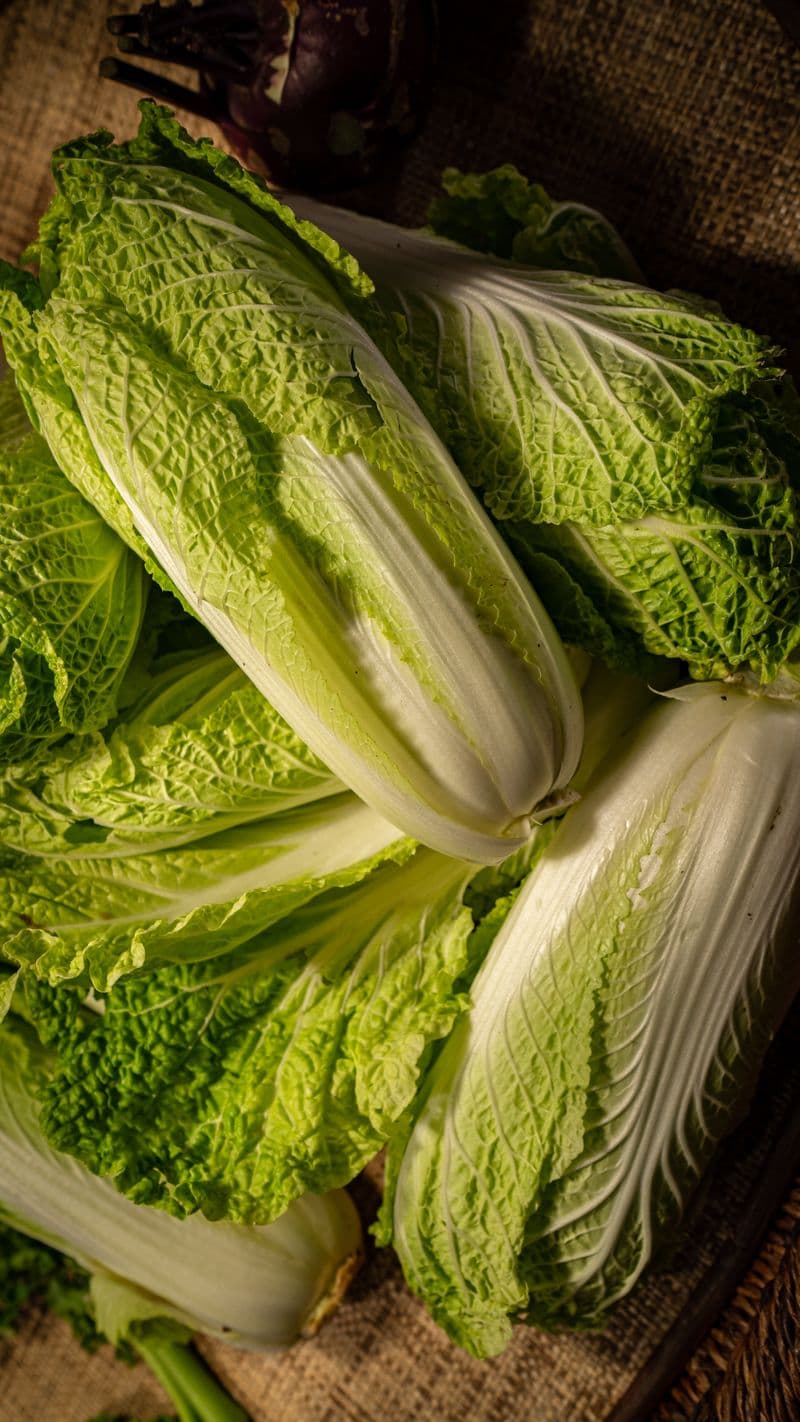
Napa Cabbage Substitute
Which cabbages actually work in place of napa, which ones only work outside kimchi, and why the water content matters more than the flavor.

Perilla Oil Substitute
Nothing quite replaces deulgireum, and which compromise to pick depends on the dish. What to use for namul, for soup and for finishing.
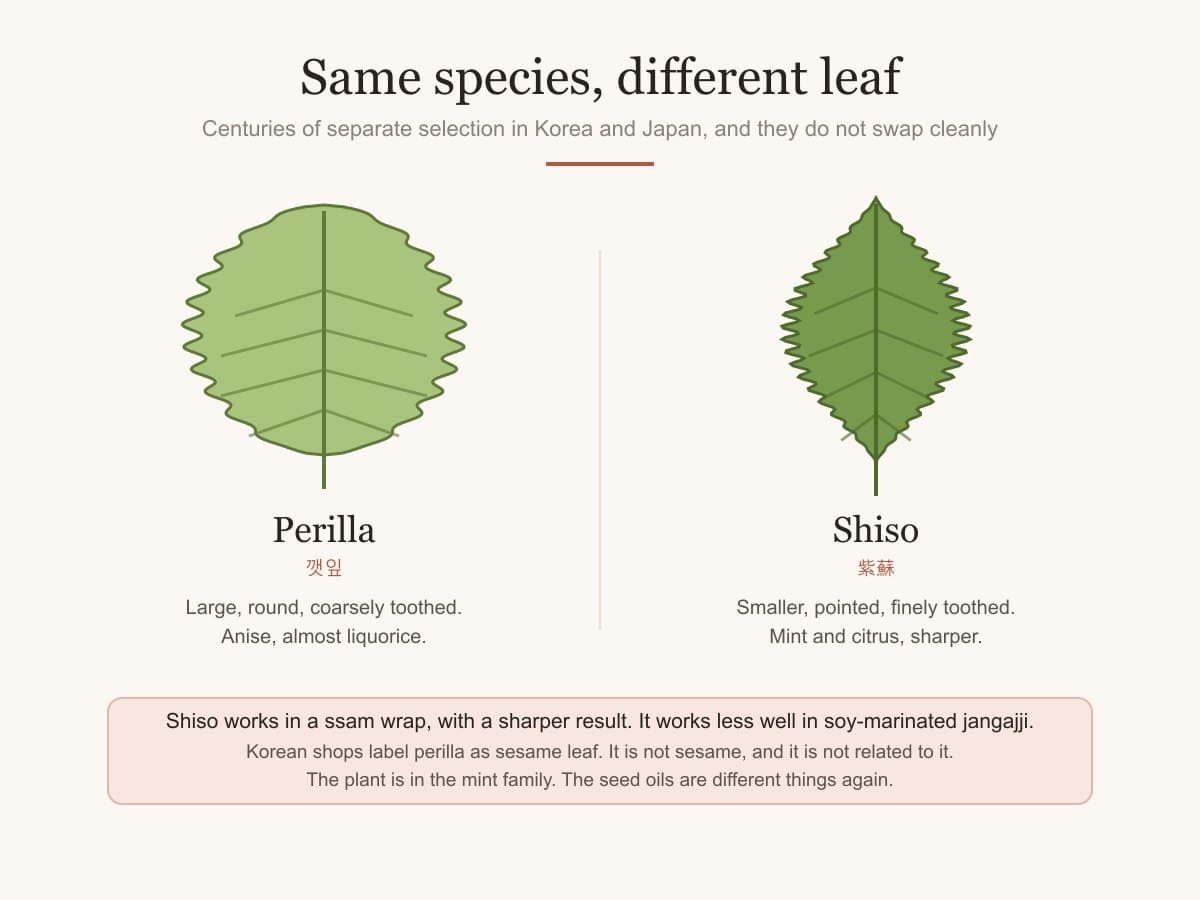
Perilla vs Shiso
Korean kkaennip and Japanese shiso are varieties of one species, and they are not interchangeable. How they differ and when a swap works.