Did you know — Korean culture
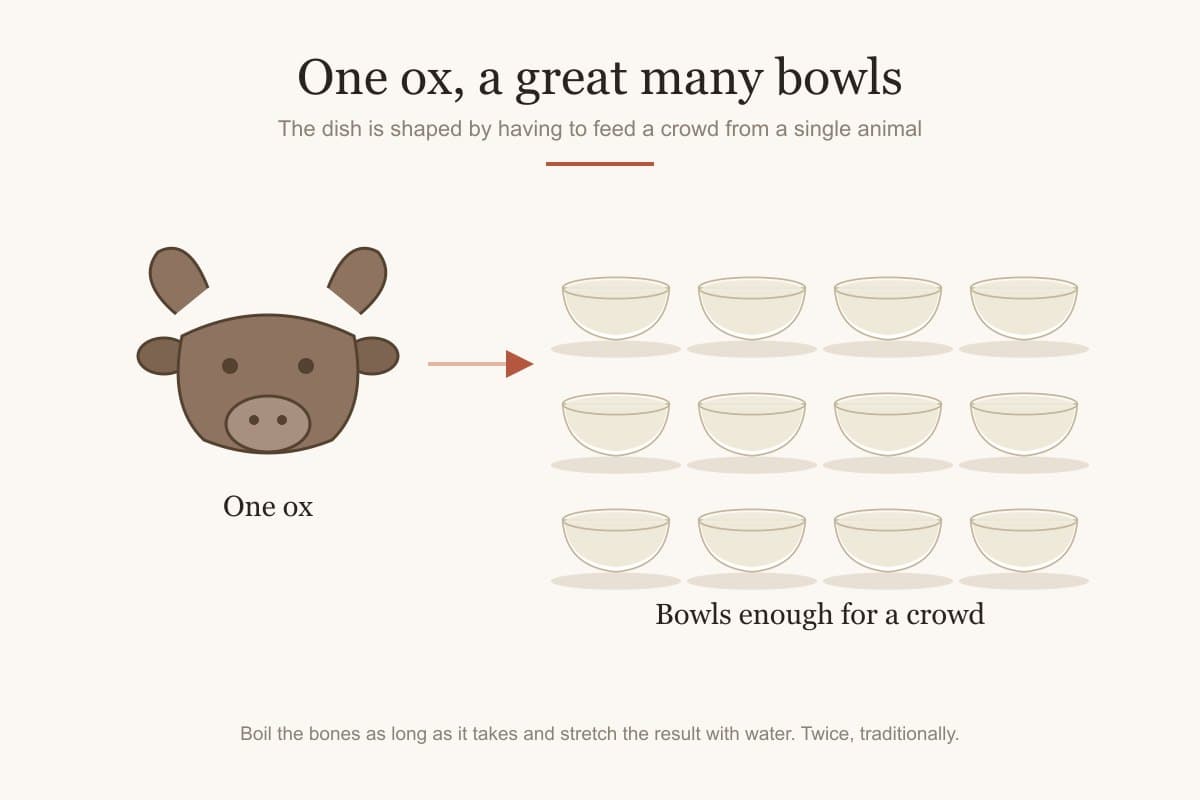
The most repeated origin story ties seolleongtang to a royal ritual. At the Seonnongdan altar the king performed an annual rite to the gods of agriculture, after which an ox was slaughtered and boiled into a broth distributed to the crowd — enough people that the only practical method was to boil the bones for as long as it took and stretch the result with water. Linguists dispute whether the name actually derives from Seonnongdan, and an alternative traces it to a Mongolian word for a meat broth. Both explanations agree on the dish's shape: one animal, a great many bowls.
Most stock advice says never boil, because boiling makes a broth cloudy. Seolleongtang wants exactly that cloudiness, so the usual advice is backwards here.
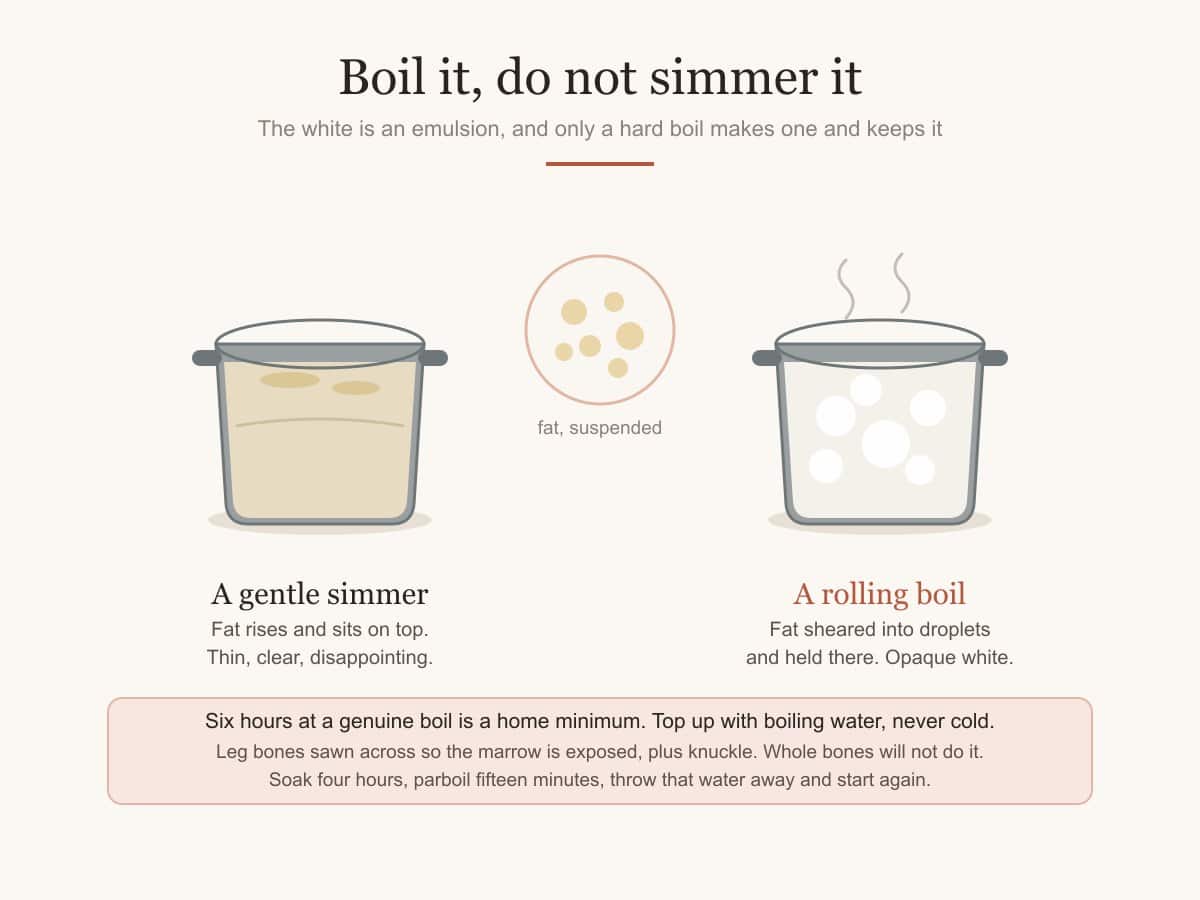
The white is an emulsion of fat and collagen, and only a hard boil creates it. A gentle simmer gives you a clear, thin, disappointing broth.
Boil, do not simmer
A rolling boil is what shears fat into droplets small enough to stay suspended, and keeps them suspended. Let the pot drop to a simmer and the emulsion breaks — the fat rises, and the broth clears.
Keep it at a genuine boil for hours, not a lazy bubble. Six hours is a reasonable home minimum; restaurants run theirs far longer.
Top up with boiling water as it reduces, never cold. Cold water drops the temperature and stalls the emulsion.
The bones have to be the right bones
Marrow bones and knuckle. Leg bones sawn across, so the marrow is exposed, plus knuckle or neck for collagen. Rib bones alone will not do it.
Ask the butcher for seolleongtang bones or ox leg bones cut into sections. If they come whole, they are nearly useless — the marrow cannot get out.
Brisket is simmered alongside for the meat, lifted out when tender at around two hours, sliced, and returned to the bowl at serving.
Soak and parboil, then start again
Soak the bones in cold water for at least four hours, changing it two or three times, until the water runs pale. This draws out blood that would otherwise turn the broth grey rather than white.
Then parboil hard for fifteen minutes, discard that water entirely, scrub the bones, and wash the pot. The scum from the first boil is exactly what you do not want emulsified into the finished stock.
This step costs twenty minutes and is the difference between white and dirty-grey.
The second and third extraction
Traditional practice boils the same bones more than once. Draw off the first batch of broth after four to six hours, top the pot up, and boil again, then combine the two.
The first extraction is the richest and the second is lighter; blended, they give a broth that is both white and not greasy.
And season at the bowl, not in the pot. Seolleongtang is served unsalted with salt, pepper and chopped spring onion on the table — the same convention as gomtang-style clear soups, and the reason the broth itself tastes of almost nothing before you touch it.
Common questions
Why is my seolleongtang clear instead of white?
You simmered rather than boiled. The white is an emulsion of fat and collagen, and only a hard rolling boil creates and holds it. At a simmer the fat separates and rises.
How long does seolleongtang need to boil?
Six hours is a reasonable home minimum at a genuine boil, topped up with boiling water. Restaurants run theirs much longer, and traditional practice extracts the same bones twice.
What bones are used for seolleongtang?
Ox leg bones sawn across so the marrow is exposed, plus knuckle or neck for collagen. Whole uncut bones will not work, and rib bones alone do not give enough.
Why is seolleongtang served unsalted?
By convention it is seasoned at the table with salt, pepper and spring onion. The broth itself tastes of very little before you touch it, which is the point rather than a fault.
More to cook
All Ingredient & Substitute Guides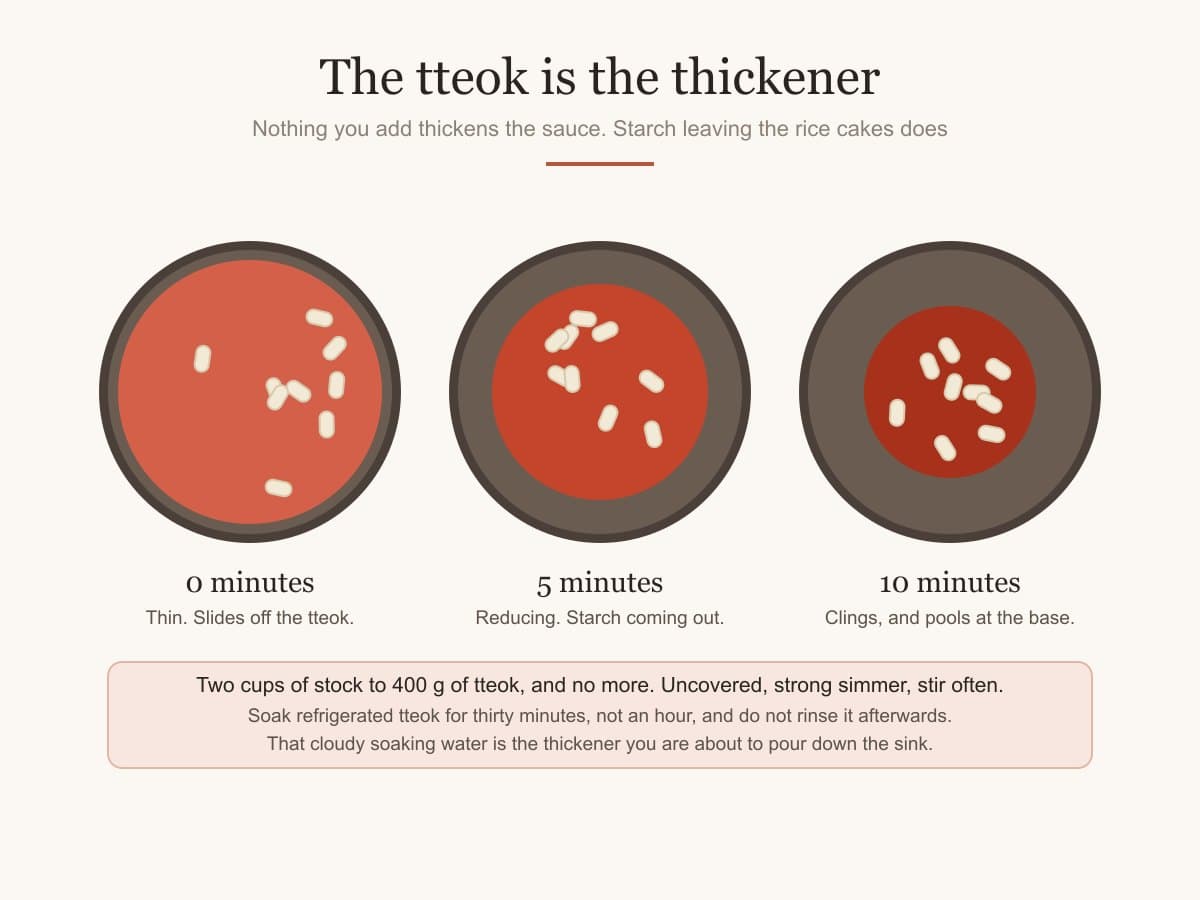
Why Is My Tteokbokki Sauce Watery?
Thin tteokbokki sauce is a starch problem, a liquid problem or a timing problem. Which one you have, and what to do about it.
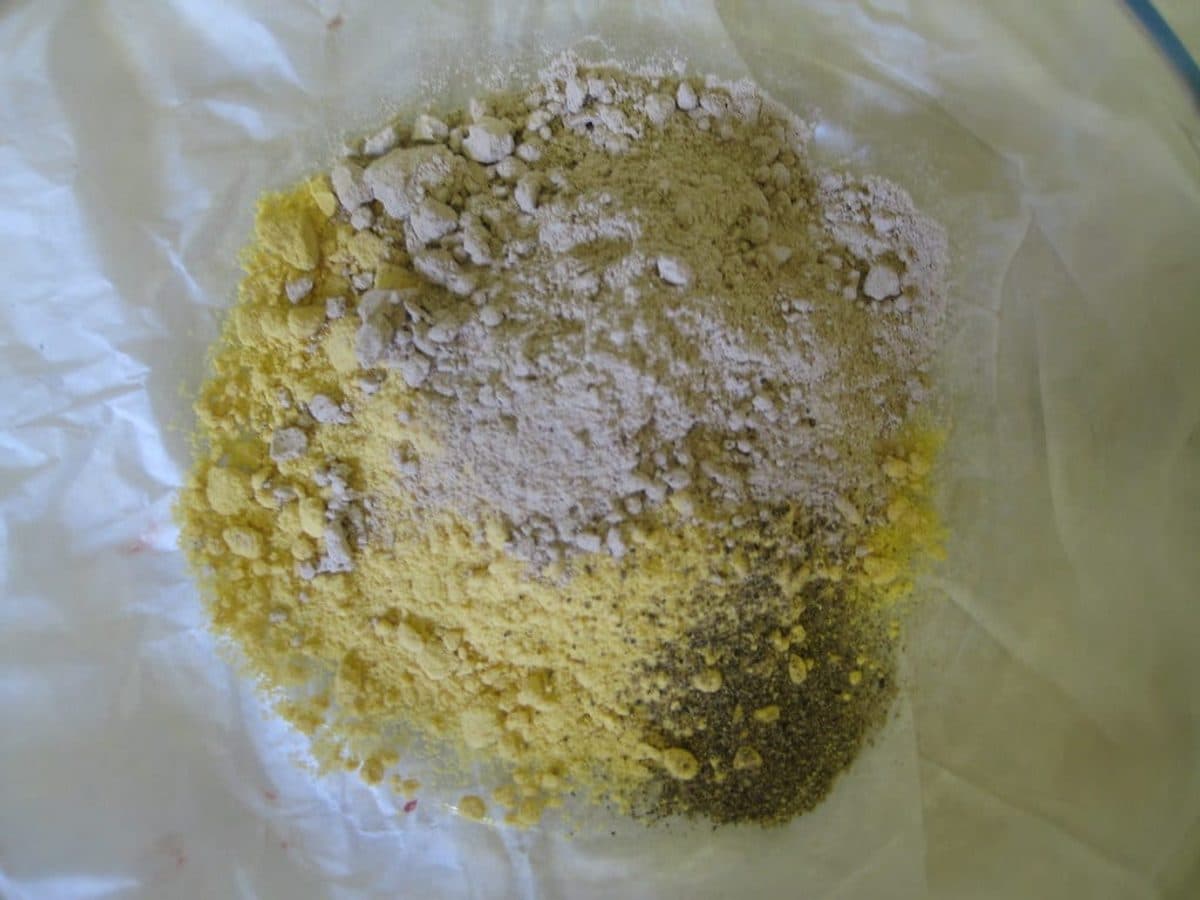
Yeongyeoja (Korean Mustard)
Why Korean mustard powder must be mixed with warm water and rested before use, and why it is nothing like the mustard on a hot dog.
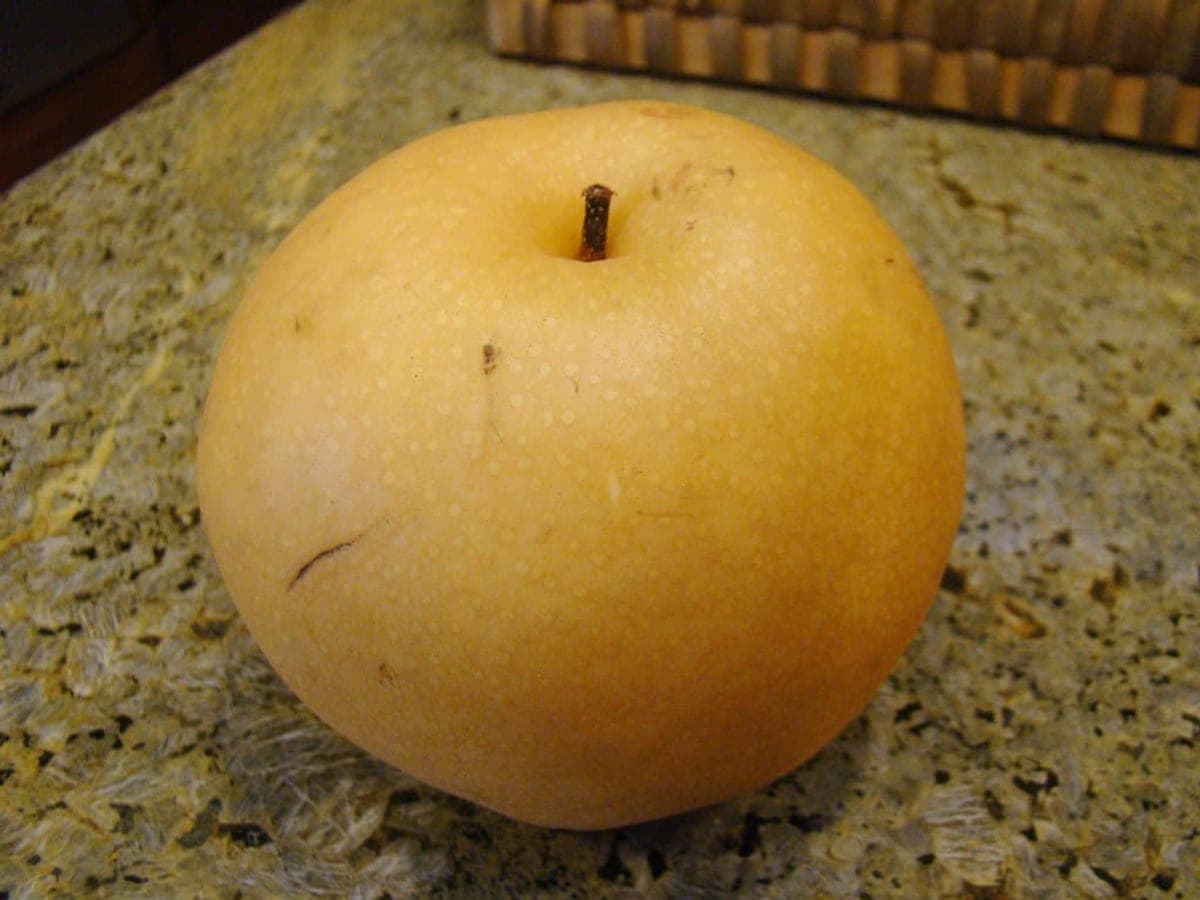
Asian Pear Substitute (For Korean Marinades)
Why Korean marinades use grated Asian pear rather than sugar, and which fruits actually reproduce the tenderising effect when you can't find one.