Steps
- 1
Salt the whole radishes, including the greens, and let sit 2-3 hours, turning occasionally.
- 2
Rinse thoroughly 2-3 times to remove excess salt, then drain well.
- 3
Whisk together gochugaru, fish sauce, shrimp, garlic, ginger, sugar, and the cooled rice flour paste into a thick sauce.
- 4
Massage the sauce into the radishes and greens, coating every surface, including between the leaves.
- 5
Pack into a clean container, pressing down to remove air pockets.
- 6
Leave at room temperature 1 day to start fermenting, then refrigerate.
- 7
Best after about a week, once the greens have softened and the flavor has deepened.
Did you know — Korean culture
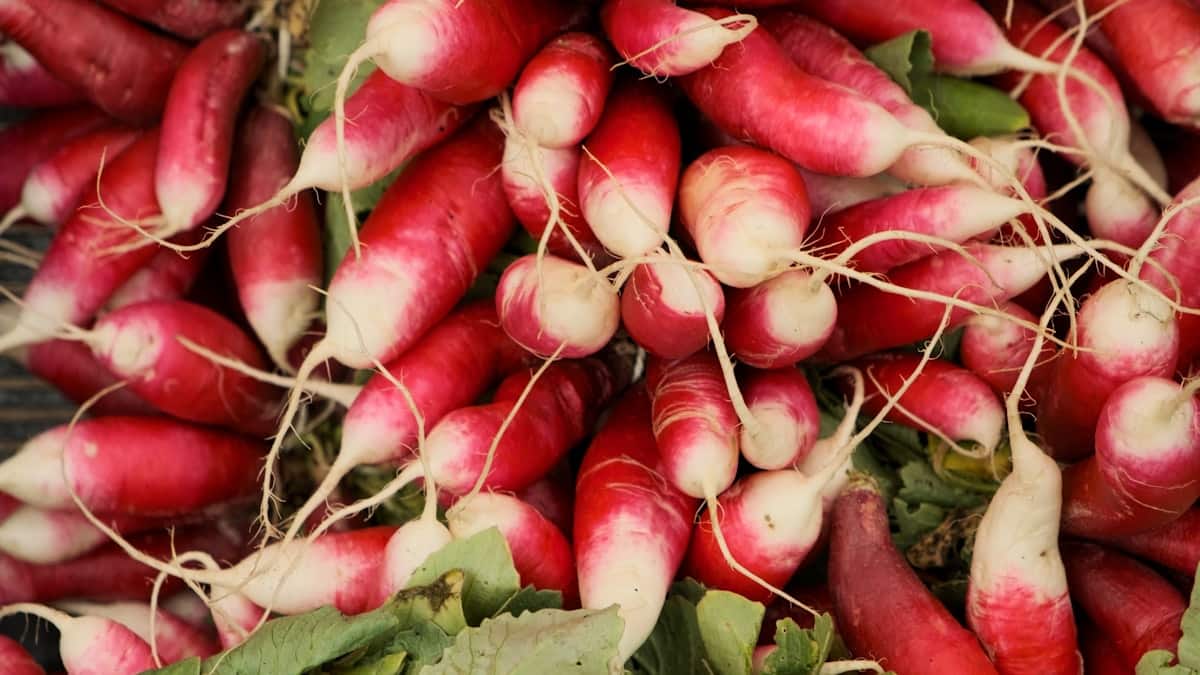
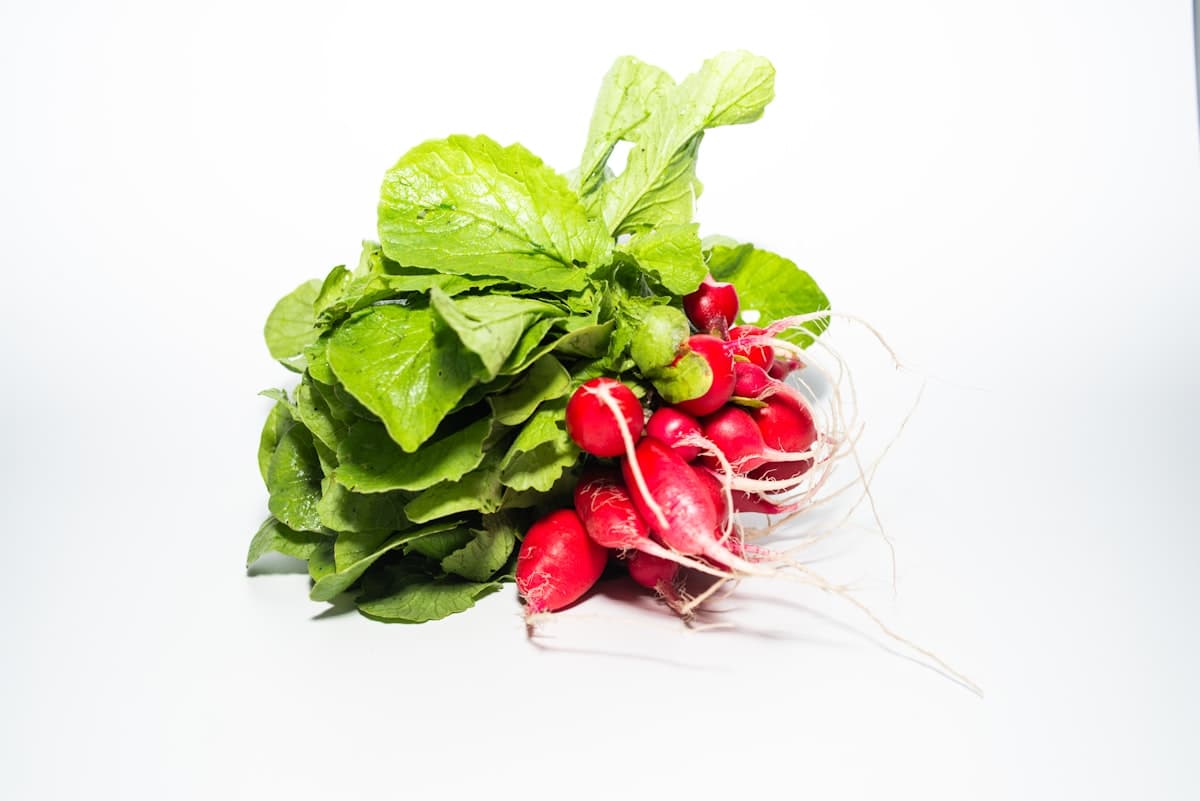
Chonggak means "bachelor" in Korean, and the kimchi is named for how the whole radish looks with its leafy green top left attached — it was thought to resemble the ponytail-style topknot unmarried young men traditionally wore before marriage in old Korea. The radish itself is sometimes even called "bachelor radish" (chonggakmu) specifically because of that visual resemblance, name and all.
Chonggak kimchi treats the greens as seriously as the radish itself, which is different from most other kimchi. The leafy tops need to be salted and coated in sauce just as thoroughly as the root, since they ferment right alongside it and make up a real portion of what ends up in each bite.
The rice flour paste isn't there for thickness alone — it gives the fermenting bacteria something to feed on early, which helps kickstart the process more reliably than relying on the radish's own sugars alone. Skipping it doesn't ruin the dish, but the fermentation tends to be slower and less consistent.
Chonggak means "bachelor" in Korean, and the kimchi is named for how the whole radish looks with its leafy green top left attached — it was thought to resemble the ponytail-style topknot unmarried young men traditionally wore before marriage in old Korea. The radish itself is sometimes even called "bachelor radish" (chonggakmu), the name carried straight through to the vegetable itself.
Troubleshooting
Greens wilting into mush instead of staying intact? They were probably over-salted or over-massaged. Handle them gently once the sauce goes on.
Sauce not reaching between the leaves? Take the time to separate the greens slightly while massaging — sauce sitting only on the outside leaves means uneven fermentation.
Radish still too crunchy after a week? Fermentation speed depends on temperature — a warmer kitchen speeds it up, so check again after a few more days in the fridge before assuming something's wrong.
Recommended products
- Fermented shrimp (saeujeot)
- Large fermentation container
More to cook
All Fermented & Pickled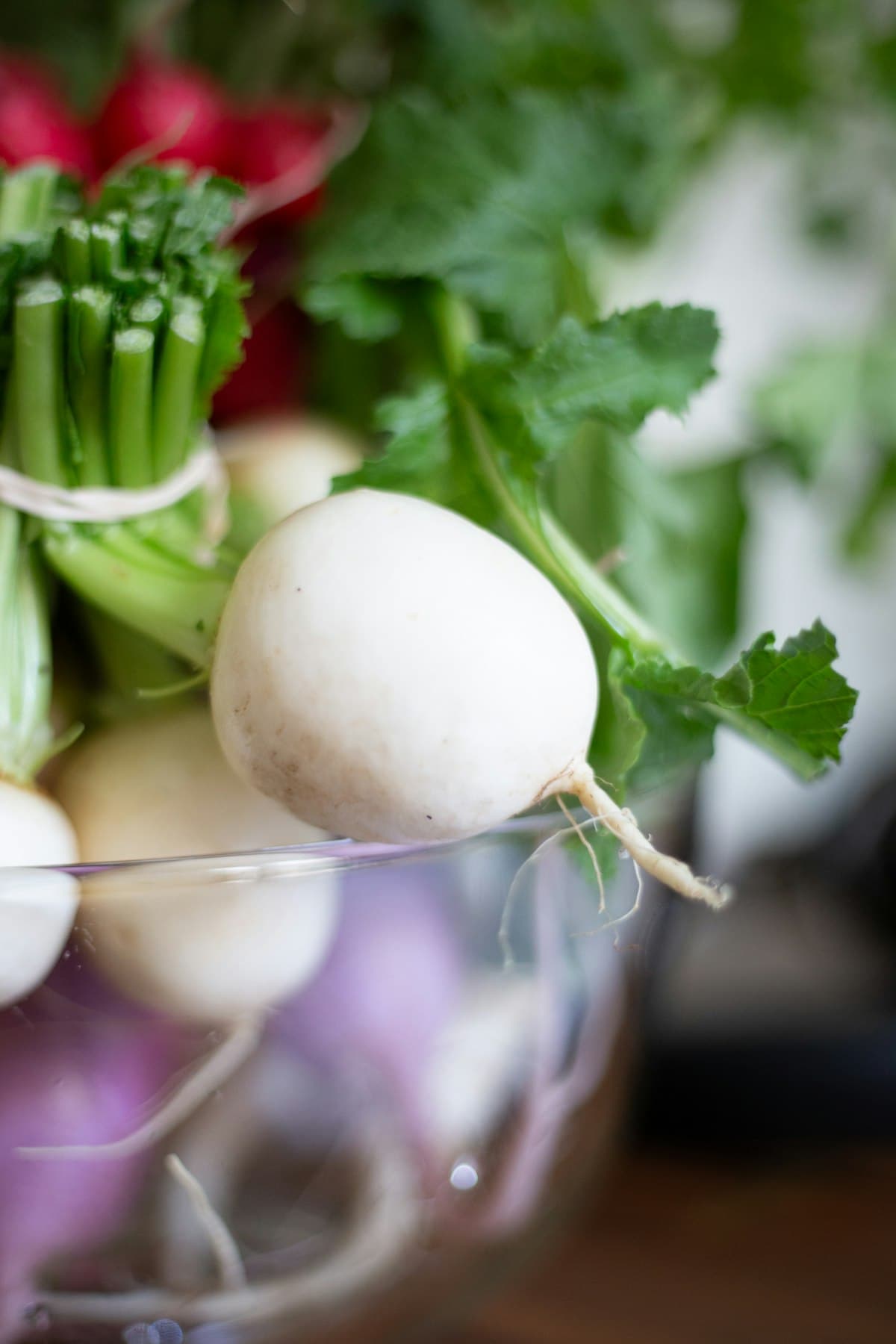
Dongchimi (Watery Radish Kimchi)
The salt-brine technique behind dongchimi's clear, tangy liquid, and why patience matters more than any single ingredient.
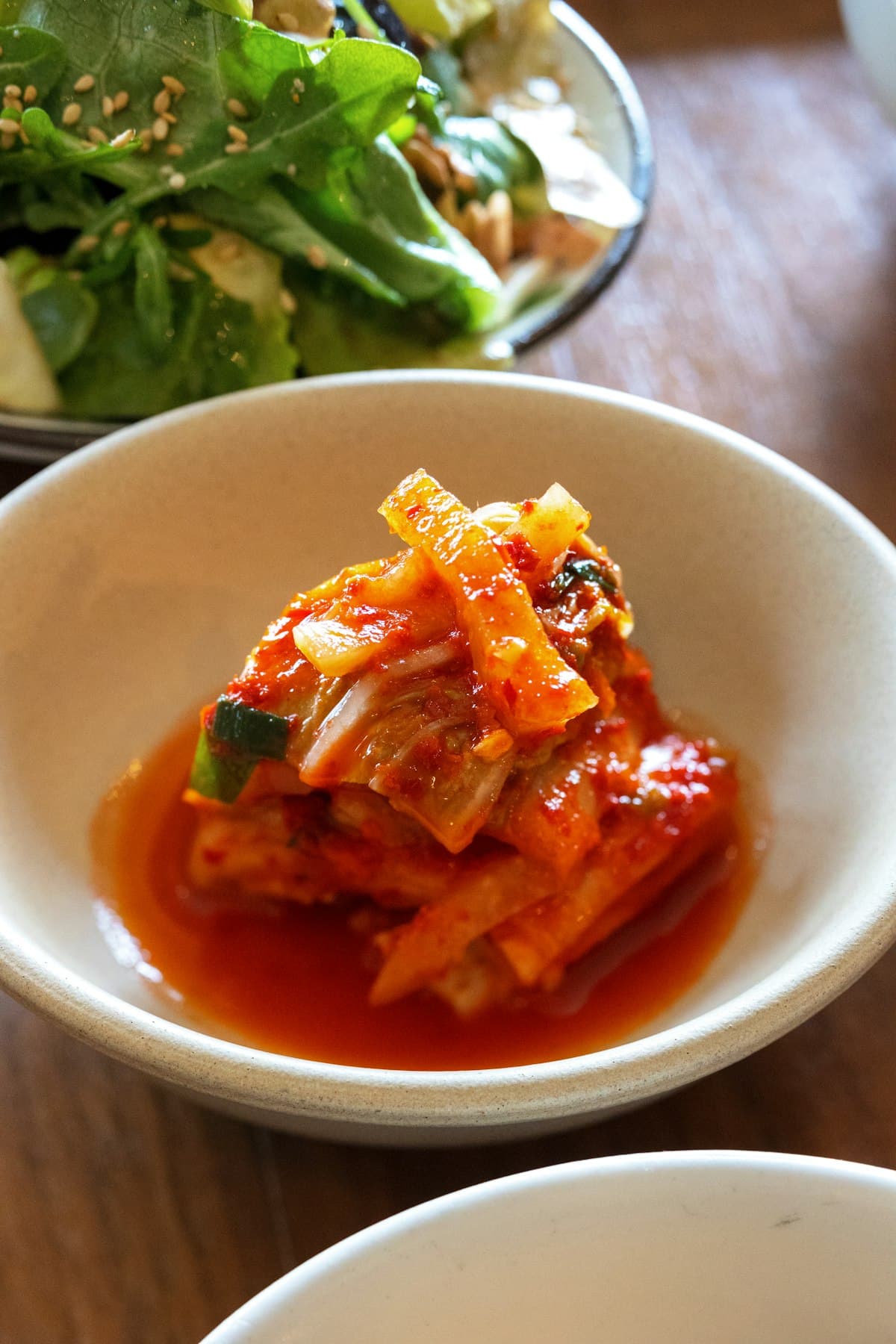
Kkakdugi (Radish Kimchi)
The salt-draw and sugar-balance technique behind kkakdugi, and why cube size determines how it ferments.
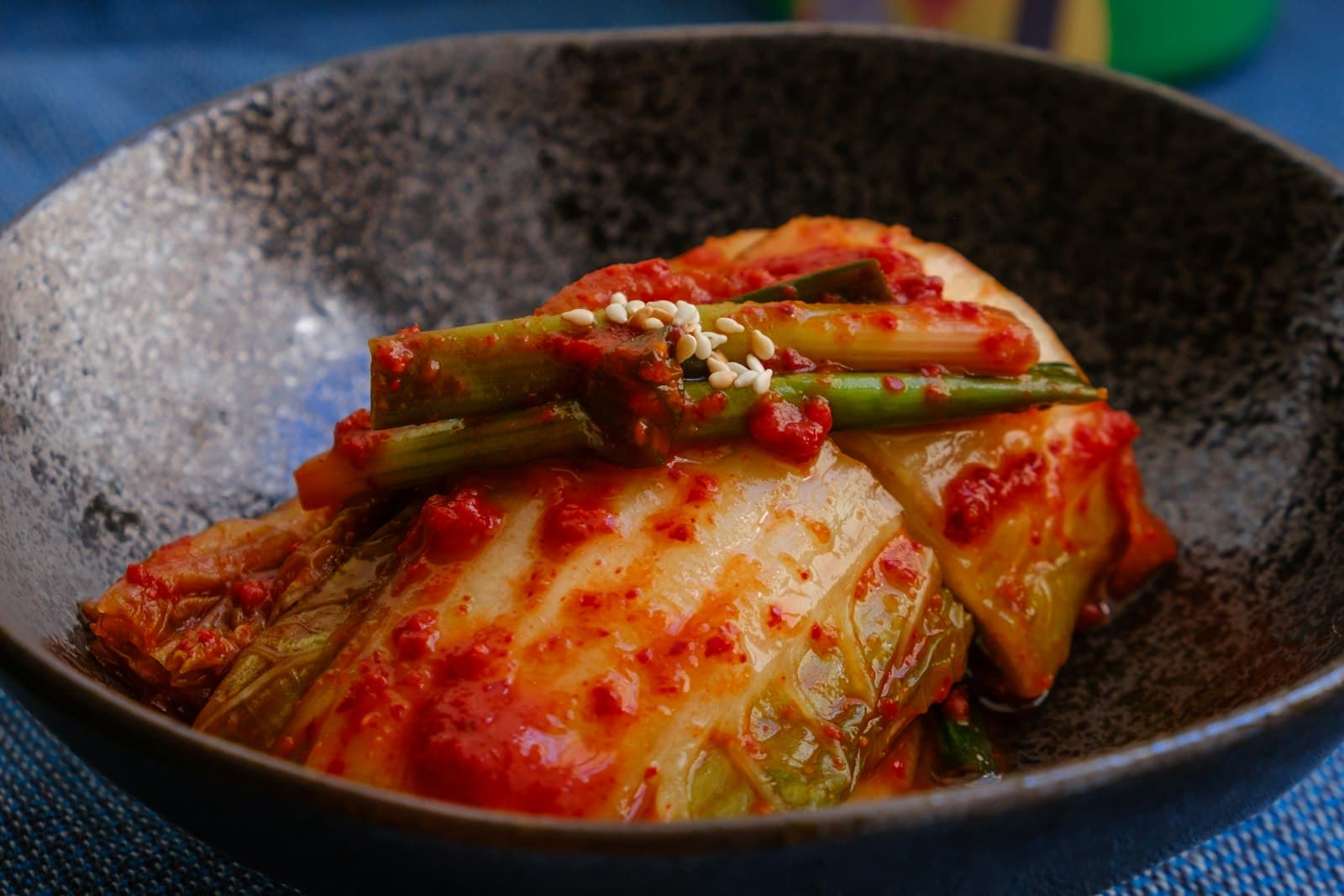
Napa Cabbage Kimchi (Baechu Kimchi)
The napa cabbage kimchi recipe people actually picture when they hear the word — brining, paste, and fermentation timing explained so it works the first time.