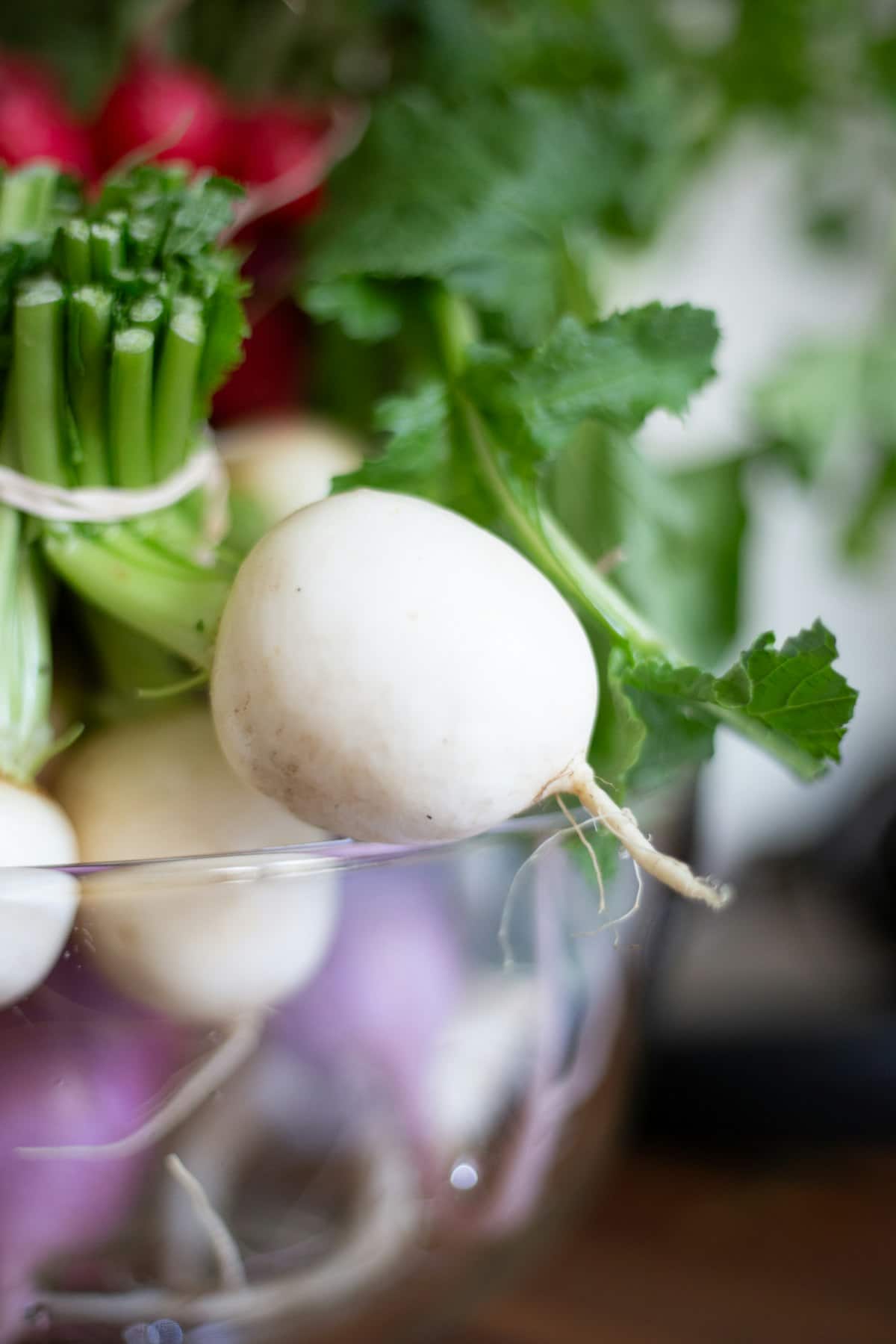
Steps
- 1
Salt the quartered radishes generously and let sit 3-4 hours, turning occasionally, until they release liquid.
- 2
Rinse the radishes briefly and drain.
- 3
Whisk the water with a portion of the leftover salting liquid, plus sugar, until well combined.
- 4
Layer the radish, pear, onion, garlic, ginger, chilies, and green onion in a large container.
- 5
Pour the brine over everything until fully submerged.
- 6
Weigh the vegetables down so they stay under the liquid.
- 7
Ferment at room temperature 1-2 days, then move to the refrigerator.
- 8
Best after 1-2 weeks, once the brine turns tangy and slightly effervescent.
Did you know — Korean culture
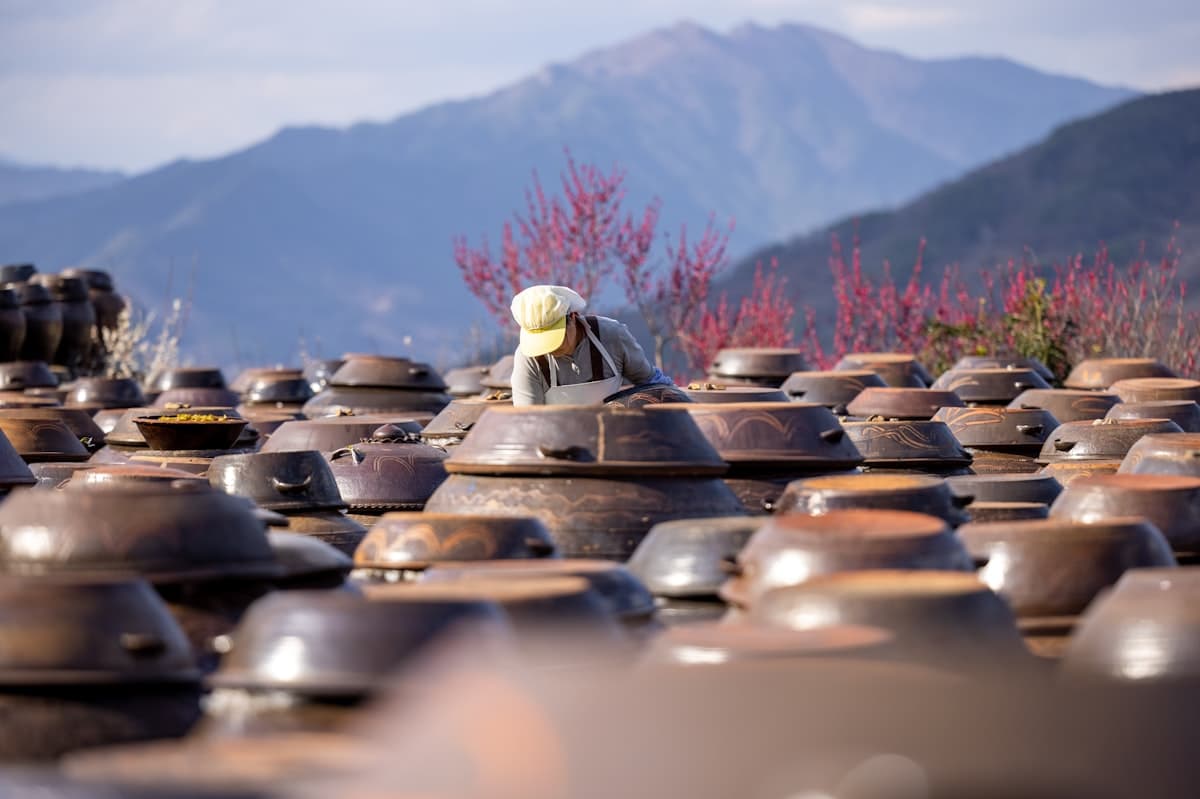
Dongchimi is traditionally made in early winter and buried in the ground in onggi (earthenware jars), specifically because soil temperature stays more stable and colder than the open air through a Korean winter. That slow, steady cold is what lets the radish ferment gently over weeks instead of turning sour too fast — a low-tech refrigeration trick that predates any actual refrigerator by centuries.
Dongchimi is built almost entirely around patience — there's no shortcut that speeds up the brine's transformation from salty water into the tangy, faintly sweet liquid the dish is known for. Rushing the fermentation just means a flat-tasting brine that hasn't had time to develop.
Salting the radish before it goes into the brine draws out enough of its own liquid to season the final brine from the inside, rather than relying purely on added salt. Skipping that step or cutting it short leaves the radish under-seasoned even after weeks in the jar.
Dongchimi is traditionally made in early winter and buried in the ground in onggi earthenware jars, specifically because soil temperature stays more stable and colder than open air through a Korean winter. That slow, steady cold lets the radish ferment gently over weeks instead of turning sour too fast — a low-tech refrigeration trick that predates any actual refrigerator by centuries.
Troubleshooting
Brine tastes flat instead of tangy and complex? It likely needs more time — dongchimi is a slow fermentation, and a week is closer to a minimum than a maximum.
Radish still too firm after two weeks? Check that it was fully submerged in brine the whole time; pieces poking above the liquid ferment much more slowly.
Brine cloudy instead of clear? Some cloudiness is normal early on and often settles — if it smells and tastes right, it's usually fine to eat despite the appearance.
Recommended products
- Large fermentation container
- Korean radish and pear
More to cook
All Fermented & Pickled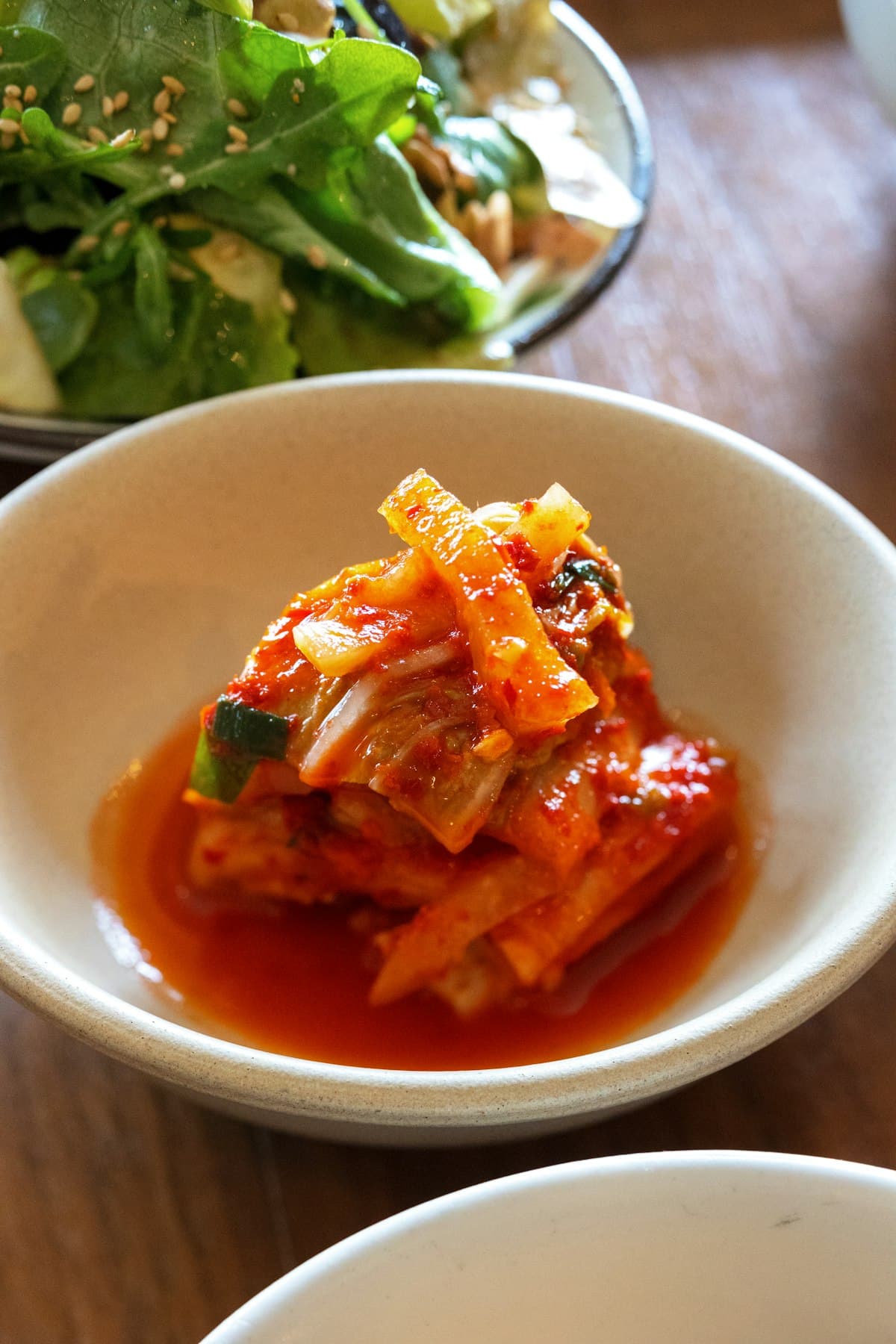
Kkakdugi (Radish Kimchi)
The salt-draw and sugar-balance technique behind kkakdugi, and why cube size determines how it ferments.
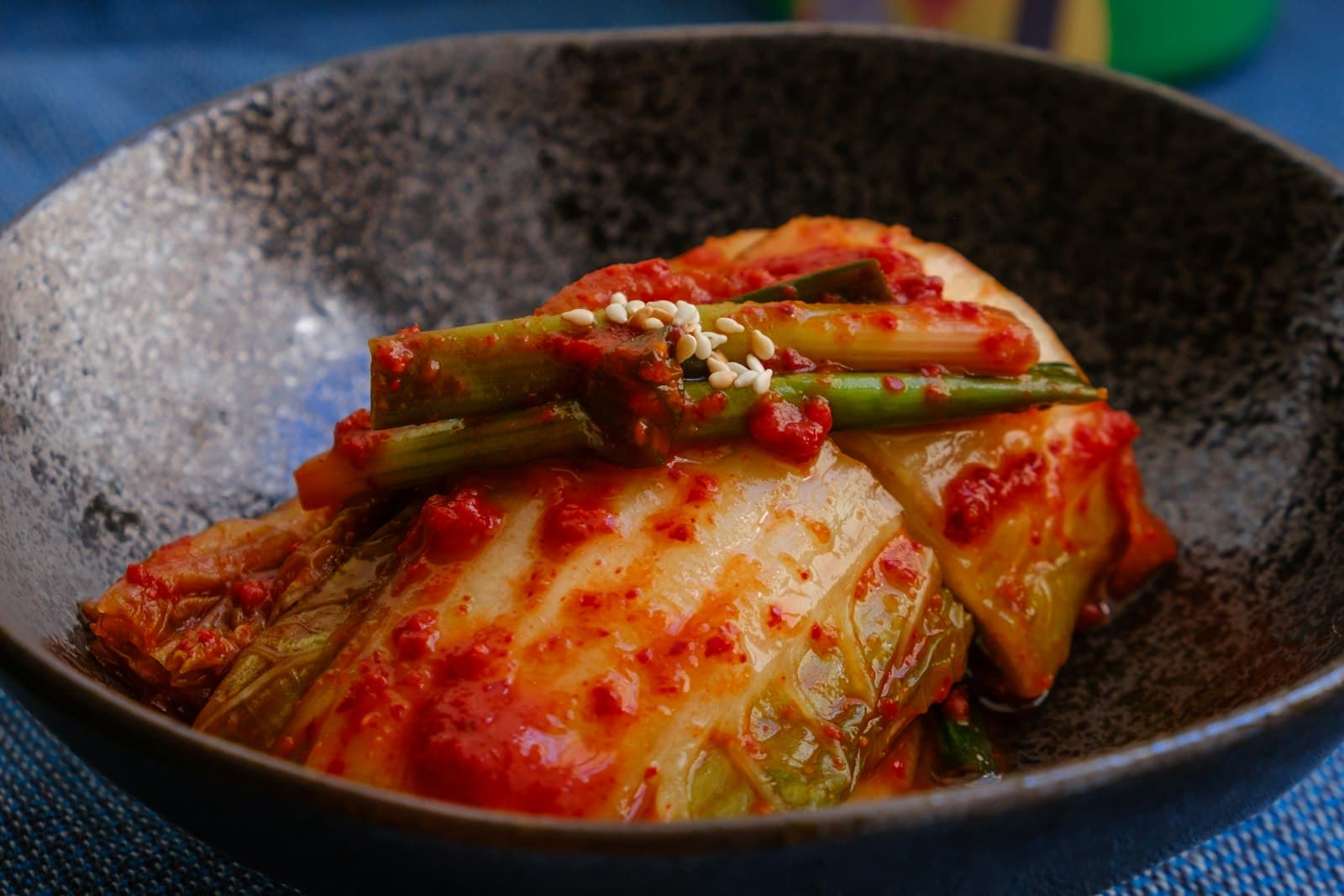
Napa Cabbage Kimchi (Baechu Kimchi)
The napa cabbage kimchi recipe people actually picture when they hear the word — brining, paste, and fermentation timing explained so it works the first time.
Oi Sobagi (Cucumber Kimchi)
The slit-and-stuff technique behind oi sobagi, and why this kimchi is best eaten fresh rather than long-fermented.