Did you know — Korean culture
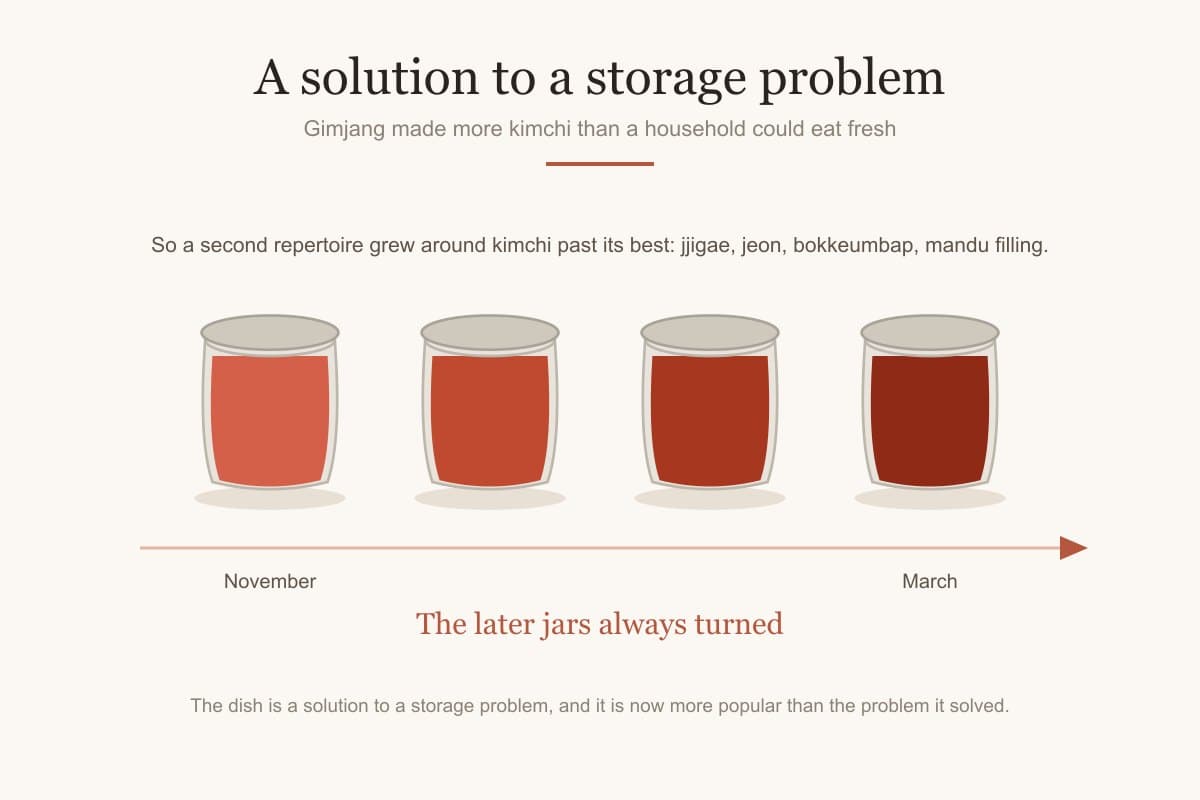
Kimchi jjigae only exists because kimchi was made in quantities too large to eat fresh. Gimjang, the communal November making, produced enough to last a household the whole winter, and the later jars inevitably turned sour long before they were finished. Rather than discarding them, Korean cooking developed an entire second repertoire for kimchi past its best — jjigae, jeon, bokkeumbap, mandu filling. The dish is a solution to a storage problem, and it is now more popular than the problem it solved.
Kimchi jjigae should taste sour, deep and faintly funky. Flat and watery means one of three things, and the first accounts for most cases.
Fresh kimchi makes a bland stew. The dish is built for kimchi that has gone too far to eat raw.
The kimchi has to be sour
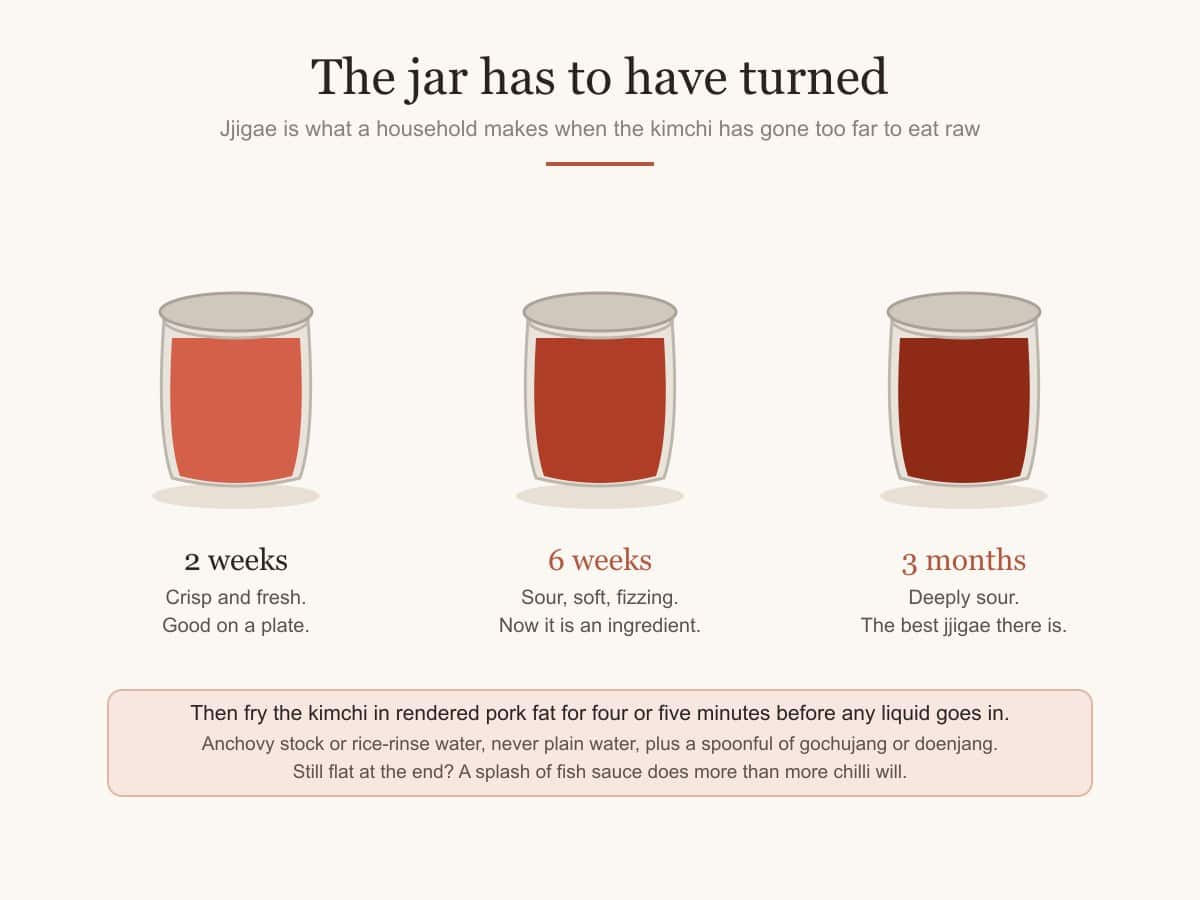
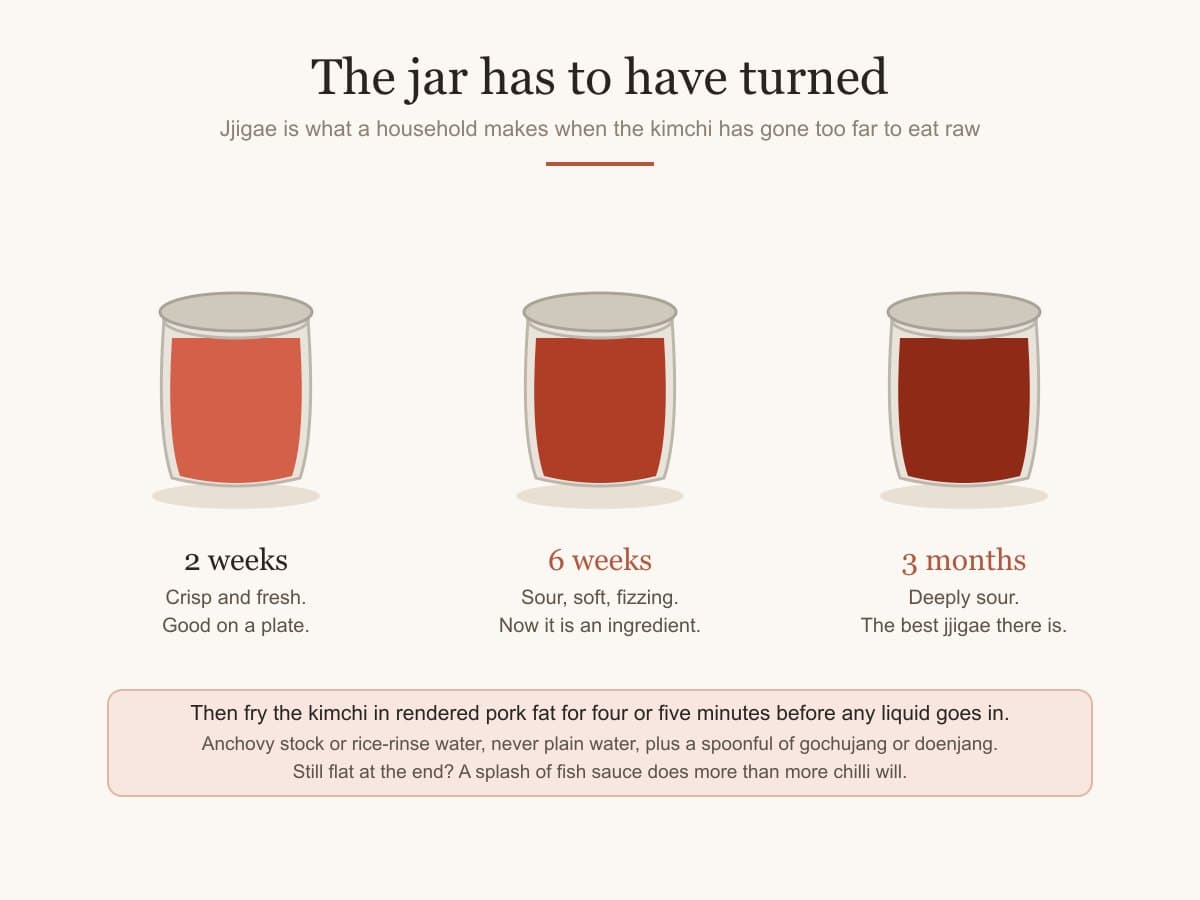
Three weeks old at the very least; two months is better. Jjigae is what a Korean household makes when a jar has turned, and that acidity is the backbone of the dish.
Fresh, crisp, two-week-old kimchi tastes good on a plate and produces a thin, sweet stew with nothing underneath it.
If all you have is fresh, you can push it: leave the portion you need out at room temperature for a day or two first. It is not the same as two months but it is a long way better than nothing. How to store kimchi covers the timeline.
Fry the kimchi before the liquid
Cook the kimchi in fat for four or five minutes before any stock goes in. Pork belly rendered first is the classic, and the kimchi fries in that fat.
This caramelises the sugars and mellows the raw sharpness into something rounder. A jjigae where everything went into the pot at once tastes like soup with kimchi in it.
Add the kimchi brine too — a few spoonfuls from the jar, after the frying. It is concentrated and free.
Stock, and something fermented
Water makes a thin jjigae. Use anchovy and kelp stock, or the water from rinsing rice, which is what many households use.
A spoonful of gochujang or doenjang adds the depth that chilli flakes alone cannot. Most good versions have one or the other, often both.
And a little sugar. Not to sweeten it — to round off the acid edge so the sourness reads as depth rather than sharpness.
The fat, and what is in it
Pork belly is the default for a reason. The rendered fat carries everything else, and a jjigae made with lean meat or none tastes noticeably thinner.
Tinned tuna is the common alternative and works well — drain it, but add a spoonful of its oil.
Tofu goes in late, in the last five minutes, or it breaks up. And if the stew is finished and still flat, a splash of fish sauce at the end does more than more chilli will.
Common questions
How old should kimchi be for kimchi jjigae?
At least three weeks, and two months is better. The dish is built for kimchi that has gone too sour to eat raw; fresh kimchi makes a thin, sweet stew.
Why does my kimchi jjigae taste watery?
Usually water instead of stock, and the kimchi going into liquid rather than being fried in fat first. Both are easy to fix and together they account for most flat versions.
Can I use fresh kimchi for jjigae?
At a push. Leave the portion you need at room temperature for a day or two to sour it first. It will not match two-month kimchi but it is far better than using it straight.
What can I add if it is still bland?
A splash of fish sauce at the end does more than extra chilli. A spoonful of gochujang or doenjang earlier in the cook is the more structural fix.
More to cook
All Ingredient & Substitute Guides
Why Is My Kimchi Not Sour?
The four things that stall kimchi fermentation — temperature, salt level, sugar and airtightness — and how to tell which one is your problem.
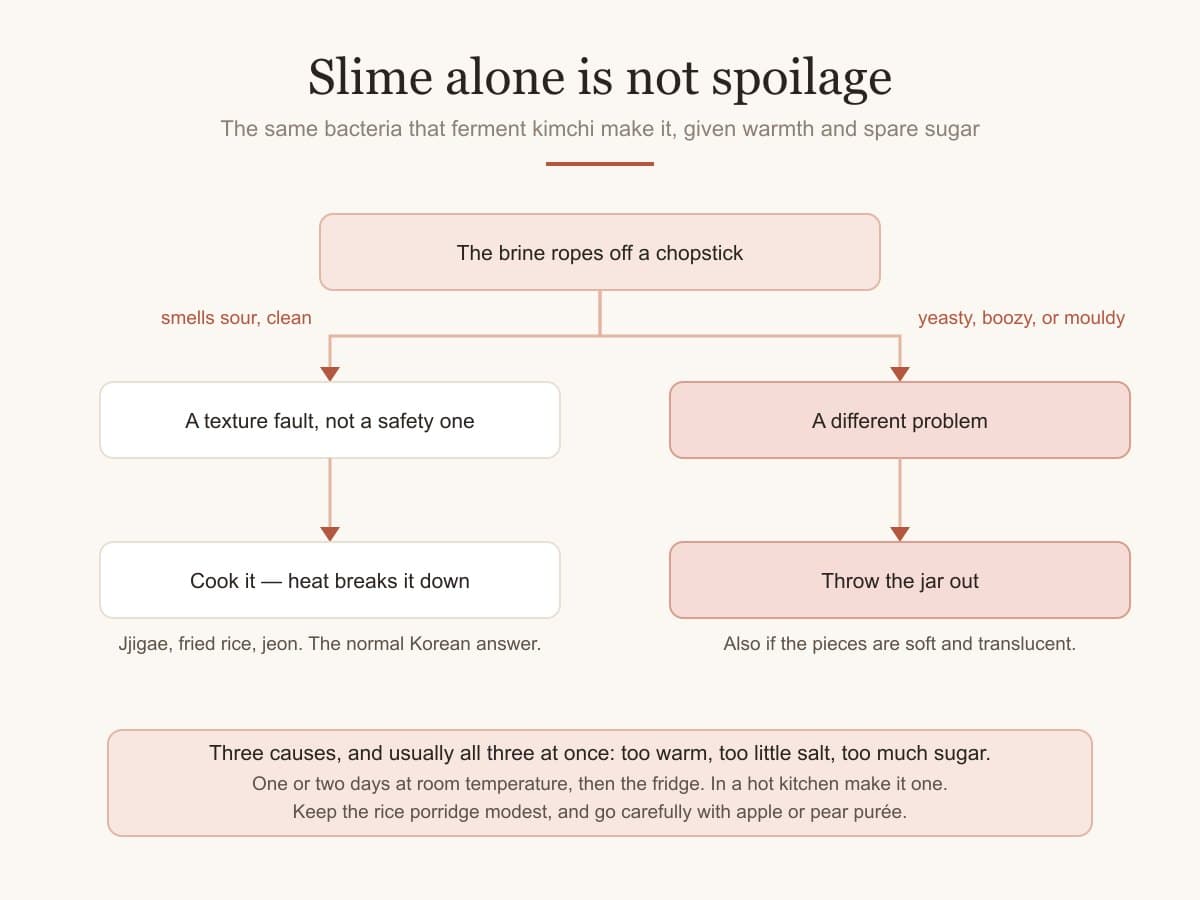
Why Is My Kimchi Slimy?
Slimy or stringy kimchi brine is usually harmless and always preventable. What causes it, when to throw the jar out, and how to avoid it next time.
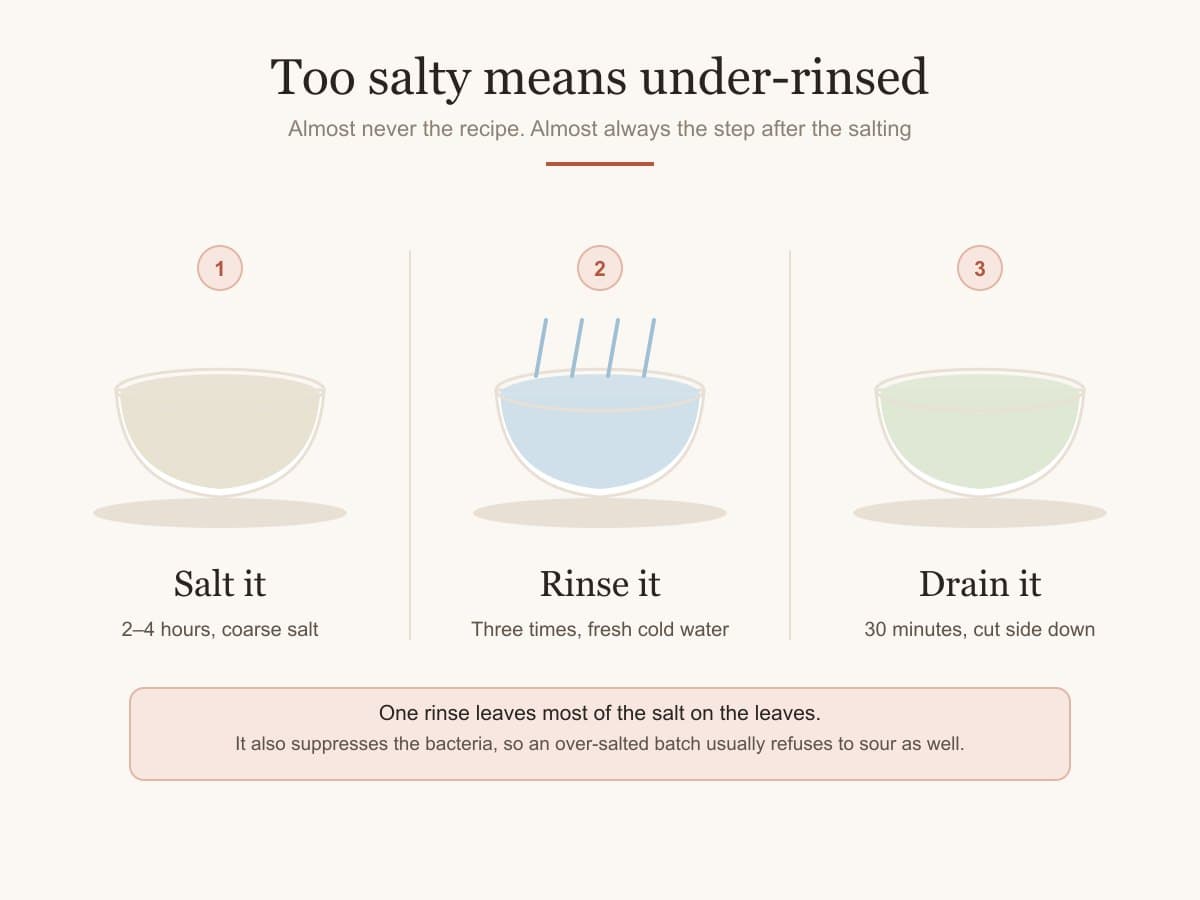
Why Is My Kimchi Too Salty?
Over-salted kimchi almost always comes from the rinse, not the recipe. How to tell, what to do with the batch you have, and how to get it right next time.