Did you know — Korean culture
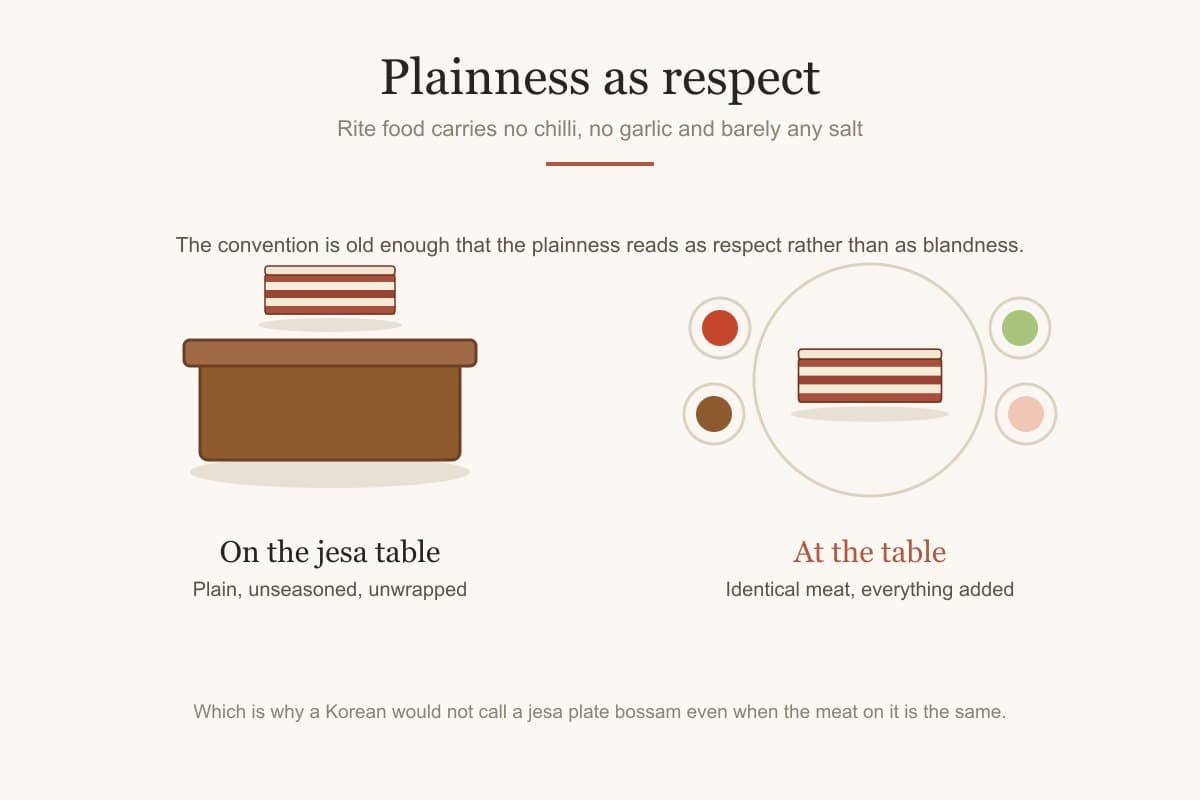
Suyuk carries a formality that bossam does not, and the reason is ritual. Boiled meat appears on the jesa table at ancestral rites, served plain, unseasoned and unwrapped, because rite food is deliberately mild — no chilli, no garlic, often no salt beyond the minimum. That convention is old enough that the plainness reads as respect rather than as blandness, and it is why a Korean would not describe a jesa plate as bossam even when the meat on it is identical.
These two overlap so heavily that Korean menus use them loosely, which is why the distinction is confusing. It is simpler than it looks.
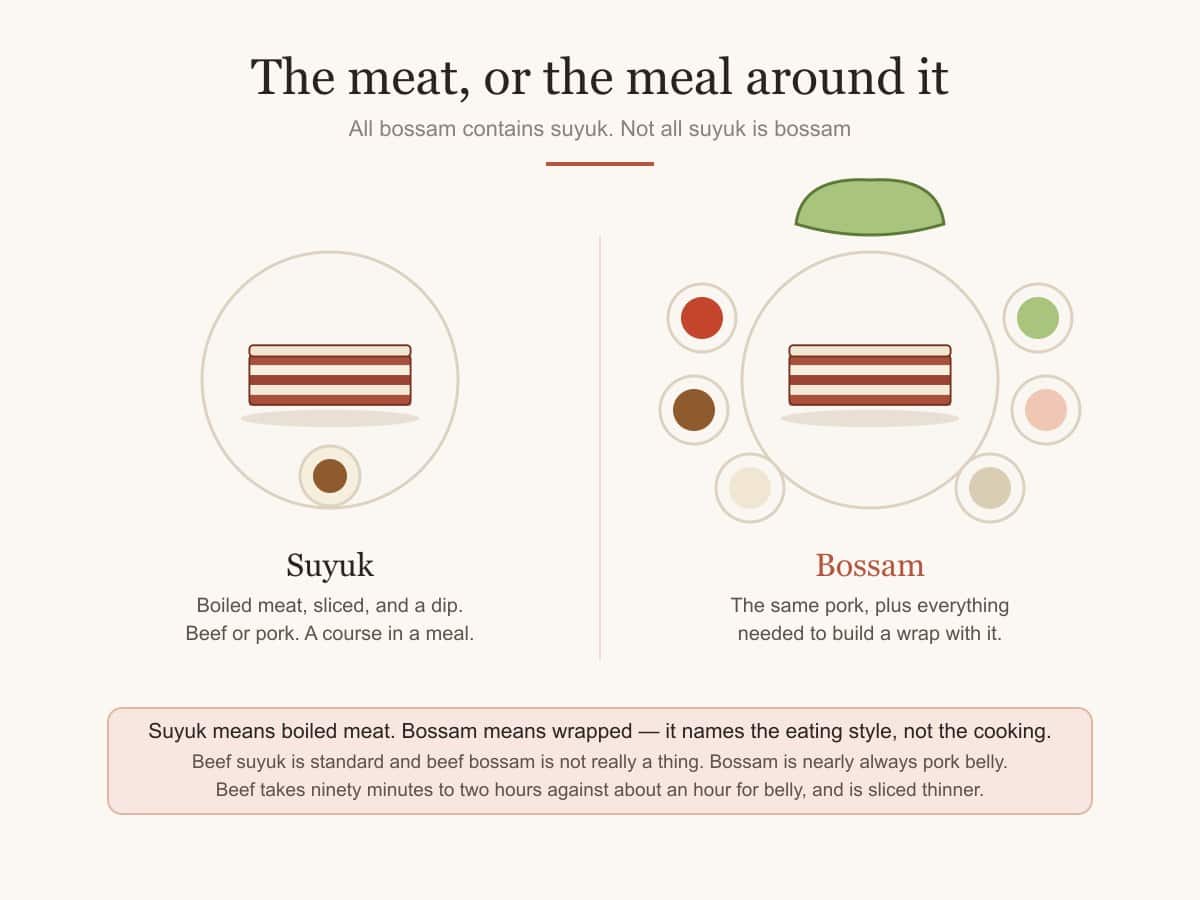
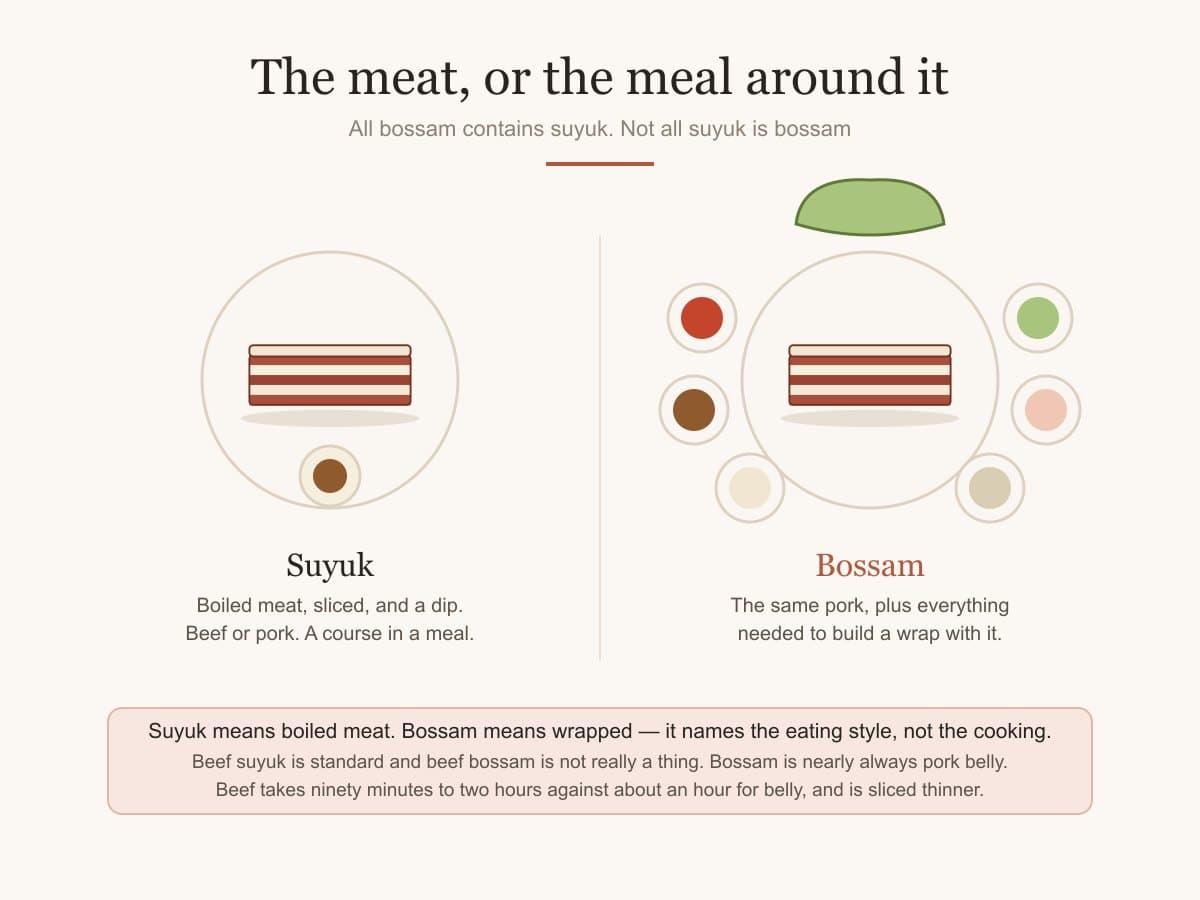
Suyuk is the meat. Bossam is the meal built around it. All bossam contains suyuk; not all suyuk is bossam.
What the words mean
Suyuk means boiled meat, literally water-meat. It can be pork belly, pork shoulder, beef brisket or beef shank, simmered with aromatics, sliced and served.
Bossam means wrapped, from the same root as ssam. It names the eating style, not the cooking method.
So a plate of sliced boiled brisket is suyuk. The same pork with leaves, saeujeot, ssamjang, radish salad and fresh kimchi around it is bossam.
What arrives at the table
Suyuk comes as meat and a dipping sauce, often little more. It appears as a course inside a larger meal, alongside seolleongtang or as part of a drinking spread.
Bossam comes as a set: a mound of sliced pork plus four or five things to build a wrap with.
The pork itself may be identical. The difference is the table around it, in the same way Korean barbecue differs from yakiniku.
Beef, pork, and which gets which name
Bossam is nearly always pork belly. Beef bossam is not really a thing.
Suyuk is both, and beef suyuk is standard — sliced brisket in a bowl of galbitang is suyuk by another route.
Suyuk is also what goes on an ancestral rite table, where it is served plain and unwrapped, and the word carries that formality that bossam does not.
Cooking them
The method is the same and the faults are the same: a bare simmer, doenjang in the pot, and a rest in the cooking liquid before slicing. Why bossam pork goes dry applies to both.
Beef suyuk takes longer — brisket or shank wants ninety minutes to two hours against an hour for belly.
And beef suyuk is sliced thinner, across the grain, because it has no fat layer to hold it together.
Common questions
What is the difference between bossam and suyuk?
Suyuk is the boiled meat itself; bossam is the meal built around it, with leaves, salted shrimp, ssamjang and fresh kimchi for wrapping. All bossam contains suyuk.
Is suyuk beef or pork?
Both. Beef brisket or shank is standard suyuk, and pork belly or shoulder is equally common. Bossam, by contrast, is nearly always pork belly.
Is bossam cooked differently?
No — the same bare simmer with doenjang and aromatics, and the same rest in the liquid. What differs is everything served alongside it.
Which takes longer to cook?
Beef. Brisket or shank wants ninety minutes to two hours, against about an hour for pork belly, and it is sliced thinner because it has no fat layer holding it together.
More to cook
All Ingredient & Substitute Guides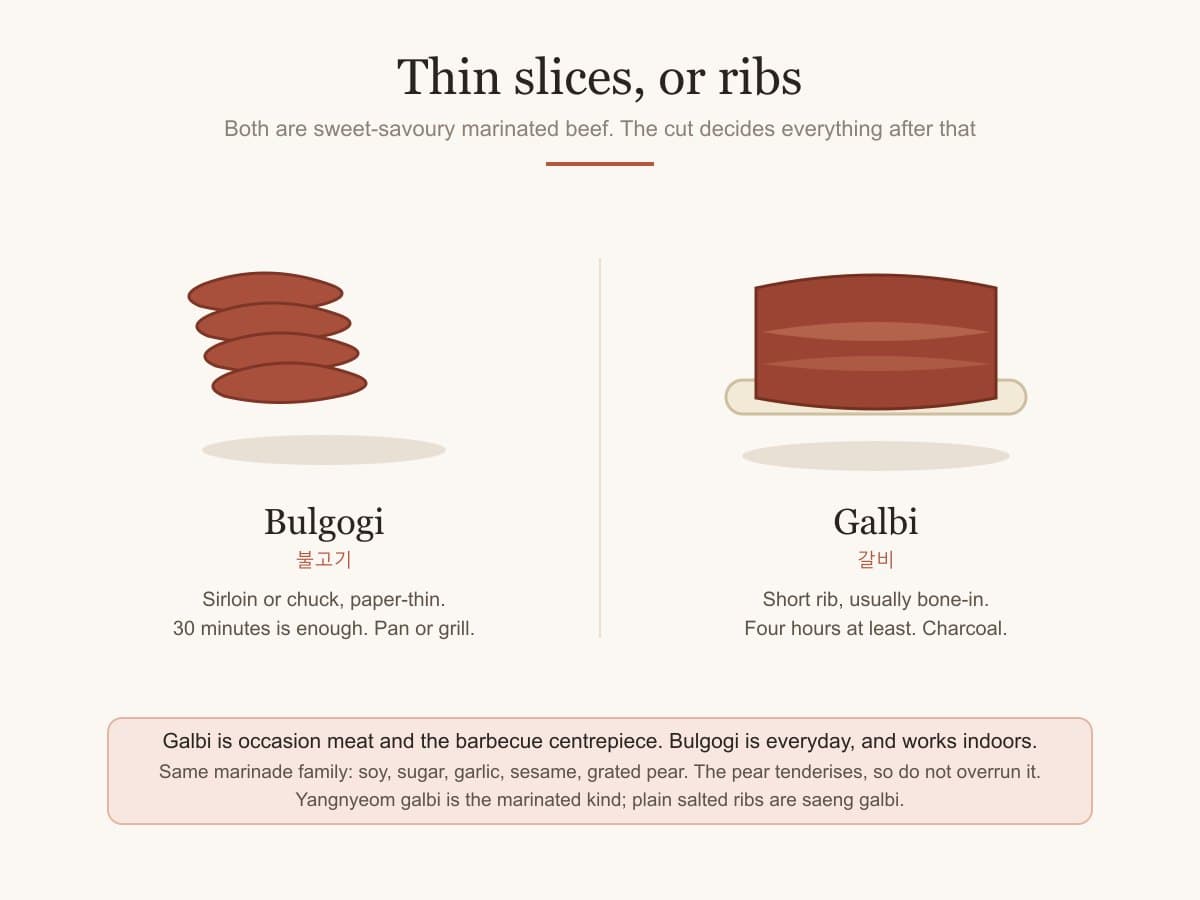
Bulgogi vs Galbi
Both are marinated Korean beef and they are not versions of one dish. The cut, the marinade, the cooking and when each one is served.
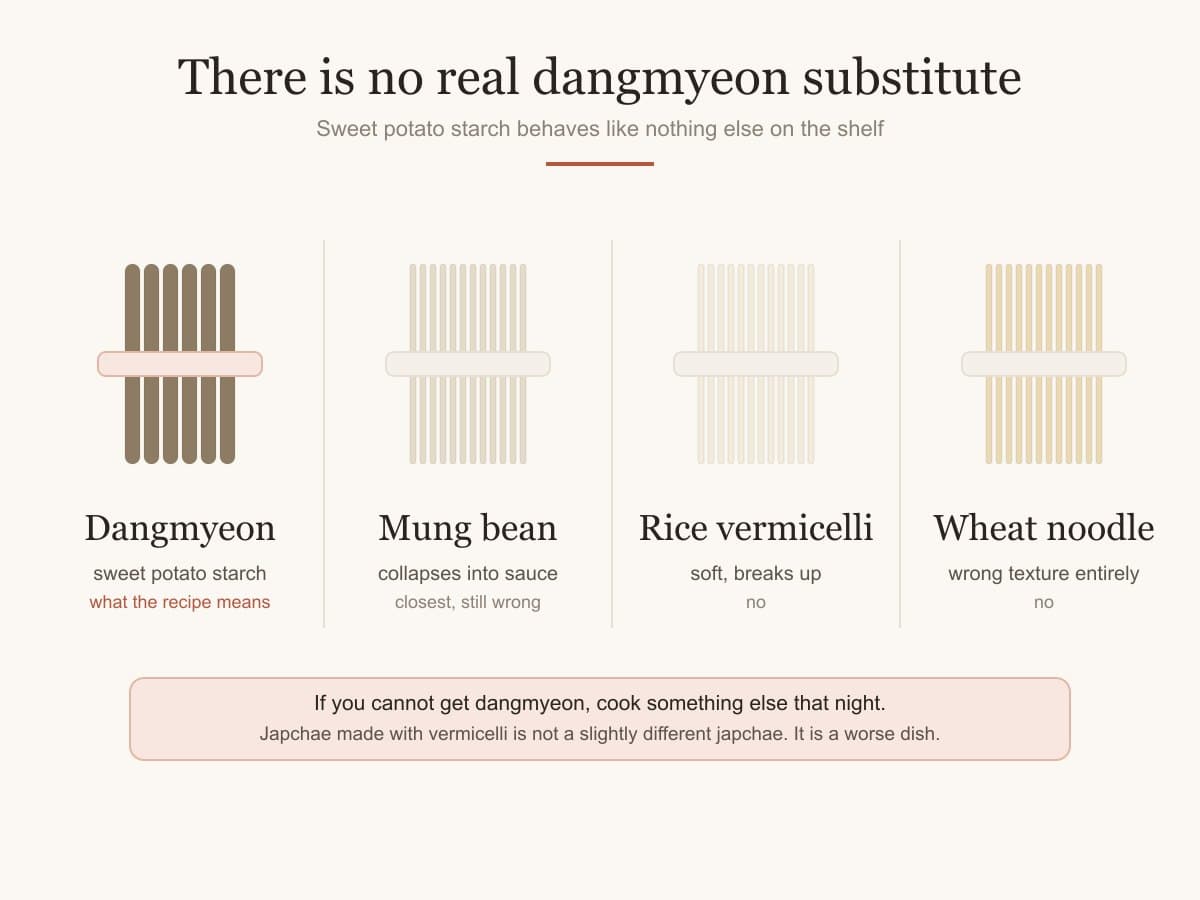
Dangmyeon Substitute
Korean sweet potato noodles behave like nothing else on the shelf. What happens when you substitute, and what to cook instead if you cannot find them.
Dasima & Dried Anchovy Stock (Yuksu)
What dasima (dried kelp) is, why it's simmered with dried anchovies for Korean soup bases, and how long is actually enough.