
Did you know — Korean culture
The ttukbaegi — the earthenware pot a jjigae arrives in — is not presentation. Fired clay holds heat far longer than metal, so the stew is still boiling when it reaches the table and stays hot through the meal, which is what cooks the egg cracked in at the end of a sundubu jjigae. It also heats slowly and unevenly, which is why a ttukbaegi is used for serving and simmering rather than for anything that needs a fast, responsive pan.
English gives you "soup" and "stew" and then gives up. Korean distinguishes three things, and the difference is not fussiness — it changes how a dish is cooked, how it is served, and where it sits on the table.
The short version: guk is soup you are served your own bowl of, jjigae is a thicker stew shared from one pot, and jeongol is a hot pot cooked at the table. Here is what that actually means.
Guk — the personal soup
Thin, lightly seasoned, and served in an individual bowl alongside rice. Every person gets their own.
Guk is the everyday soup that sits beside rice at almost any Korean meal. It is not the centrepiece; it is there to make the rice easier to eat and to round the table out. Seasoning is restrained, because it is eaten in quantity.
More broth than solids. Whatever is in it is scattered through the liquid rather than filling the bowl.
Examples: miyeok guk (seaweed), kongnamul gukbap, tteok guk, galbitang, seolleongtang, samgyetang.
A note on -tang: dishes ending in -tang are a subset of guk, generally richer and longer-simmered, and often a meal in themselves rather than a side.
Jjigae — the shared stew
Thicker, saltier, more solids than liquid, and shared from the pot in the middle of the table. Everyone dips in.
Because it is eaten in small amounts with a lot of rice, jjigae is seasoned much more aggressively than guk. Tasted alone it is often too salty — that is correct, not a mistake.
Served in a ttukbaegi, the earthenware pot, which holds heat and keeps it bubbling at the table.
Examples: kimchi jjigae, doenjang jjigae, sundubu jjigae, budae jjigae.
The rule of thumb: if you could drink it from the bowl, it is guk. If you spoon it over rice, it is jjigae.
Jeongol — the table hot pot
Cooked at the table on a portable burner, arranged rather than stirred, and eaten as it cooks.
Jeongol is closest to a hot pot. Raw ingredients are laid out in a wide, shallow pan in neat sections, broth is poured over, and it cooks in front of everyone. People eat from it progressively, adding noodles or rice toward the end.
It is occasion food. Jeongol is what you order for a group; nobody makes it for one person on a Tuesday.
Examples: dubu jeongol, beoseot jeongol.
The arrangement matters. A jeongol that arrives pre-stirred has lost half its point.
Quick comparison
| | Guk | Jjigae | Jeongol | |---|---|---|---| | Served | Individual bowls | Shared pot | Shared, cooked at table | | Liquid | Mostly broth | More solids | Broth added to arranged solids | | Seasoning | Mild | Strong | Moderate | | Vessel | Bowl | Ttukbaegi | Wide shallow pan | | Occasion | Every meal | Everyday | Groups, occasions |
Where jjim and tang fit
Two more words appear on menus and cause confusion.
-tang — a guk, but richer and usually long-simmered from bones. Galbitang, samgyetang, gamjatang. Substantial enough to be the meal.
jjim — braised, not soup at all. Liquid is present but reduces down to a sauce rather than being drunk. Jjimdak, agujjim, kalbi jjim.
So the full spectrum runs roughly: guk (most liquid) → tang → jjigae → jeongol → jjim (least).
Why the distinction is worth knowing
It tells you three practical things before you have read the recipe.
How much to make. Guk is per-person; jjigae is one pot for the table.
How hard to season. A jjigae seasoned like a guk tastes of nothing over rice. A guk seasoned like a jjigae is inedible by the bowl.
What else to serve. A meal usually has one of these plus rice and banchan — not two. If you are making doenjang jjigae, you do not also need a soup.
More to cook
All Ingredient & Substitute Guides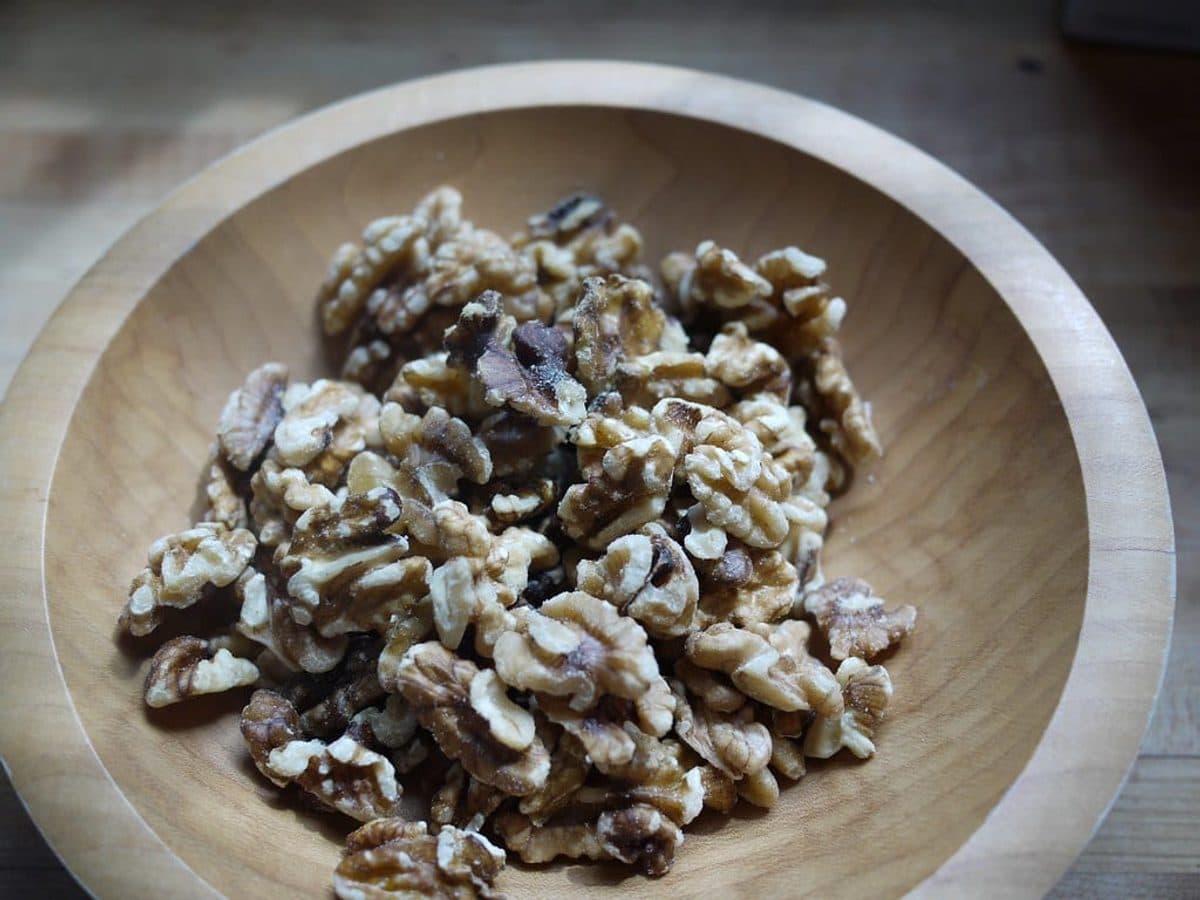
Walnuts in Korean Cooking (Hodu)
Where walnuts turn up in Korean food beyond hodu-gwaja, why they are blanched before candying, and how to keep them from turning bitter.
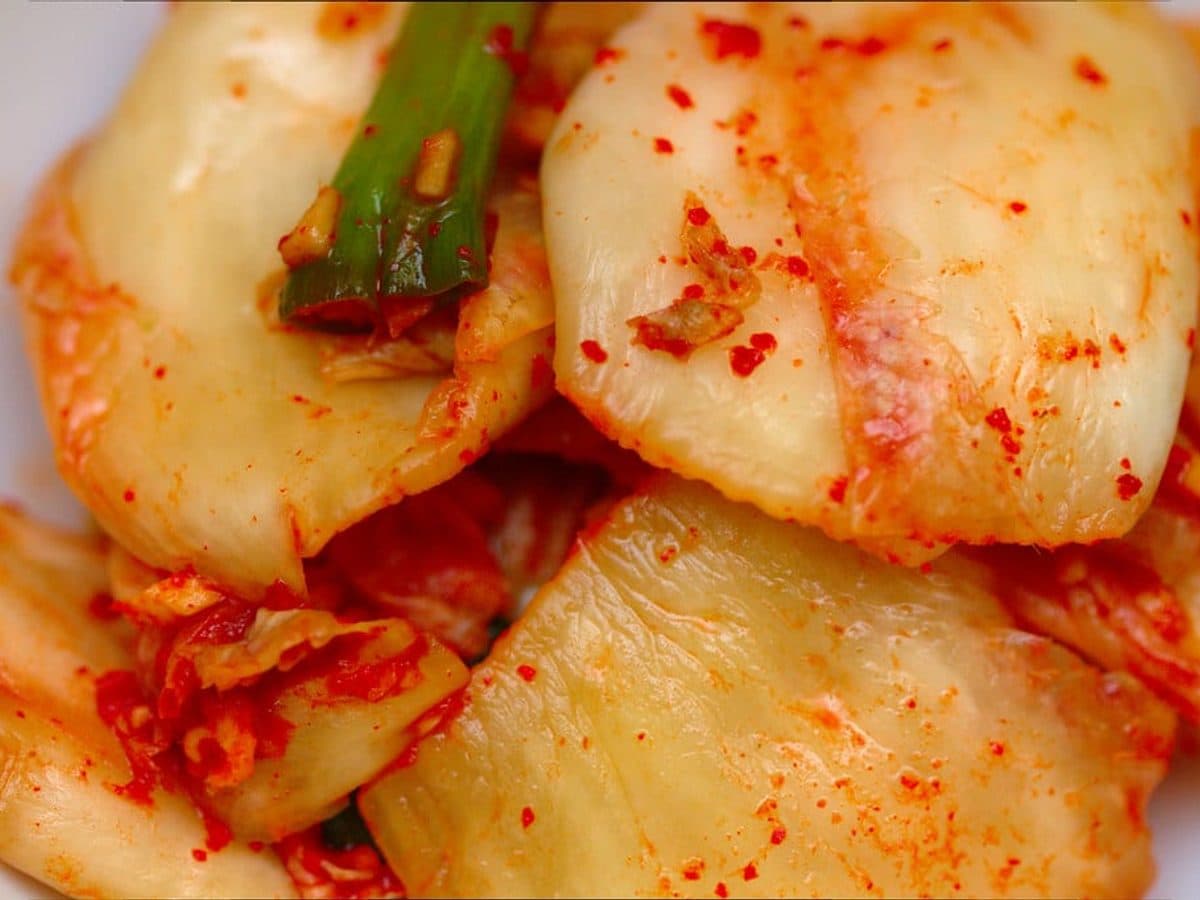
How to Salt Napa Cabbage for Kimchi
How long to brine napa cabbage, the bend test that tells you it is ready, and why rinsing three times is not excessive.
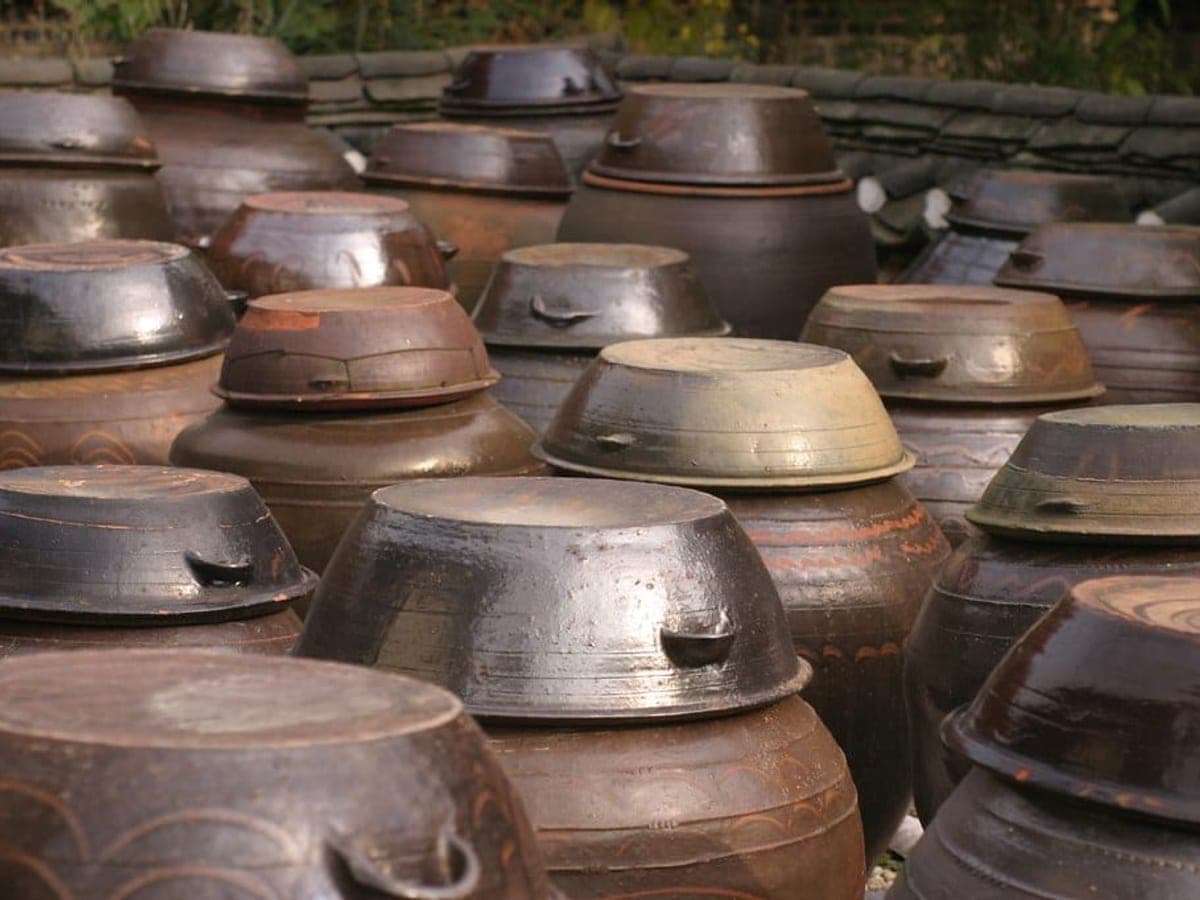
How to Store Kimchi
Why kimchi keeps fermenting in the fridge, how to slow it down, and what the pressed-flat surface and weighted lid are actually doing.