Steps
- 1
Rinse the chicken inside and out, and pat dry.
- 2
Drain the soaked rice and stuff it into the chicken cavity along with a few garlic cloves and a jujube, securing the opening with a skewer or kitchen string.
- 3
Place the stuffed chicken in a large pot with the remaining garlic, ginseng, jujube, and chestnut.
- 4
Add the water, bring to a boil, then reduce to a steady simmer.
- 5
Simmer covered for 60-75 minutes, until the chicken is completely tender and the rice inside is cooked through.
- 6
Skim excess fat from the surface as it cooks if you want a cleaner broth.
- 7
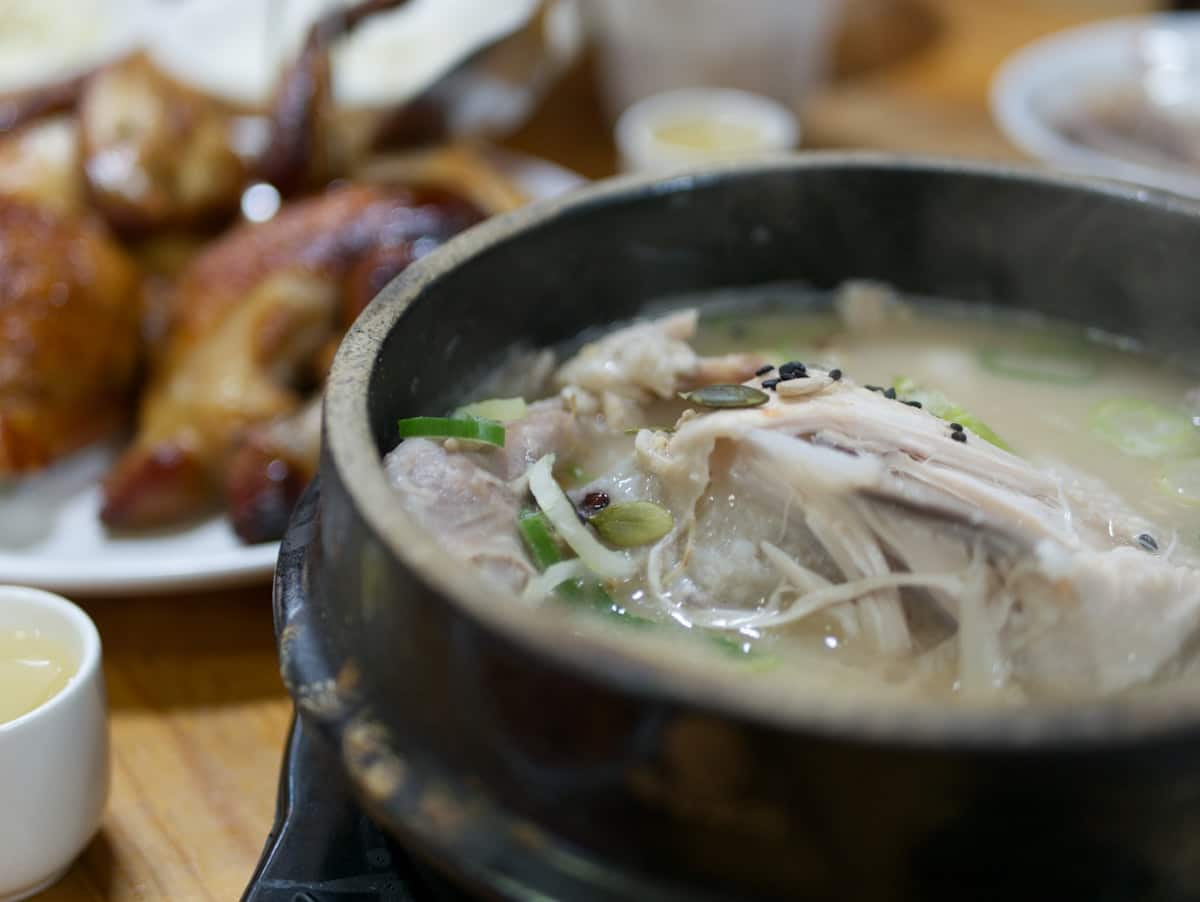
Serve the whole chicken in its broth, with salt, pepper, and green onion on the side for each person to season their own bowl.
Did you know — Korean culture
Eating hot soup on the hottest days of the year sounds backwards until you know the logic behind it. Samgyetang is the centerpiece of boknal, the three hottest stretches of the Korean summer, built on the old idea of "fighting heat with heat" — a scalding, restorative broth is supposed to replace what the body sweats out, rather than fight the heat by cooling down. It's less a seasonal treat than a folk-medicine ritual most Korean families still keep.
Samgyetang is built around a whole small chicken cooked long and gently rather than pieces cooked fast — the extended simmer is what renders the bird fall-apart tender and pulls the ginseng's flavor fully into the broth, which a quick cook just can't do.
Stuffing the cavity with soaked glutinous rice does double duty: the rice cooks inside the bird using the chicken's own moisture and comes out rich and slightly savory, and it keeps the cavity's shape intact through a long simmer instead of collapsing.
This is the centerpiece dish of boknal, the three hottest stretches of the Korean summer, built on the old logic of "fighting heat with heat" — a scalding, restorative broth is meant to replace what the body sweats out, rather than fight the heat by cooling down. It's less an occasional treat than a folk-medicine ritual many Korean families still keep every summer without much thought.
Troubleshooting
Chicken tough after an hour of simmering? Bigger or older birds need more time — keep it at a steady simmer rather than raising the heat, and check for tenderness before pulling it.
Rice inside undercooked? Make sure it was soaked beforehand, and don't pack the cavity too tightly — the rice needs room and moisture flow to cook through evenly.
Broth greasy rather than clean? Skim more aggressively during the first 20 minutes of simmering, when most of the rendered fat rises to the surface.
Recommended products
- Fresh or dried ginseng root
- Large stockpot
More to cook
All Stews & Soups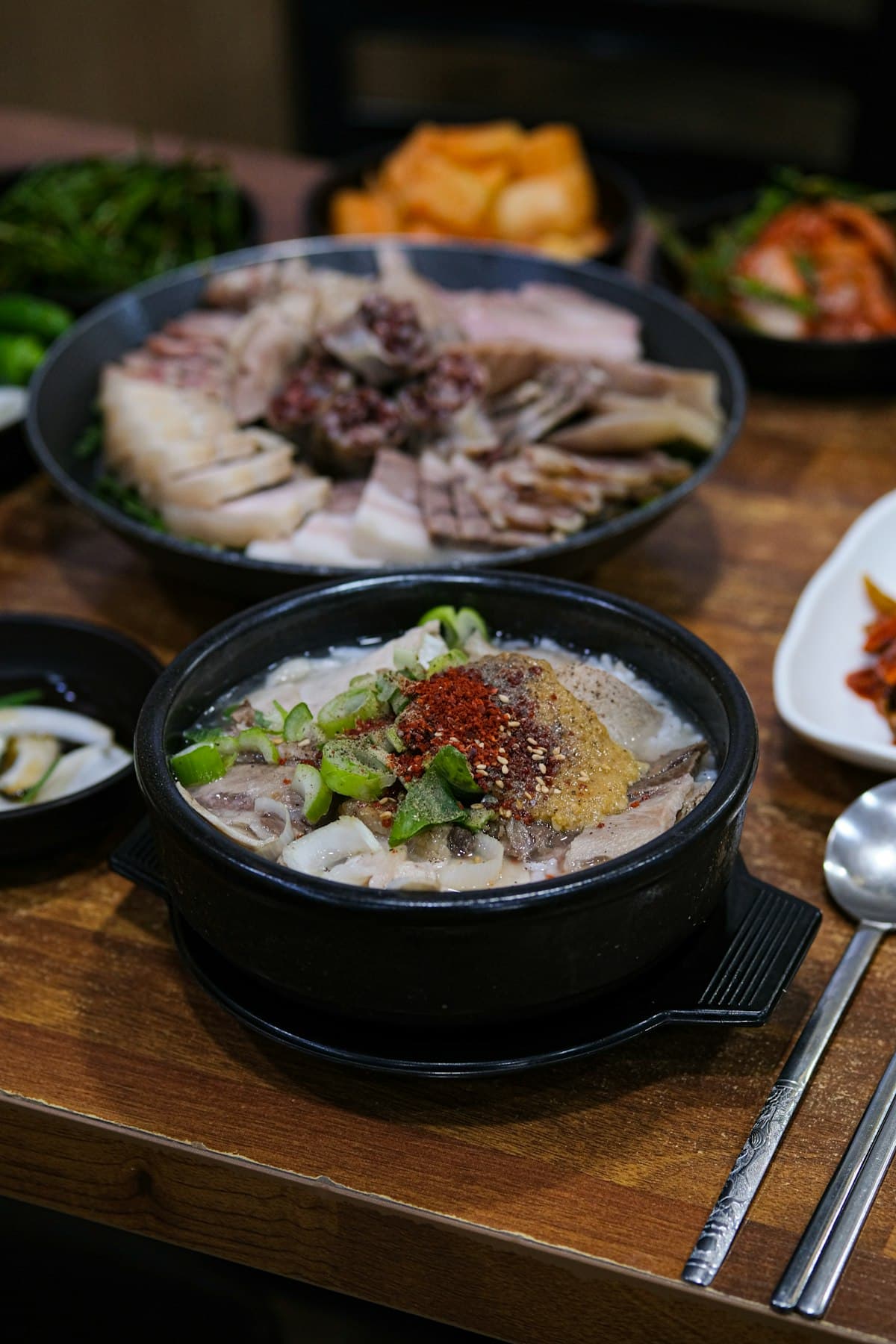
Seolleongtang (Ox Bone Soup)
The long-simmer, multi-boil technique that turns ox bones into seolleongtang's milky white broth, and why patience matters more than seasoning.
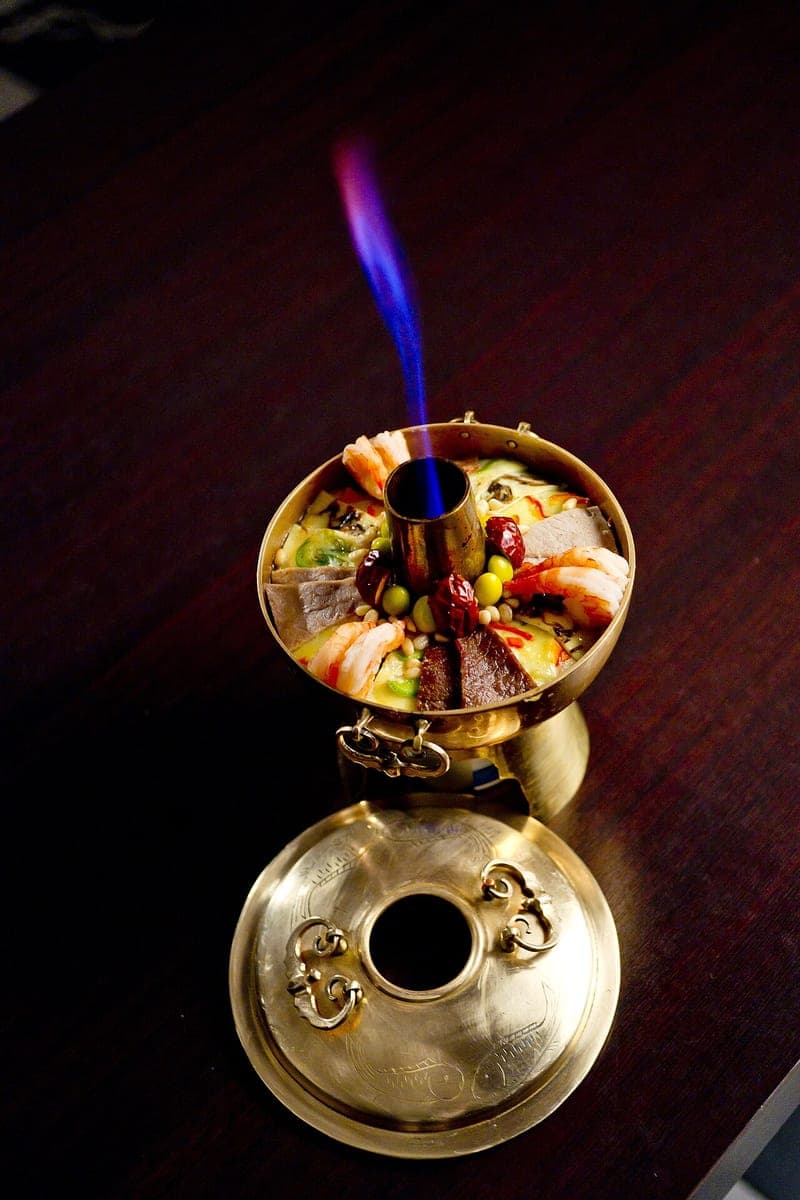
Sinseollo (Royal Hot Pot)
How the sections of a sinseollo are arranged and why, plus how to build the clear beef broth this royal-court hot pot depends on.
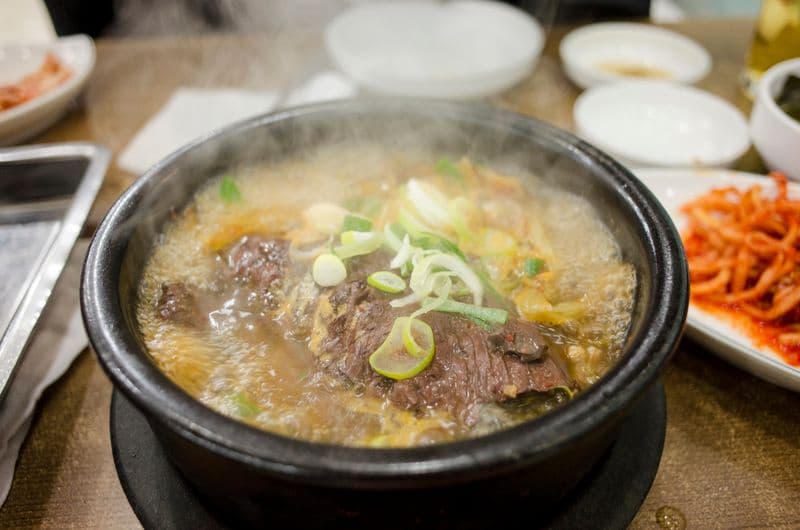
Sogogi Muguk (Beef Radish Soup)
Why the beef and radish get sauteed in sesame oil before any water goes in, and how that one step separates a rich broth from a watery one.