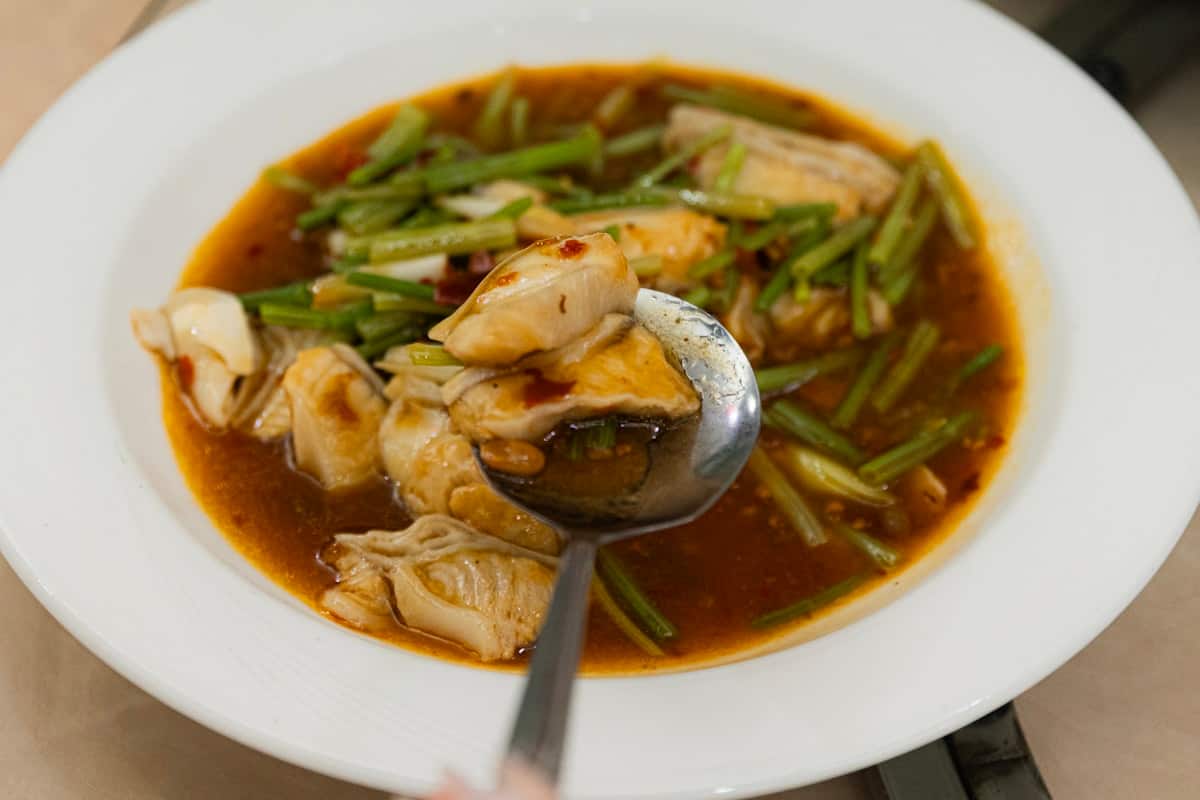
Steps
- 1
Soak the monkfish pieces briefly in salted water, then rinse and pat dry.
- 2
Whisk together gochujang, gochugaru, soy sauce, sugar, garlic, and ginger into a sauce.
- 3
Spread the bean sprouts and onion in the bottom of a wide pot.
- 4
Arrange the monkfish over the vegetables and pour the sauce and stock over everything.
- 5
Bring to a boil, then reduce to a simmer and cook 10-12 minutes, until the fish is opaque and cooked through.
- 6
Stir in the cornstarch slurry and simmer another 2-3 minutes, until the sauce thickens and clings.
- 7
Add green onion in the last minute, and finish with sesame oil.

Did you know — Korean culture
Monkfish used to be considered close to worthless by Korean fishermen — its odd appearance meant it was often thrown back or left to spoil rather than sold. The dish's invention is generally credited to cooks in the port city of Masan (now part of Changwon) sometime in the mid-20th century, who braised the discarded fish in a thick, fiery sauce specifically to mask its plain flavor and make use of a catch nobody wanted. Agujjim turned a "trash fish" into one of the more expensive items on a modern Korean seafood menu.
Monkfish holds together through a real braise in a way more delicate white fish can't — its firm, almost meaty texture is exactly why it works here, where a flakier fish would fall apart into the sauce before the flavors have time to develop.
The cornstarch slurry at the end is what gives agujjim its signature thick, clinging sauce rather than a thin, soupy one. Adding it only after the fish is already cooked through avoids overcooking the monkfish while the sauce reduces — the thickening happens fast, in just a couple of minutes, once the slurry hits the simmering liquid.
Monkfish used to be considered close to worthless by Korean fishermen — its odd appearance meant it was often thrown back or left to spoil rather than sold. The dish's invention is generally credited to cooks in the port city of Masan (now part of Changwon) sometime in the mid-20th century, who braised the discarded fish in a thick, fiery sauce specifically to mask its plain flavor and make use of a catch nobody wanted. Agujjim turned a "trash fish" into one of the more expensive items on a modern Korean seafood menu.
Troubleshooting
Sauce thin instead of clinging to the fish? The cornstarch slurry needs to be fully dissolved and added while the liquid is still simmering — stir it in and give it a couple of minutes of active heat to thicken.
Fish falling apart in the pot? Monkfish is generally sturdy, but overcooking past the 10-12 minute mark can still break it down — check for opaque, just-cooked-through pieces rather than a fixed time.
No monkfish available? A firm white fish like cod or halibut works as a substitute, though it needs a gentler hand and shorter cook time since it's more delicate than monkfish.
Recommended products
- Monkfish, cut into chunks
- Wide braising pot
More to cook
All Meat & BBQ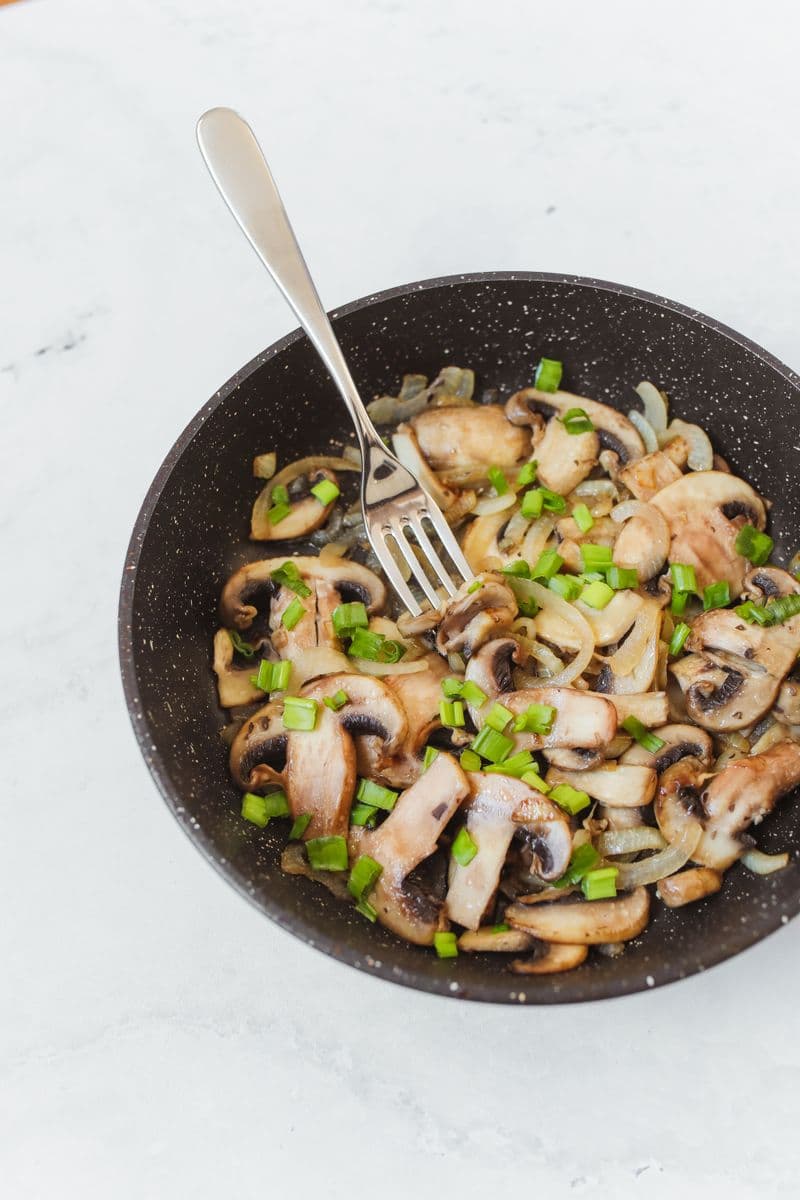
Beoseot Bulgogi (Mushroom Bulgogi)
Why mixing mushroom types changes the texture more than any seasoning choice, and how to marinate mushrooms without turning them mushy.
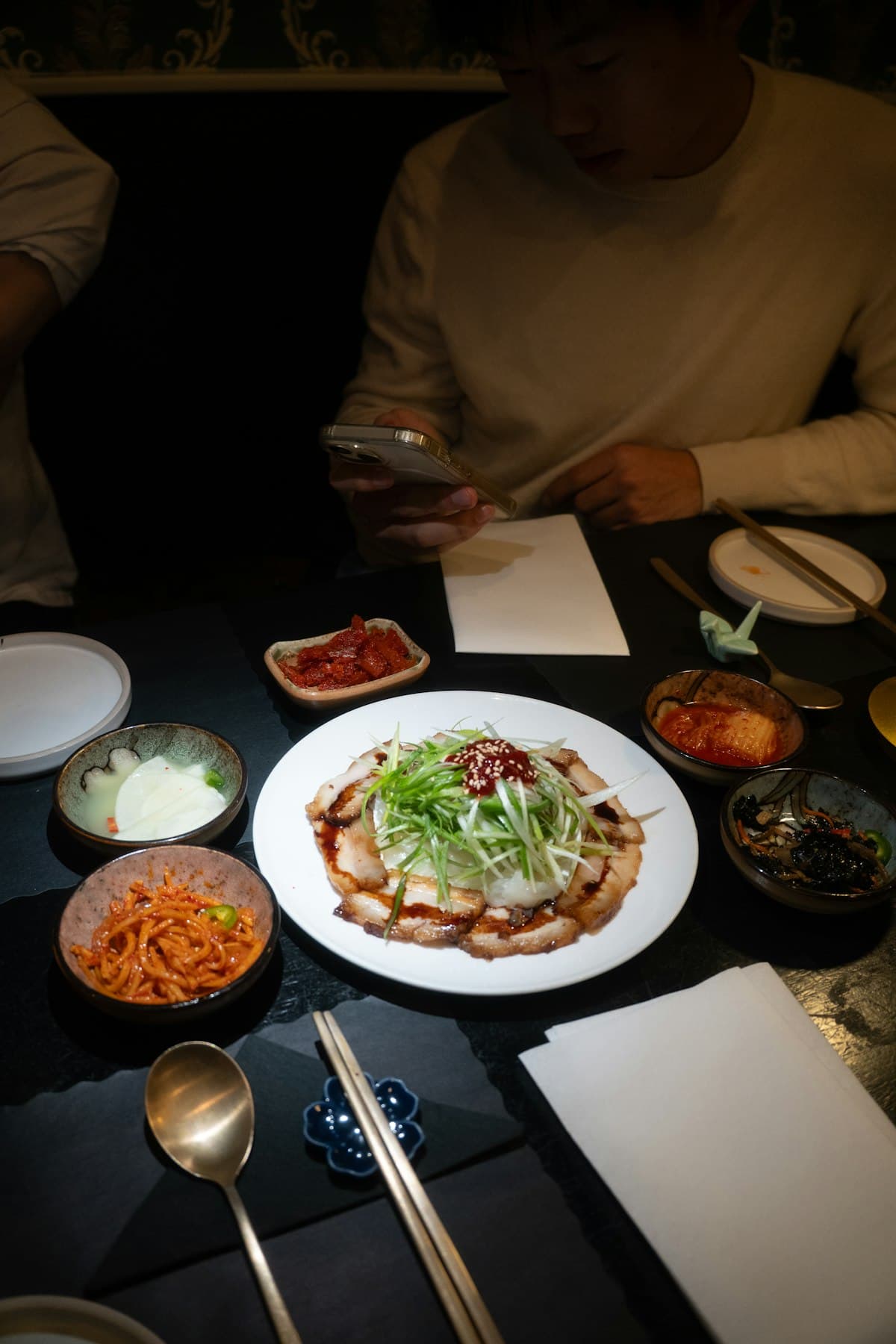
Bossam (Korean Boiled Pork Wraps)
The aromatic brine that makes boiled pork belly taste like more than boiled pork, and why it's always served sliced thin, wrapped in salted cabbage.
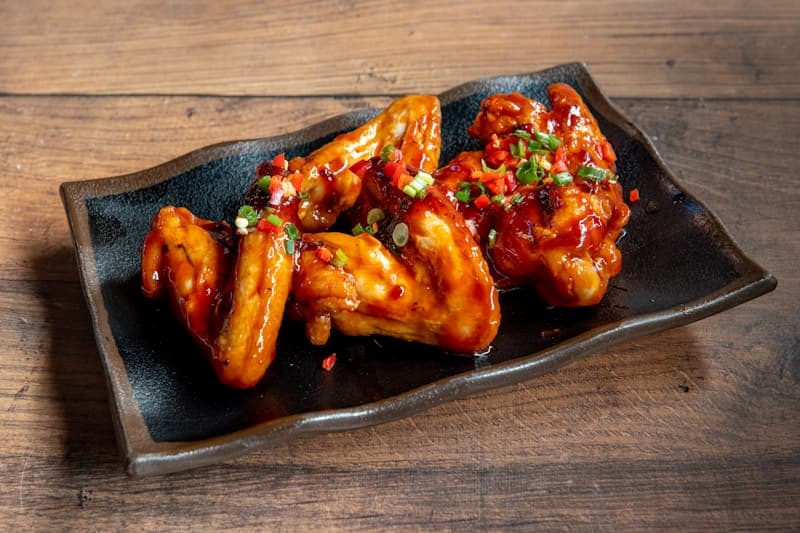
Buldak (Fire Chicken)
How to build real buldak heat with gochugaru and gochujang together, and why the sauce goes on at the very end, not during cooking.