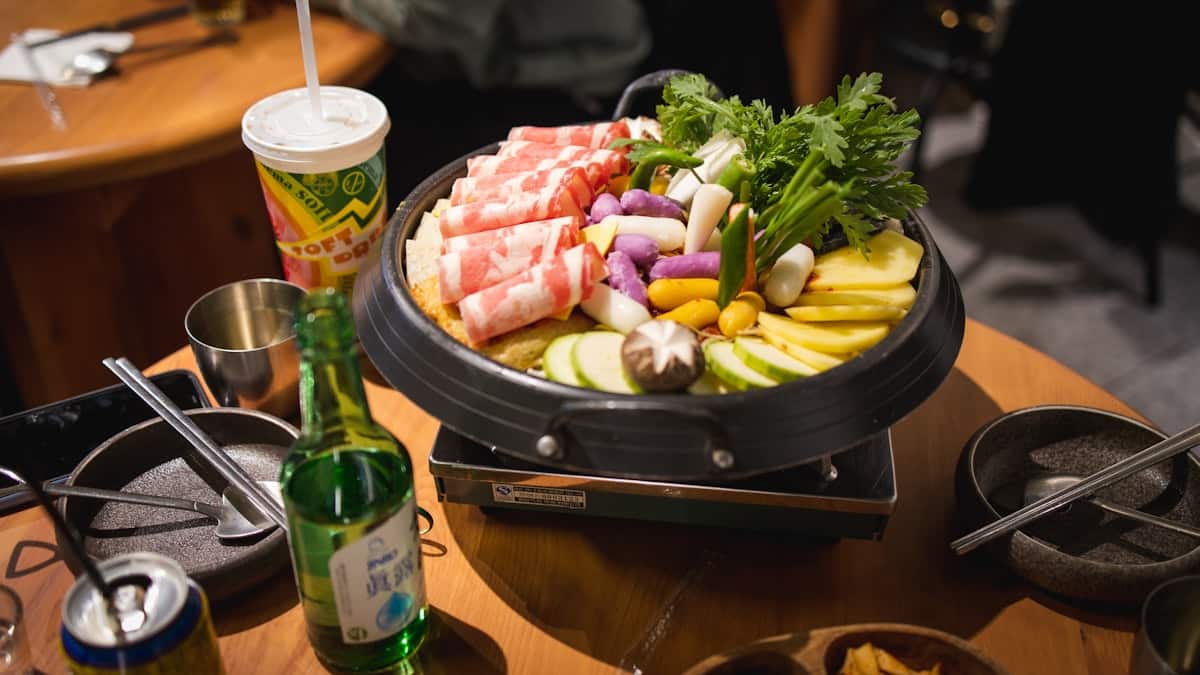
Steps
- 1
Whisk together gochujang, gochugaru, soy sauce, and garlic with a splash of the stock to make a paste.
- 2
Arrange the Spam, hot dogs, kimchi, onion, and tofu around the edges of a wide shallow pot, saving the center for the sauce.
- 3
Spoon the sauce paste into the center of the pot.
- 4
Pour in the stock, cover, and bring to a boil at the table if using a portable burner, or on the stove otherwise.
- 5
Once boiling, stir everything together and simmer 8-10 minutes.
- 6
Add the uncooked ramyeon noodles and simmer until just tender, 3-4 minutes.
- 7
Lay the cheese slice on top to melt just before serving.
Did you know — Korean culture
Budae jjigae translates to "army base stew," and that's literally where it came from. In the food-scarce years after the Korean War, people living near US military bases in Uijeongbu got hold of surplus American rations — Spam, hot dogs, canned beans — and stretched them into a spicy, kimchi-based stew. What started as wartime improvisation with leftover base food is now a nostalgic comfort dish in its own right.
Budae jjigae is meant to keep cooking after it hits the table, which is why it's traditionally made in a wide, shallow pot on a portable burner rather than served already finished from the kitchen — the noodles go in last and keep simmering as people eat, so the texture is still changing through the meal.
The name translates literally to "army base stew," and that's exactly where it came from. In the food-scarce years after the Korean War, people living near US military bases in Uijeongbu got hold of surplus American rations — Spam, hot dogs, canned beans — and stretched them into a spicy, kimchi-based stew using what was actually available. What started as wartime improvisation with leftover base food has become one of Korea's most recognizable comfort dishes, embraced rather than treated as something to move past.
Arranging the ingredients around the edges before adding the sauce and stock isn't just presentation — it means everything gets roughly equal exposure to the broth as it comes together, instead of the first things added overcooking while the pot builds up to a boil.
What actually goes in
Budae jjigae is a real dish with a real history, and its ingredient list is genuinely part of that history rather than a novelty.
The processed elements: spam or similar luncheon meat, hot dogs or sausage, and often sliced ham. Sliced, not diced — they should be recognisable.
Kimchi, properly sour, plus its brine.
Baked beans, in many versions. This sounds wrong and works — the sweetness balances the chili.
American cheese, a single slice melted on top. Not cheddar; the processed slice melts into the broth the way cheddar will not.
Ramyeon noodles, added at the end.
Tofu, scallion, onion, mushrooms round it out.
The broth is what makes it good rather than just salty
The processed meats bring plenty of salt and fat but very little depth. The broth has to supply that.
Use dasima and dried anchovy stock, not water. This is the single biggest difference between a good budae jjigae and a salty one.
The seasoning paste — gochugaru, gochujang, soy sauce, garlic, a little sugar — is mixed separately and added to the pot rather than stirred in at the end, so it distributes properly.
Taste before adding salt. Between the spam, the ham and the kimchi brine, it is usually salty enough already.
Assembling and cooking it
Budae jjigae is arranged, not stirred. Everything is laid out in sections in a wide, shallow pot so it arrives at the table looking composed, and people eat from their own side.
Add in stages:
- Meats, kimchi, hard vegetables and the seasoning paste with the stock — simmer 10 minutes
- Tofu and soft vegetables — 3 minutes
- Noodles and cheese — the last 2–3 minutes
The noodles go in last, at the table if possible. Added early they turn to mush and thicken the broth into paste.
Timing and scaling
25–30 minutes, and almost all of it is chopping.
This is a communal dish — it is cooked in one wide pot at the table on a portable burner and eaten straight from it. Scaling up is easy; scaling down to one person loses most of the point.
Prep everything first and arrange it on a tray. Once the pot is on, it moves quickly.
Storing and reheating
2–3 days refrigerated, minus the noodles, which will have disintegrated.
Reheat on the stove and add fresh noodles at the end rather than trying to salvage the old ones.
Do not freeze — the tofu goes spongy and the processed meats turn unpleasant in texture.
What to serve with it
Very little, deliberately — budae jjigae is already a full table in one pot:
- Rice, and stirring some into the remaining broth at the end is standard
- Extra kimchi
- More noodles for a second round
- Soju or beer, conventionally
Troubleshooting
Noodles turned to mush? They go in last and only need a few minutes — if the stew's still simmering after they're done, pull the noodles out or take the pot off heat.
Stew tastes flat despite the gochujang? The kimchi needs to be reasonably fermented and tangy — mild, fresh kimchi doesn't carry the same depth.
Broth too thin? Simmer a little longer before adding the noodles, or reduce the added stock slightly — the fat from the Spam and sausage helps carry flavor but won't thicken a watery base on its own.
Common questions
What is budae jjigae?
Army stew — a spicy Korean stew built around processed meats like spam and hot dogs alongside kimchi, tofu and ramyeon noodles. It originated near US military bases after the Korean War, using surplus rations, and has since become a genuinely popular dish in its own right.
Do I have to use spam in budae jjigae?
It is the defining ingredient, and leaving it out gives you a different stew. Any luncheon meat works. If you want to reduce it, use less rather than substituting something fresh — the flavour of the processed meat is central to what the dish is.
What kind of cheese goes in budae jjigae?
A single slice of processed American cheese, laid on top near the end. It melts smoothly into the broth. Cheddar and other real cheeses split and go oily instead.
When do you add the noodles?
In the last two to three minutes, ideally at the table. Added early they overcook into mush and thicken the broth into paste.
Why are baked beans in budae jjigae?
They come from the same origin as the spam — surplus American rations — and stayed because they work. The sweetness balances the chili and the beans add body. Not every version includes them, but many do.
Recommended products
- Portable tabletop burner
- Wide shallow stew pot
More to cook
All Stews & Soups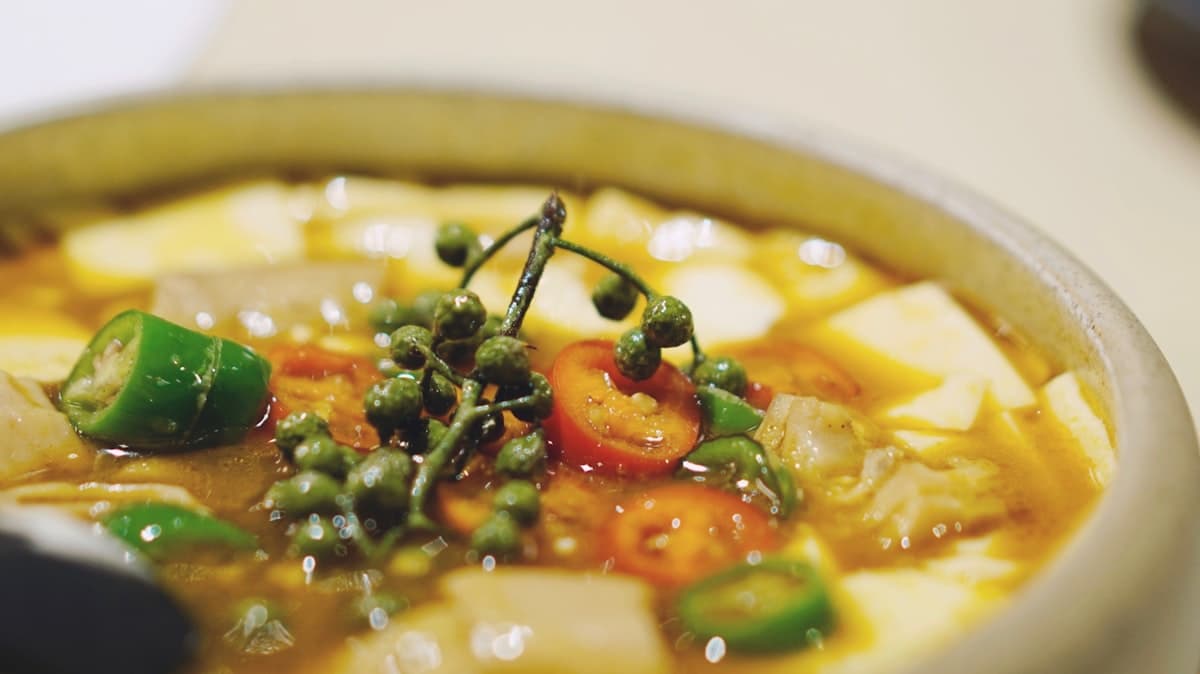
Cheonggukjang (Fast-Fermented Soybean Stew)
What makes cheonggukjang different from doenjang jjigae, and how to cook its pungent fermented soybeans into a proper stew.
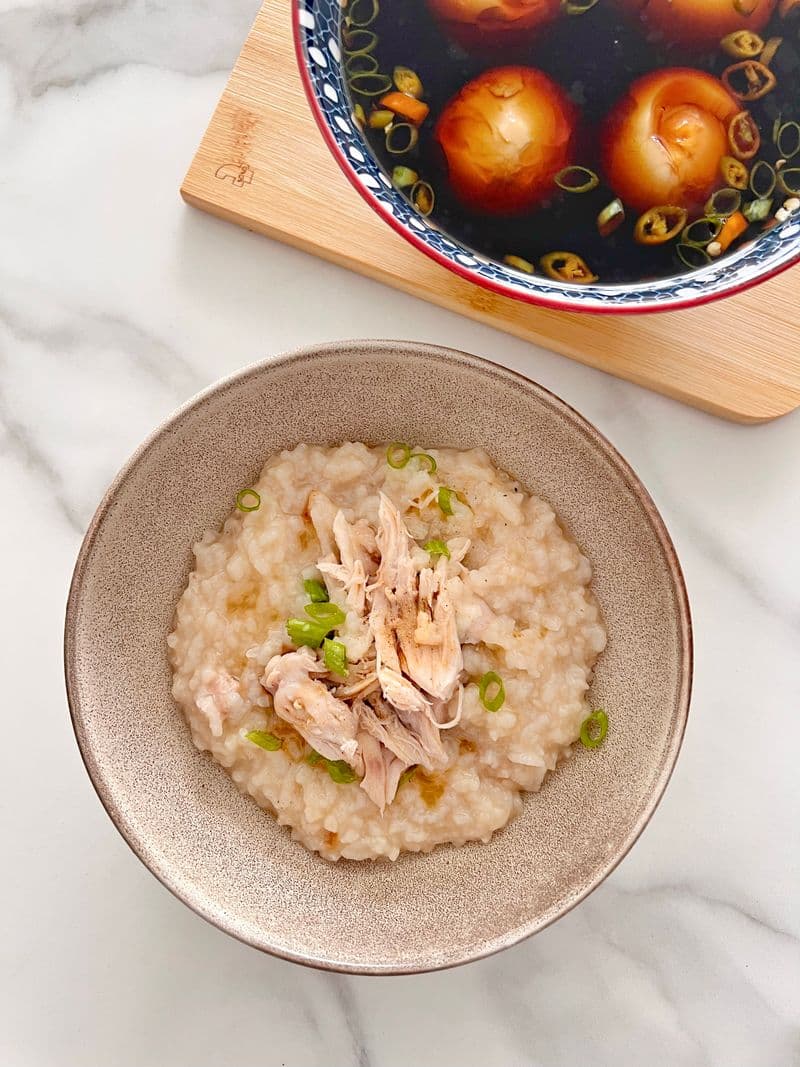
Dakjuk (Chicken Rice Porridge)
Why soaking the rice before cooking, not just simmering it longer, is what makes dakjuk creamy instead of watery.
Doenjang Jjigae (Soybean Paste Stew)
The rice-water base and anchovy-kelp stock that gives doenjang jjigae its depth, and why this everyday stew rewards patience more than any other.