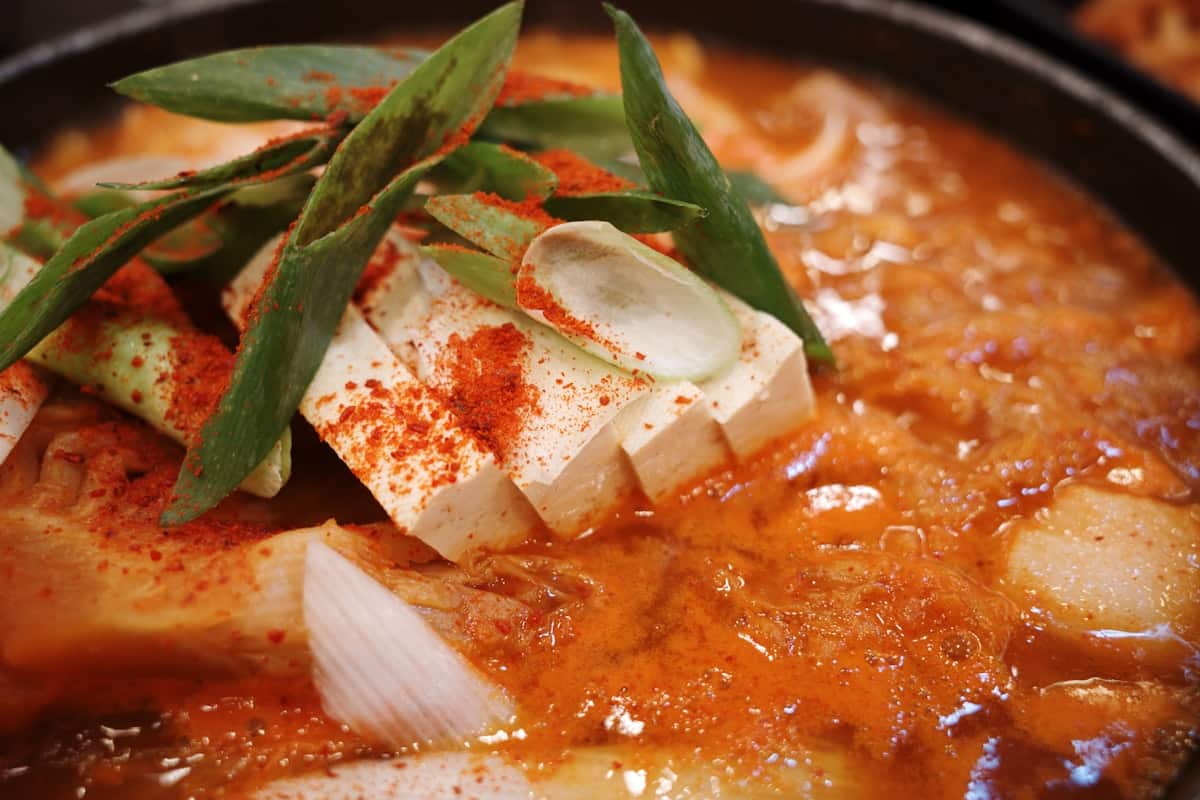
Steps
- 1
Soak the pork bones in cold water at least 1 hour, changing water once, to draw out blood.
- 2
Boil the bones hard for 10 minutes in fresh water, then discard this water and rinse the bones.
- 3
Return the bones to a clean pot with fresh water, and simmer 90 minutes to 2 hours until the meat is tender.
- 4
Whisk together gochujang, gochugaru, doenjang, and garlic, and stir into the pot.
- 5
Add the potato and cabbage, and simmer another 20-30 minutes until the potato is tender.
- 6
Stir in the ground perilla seed to thicken and enrich the broth.
- 7
Add torn perilla leaves and green onion in the last few minutes.
- 8
Season with salt to taste before serving.
Did you know — Korean culture
Gamjatang's name looks like it simply means "potato stew," since gamja is the modern Korean word for potato. But there's a real etymology dispute: some food historians argue the name actually comes from an old regional term for the pork spine bones the stew is built on, and the potato showed up later as a hearty add-in that happened to share the name. Either way, the potato chunks are now considered essential, whichever came first.
The first-boil-discard step matters just as much here as it does for any long-simmered bone broth — pork spine bones carry a lot of blood and impurities, and boiling them briefly in one batch of water, then throwing that water out and starting clean, is what keeps the final stew from tasting muddy.
Ground perilla seed isn't a garnish here, it's a thickener. Stirred into the broth toward the end, it gives gamjatang a slightly nutty richness and a bit of body that a purely gochujang-based broth doesn't have on its own — leaving it out changes the texture more than people expect.
The name itself hides a genuine etymology dispute. Gamjatang looks like it simply means "potato stew," since gamja is the modern word for potato. But some food historians argue the name actually traces back to an old regional term for the pork spine bones the stew is built on, with the potato added later as a hearty ingredient that happened to share the name. Either way, the potato is now considered non-negotiable.
Pork neck bones, and preparing them
Pork neck bones (gamja-ppyeo) are the cut, not pork shoulder. They carry a surprising amount of meat between the vertebrae, and the marrow and connective tissue are what give the broth its body.
Soak them first. 1–2 hours in cold water, changed a couple of times, draws out blood. Skipping this gives a murky, faintly metallic broth.
Then parboil. Cover with fresh water, bring to a hard boil for 5–10 minutes, then discard that water entirely and rinse each bone. Scum and impurities come off here, and this is what makes the difference between a clean broth and a cloudy one.
It feels wasteful. It is the step that matters most.
The seasoning paste and the potatoes
The paste: doenjang, gochugaru, gochujang, a lot of garlic, ginger, soy sauce, and often ground perilla seeds.
Ground perilla seed (deulkkae garu) is the signature. It gives gamjatang its nutty thickness and slightly grainy body, and its absence is why home versions often taste thinner than restaurant ones. Worth seeking out.
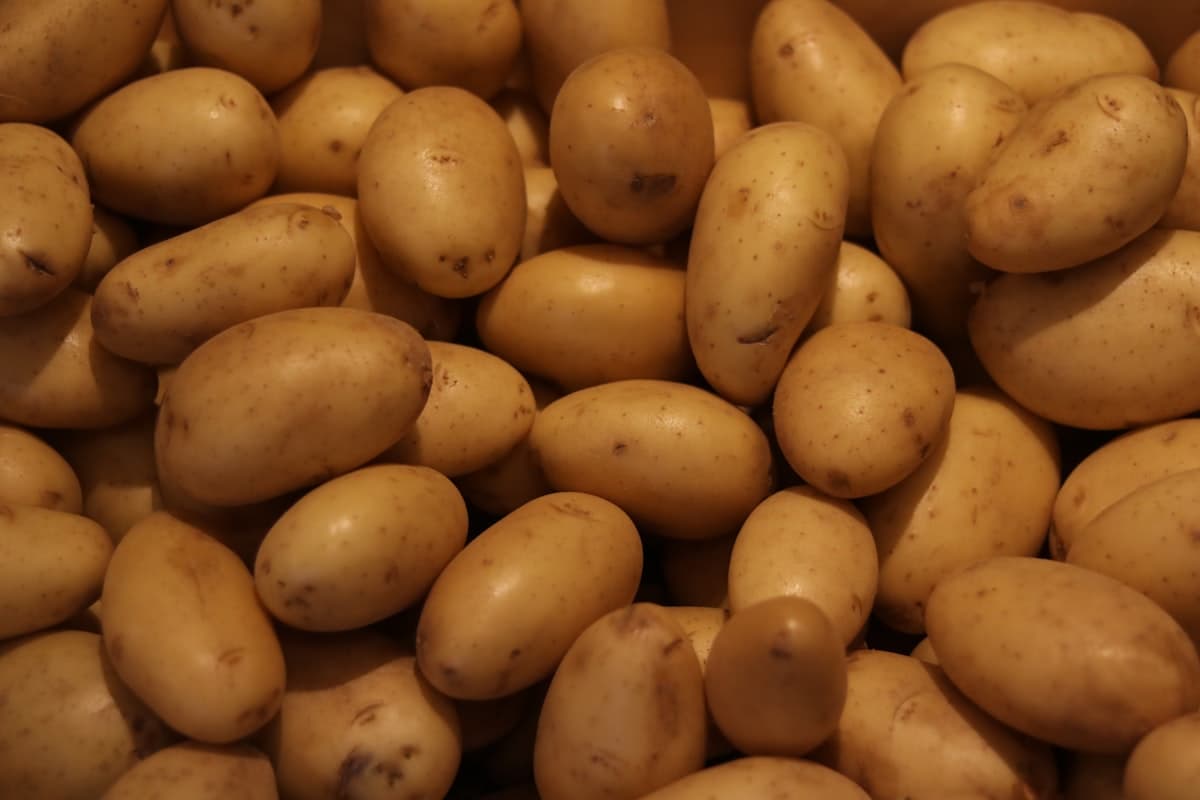
Potatoes go in whole or halved, and late — about 20 minutes before the end. In too early and they disintegrate into the broth.
Ugeoji — dried or blanched outer cabbage leaves — is traditional and adds a slightly bitter, silky texture. Napa cabbage is a reasonable stand-in.
The long simmer
1.5 to 2 hours after parboiling, at a bare simmer.
You are waiting for the meat to come away from the bone with a chopstick. Rushing it at a rolling boil gives you tough meat in cloudy broth — connective tissue needs low, slow heat to break down into gelatine.
Skim occasionally in the first half hour.
Add the potatoes at the 60-minute mark, the cabbage at 80, the perilla seed and crown daisy in the last five minutes.
Timing and making it ahead
Around 3 hours total, most of it unattended, plus the soak.
It is better the next day, clearly so. Make it deliberately in advance.
It also makes chilling off the fat trivial — refrigerate overnight and lift the solidified layer off the top, which is easier and more thorough than skimming hot.
Storing and reheating
4 days refrigerated. 2 months frozen, and it freezes better than most Korean stews because there is no tofu to go spongy.
Reheat on the stove to a proper simmer.
Bokkeumbap at the end is standard: when the meat is gone, rice, sesame oil, seaweed and kimchi go into the remaining broth in the pot and get fried. Restaurants offer this and it is the best part of the meal.
What to serve with it
- Rice, and keep enough back for the fried rice at the end
- Kimchi and pickled radish
- Ssamjang and lettuce — the meat off the bones is often wrapped
- Very little else. It is a one-pot meal and a heavy one.
Troubleshooting
Broth tastes muddy or bitter? The bones likely weren't parboiled and rinsed properly before the main simmer — don't skip the discard-the-first-water step.
Broth thin instead of rich? Make sure the perilla seed actually gets stirred in, not just sprinkled on top — it needs to dissolve into the liquid to thicken it.
Meat still tough near the bone after 90 minutes? Larger bone pieces need the longer end of the simmer range; give it the full 2 hours before checking again.
Common questions
What cut of pork is used in gamjatang?
Pork neck bones, which carry meat between the vertebrae plus marrow and connective tissue. Pork shoulder is not a substitute — the bones are what give the broth its body.
Why do you parboil the bones for gamjatang?
To remove blood and impurities. Soak them, then boil hard for 5–10 minutes, throw that water away and rinse each bone. It's the difference between a clean broth and a cloudy, metallic one, and it's the step most often skipped.
What is deulkkae garu in gamjatang?
Ground perilla seed. It gives the stew its nutty thickness and slightly grainy body and is the signature flavour. Home versions that taste thin than restaurant ones are usually missing it.
Does gamjatang mean potato soup?
The dish contains potatoes, but there's a long-running claim that 'gamja' here refers to a cut of pork bone rather than the vegetable. The etymology is genuinely disputed, so treat any confident answer with suspicion — including that one.
Can gamjatang be made ahead?
Yes, and it's noticeably better the next day. Refrigerating overnight also lets you lift the solidified fat off the top, which is easier and more thorough than skimming it hot.
Recommended products
- Ground perilla seed (deulkkae)
- Pork spine bones for gamjatang
More to cook
All Stews & Soups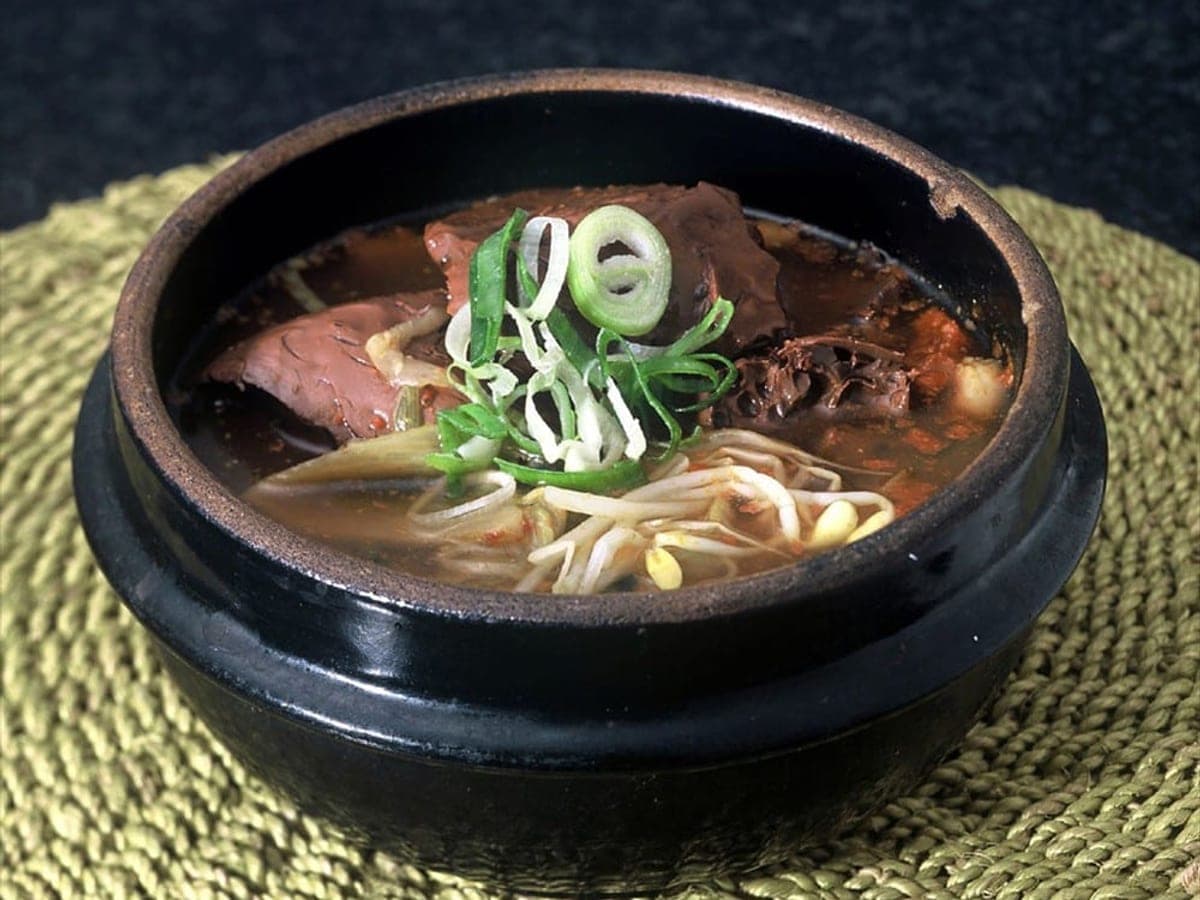
Haejangguk (Hangover Soup)
Why haejangguk needs a long ox-bone broth rather than a quick stock, and how the cabbage and bean sprouts go in at different times so neither overcooks.
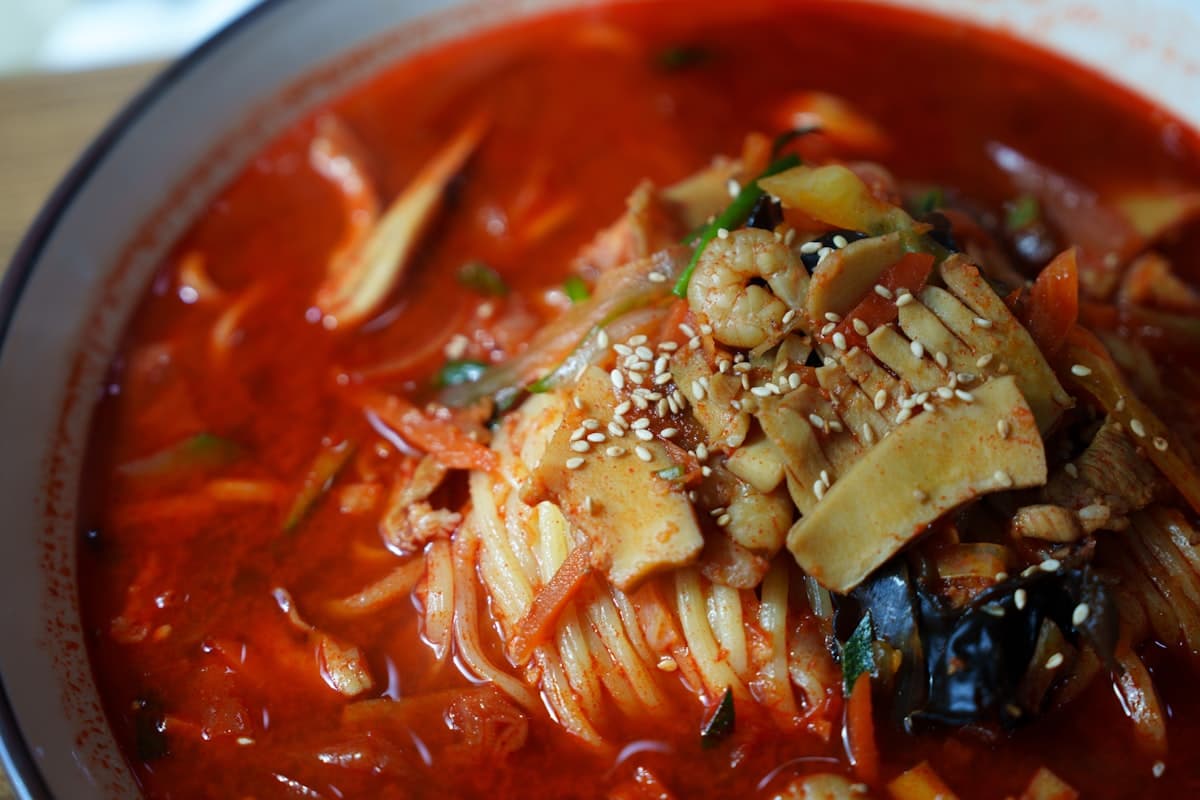
Jjamppong (Spicy Seafood Noodle Soup)
The high-heat stir-fry-then-simmer technique behind jjamppong's deep red broth, and why the seafood goes in in stages, not all at once.
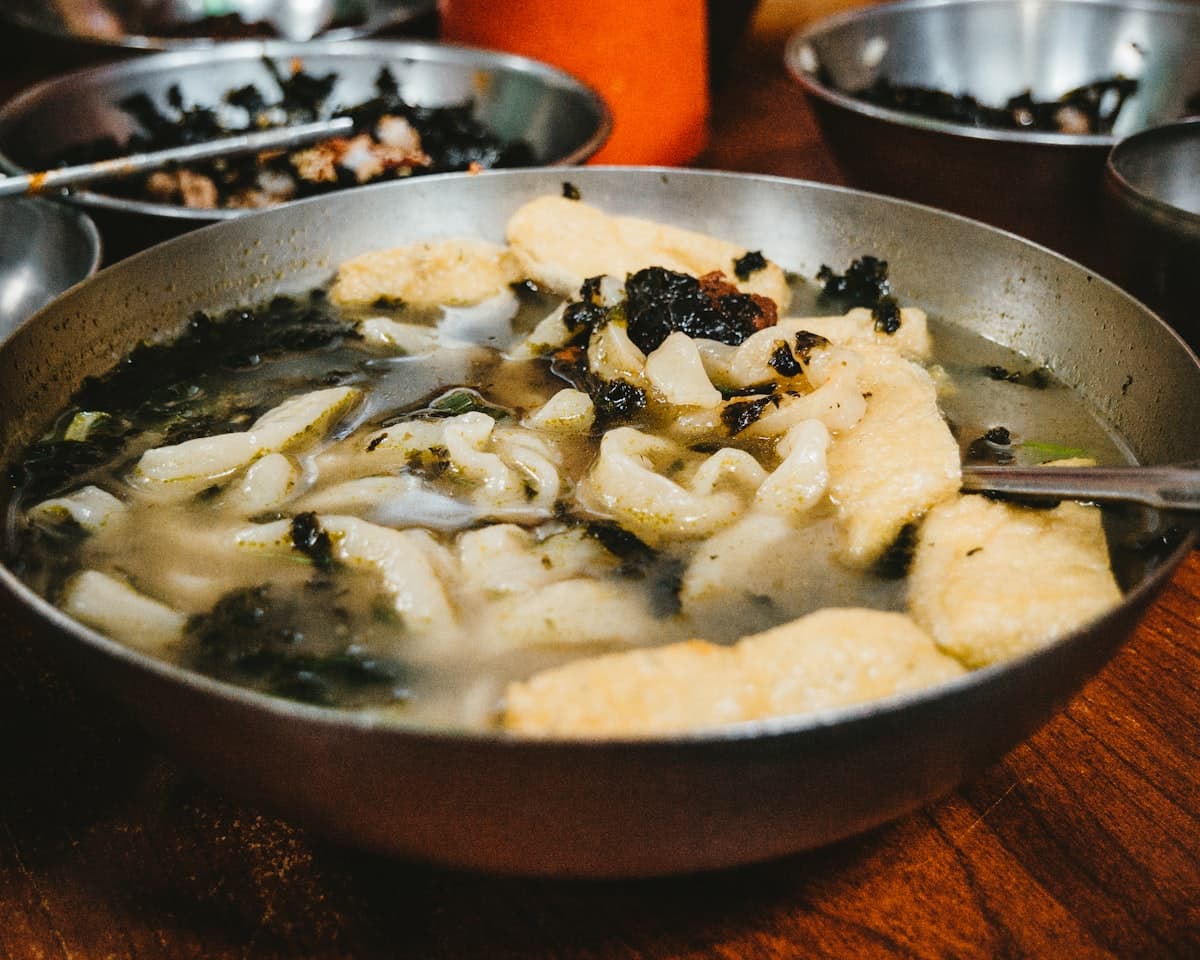
Kalguksu (Knife-Cut Noodle Soup)
The dough-resting step behind kalguksu's chewy hand-cut noodles, and why a real anchovy-kelp stock matters more than in most noodle soups.