Did you know — Korean culture
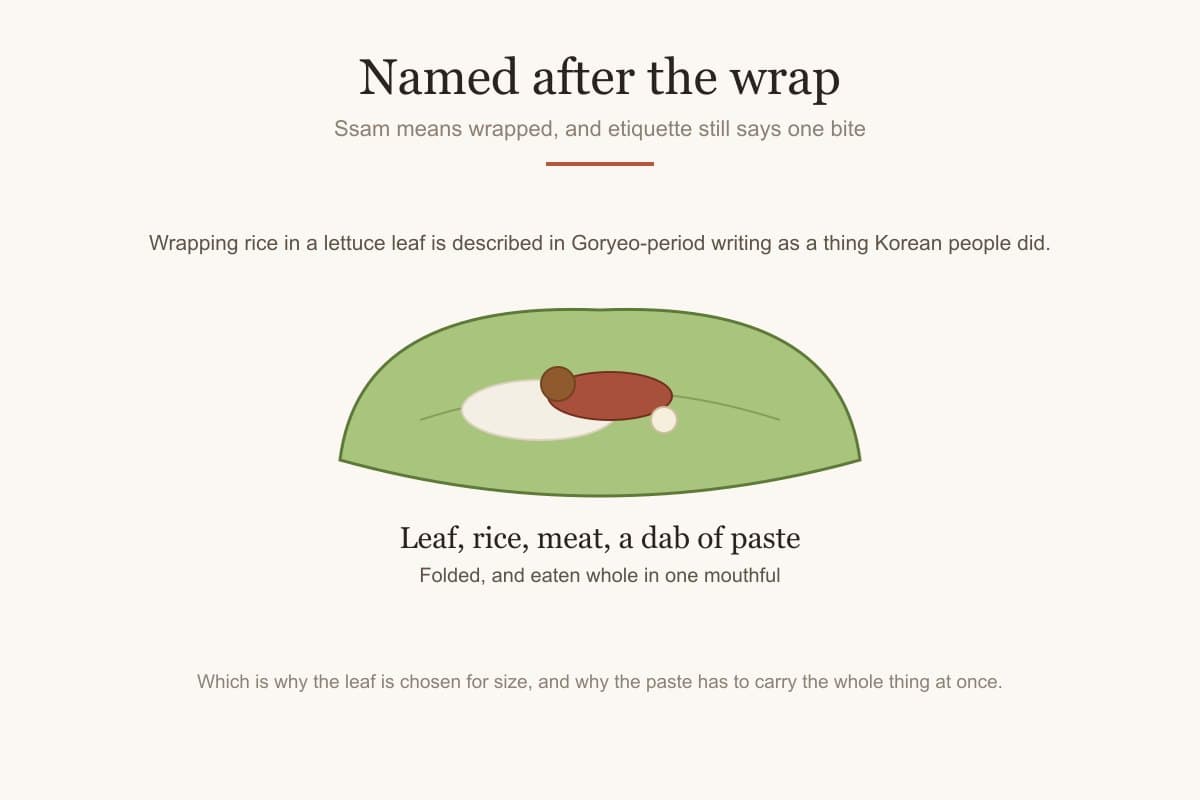
Ssamjang is named after the wrap rather than the paste, which tells you what it is for. Ssam means wrapped, and the eating style — a leaf, rice, meat, a dab of paste, folded and eaten whole in one mouthful — is old enough to appear in Goryeo-period writing, where wrapping rice in a lettuce leaf is described as a thing Korean people did. Etiquette still holds that a ssam is eaten in a single bite, which is why the leaf is chosen for size and why the paste has to be strong enough to carry the whole thing at once.
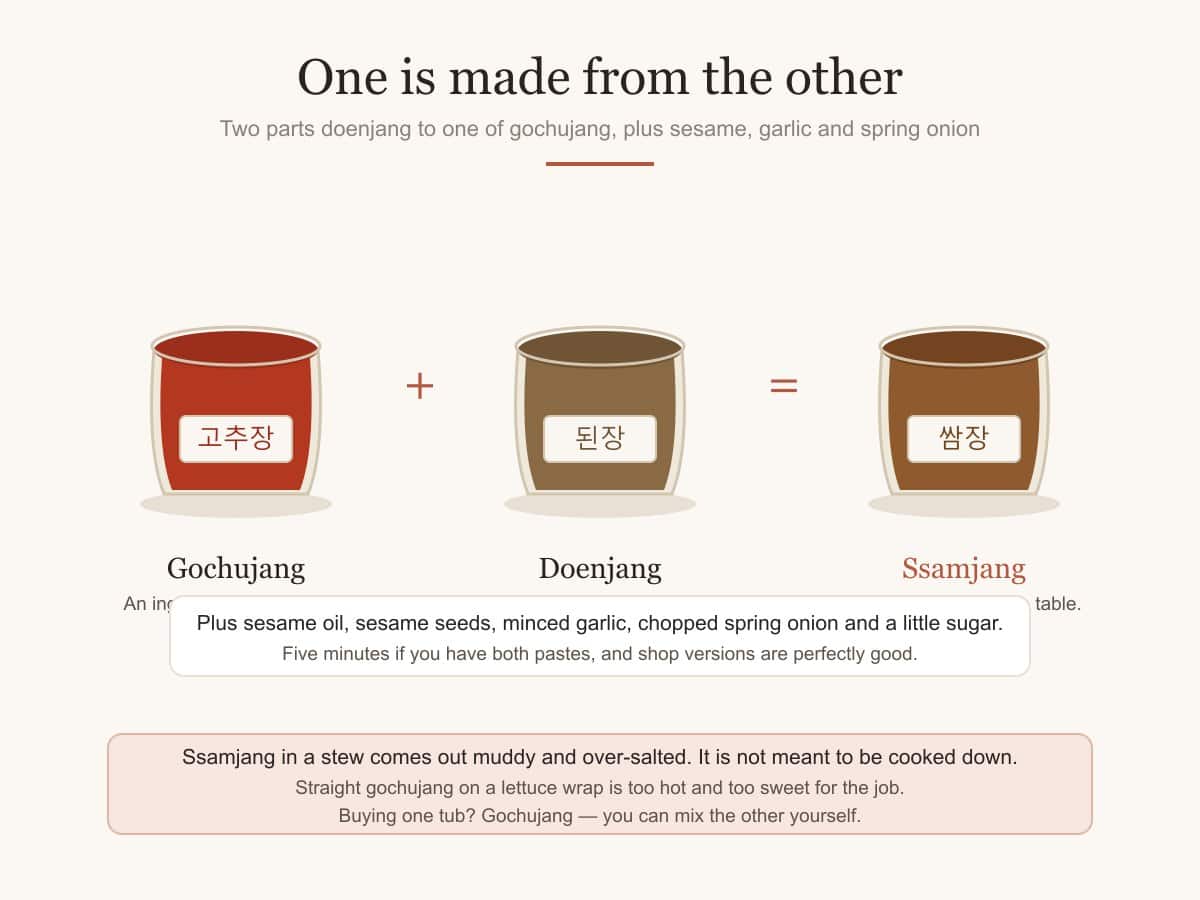
These sit beside each other in the shop in near-identical tubs, and one is an ingredient while the other is a finished condiment.
Gochujang is a fermented chilli paste. Ssamjang is a dip made from gochujang plus doenjang plus aromatics.
What ssamjang actually is
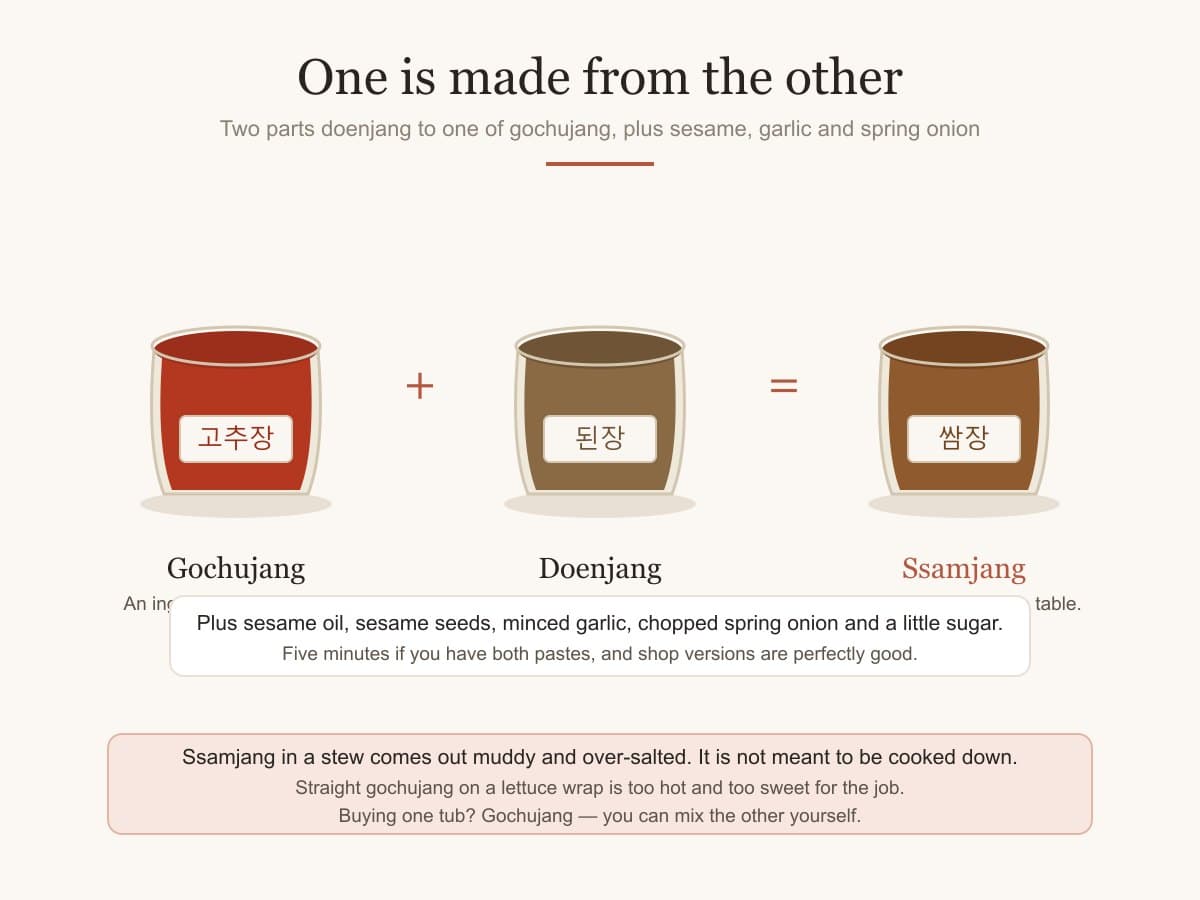
Roughly two parts doenjang to one part gochujang, plus sesame oil, sesame seeds, minced garlic, chopped spring onion, and usually a little sugar or honey.
That is it. It is a mixed condiment, not a separate ferment, and it is easy to make — a bowl of it takes five minutes if you have both pastes.
Shop ssamjang is perfectly good and usually sweeter and smoother than a homemade one.
How each tastes and behaves
Gochujang is hot, sweet and sharply fermented, and it is assertive enough that a spoonful dominates whatever it goes into.
Ssamjang is milder, nuttier and saltier, with the doenjang doing most of the work and the gochujang sitting behind it. It is also thicker and chunkier.
The difference is clearest eaten from a spoon: gochujang reads as chilli paste, ssamjang as a savoury dip.
Where each belongs
Ssamjang is for the table. It goes into a lettuce wrap at a barbecue, on bossam, with raw vegetables and with suyuk. It is almost never cooked.
Gochujang is for the pan. Tteokbokki, bibimbap sauce, marinades, jjigae, braises.
Using ssamjang in a stew gives you a muddy, over-salted result, because the doenjang and the sesame oil are not meant to be cooked down.
If you only have one
Gochujang in place of ssamjang: mix it with doenjang if you have any, or with miso, plus sesame oil and garlic. Straight gochujang on a lettuce wrap is too hot and too sweet for the job.
Ssamjang in place of gochujang: use less, and expect the dish to taste of doenjang. It is workable in a marinade and poor in a sauce.
If you are buying one tub, buy gochujang — substitutes for it are worse than substitutes for ssamjang, which you can mix yourself in five minutes.
Common questions
What is the difference between ssamjang and gochujang?
Gochujang is a fermented chilli paste used as an ingredient. Ssamjang is a finished dip made from doenjang and gochujang with sesame oil, garlic and spring onion.
Can I use gochujang instead of ssamjang?
On a lettuce wrap it is too hot and too sweet on its own. Mix it with doenjang or miso plus sesame oil and garlic, which is essentially making ssamjang.
Can I cook with ssamjang?
Not well. The doenjang and sesame oil in it are not meant to be cooked down, and a stew made with it comes out muddy and over-salted.
How do I make ssamjang?
About two parts doenjang to one part gochujang, with sesame oil, sesame seeds, minced garlic, chopped spring onion and a little sugar. Five minutes if you have both pastes.
More to cook
All Ingredient & Substitute Guides
Ssukgat (Crown Daisy)
Why crown daisy goes into a Korean stew in the last thirty seconds rather than the last five minutes, and what to use if you can't find it.
Sukju vs Kongnamul (Bean Sprouts)
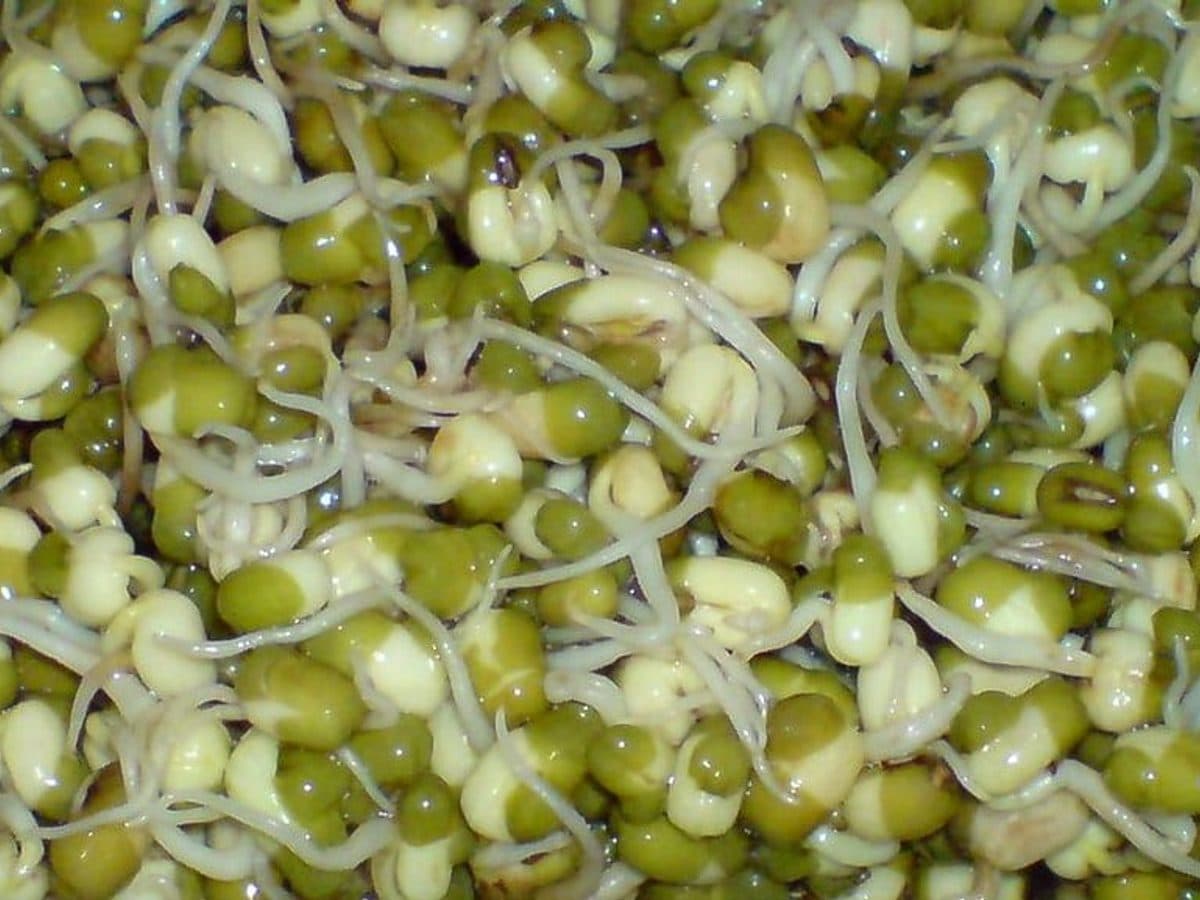
Why Korean cooking uses two different bean sprouts, which dishes need which, and why only one of them can survive a long simmer.
Tteok vs Mochi
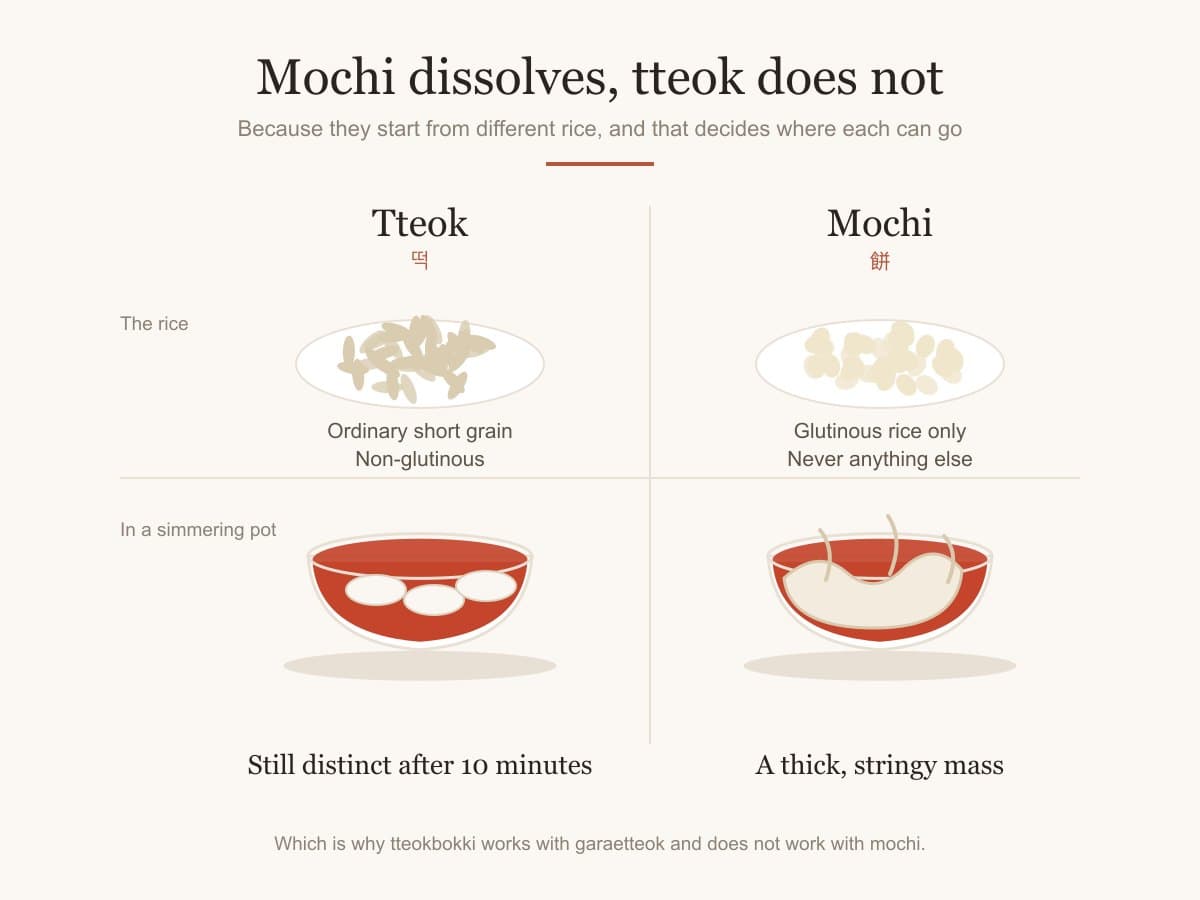
Both are pounded rice cake, but Korean tteok and Japanese mochi start from different rice and end up in completely different dishes.