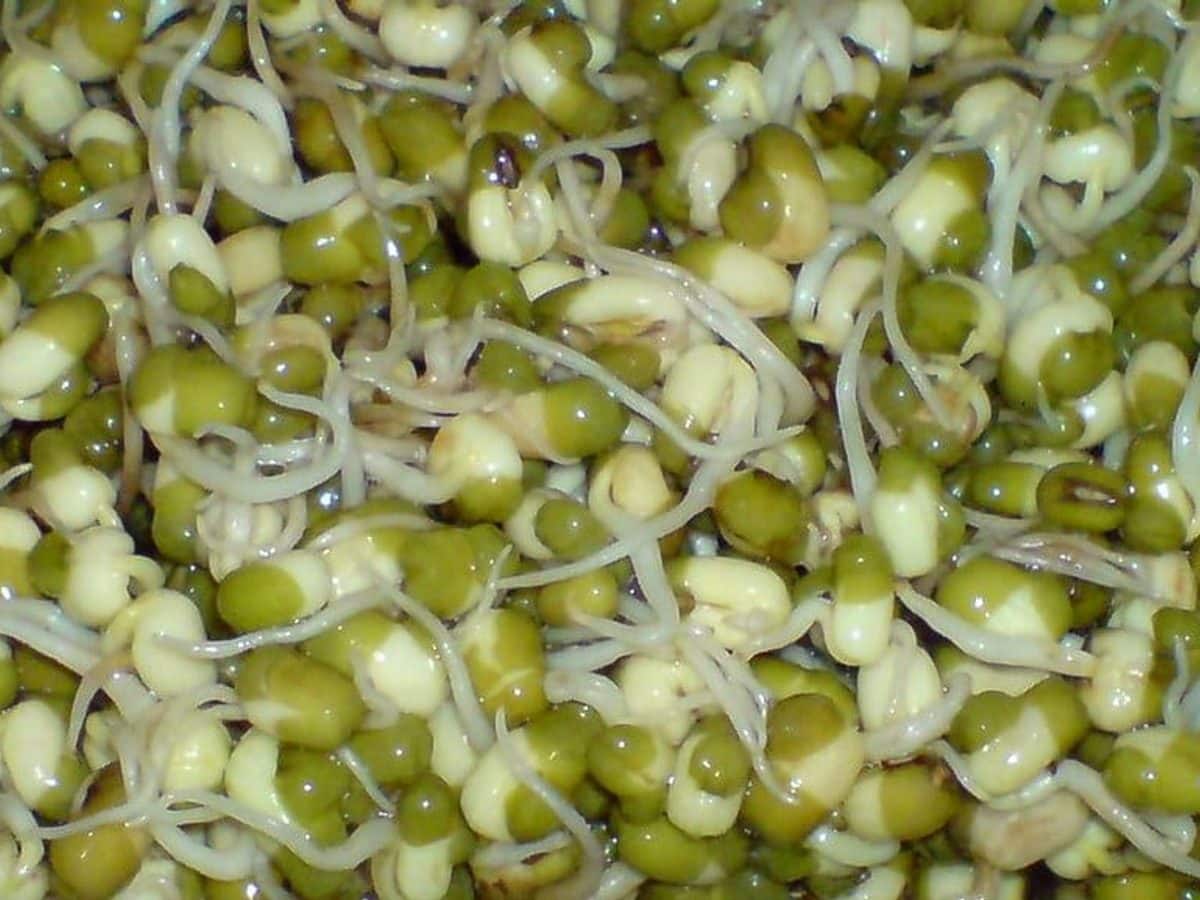
Photo: conskeptical · CC BY-SA
Did you know — Korean culture
Soybean sprouts are markedly more common in Korea than in neighbouring cuisines, which lean toward mung bean sprouts. Growing them requires only soybeans, water and darkness, and they were historically a way of producing a fresh vegetable in the middle of winter with no land and no sunlight — a jar in a dark corner, rinsed a few times a day, yields sprouts in under a week.
Korean shops sell two bean sprouts and they are genuinely different vegetables with different uses. Substituting one for the other is the reason a dish sometimes comes out limp or unexpectedly beany.
Sukju namul are mung bean sprouts: short, slender, white, with a small head. Kongnamul are soybean sprouts: longer, with a distinct yellow bean head and a firmer, squeakier stem.
Which dish wants which
Kongnamul — the sturdier one. It goes in soups and stews where it needs to survive heat: kongnamul gukbap, and as the base under dolsot bibimbap.
Sukju — the delicate one. Blanched briefly and dressed as a namul, or added to japchae and dumpling fillings. It goes limp in a soup.
The lid rule applies to kongnamul
Soybean sprouts release a raw, beany smell as they heat. The rule is: lid fully on or fully off, never lifted partway — opening the pot mid-cook traps that half-released aroma in the broth.
This does not apply to mung bean sprouts, which have no equivalent problem.
Cook them briefly, either way
Both are mostly water and both go limp if overcooked. Kongnamul wants about 10 minutes; sukju wants 30 seconds to a minute of blanching, then an immediate cold rinse to stop it.
The texture you are protecting is the squeak. Once it is gone it does not come back.
Buying and storing
Look for white, firm stems with no browning at the root end and no sliminess in the bag. Both spoil fast — two or three days at most.
Store them submerged in cold water in the fridge, changing the water daily, and they will hold a little longer. Sealed in their bag they turn to slime quickly.
Growing them at home
Both are easy, and sprouting is genuinely how many Korean households got a fresh vegetable through winter.
You need: dried mung beans or soybeans, a jar or a container with drainage, water, and darkness.
Soak overnight. Drain, then keep them in the dark and rinse two or three times a day — this is the part people forget, and it is what prevents them going slimy.
Mung beans: ready in 3–5 days.
Soybeans: 5–7 days, and they want a weight on top, which is what produces the thick, straight stems rather than curly ones.
Keep them dark. Light turns them green and bitter.
Cooking each one properly
Kongnamul (soybean sprouts) — about 10 minutes, and the lid rule applies: fully on or fully off, never lifted partway. Opening the pot midway traps a half-released beany smell in the broth. Goes into kongnamul gukbap and under dolsot bibimbap.
Sukju (mung bean sprouts) — 30 seconds to a minute blanched, then an immediate cold rinse. Any longer and they go limp. Used in japchae, dumpling fillings, and as a namul.
For namul, either one: dress while still warm with sesame oil, garlic, salt and scallion. Warm sprouts absorb the seasoning; cold ones sit under it.
Squeeze sukju gently after blanching. Squeezing kongnamul hard breaks the stems.
Buying and storing
Look for white, firm stems, no browning at the root end, and no liquid pooling in the bag. Sliminess means they have started to go.
They spoil fast — two or three days is realistic.
To extend that: submerge them in cold water in a container in the fridge and change the water daily. This buys several extra days and is worth doing if you buy a large bag.
Sealed in their original bag they turn to slime quickly, because they are still respiring and the trapped moisture has nowhere to go.
Do not freeze. They thaw limp and watery.
Common questions
What is the difference between sukju and kongnamul?
Sukju are mung bean sprouts — short, slender, small-headed and delicate. Kongnamul are soybean sprouts — longer, with a yellow bean head and a firmer, squeakier stem. They're different vegetables with different uses, not interchangeable.
Which bean sprouts go in soup?
Kongnamul, the soybean sprouts. They're sturdy enough to survive a simmer. Mung bean sprouts go limp in a soup and are used for quick namul, japchae and dumpling fillings instead.
Why do you not lift the lid when cooking soybean sprouts?
They release a raw, beany aroma as they heat. Opening the pot partway through traps that half-released smell in the broth. The rule is lid fully on or fully off for the whole cook.
How do you keep bean sprouts fresh?
Submerged in cold water in a container in the fridge, changing the water daily. That buys several extra days over leaving them sealed in their bag, where trapped moisture turns them slimy fast.
More to cook
All Ingredient & Substitute Guides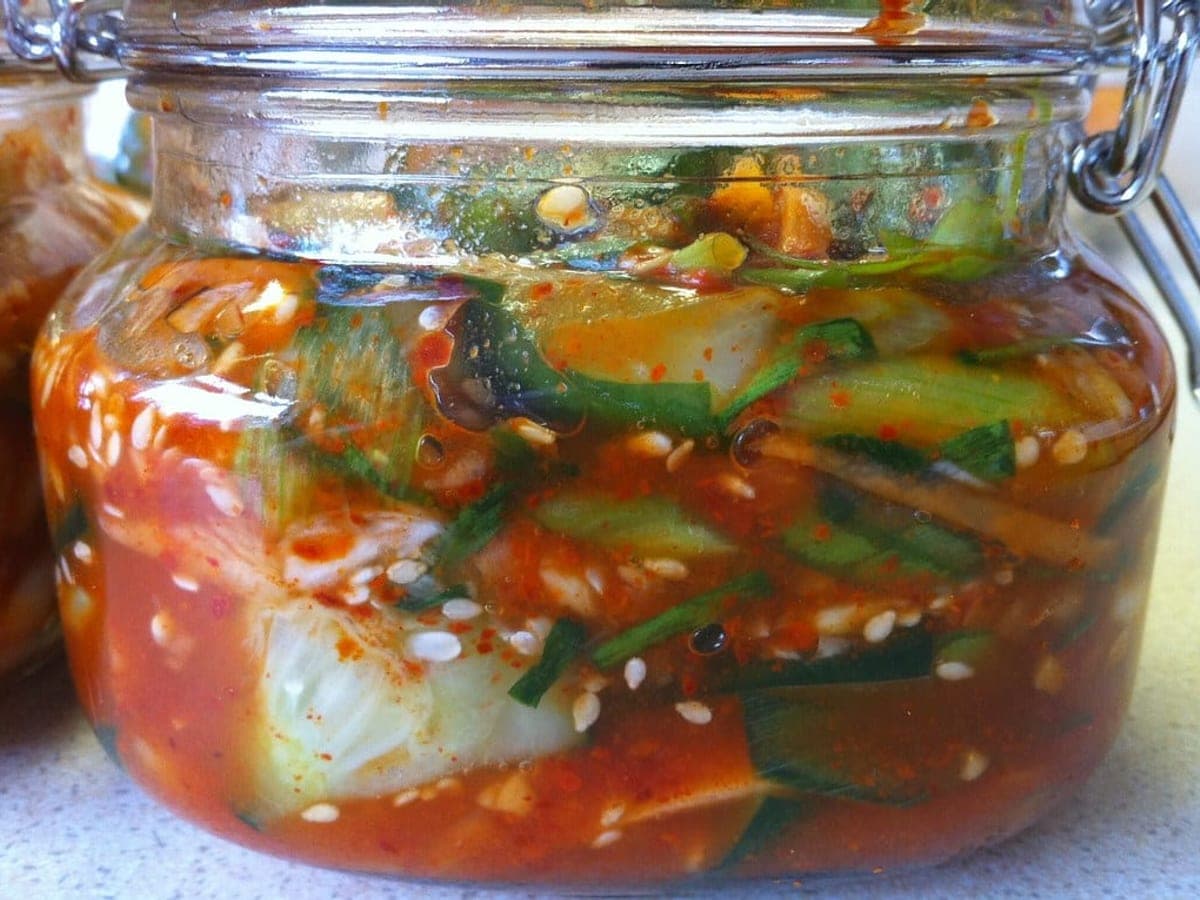
Why Is My Kimchi Not Sour?
The four things that stall kimchi fermentation — temperature, salt level, sugar and airtightness — and how to tell which one is your problem.
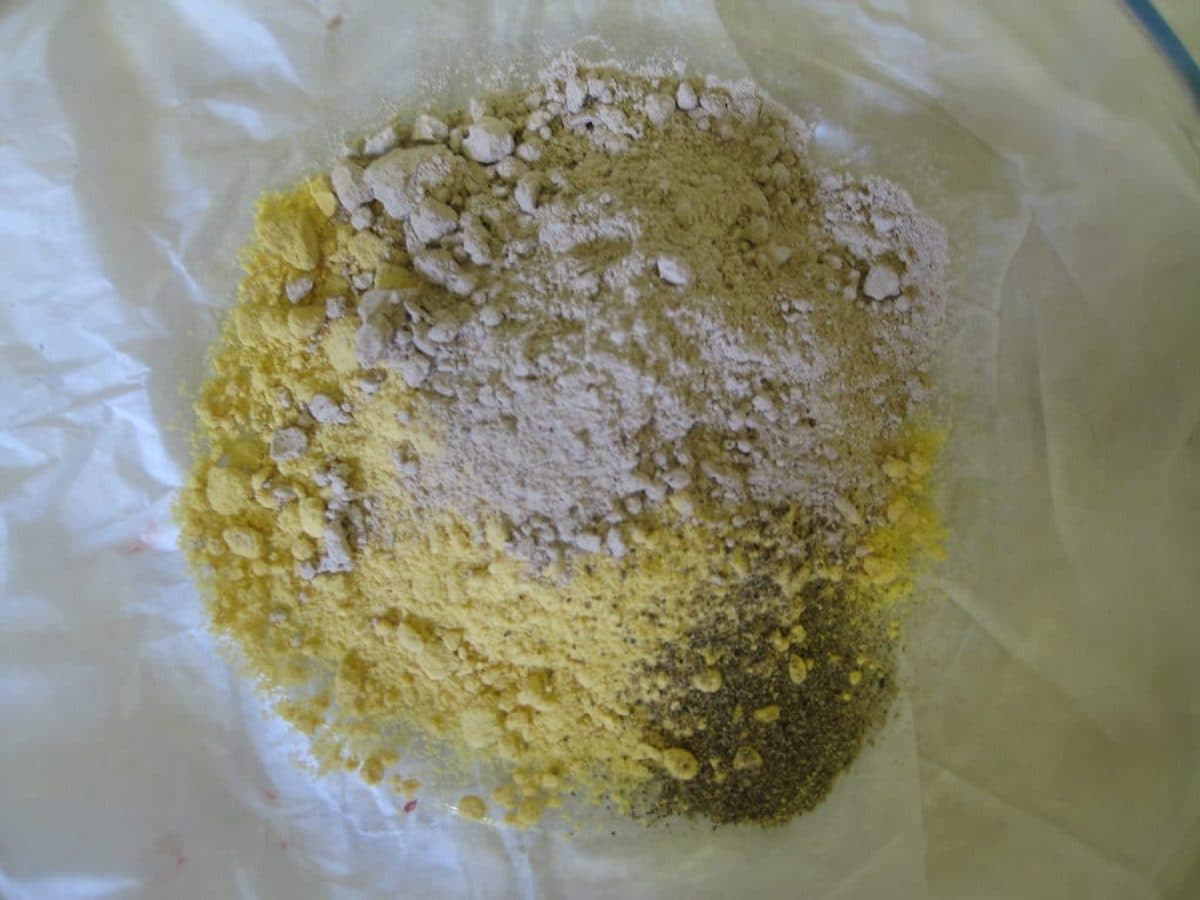
Yeongyeoja (Korean Mustard)
Why Korean mustard powder must be mixed with warm water and rested before use, and why it is nothing like the mustard on a hot dog.
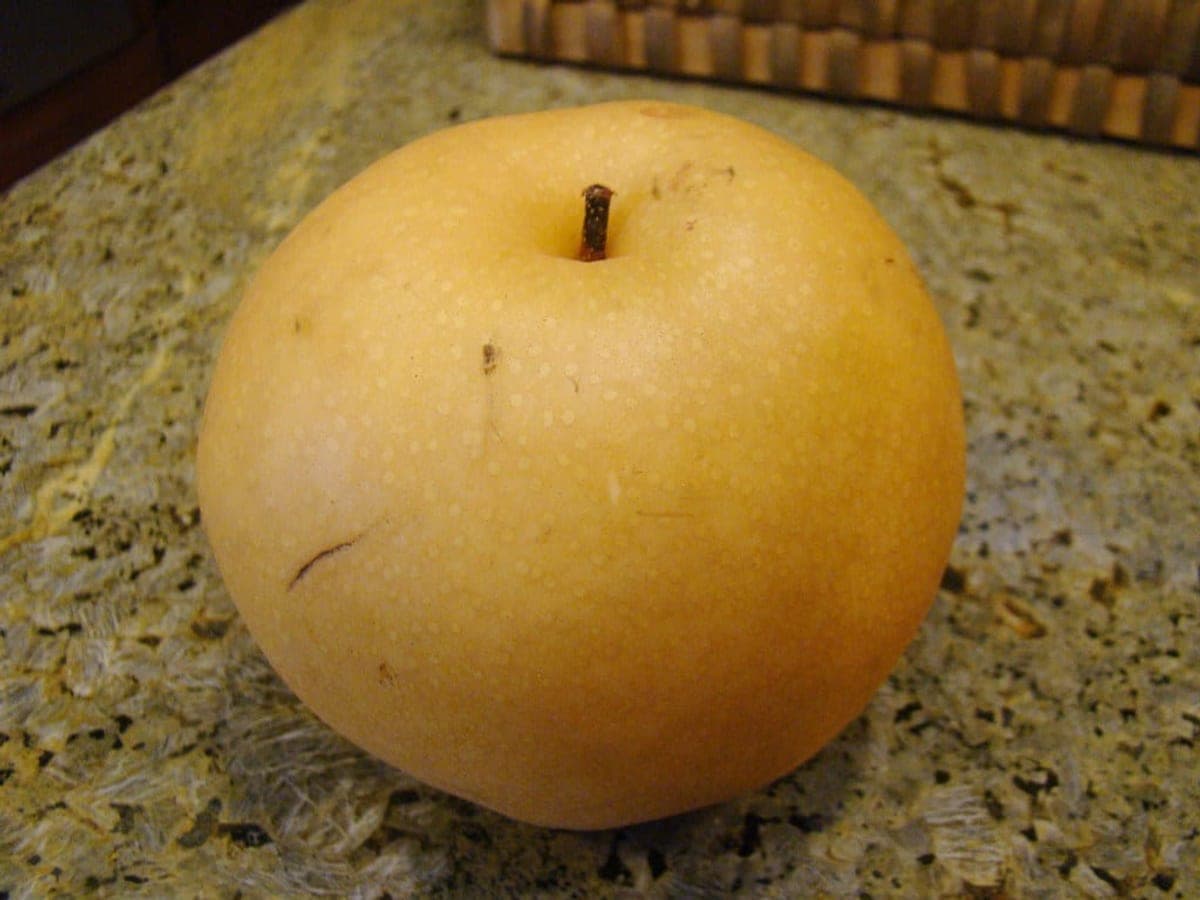
Asian Pear Substitute (For Korean Marinades)
Why Korean marinades use grated Asian pear rather than sugar, and which fruits actually reproduce the tenderising effect when you can't find one.