Did you know — Korean culture
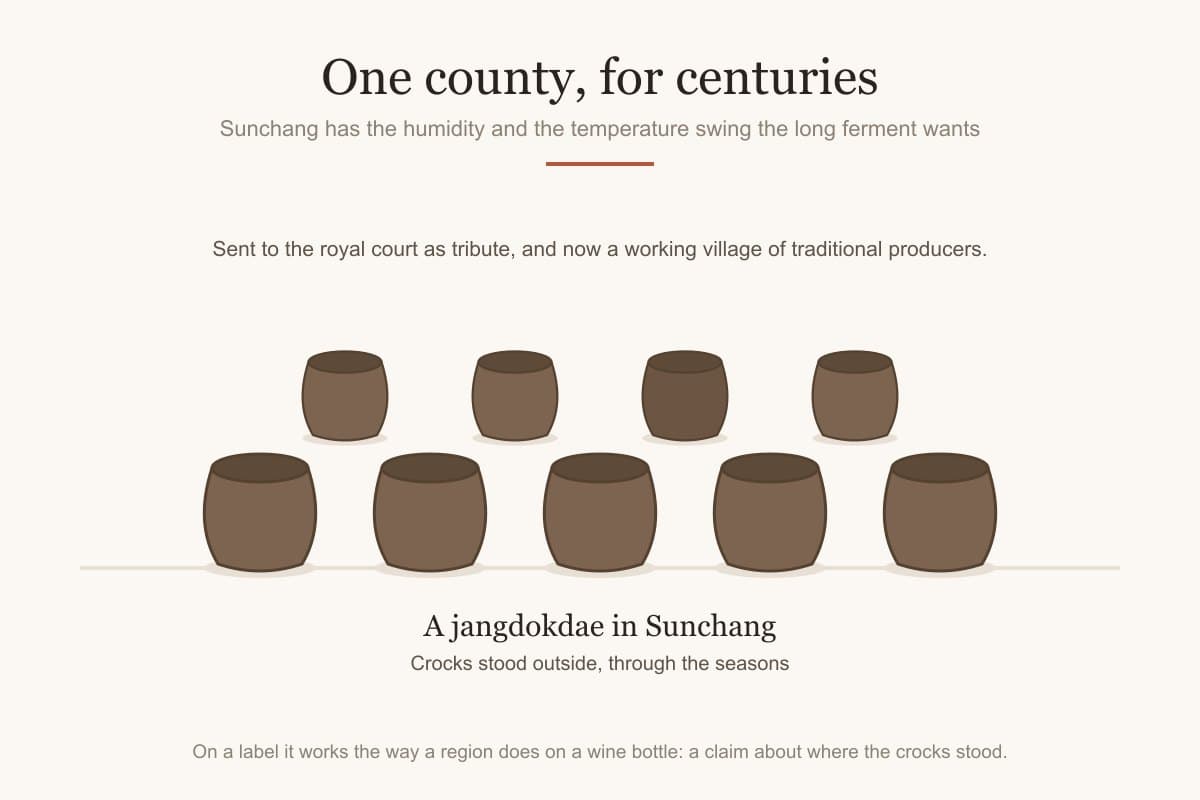
One county makes a disproportionate share of Korea's gochujang and has for centuries. Sunchang in North Jeolla has a particular combination of humidity, water and temperature swing that suits the long outdoor ferment, and its paste was sent to the royal court as tribute. The county now runs a village of traditional producers as a working industry, and Sunchang on a label functions roughly the way a region does on a wine bottle — a claim about where the crocks stood, not just who filled them.
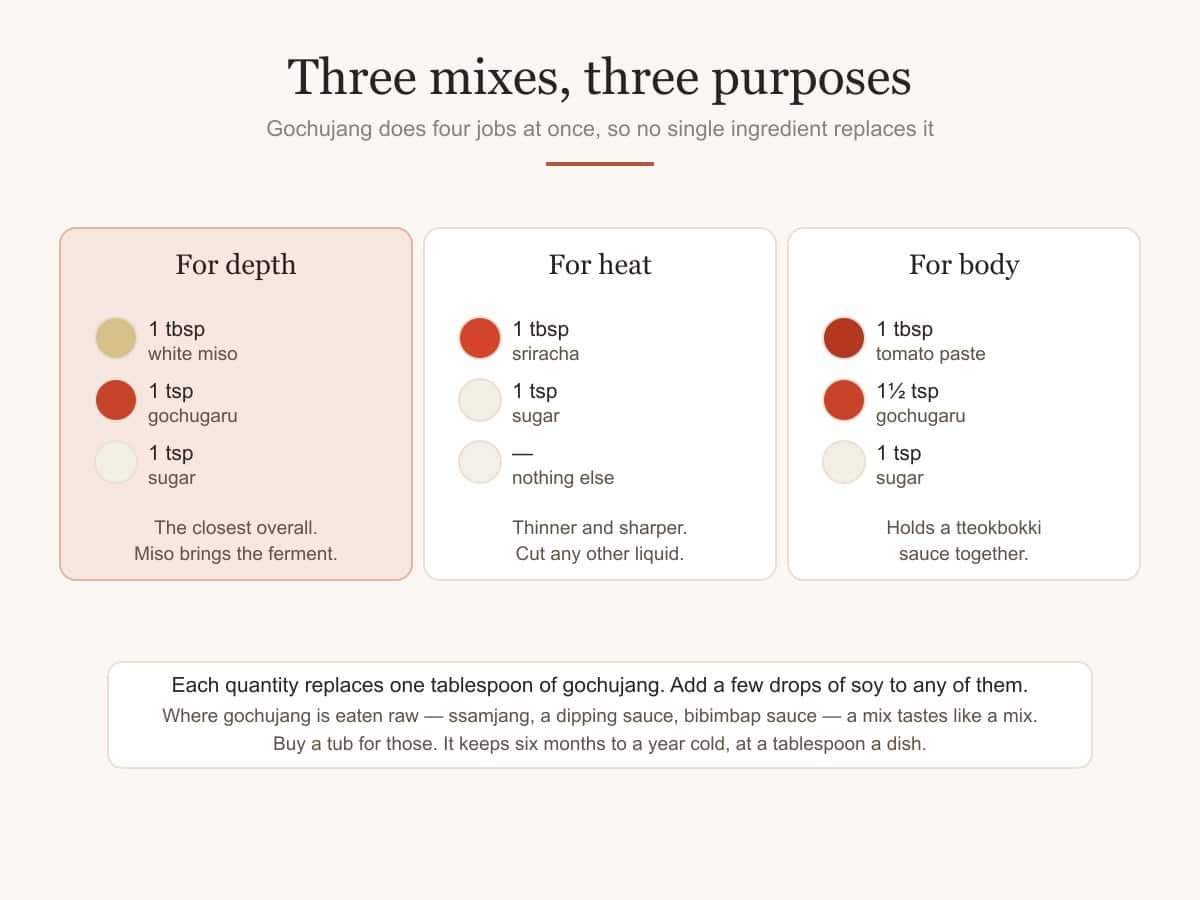
Gochujang is doing four jobs at once — heat, sweetness, salt and fermented depth — which is why no single ingredient replaces it.
What works is a mix, and which mix depends on whether the dish needs body, heat or both.
The closest mix: miso, chilli and sugar
1 tbsp white miso + 1 tsp gochugaru + 1 tsp sugar + a few drops of soy gives you roughly 1 tbsp of gochujang.
This is the best general substitute because miso supplies the one thing chilli paste alone cannot: fermented soybean depth. That depth is most of what makes gochujang taste like gochujang.
Red miso works and is stronger; use a little less. Doenjang works too and is closer in origin, though saltier and more assertive.
If the dish is mostly about heat
For a marinade or a stir-fry where gochujang is one of six things, sriracha plus a little sugar is a fair approximation and takes no preparation.
It is thinner and sharper — more vinegar, more garlic, less body — so reduce any other liquid in the recipe slightly.
Sambal oelek plus sugar and a pinch of salt is the same idea with a cleaner chilli flavour and no garlic. Neither has the stickiness that makes gochujang coat things.
If the dish is mostly about body
For tteokbokki or a braise, where gochujang is also the thickener, tomato paste plus gochugaru plus sugar holds the sauce together in a way thin chilli sauces do not.
Use 1 tbsp tomato paste, 1.5 tsp gochugaru, 1 tsp sugar, and a splash of soy.
It will taste faintly of tomato. That is noticeable in a simple dish and almost invisible in a loaded one.
Where no substitute works
Ssamjang and dipping sauces, where gochujang is eaten more or less raw and is the whole flavour. A mix tastes like a mix.
Bibimbap sauce, for the same reason — it is a four-ingredient sauce and gochujang is three of them.
If gochujang is the point of the dish, it is worth buying a tub rather than approximating. It keeps six months to a year refrigerated once opened, and a tub lasts a long time at a tablespoon a dish.
Common questions
What is the best gochujang substitute?
One tablespoon of white miso with a teaspoon of gochugaru and a teaspoon of sugar, per tablespoon of gochujang. The miso supplies the fermented soybean depth that chilli sauce alone cannot.
Can I use sriracha instead of gochujang?
In a marinade or stir-fry where it is one of several ingredients, yes, with a little sugar. It is thinner, sharper and more vinegary, so cut other liquid slightly.
Is there a gochujang substitute without soy?
Tomato paste with gochugaru and sugar gets the heat, sweetness and body, and can be made soy-free. It tastes faintly of tomato, which shows in a simple dish.
Can I substitute gochujang in bibimbap sauce?
Not really. The sauce is three or four ingredients and gochujang is the main one, so a substitute tastes like a substitute. Buy a tub for dishes where it is eaten raw.
More to cook
All Ingredient & Substitute Guides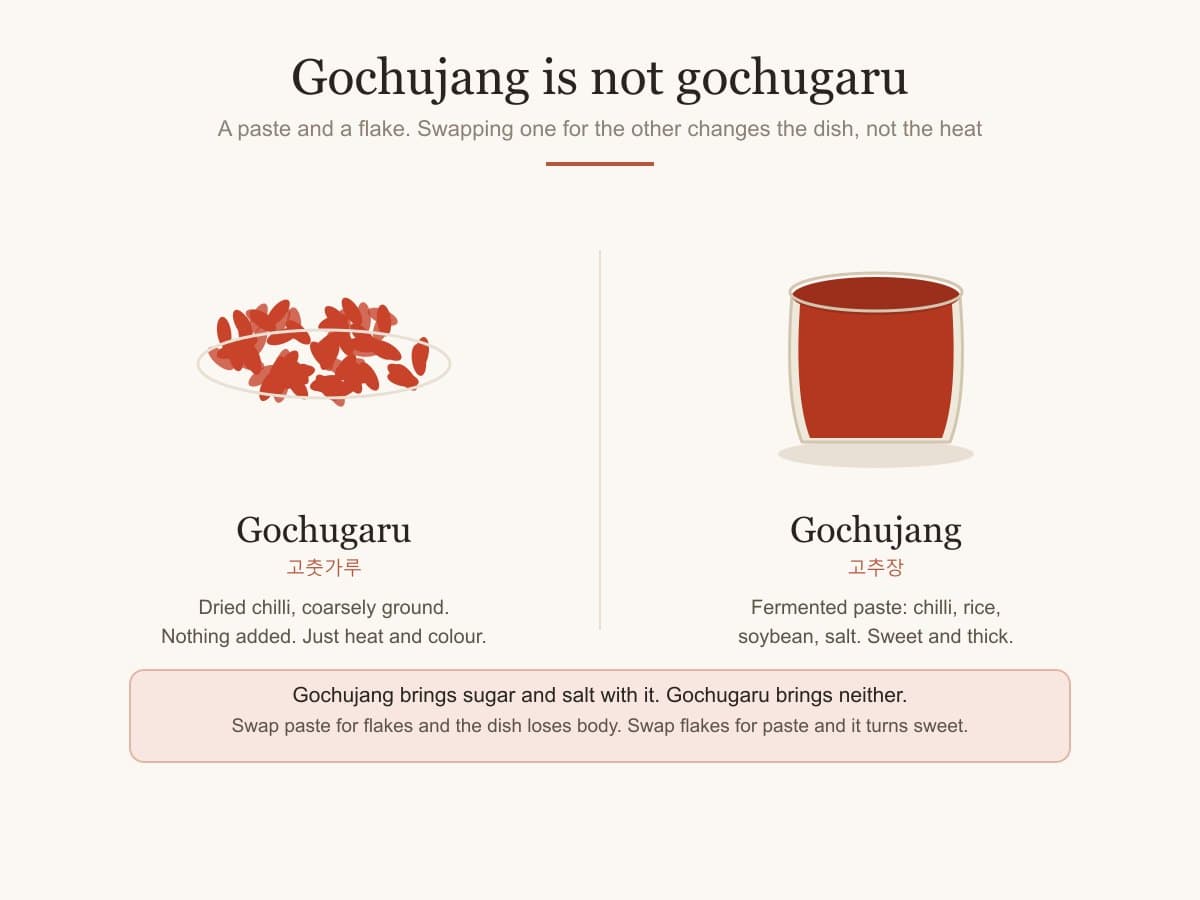
Gochujang vs Gochugaru
One is a fermented paste, the other is dried chilli flakes. Why swapping them changes the dish, and what to do when you only have one.

Gosari (Dried Fernbrake)
Why gosari must be soaked and boiled rather than just rehydrated, how to tell good dried fernbrake from tough old stock, and what it does in bibimbap.
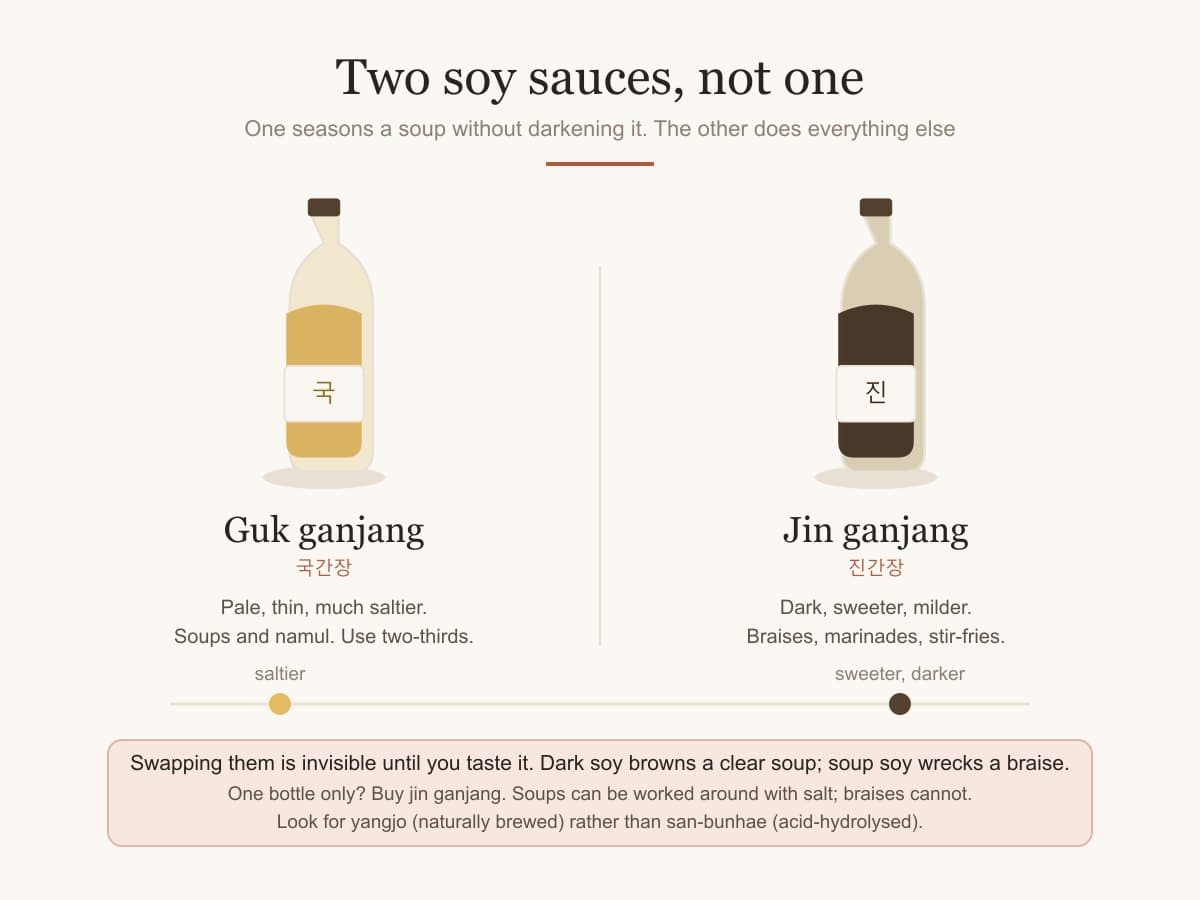
Guk Ganjang vs Jin Ganjang
Korean recipes call for two different soy sauces and swapping them ruins the dish. What each is for, and what to do with only one bottle.