Street Food & Snacks
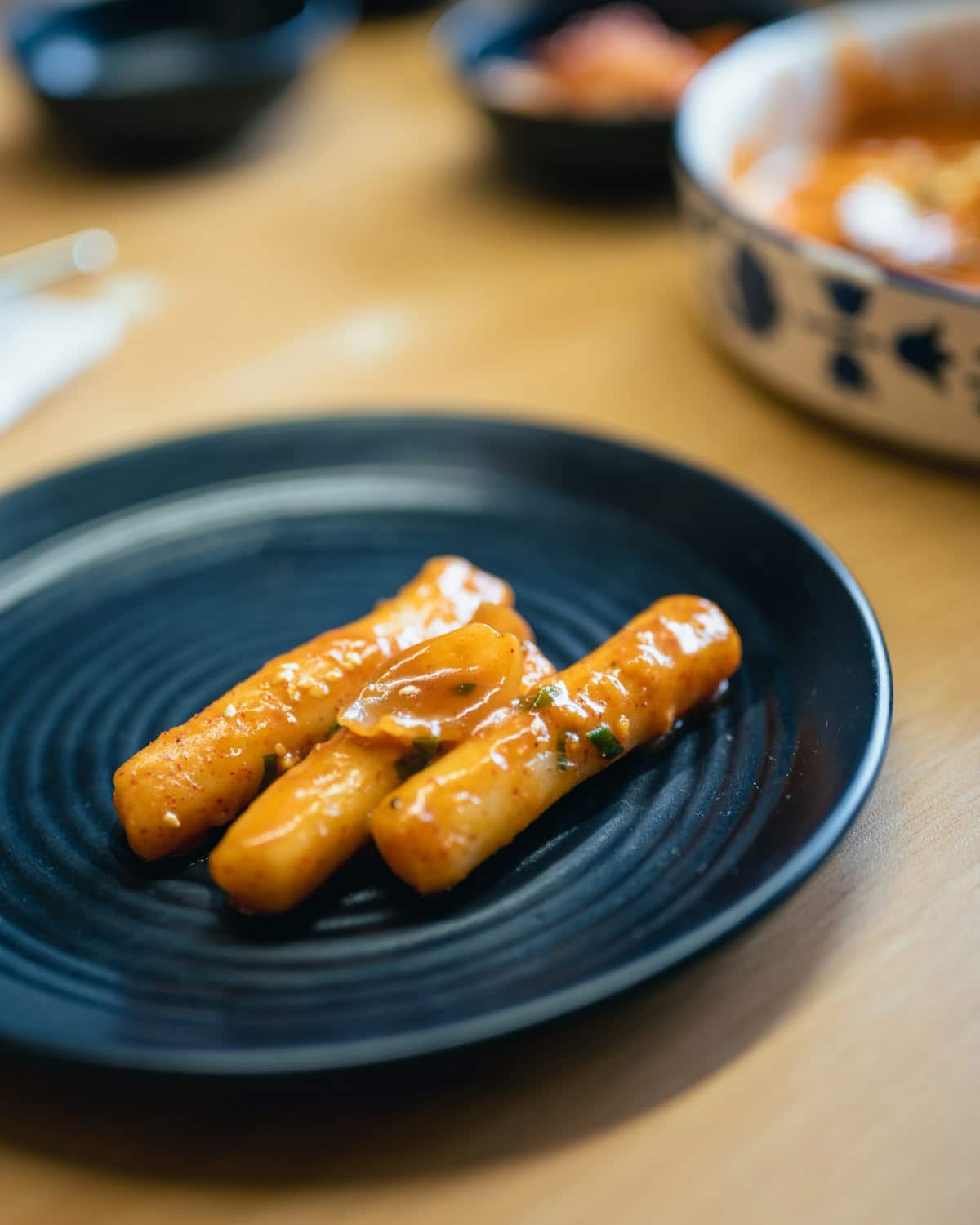
Tteokbokki (Spicy Korean Rice Cakes)
By Suku · · Updated
Prep
15 min
Cook
15 min
Servings
3
Steps
- 1
If the rice cakes are refrigerated or frozen, soak them in warm water for 10 minutes so they cook evenly.
- 2
Bring the anchovy stock to a simmer.
- 3
Whisk in the gochujang, gochugaru, soy sauce, sugar, honey, and garlic.
- 4
Add the rice cakes and bring back to a gentle boil.
- 5
Simmer 7-10 minutes, stirring often so the rice cakes don't stick to the bottom.
- 6
Add the fish cake strips in the last 3-4 minutes, just long enough to heat through.
- 7
The sauce should thicken and cling to the rice cakes as they finish cooking — if it's still thin, simmer a couple minutes longer.
- 8
Stir in the green onions right at the end.
- 9
Serve hot, with a soft-boiled egg on top if you want one.
Did you know — Korean culture
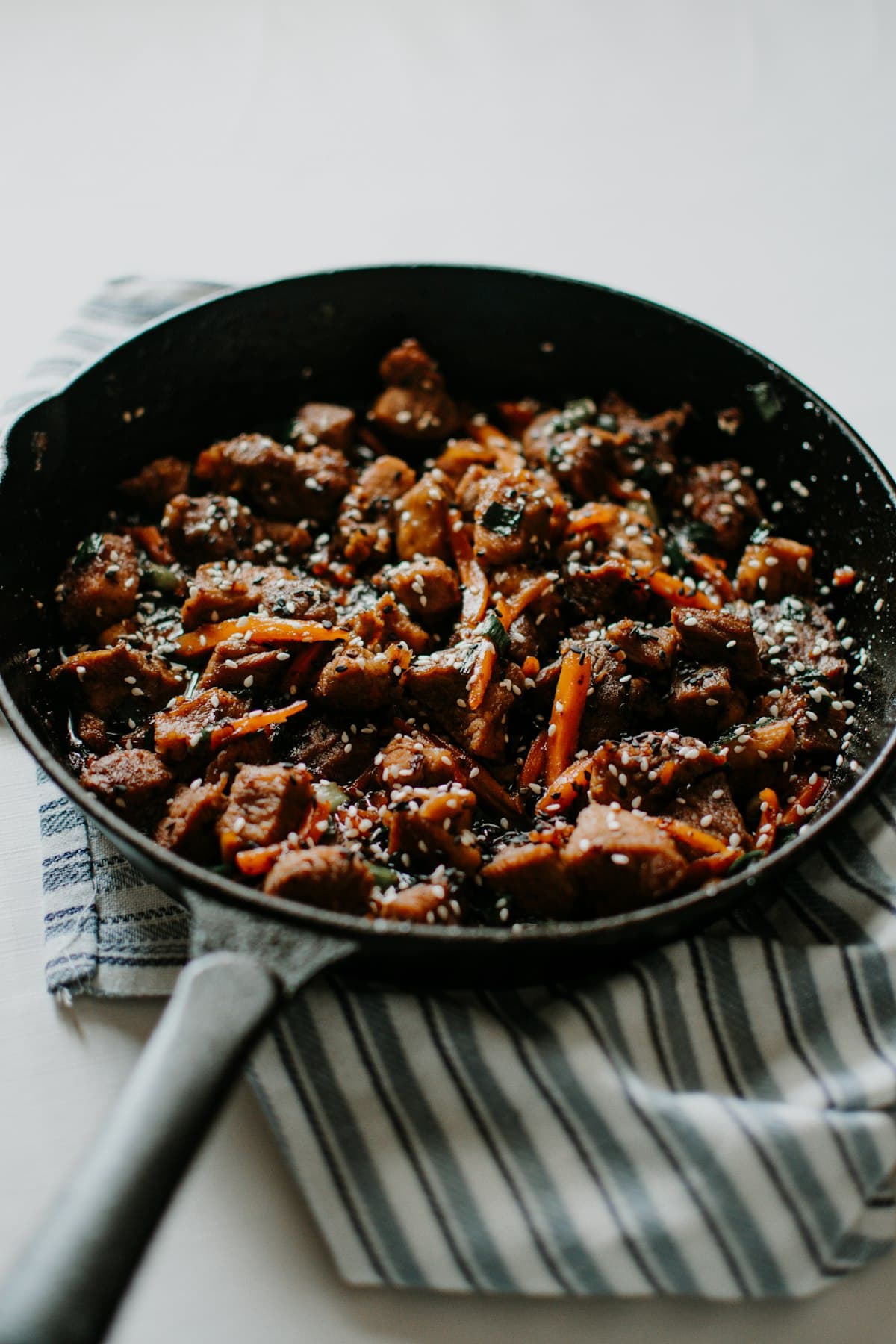
Before tteokbokki was ever red, it was royal. Gungjung tteokbokki — the Joseon-era "palace" version documented in the 19th-century cookbook Siuijeonseo — was rice cakes stir-fried with beef, soy sauce, and sesame oil, no chili at all. Hot peppers hadn't reached Korean cooking yet. The fiery version everyone knows today is the upstart; the mild soy one came first.
Tteokbokki runs on two chili products doing two different jobs. Gochujang brings the fermented depth and body — it's doing the heavy lifting on flavor. Gochugaru is there for color and a cleaner heat on top of it. Skip one and the sauce tastes flat in a way that's hard to place until you notice what's missing.
The stock matters more than people expect from a "simple" street food dish. Plain water works in a pinch, but anchovy stock gives the sauce a savory backbone that plain water sauce never quite gets to.
Rice cakes go from too firm to right to gummy in a pretty narrow window. Fresh from the fridge, they can seize up in hot liquid before they've had a chance to soften — the ten-minute warm-water soak fixes this before it becomes a problem, not after.
The rice cakes, and getting them right
Garaetteok — the thick cylindrical rice cakes — are what tteokbokki is built on. They come in three states and each behaves differently.
Fresh (soft, from a Korean bakery) — best texture, use straight away.
Refrigerated (vacuum-packed, most common) — hard when cold. Soak in warm water for 10–20 minutes before cooking or the centre stays stubbornly firm.
Frozen — thaw fully, then soak. Do not drop them in frozen.
The texture you want is chewy with give, not dense. If they are still hard after simmering, they went in under-soaked.
Building the sauce
Gochujang is the base, but gochujang alone makes a sauce that is heavy and one-dimensional.
Gochugaru on top of it adds clean heat and the red colour. This combination is what street vendors use.
Sugar or syrup — tteokbokki is genuinely sweet, and under-sweetening it is a common home-cook correction that makes it taste wrong.
Anchovy stock, not water. This is the biggest single upgrade available. Dasima and dried anchovy stock takes ten minutes and is the difference between street-cart tteokbokki and a bowl of sweet chili paste.
Soy sauce for depth, and a little at the end to adjust.
Getting the sauce to the right consistency
The sauce should coat the rice cakes and pool slightly, not sit as thin liquid or seize into paste.
It thickens on its own. The rice cakes shed starch as they simmer, and that starch is the thickener — no cornstarch needed. Simmer uncovered and stir often, and it comes together in 8–10 minutes.
Too thick? A splash of stock. Too thin? Keep simmering; resist adding starch.
It thickens further off the heat, so pull it a little looser than you want it.
Variations worth knowing
Rosé tteokbokki — cream or milk stirred in at the end. Now genuinely mainstream in Korea, not a Western invention.
Cheese tteokbokki — mozzarella melted over the top.
Gungjung tteokbokki — the older royal-court version: soy-based, not spicy at all, with beef and vegetables. A completely different dish sharing a name.
Jjajang tteokbokki — black bean sauce instead of gochujang, related to jjajangmyeon.
Common additions: fish cake (eomuk), boiled eggs, ramyeon noodles, scallion, cabbage, dumplings.
Storing and reheating — the honest answer
Tteokbokki does not keep well, and pretending otherwise sets you up for disappointment. The rice cakes harden in the fridge and the sauce dries onto them.
It is genuinely best eaten within an hour of cooking, which is why it is street food.
If you must: 2 days refrigerated. Reheat in a pan with a good splash of water or stock, over low heat, stirring until the cakes soften again. They will not fully return to their original texture. Do not freeze cooked tteokbokki — freeze the uncooked rice cakes instead.
What to serve with tteokbokki
Street-food combinations, mostly:
- Twigim — Korean fritters, dipped straight into the tteokbokki sauce, which is the classic pairing
- Sundae or fish cake skewers
- Kimbap — very common alongside
- Something cold to drink; the sauce builds heat as you go
Troubleshooting
Rice cakes still hard in the middle? They needed the warm-water soak first, or the simmer wasn't long enough. Give it another few minutes rather than cranking the heat, which just scorches the sauce.
Sauce too thin? Keep simmering, uncovered — it reduces and thickens as the rice cakes release a little starch. Rushing this step is the most common reason tteokbokki turns out watery.
Too spicy? Cut the gochugaru first, not the gochujang — gochujang carries the flavor, gochugaru mostly carries heat.
Common questions
Why are my rice cakes hard in tteokbokki?
They went in without soaking. Refrigerated or frozen garaetteok need 10–20 minutes in warm water before cooking, or the centres stay firm no matter how long they simmer. Fresh rice cakes can go straight in.
Can I make tteokbokki less spicy?
Yes — reduce the gochugaru first, which carries most of the raw heat, and keep the gochujang for body and flavour. More sugar and a splash of milk or cream also tame it, which is essentially what rosé tteokbokki does. Gungjung tteokbokki is the traditional non-spicy version.
What is rosé tteokbokki?
Tteokbokki with cream or milk stirred into the sauce, giving a milder, richer, pinkish result. It is genuinely popular in Korea rather than a Western adaptation, and it is a good entry point if the standard version is too hot.
Do I have to use anchovy stock?
No, but it is the single biggest improvement available. Water gives you a flat, sweet sauce. A ten-minute dasima and dried anchovy stock gives it the savoury backbone that makes street tteokbokki taste the way it does.
How do you store leftover tteokbokki?
Honestly, it is best eaten fresh — the rice cakes harden in the fridge and never fully recover. If you have leftovers, two days is the limit, and reheat gently in a pan with plenty of extra stock or water.
Recommended products
- Garaetteok (Korean rice cakes)
- Gochugaru (Korean red pepper flakes)
More to cook
All Street Food & Snacks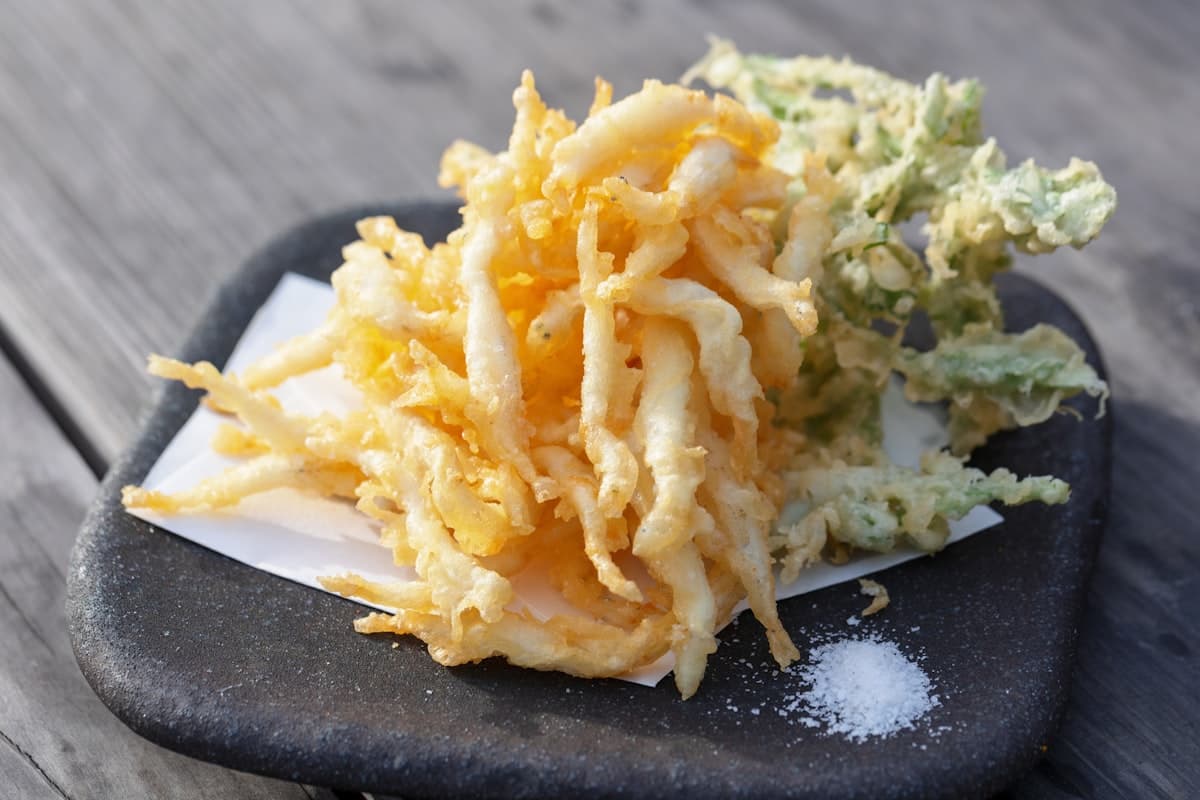
Twigim (Assorted Fried Snacks)
The batter consistency and oil temperature behind crisp twigim, and why frying in small batches matters more than any single ingredient.
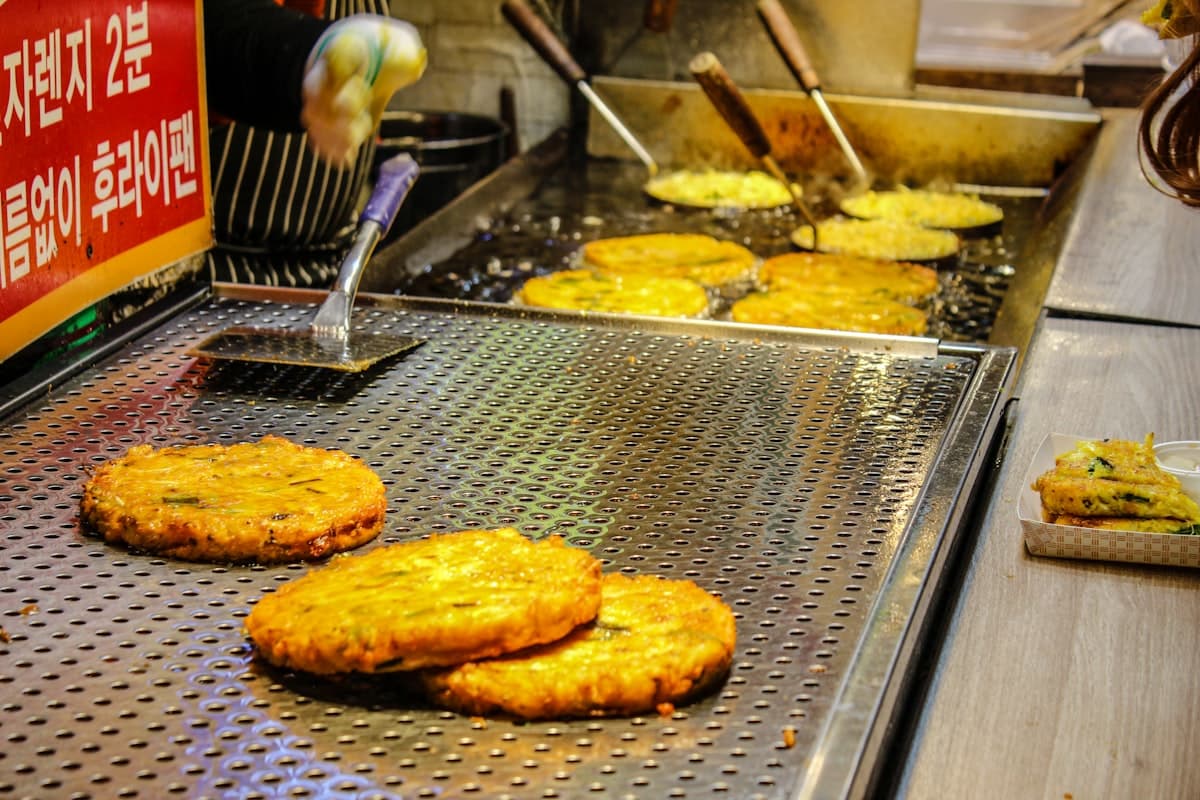
Bindaetteok (Mung Bean Pancake)
The soak-and-grind technique behind bindaetteok's thick, hearty batter, and why a hot pan matters more than any single ingredient.
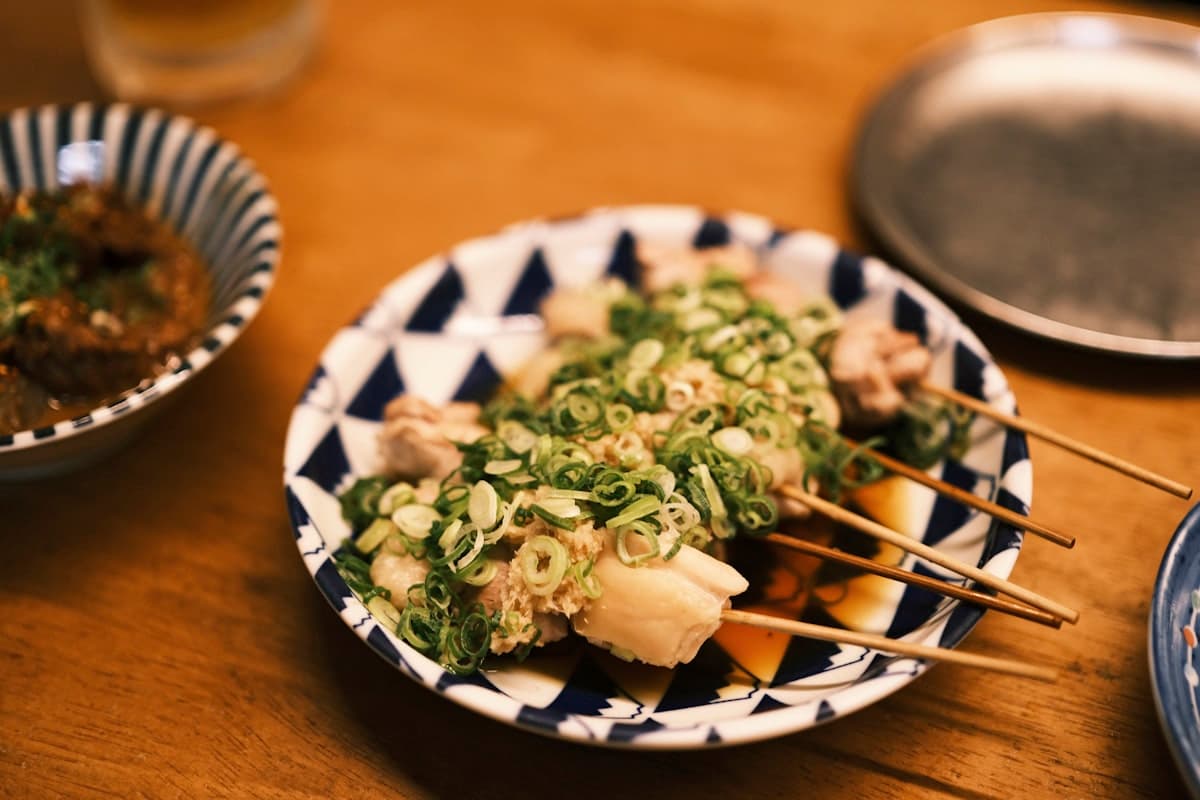
Dakkochi (Korean Chicken Skewers)
The timing behind glazing dakkochi at the end, not the start, of grilling, and why that's what keeps the sauce from burning.