Did you know — Korean culture
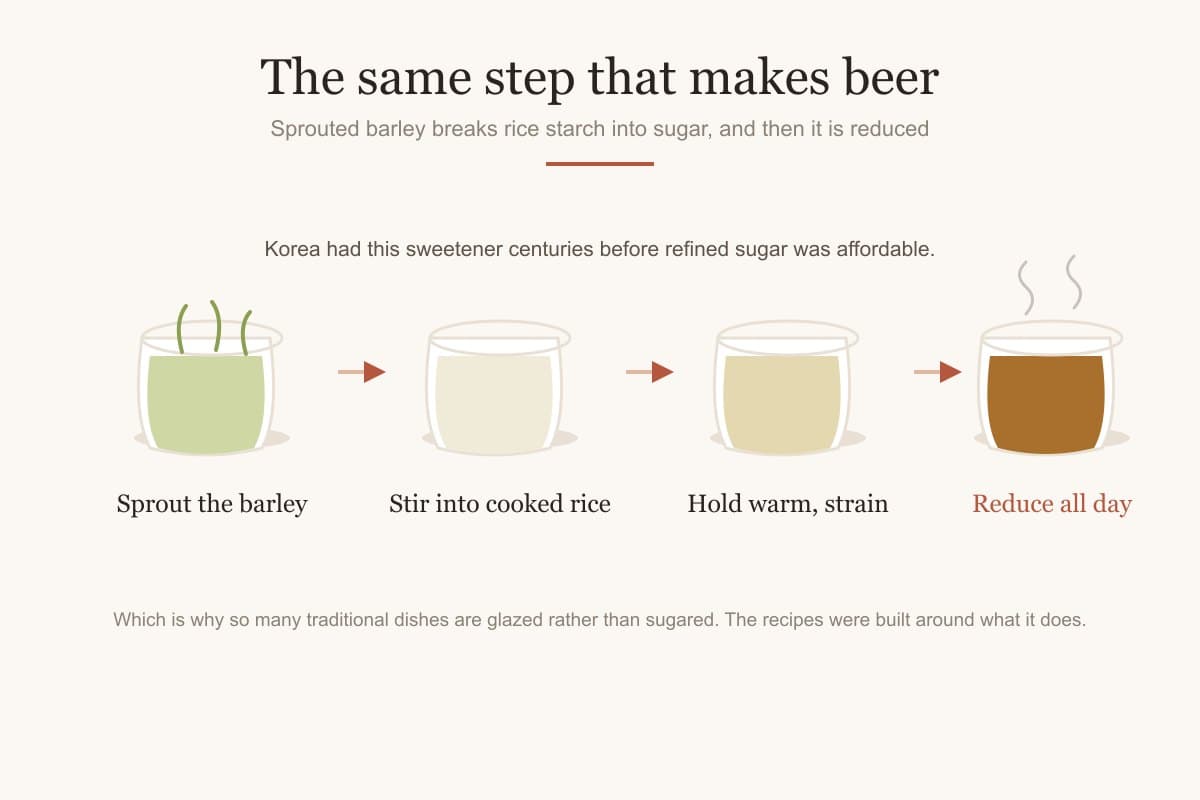
Jocheong is made with the same step that makes beer. Barley is sprouted and dried to produce malt, whose enzymes break starch into sugar; stir that into cooked rice, hold it warm for several hours, strain, and reduce the liquid for most of a day. Korea had this sweetener centuries before refined sugar was affordable, which is why so many traditional dishes are glazed rather than sugared — the syrup was what existed, and the recipes were built around what it does.
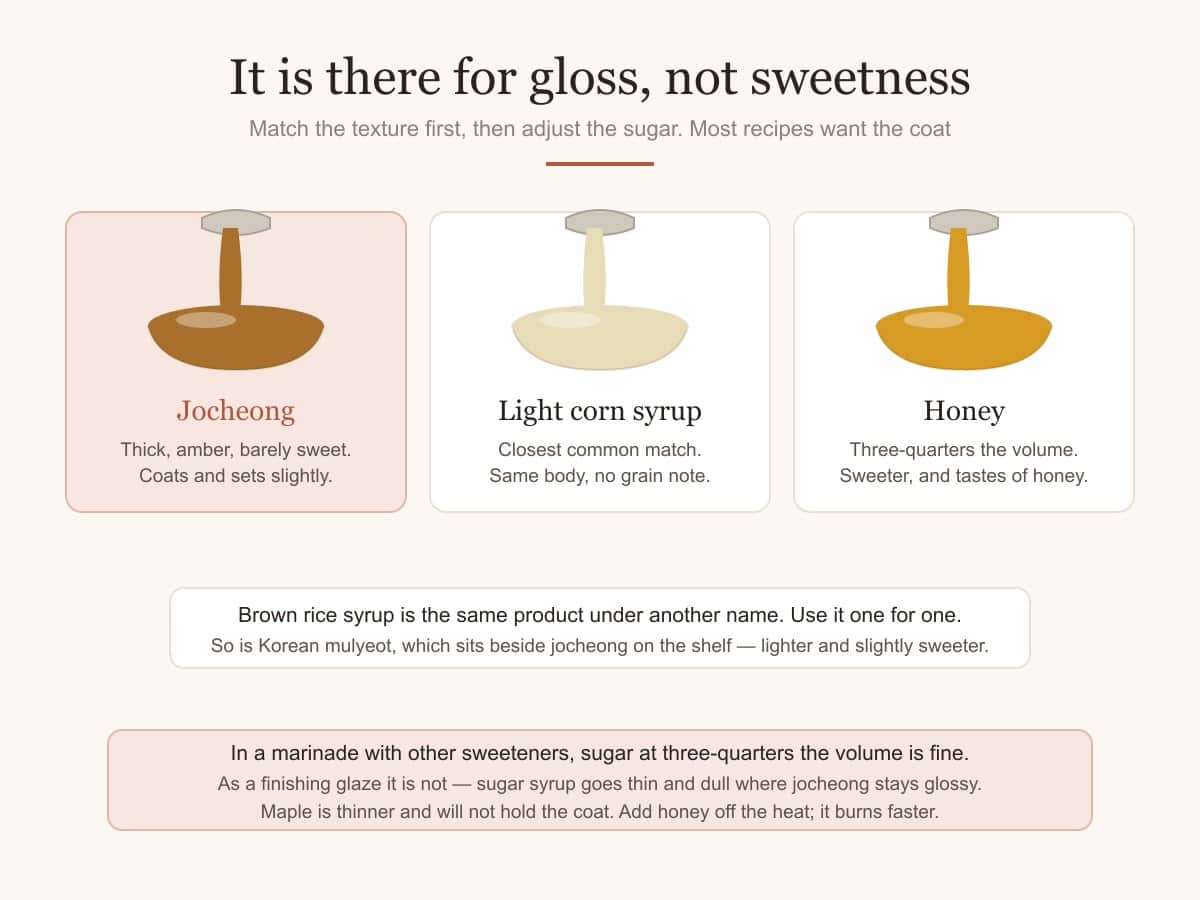
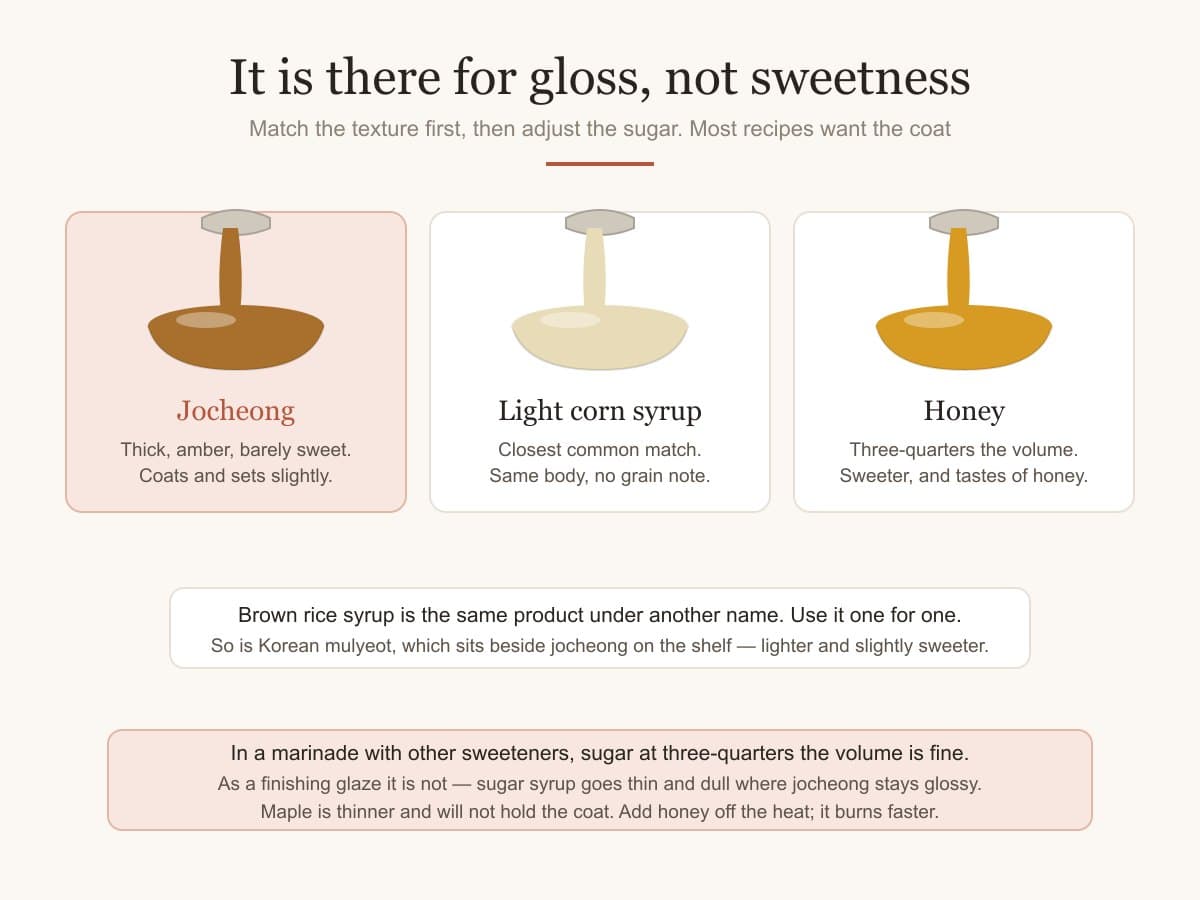
Jocheong is grain syrup, and the reason recipes call for it is rarely sweetness. It is there for gloss, body and the way it clings.
That makes the substitution question different from the usual one: match the texture first, then adjust the sugar.
What jocheong is actually doing
It is made by converting grain starch to sugar with malt, then reducing it. The result is thick, amber, far less sweet than honey, and sticky in a specific way — it coats rather than soaks in.
That is why it finishes dakgangjeong, myeolchi bokkeum and jangjorim: it makes a glaze that sets slightly and stays glossy as it cools.
Sugar syrup goes thin and dull by comparison. That difference is visible on the plate.
Corn syrup, and Korean mulyeot
Light corn syrup is the closest widely available match for texture — same viscosity, same non-crystallising behaviour, roughly as neutral.
Mulyeot is the Korean product next to jocheong on the shelf and is essentially the same thing, lighter in colour and slightly sweeter. Use it one for one.
Neither has jocheong's faint roasted-grain note, which matters in a dish where the syrup is the finish rather than a background.
Honey, maple, brown rice syrup
Honey: closest in body of the common pantry options, but sweeter and strongly flavoured. Use about three-quarters as much, and expect it to taste of honey. It also burns faster, so add it off the heat.
Maple syrup: thinner, so the glaze will not hold as well, and distinctly flavoured.
Brown rice syrup from a health-food shop is the nearest thing of all — it is the same product by another name, and if you can find it, use it one for one.
When sugar will do
If the syrup is one of several sweeteners in a marinade — most bulgogi and galbi recipes — sugar at about three-quarters the volume is fine and nobody will notice.
Where it is the finishing glaze, it is worth buying a bottle. Jocheong keeps indefinitely in a cupboard.
And for sweetness alone, Korean sweeteners covers the wider set — including maesil cheong, which brings acidity as well and is not interchangeable with any of these.
Common questions
What can I use instead of jocheong?
Light corn syrup is the closest common match for texture, and brown rice syrup is effectively the same product. Honey works at about three-quarters the volume but tastes of honey.
Is jocheong the same as mulyeot?
Nearly. Mulyeot is lighter in colour and slightly sweeter, and swaps one for one. Jocheong has a faint roasted-grain note that shows in a finishing glaze.
Can I just use sugar?
In a marinade with several sweeteners, yes — about three-quarters the volume. As a finishing glaze, no: sugar syrup goes thin and dull where jocheong stays glossy.
Why do Korean recipes use rice syrup instead of sugar?
For gloss and body rather than sweetness. It coats rather than soaking in, and it sets slightly as it cools, which is what gives dishes like dakgangjeong their shine.
More to cook
All Ingredient & Substitute Guides
Kimchi 101: A Complete Guide
What kimchi actually is, the main types beyond the red cabbage one, how fermentation works, and what to do when a batch goes wrong.
Kimchi Types Explained
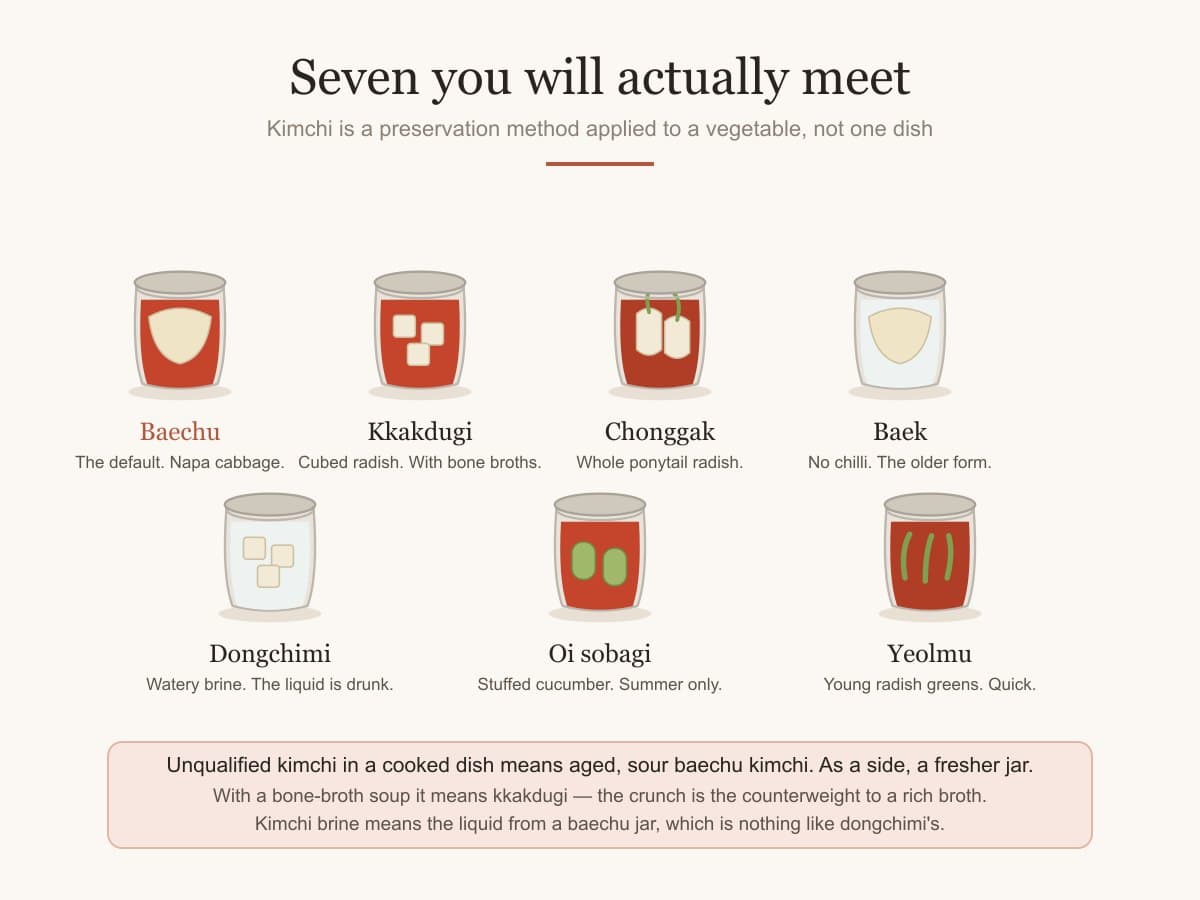
Kimchi is a method, not a dish. The seven kinds worth knowing, what each is made from, and which one a recipe means.
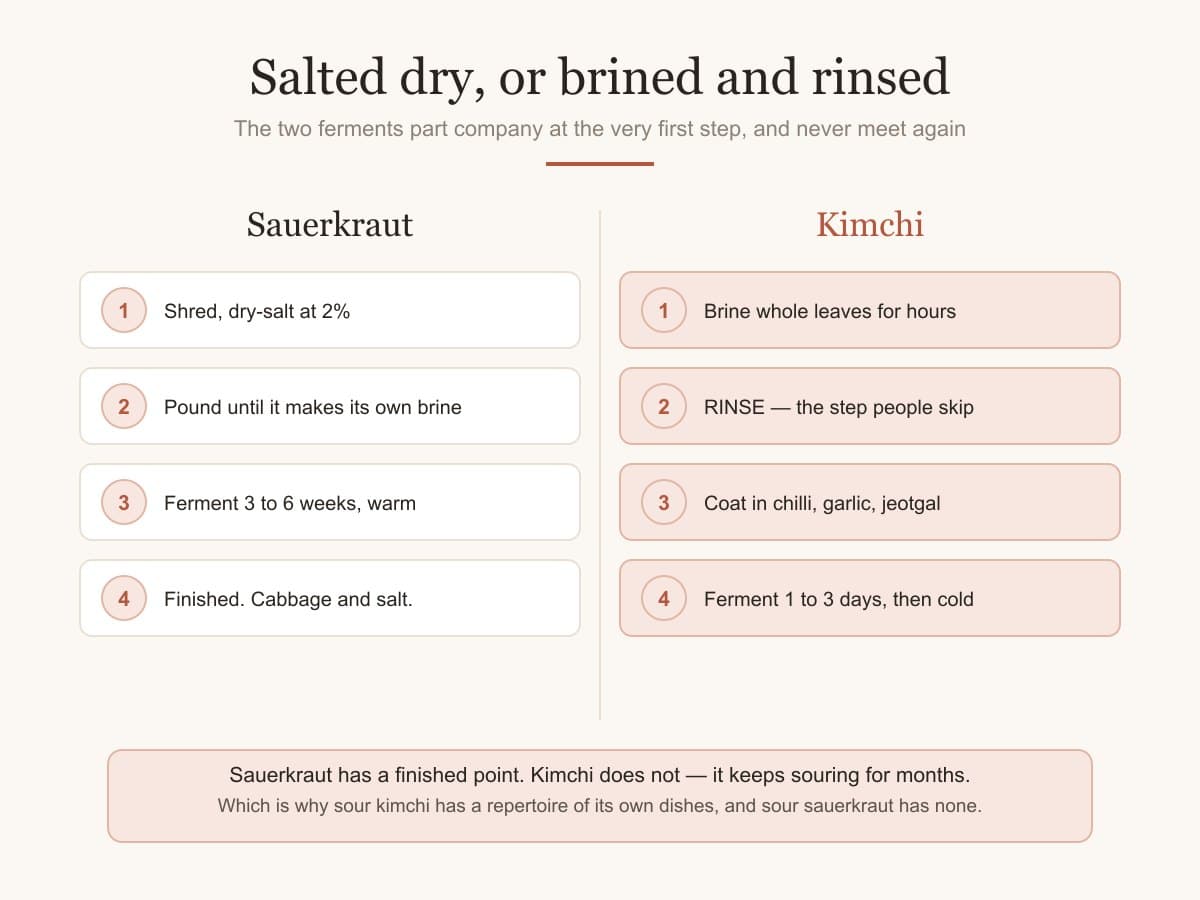
Kimchi vs Sauerkraut
Both are lacto-fermented cabbage and that is where the resemblance stops. Salt method, seasoning, timing and what each one does in cooking.