Did you know — Korean culture
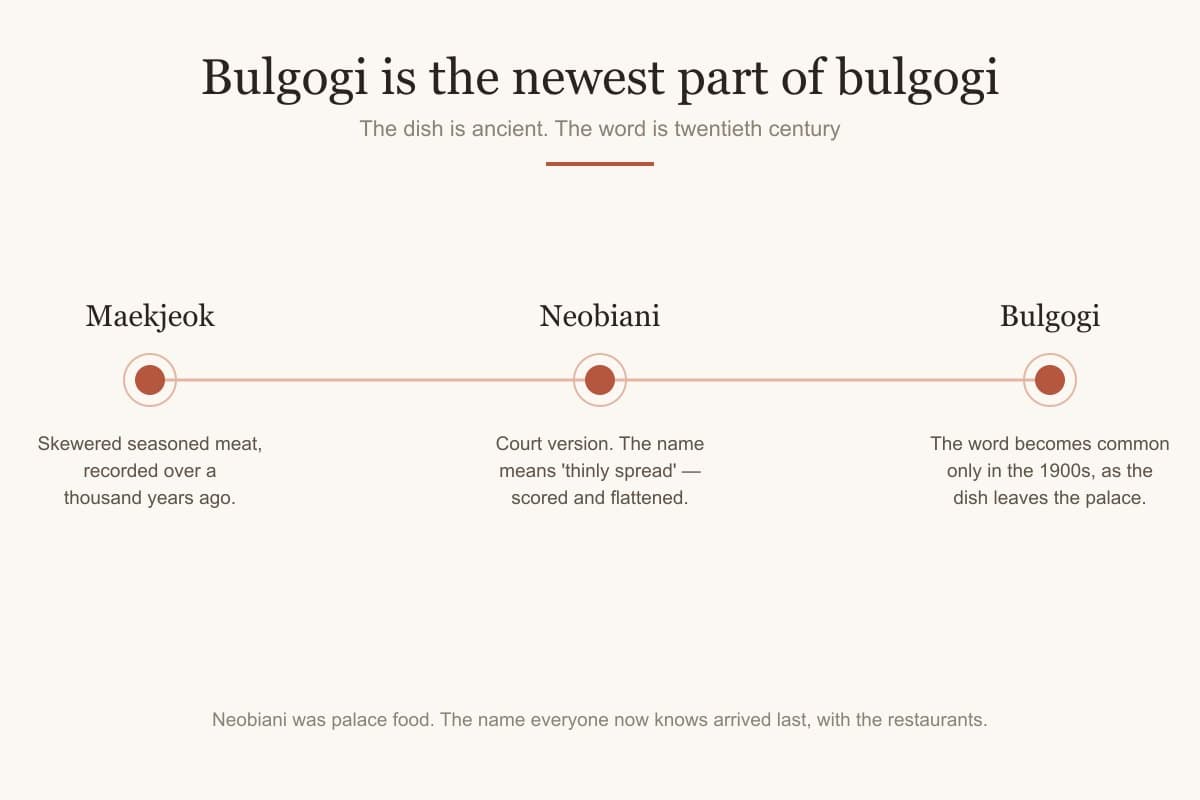
The word bulgogi is younger than the dish by a long way. Its ancestor is maekjeok, skewered seasoned meat recorded well over a thousand years ago, and the refined court version was called neobiani — 'thinly spread' — because the meat was scored and flattened before grilling. Neobiani was palace food; bulgogi as a word only became common in the twentieth century, as the dish moved out of the court and into restaurants. The name everyone knows is the newest part of it.
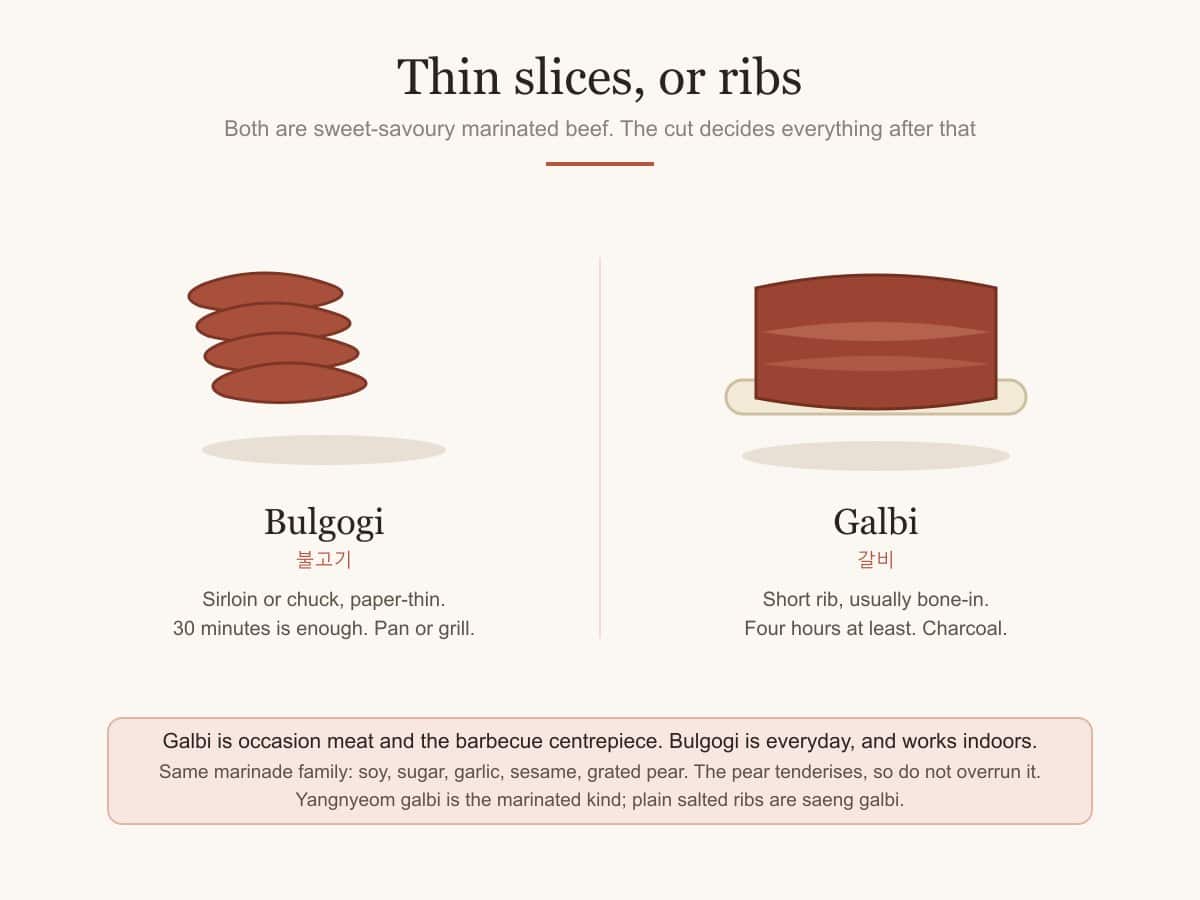
Both are sweet-savoury marinated beef, so they get treated as interchangeable. They are different cuts cooked different ways, and ordering one expecting the other is a common disappointment.
Bulgogi is thin slices. Galbi is ribs. That difference decides everything else.
The cut
Bulgogi is sirloin, ribeye or chuck sliced paper-thin — often frozen briefly first so it can be cut thinner than a knife would otherwise manage. It is sold ready-sliced in Korean shops.
Galbi is short rib. Bone-in in the traditional preparation, sometimes butterflied off the bone in a long sheet for the grill.
The bone matters. Galbi cooked on the bone is richer and takes longer, and the meat nearest it is the piece people fight over.
The marinade
Both start from soy, sugar, garlic, sesame oil and grated Asian pear. The balance differs.
Bulgogi's marinade is thinner and sweeter, and the thin slices take it on in thirty minutes. Longer is fine but adds little.
Galbi's is stronger and it needs hours — four at the least, overnight for preference. A thick rib marinated for thirty minutes is seasoned on the outside only.
The pear is doing real work in both: its enzymes tenderise, which is why over-marinating turns meat mushy.
The cooking
Bulgogi is pan food as often as grill food. A domed Korean grill pan, or a hot skillet, and the slices release enough liquid to half-braise in their own marinade. Many home versions are deliberately saucy, and bulgogi deopbap depends on that liquid.
Galbi is grilled, over charcoal if possible. It wants direct heat and attention, and the sugar in the marinade burns if the fire is too hot.
This is the practical difference for a home cook with no grill: bulgogi works indoors, galbi is compromised by it.
Where each one sits
Galbi is the occasion meat. Expensive, served at celebrations, and the usual centrepiece at a Korean barbecue table. A rib box is a standard holiday gift.
Bulgogi is everyday. It goes into lunchboxes, over rice, into jeongol.
Two more things worth knowing: yangnyeom galbi is the marinated kind, while plain salted ribs are saeng galbi; and galbitang is the same cut simmered into a clear soup rather than grilled at all.
Common questions
What is the difference between bulgogi and galbi?
Bulgogi is beef sliced paper-thin and cooked fast, often in a pan. Galbi is short rib, usually bone-in, marinated for hours and grilled. Same flavour family, different cut and method.
Is galbi always beef?
Not always — dwaeji galbi is the pork version and is common and cheaper. Unqualified, galbi usually means beef short rib.
Can I make galbi with bulgogi meat?
You can use the marinade, but not the dish. Thin slices cooked on a grill overcook in seconds and lose the rendered richness that the rib's fat and bone provide.
How long should each be marinated?
Bulgogi needs about thirty minutes, because the slices are thin. Galbi needs four hours at the least and is better overnight; a thick rib marinated briefly is seasoned only on the surface.
More to cook
All Ingredient & Substitute Guides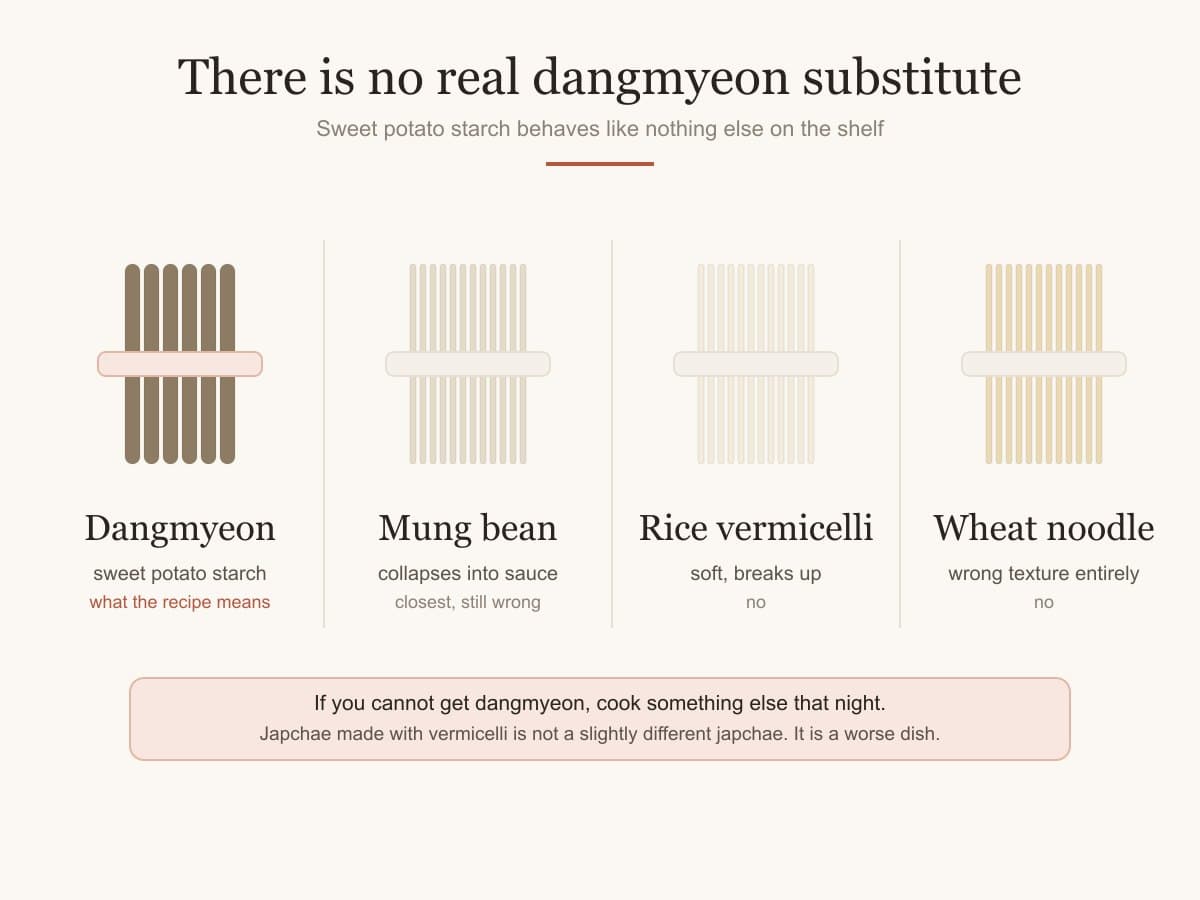
Dangmyeon Substitute
Korean sweet potato noodles behave like nothing else on the shelf. What happens when you substitute, and what to cook instead if you cannot find them.
Dasima & Dried Anchovy Stock (Yuksu)
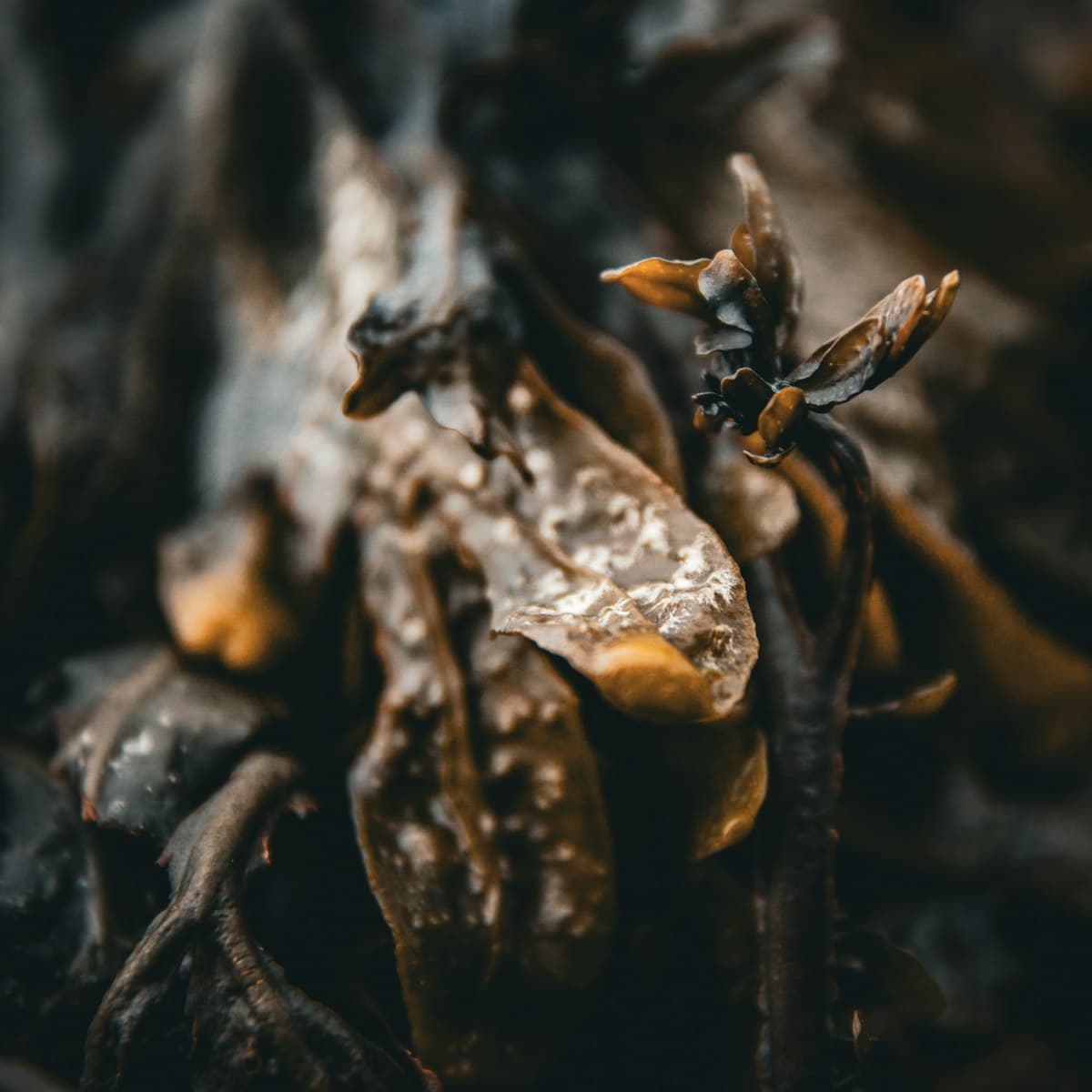
What dasima (dried kelp) is, why it's simmered with dried anchovies for Korean soup bases, and how long is actually enough.
Doenjang (Fermented Soybean Paste)
What doenjang is, how it differs from Japanese miso, and how to use its stronger, funkier flavor without overdoing it.