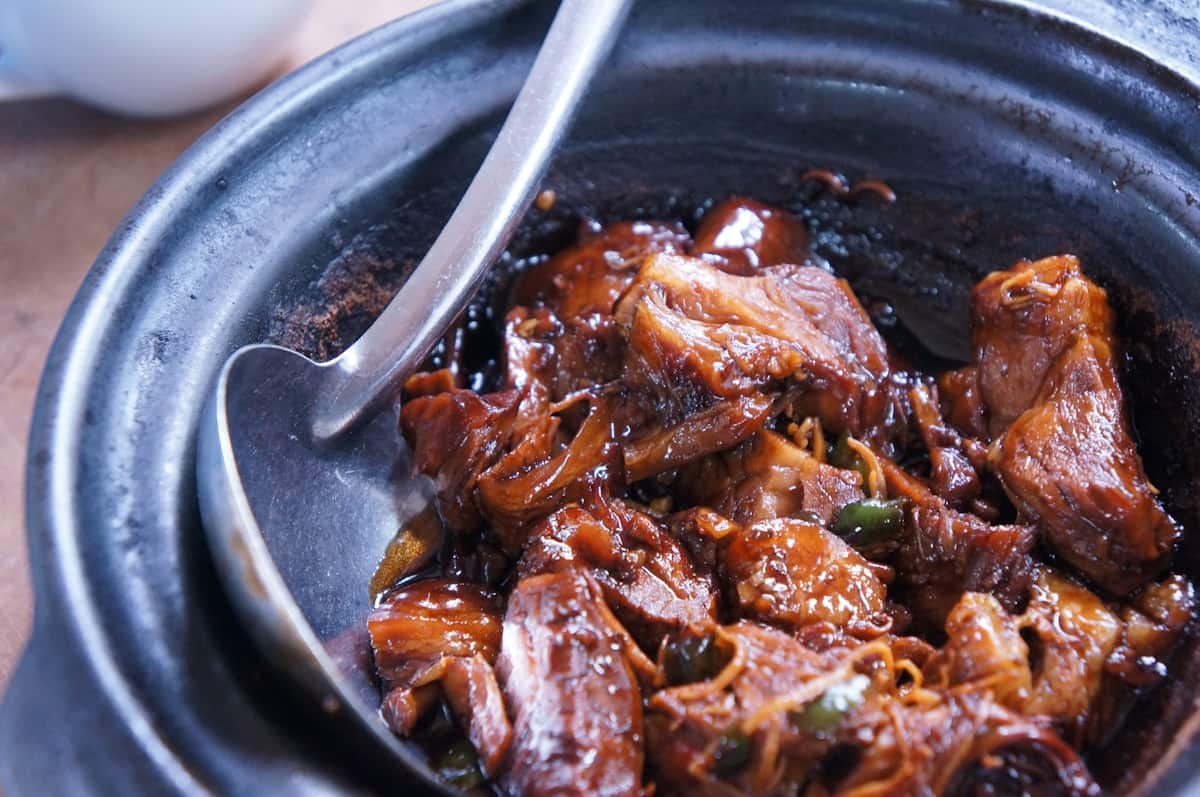
Steps
- 1
Parboil the beef in plain water for 5 minutes to remove surface impurities, then drain and rinse.
- 2
Combine the beef, soy sauce, water, onion, garlic, kelp, sugar, corn syrup, chilies, and peppercorns in a pot.
- 3
Bring to a boil, then reduce to a steady simmer, partially covered.
- 4
Simmer 45-60 minutes, until the beef is fully tender.
- 5
Add the peeled hard-boiled eggs in the last 15-20 minutes so they absorb the sauce.
- 6
Remove the beef, let it cool slightly, then shred or tear into bite-size pieces by hand.
- 7
Return the shredded beef to the sauce briefly to soak it back up before serving or storing.
Did you know — Korean culture
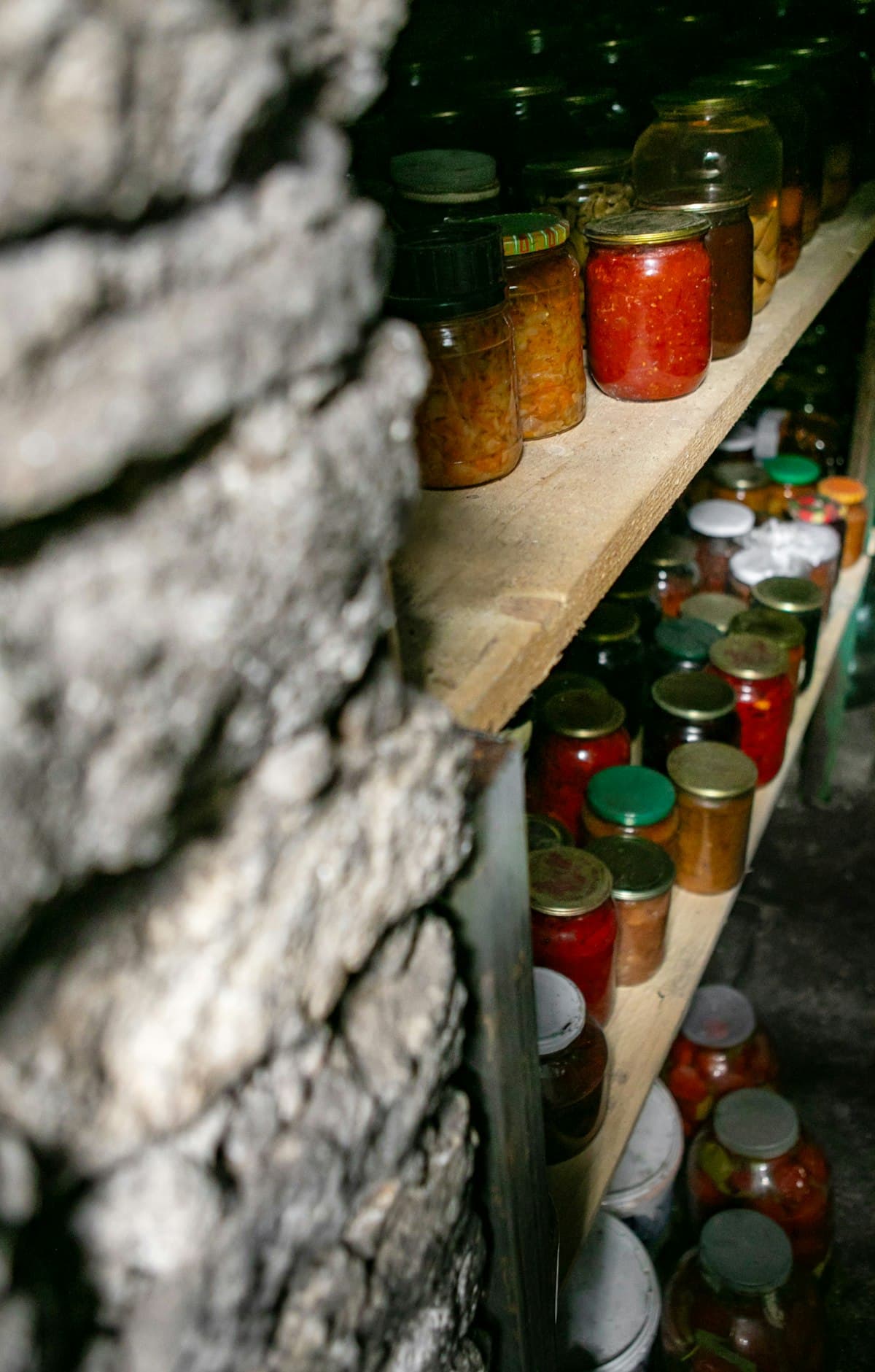
Jangjorim exists because soy sauce is a genuinely powerful preservative, not just a flavoring. Beef simmered down in concentrated soy sauce can keep safely in the refrigerator for two to three weeks, far longer than almost any other Korean banchan — which is exactly why it became a staple for stocking a fridge that needs to get through a busy week, or for army-style rationed meals sent to soldiers, without spoiling.
Parboiling the beef before it goes into the main braise isn't optional if you want a clean-tasting sauce. That first quick boil pulls out surface blood and impurities that would otherwise cloud and muddy the soy braising liquid — skip it and the finished dish tastes slightly off in a way that's hard to pin down.
Shredding by hand rather than slicing is what makes jangjorim work as a make-ahead side dish. Torn, ragged pieces have far more surface area than clean slices, so they soak the concentrated soy sauce back up fast and stay flavorful even cold, straight from the fridge.
Jangjorim exists because soy sauce is a genuinely powerful preservative, not just a seasoning. Beef simmered down in concentrated soy sauce can keep safely refrigerated for two to three weeks, far longer than almost any other Korean banchan — which is exactly why it became a staple for stocking a fridge through a busy week, or for meals that needed to travel or store without spoiling.
Troubleshooting
Sauce tastes muddy or off? The parboil step was probably skipped — that quick first boil is what keeps the braising liquid clean.
Beef falling apart into mush instead of tearing into strands? It was likely simmered too long past tender — check doneness starting around 45 minutes rather than committing to a full hour blind.
Jangjorim tasting bland after a few days in the fridge? Return it to the sauce briefly before serving each time — the flavor lives in the liquid, and beef sitting dry loses it fast.
Recommended products
- Dried kelp (dasima)
- Airtight storage container
More to cook
All Banchan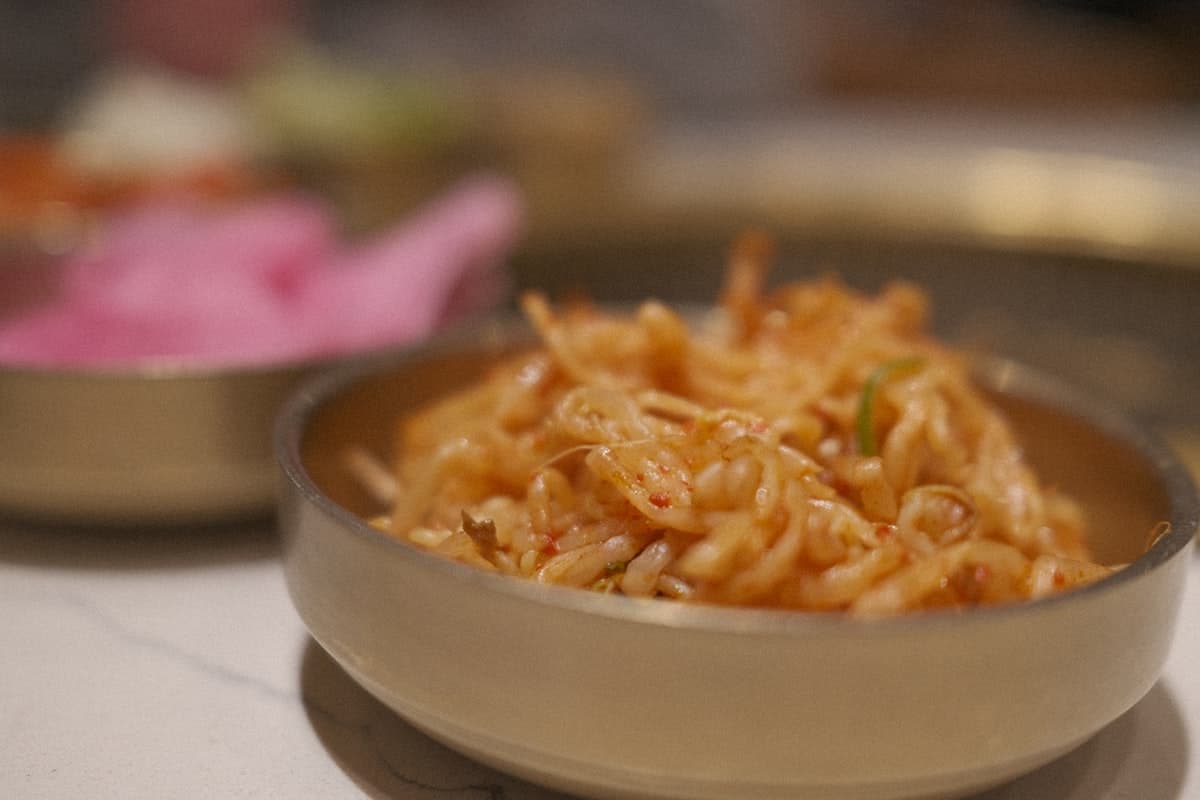
Kongnamul Muchim (Bean Sprout Salad)
The exact blanching time for bean sprouts that keeps them crisp, and why the lid stays on while they cook.
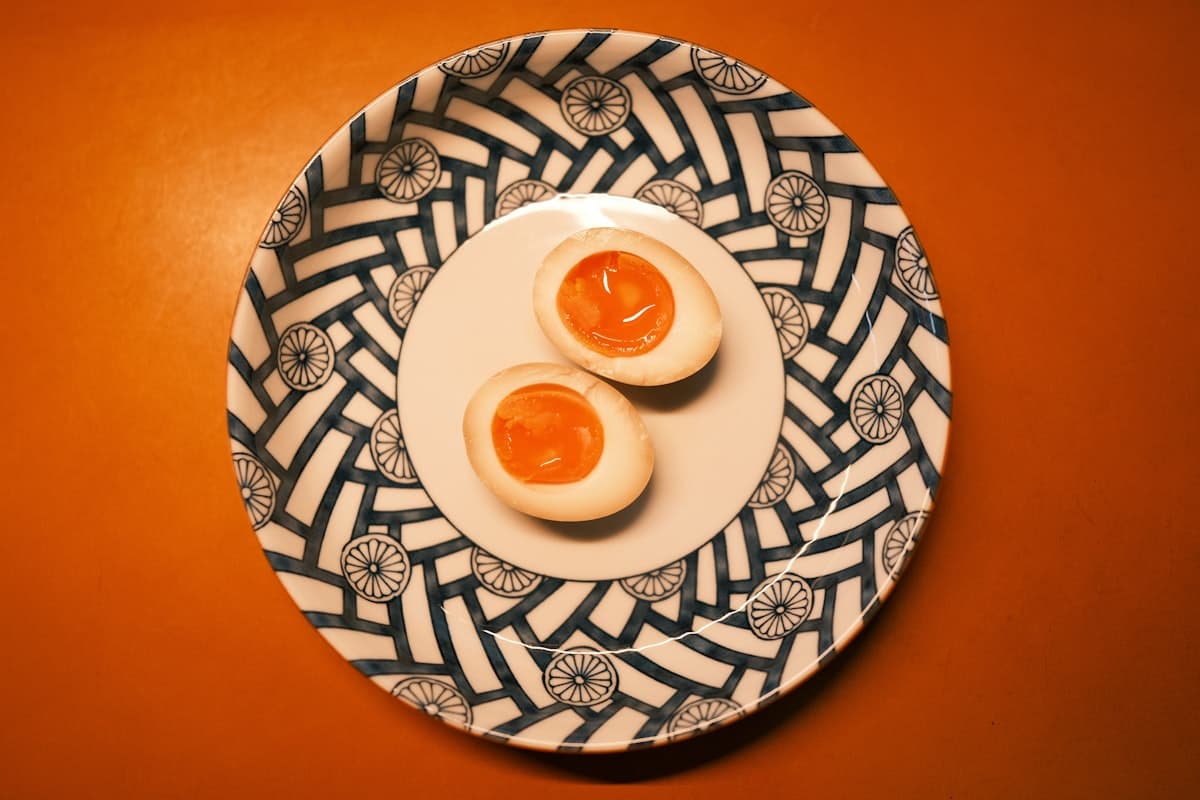
Mayak Gyeran ("Drug" Marinated Eggs)
The soft-boil timing and soy marinade behind mayak gyeran, and why the eggs need to rest before they're actually good.
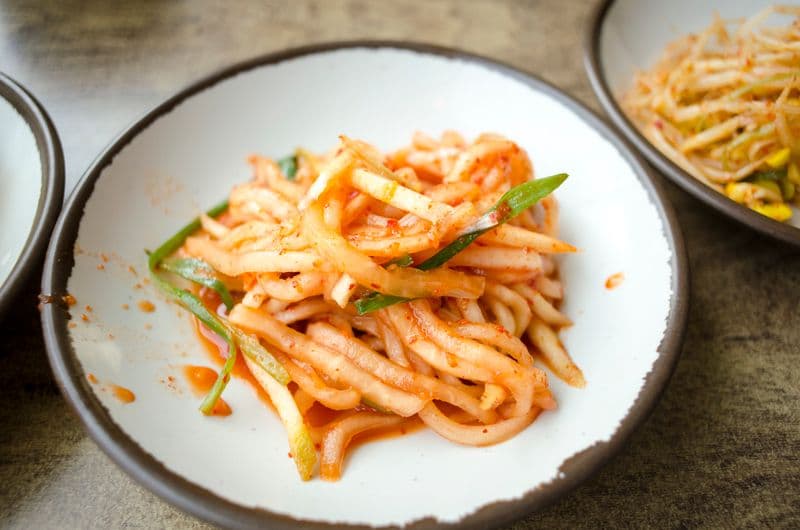
Musaengchae (Spicy Radish Salad)
Why salting and draining the julienned radish before seasoning is what keeps this banchan crisp instead of watery.