Did you know — Korean culture
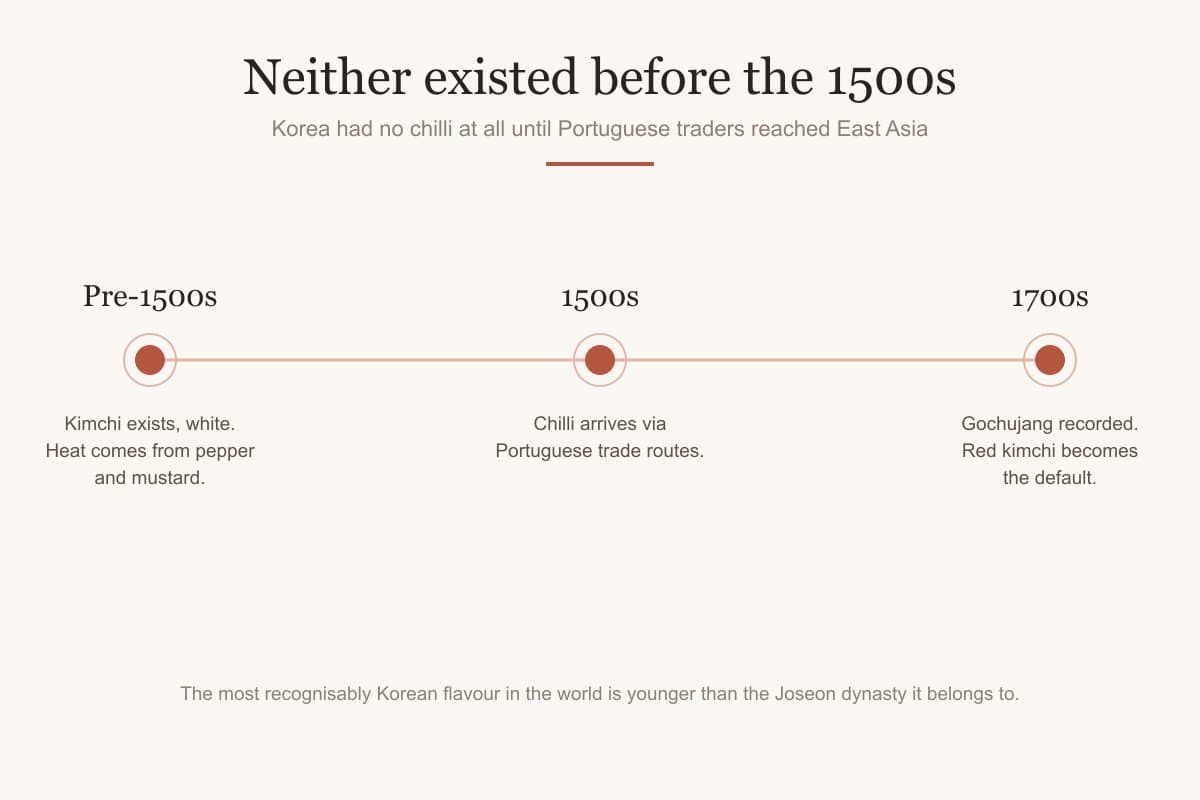
Neither of these existed in Korea before the sixteenth century, because the chilli did not. Capsicum is a New World plant, and it reached East Asia on Portuguese trade routes. Kimchi predates it by a long way and was originally white, seasoned with Sichuan pepper, ginger and mustard. Gochujang first appears in the written record in the eighteenth century. The most recognisably Korean flavour in the world is younger than most of the dynasty it belongs to.
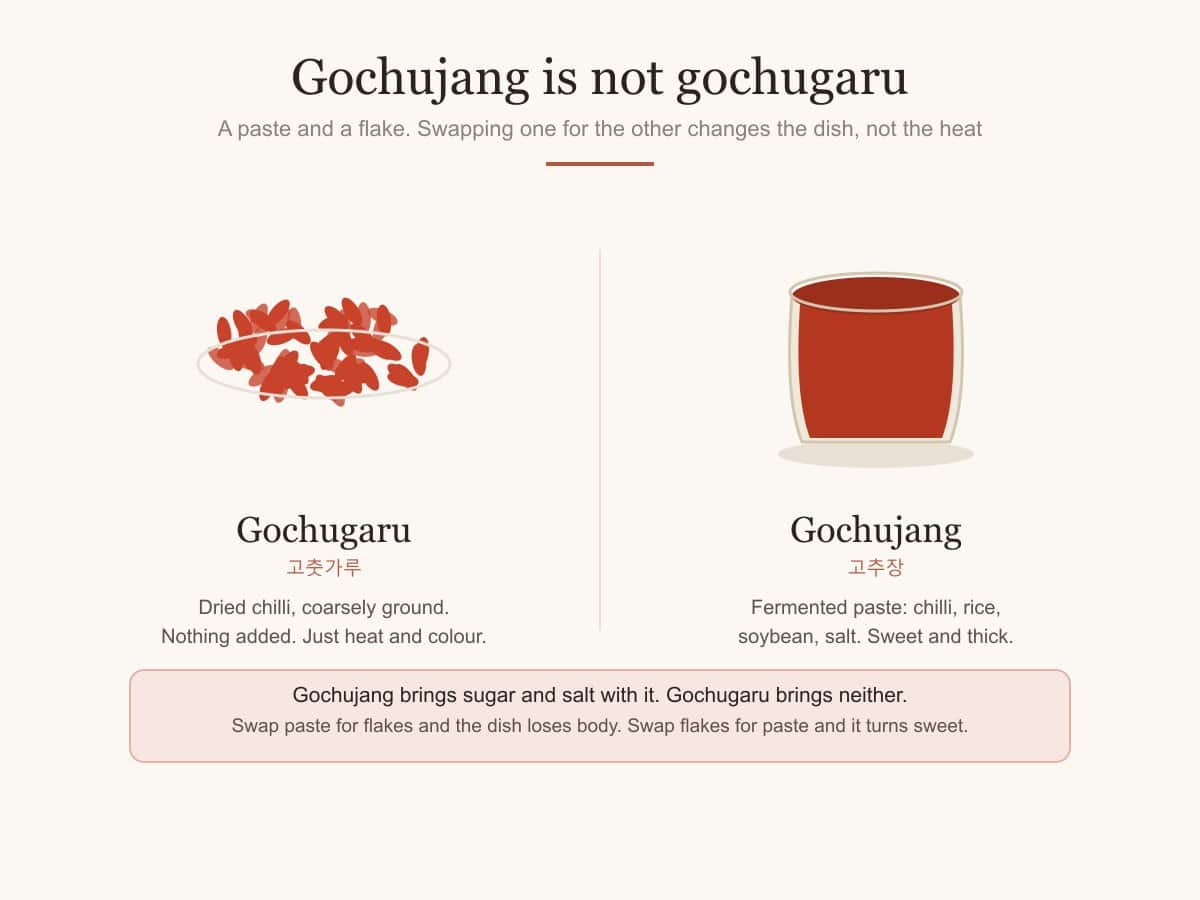
These two sit next to each other on the shelf, both red, both Korean, both chilli. They are not versions of the same thing, and a recipe that asks for one will not accept the other quietly.
The short version: gochugaru is dried chilli and nothing else. Gochujang is a fermented paste that happens to contain chilli, along with rice, soybean and a great deal of salt.
What each one actually is
Gochugaru is Korean chilli, sun-dried and ground. Coarse flakes for kimchi, fine powder for sauces. It is one ingredient. It brings heat, a fruity sweetness and the red colour, and it brings them without changing the texture or the salt level of what you add it to.
Gochujang is a ferment. Chilli powder, glutinous rice, fermented soybean and salt, left to age for months. It is thick, sticky, sweet, salty and deeply savoury. Spoon it into a pan and you are adding body and sugar as well as heat.
Why you cannot simply swap them
Flakes where the recipe wants paste: the dish loses its body. A tteokbokki sauce made with gochugaru alone stays thin and tastes sharp rather than round, because the sugar and the fermented depth are missing.
Paste where the recipe wants flakes: the dish turns sweet and heavy. Kimchi made with gochujang is the clearest failure — the rice starch in the paste goes cloudy and sour in a way that fermenting cabbage does not want, and the sugar feeds the wrong things.
The heat level is almost never the problem. The sugar, salt and starch are.
If you only have one
You have gochujang, the recipe wants gochugaru. For a cooked dish, use a smaller amount and cut the sugar elsewhere in the recipe. For kimchi, do not — make baek kimchi, the white version, which uses no chilli at all and is a real dish rather than a compromise.
You have gochugaru, the recipe wants gochujang. Closer to workable. Mix gochugaru with a little miso or doenjang, a spoonful of sugar or syrup, and a splash of water. It is not gochujang, but it occupies the same place in the pan.
See gochugaru substitutes if you have neither.
Buying and keeping them
Gochugaru loses colour and aroma at room temperature faster than people expect. Keep it in the freezer, sealed — standard practice in Korean kitchens, not excessive. Buy coarse grind if you are making kimchi.
Gochujang goes in the fridge after opening and keeps for a very long time. Darkening is normal. Tubs vary a lot in sweetness and heat between brands, so taste before you commit a whole batch of sauce to one.
Both are on the first-five list in the Korean pantry.
Common questions
Can I use gochujang instead of gochugaru in kimchi?
No — this is the one swap to avoid. The rice starch and sugar in gochujang ferment differently from plain chilli, and the result goes cloudy and oddly sweet. Make baek kimchi instead, which uses no chilli at all.
Is gochujang spicier than gochugaru?
Usually less so, spoon for spoon. Gochujang is diluted with rice and soybean and balanced with sugar. Gochugaru is pure chilli, though Korean chilli is mild by global standards — roughly 1,500 to 10,000 SHU.
What can I use if I have neither?
Aleppo pepper is the closest single substitute for gochugaru: mild, fruity, coarse, roughly 1:1. For gochujang, miso plus chilli flakes plus a little sugar gets you to the right place in the pan, if not the right flavour.
Why is my gochugaru brown rather than red?
It is old, or it has been stored warm. Gochugaru fades with light and heat, and faded flakes make dull kimchi. Keep it in the freezer and buy smaller bags more often.
More to cook
All Ingredient & Substitute Guides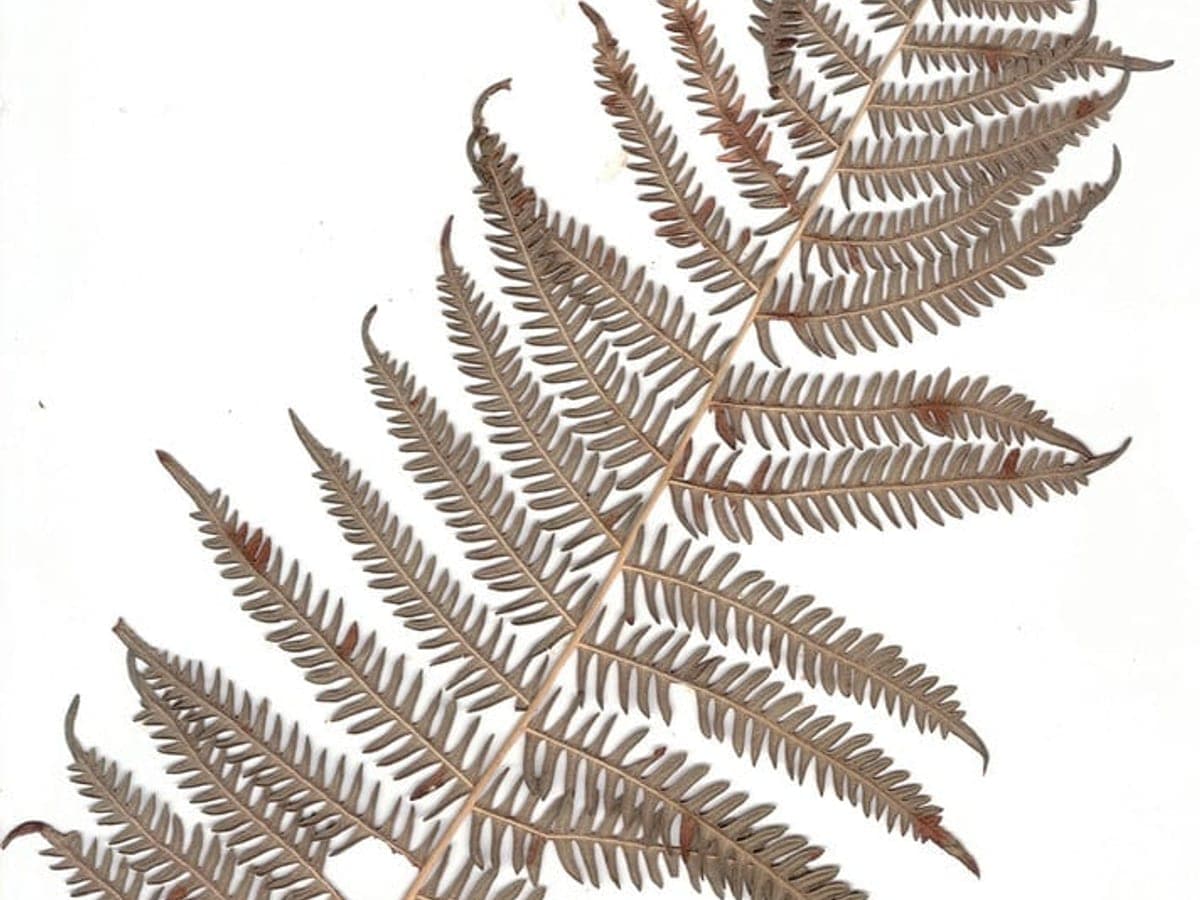
Gosari (Dried Fernbrake)
Why gosari must be soaked and boiled rather than just rehydrated, how to tell good dried fernbrake from tough old stock, and what it does in bibimbap.
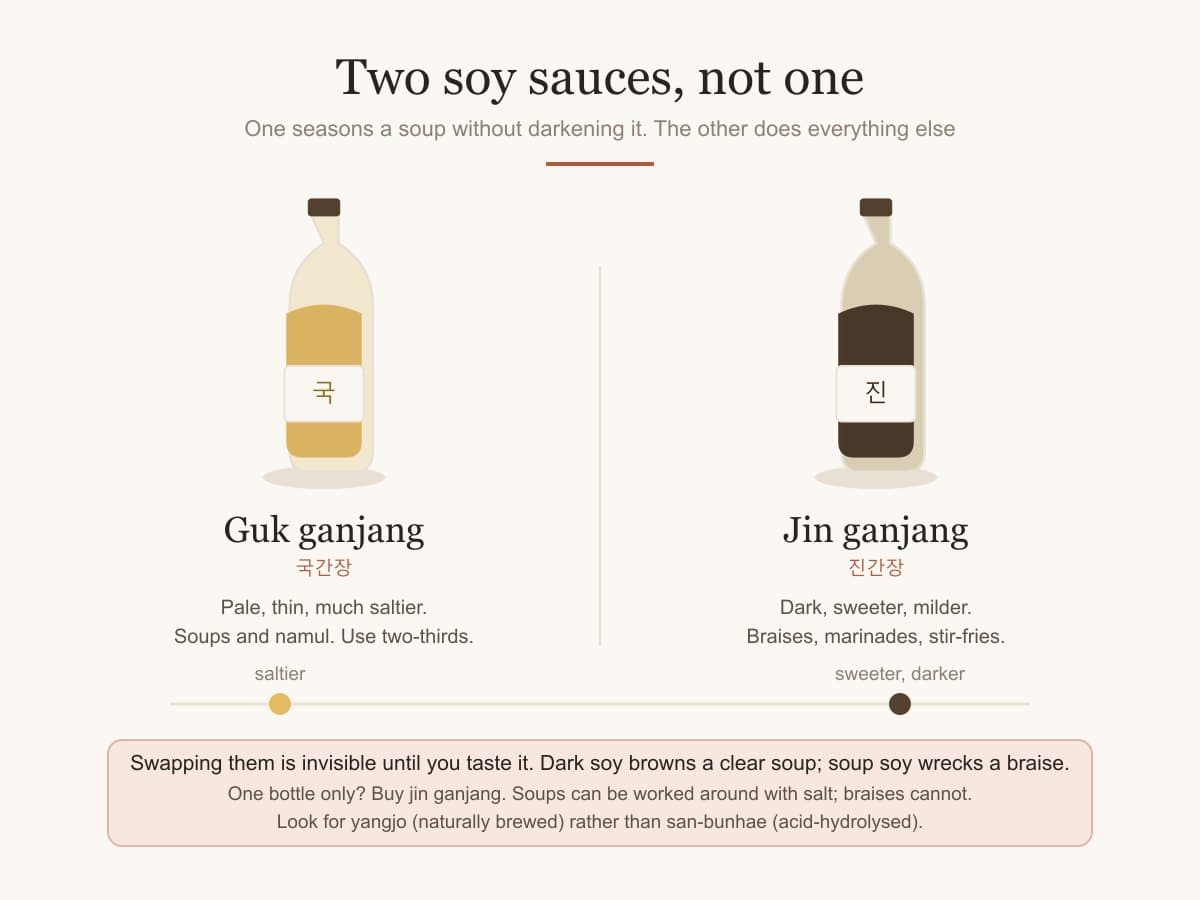
Guk Ganjang vs Jin Ganjang
Korean recipes call for two different soy sauces and swapping them ruins the dish. What each is for, and what to do with only one bottle.

Guk vs Jjigae vs Jeongol
Korean has three words for what English calls soup, and they are not interchangeable. What separates them, and which dishes belong to which.