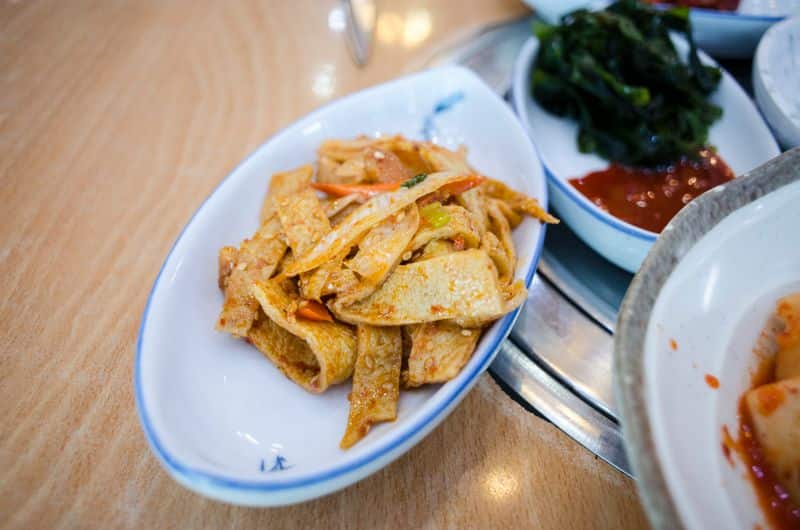
Steps
- 1
Blanch the fish cake strips in boiling water for 30 seconds to rinse off surface frying oil, then drain well.
- 2
Heat vegetable oil in a pan over medium-high heat.
- 3
Add the onion and carrot and stir-fry 1-2 minutes.
- 4
Add the fish cake and garlic and stir-fry another 2 minutes.
- 5
Add soy sauce, sugar, and corn syrup, and continue stir-frying over high heat until the sauce reduces and coats everything glossy, 2-3 minutes.
- 6
Finish with sesame oil, sesame seeds, and green onion.
Did you know — Korean culture
Eomuk bokkeum is one of the most common lunchbox banchan in Korea specifically because it reheats well and holds up over a day or two in the fridge, making it a practical make-ahead dish rather than one that needs to be eaten fresh.
Blanching the fish cake before it goes into the pan isn't optional the way it might seem — most packaged fish cake is deep-fried during manufacturing, and that surface oil is exactly what makes stir-fried fish cake taste greasy and heavy if it's skipped. A quick 30-second blanch strips off most of that oil without affecting the texture underneath.
Finishing over high heat once the sauce goes in is what builds the actual glaze. A gentler heat at that stage just simmers the sauce into a wet coating instead of reducing it into something that clings — the high heat at the end is a short, deliberate push, not a mistake to avoid.
Eomuk bokkeum is one of the most common lunchbox and side-dish banchan in Korea specifically because it reheats well and holds up over a day or two in the fridge, making it a practical make-ahead dish rather than one that needs to be eaten fresh.
Troubleshooting
Dish tastes greasy or oily? The fish cake likely wasn't blanched first — that step rinses off the frying oil most packaged fish cake carries.
Sauce thin instead of glossy? Finish the last couple of minutes over higher heat, not lower — that's what reduces and thickens it.
Fish cake tough or rubbery? It was probably overcooked — fish cake is already cooked when purchased, so the stir-fry stage is really just about reheating and glazing, not cooking through.
Recommended products
- Wide skillet
More to cook
All Banchan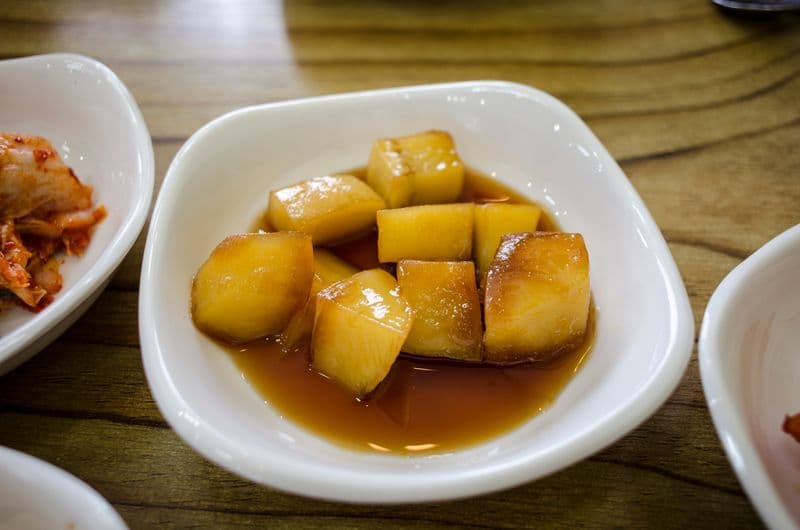
Gamja Jorim (Braised Potatoes)
Why par-cooking the potatoes before they hit the sauce prevents the mushy-outside, raw-inside problem, and how the final uncovered simmer builds the glaze.
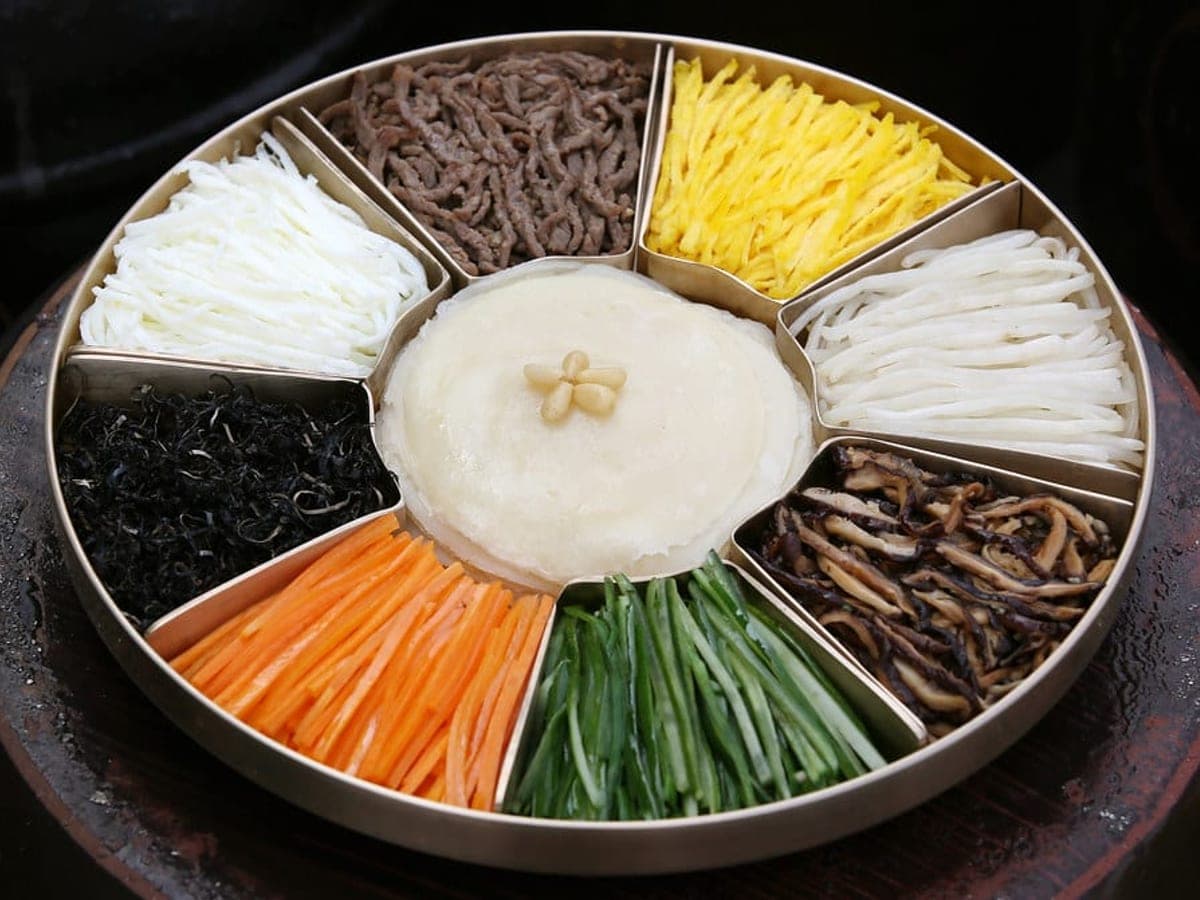
Gujeolpan (Nine-Section Platter)
How the eight fillings around a gujeolpan are chosen for contrast rather than variety, and why the crepes in the centre must be thin enough to see through.
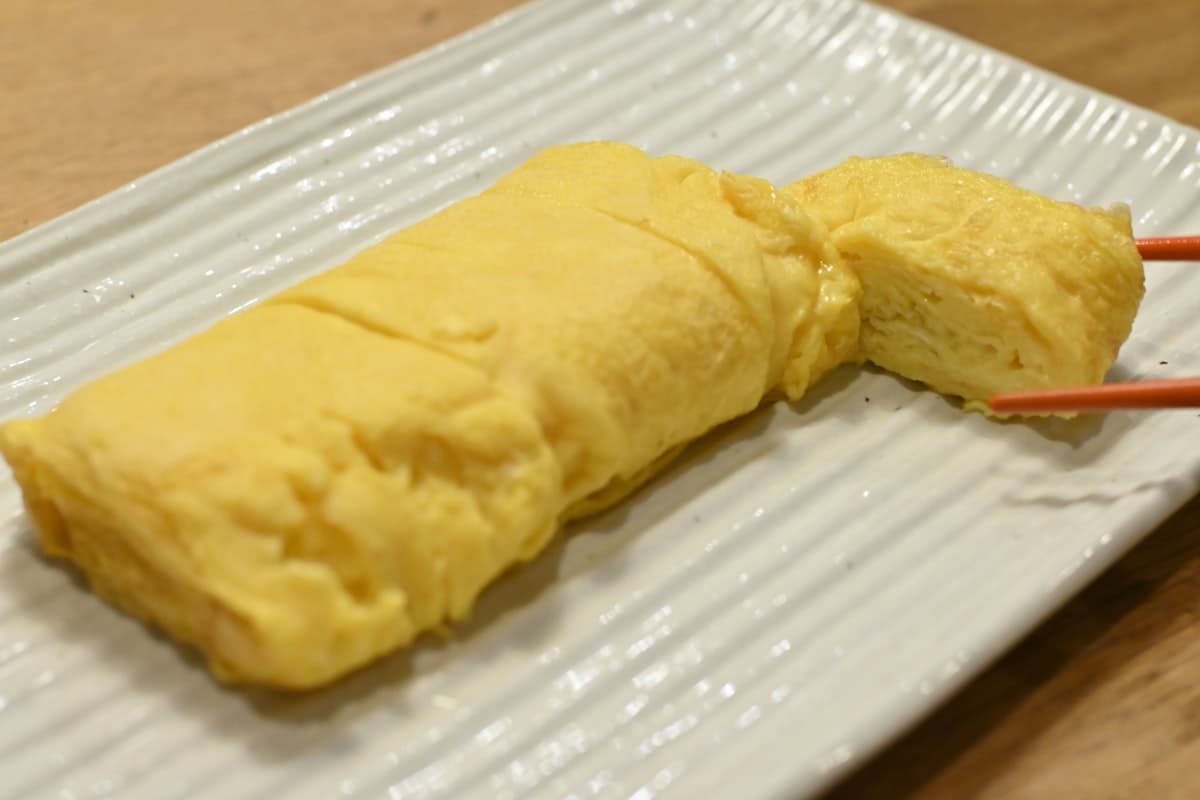
Gyeran Mari (Rolled Omelette)
The low-heat, layer-by-layer rolling technique behind gyeran mari, and why rushing the heat is the most common mistake.