Did you know — Korean culture
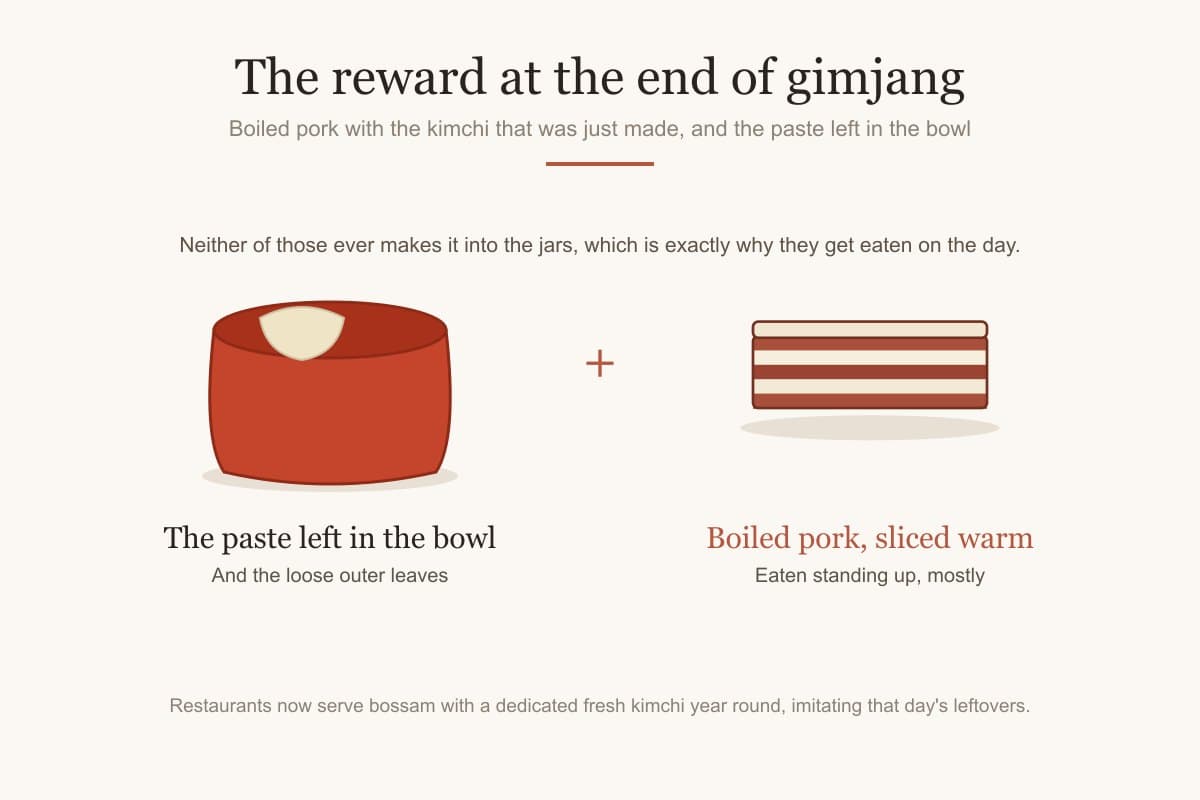
Bossam belongs to gimjang day. The communal November kimchi-making is a long day of salting, rinsing and packing, and the traditional reward at the end of it is boiled pork eaten with the fresh kimchi that has just been made — specifically with the loose outer leaves and the paste left in the bowl, which never make it into the jars. Restaurants now serve bossam with a dedicated unfermented *geotjeori* kimchi year round, which is a direct imitation of that day's leftovers.
Bossam is boiled pork, which sounds like a recipe for dryness and is not — done properly the meat is soft enough to fall apart under a chopstick.
Wrong cut, hard boil, or sliced too soon. Those are the three, in that order.
Pork belly, skin on, in one piece
Samgyeopsal — belly, skin on, in a single slab. The fat layers are what keep it moist through an hour of simmering, and the skin holds the whole thing together.
Shoulder (moksal) also works and is leaner. Loin does not; it has nothing to give up and comes out stringy whatever you do.
Buy it in one piece rather than pre-sliced. A pre-sliced belly loses its moisture into the pot within twenty minutes.
A bare simmer, never a boil
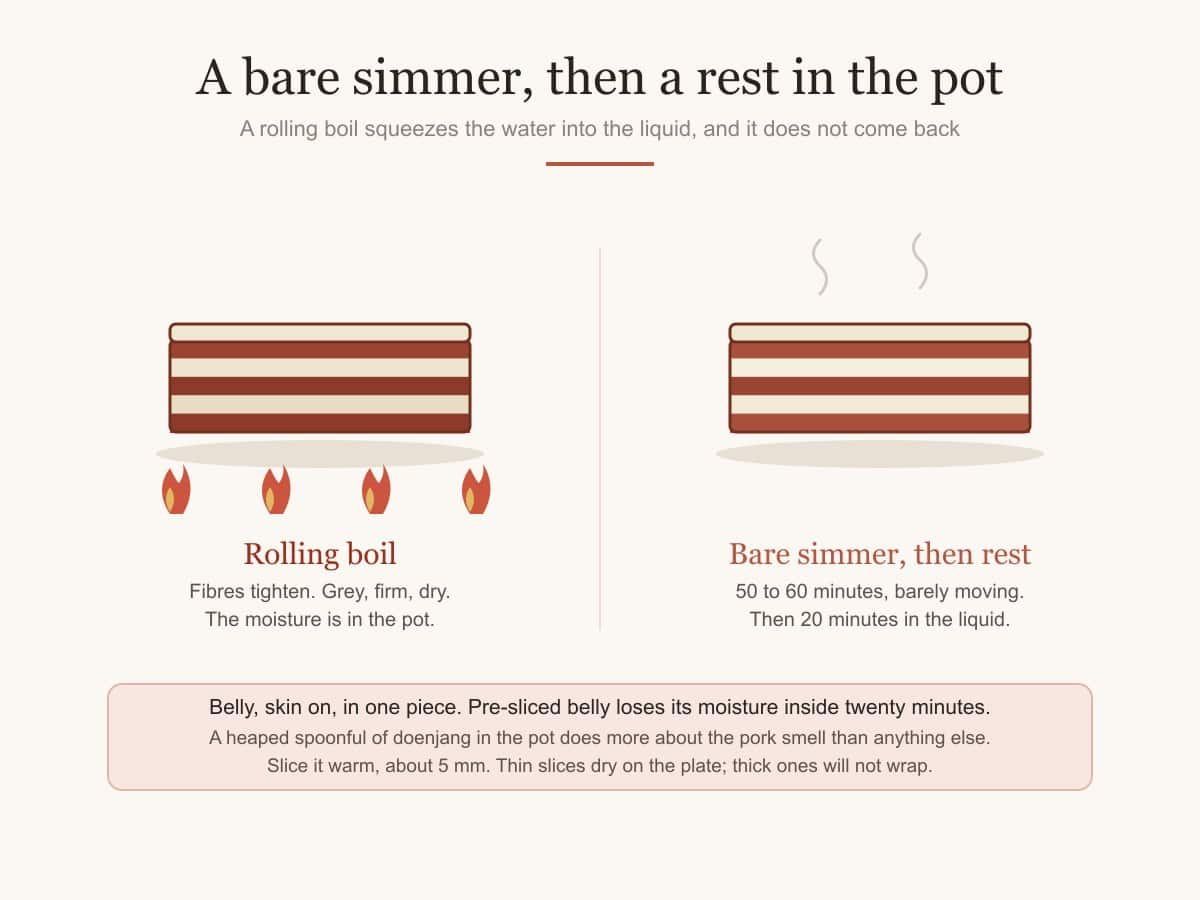
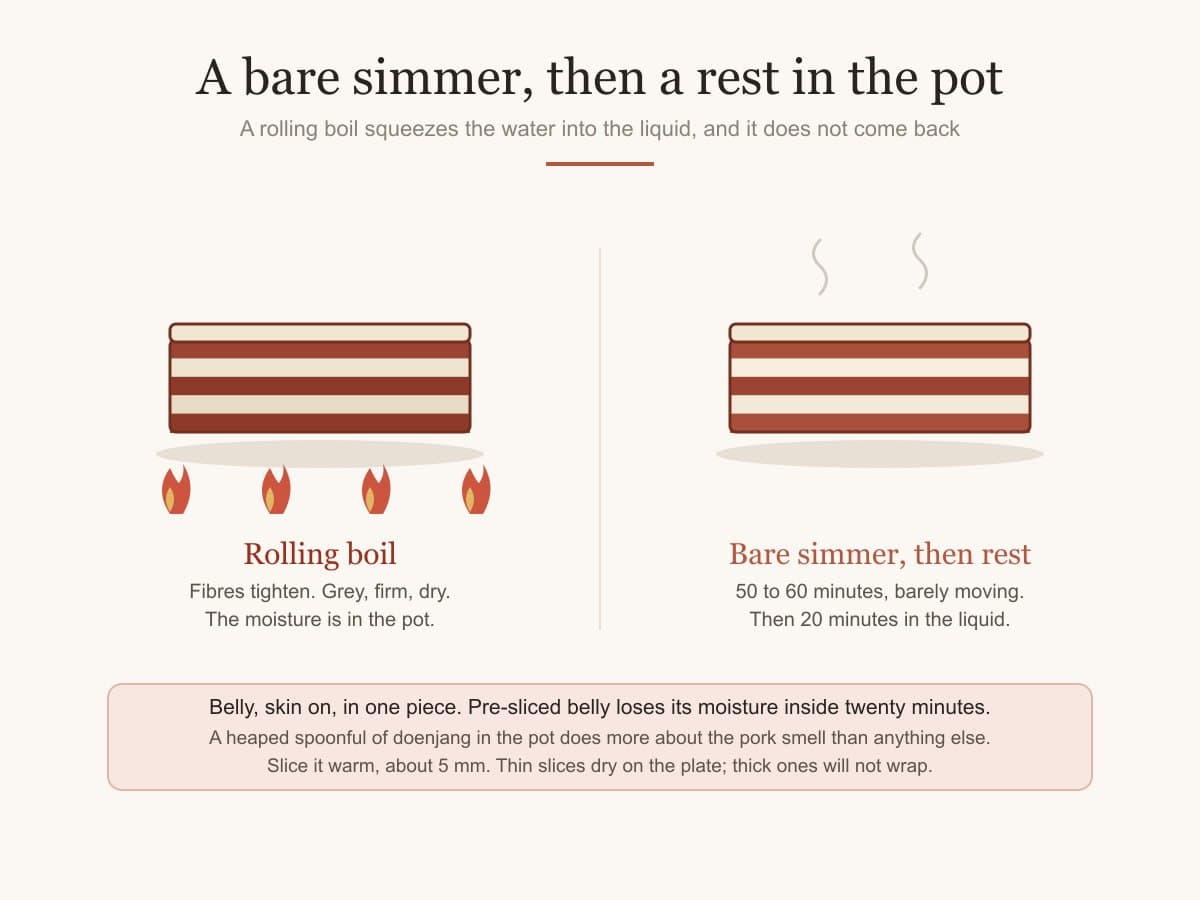
Bring the liquid to the boil, add the pork, then drop it to a bare simmer immediately — the surface should barely move.
A rolling boil tightens the muscle fibres and squeezes the water out. The pork goes grey, firm and dry, and the lost moisture is in the pot rather than the meat.
Fifty to sixty minutes for a 1 kg piece. Test with a skewer: it should slide through the thickest part with no resistance.
Rest it in the liquid
Take the pot off the heat and leave the pork in the cooking liquid for fifteen to twenty minutes before it comes out.
This is the step most recipes skip and it matters more than any of the aromatics. Meat lifted straight out loses moisture to the air at exactly the point it is least able to spare it.
Then slice it warm, not hot, and about 5 mm thick. Thin slices dry out on the plate in minutes; thick ones are hard to wrap.
What goes in the pot
Doenjang is the one that matters — a heaped spoonful, and it does more to kill the pork smell than anything else in the pot.
Then whole garlic, ginger, spring onion, onion, black peppercorns, bay, and a splash of soju. Instant coffee or a dark beer are common additions for colour and cover.
And serve it the way it is meant to be served: saeujeot, ssamjang, raw garlic, a radish salad and leaves. Bossam eaten plain tastes drier than bossam in a wrap, whatever the meat is actually like.
Common questions
What cut of pork is used for bossam?
Pork belly with the skin on, in one piece. The fat layers keep it moist through the simmer. Shoulder works and is leaner; loin does not work at all.
Should bossam be boiled or simmered?
Simmered, barely. A rolling boil tightens the fibres and squeezes the moisture into the pot. Fifty to sixty minutes for a kilo, tested with a skewer.
Why rest the pork in the liquid?
Fifteen to twenty minutes off the heat, still submerged, keeps the moisture in the meat. Lifting it straight out loses water to the air at the worst moment.
How thick should bossam be sliced?
About 5 mm, and while it is warm rather than hot. Thinner slices dry on the plate; thicker ones are awkward to wrap in a leaf.
More to cook
All Ingredient & Substitute Guides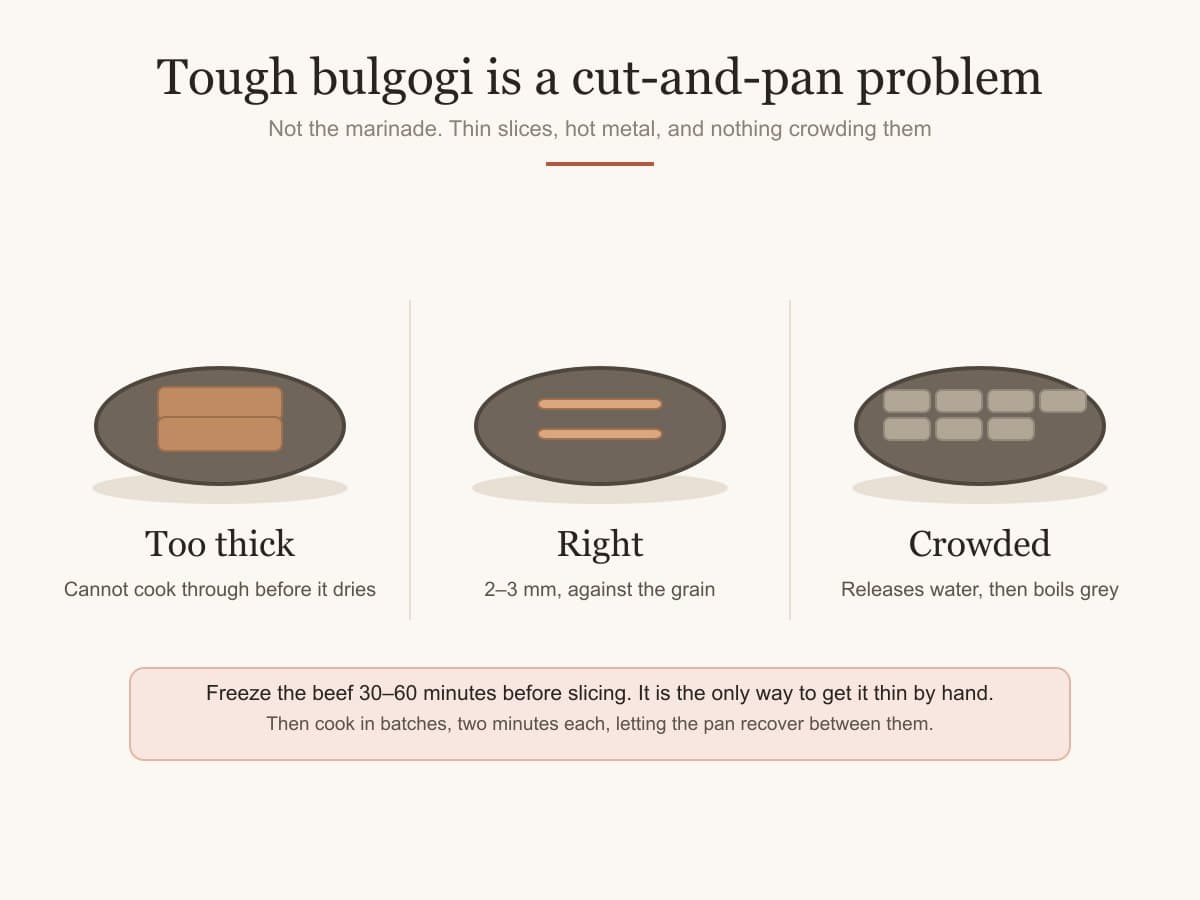
Why Is My Bulgogi Tough?
Tough bulgogi is almost never the marinade. The three real causes are the cut, the thickness and a crowded pan, and all three are easy to fix.
Why Is My Bulgogi Watery?
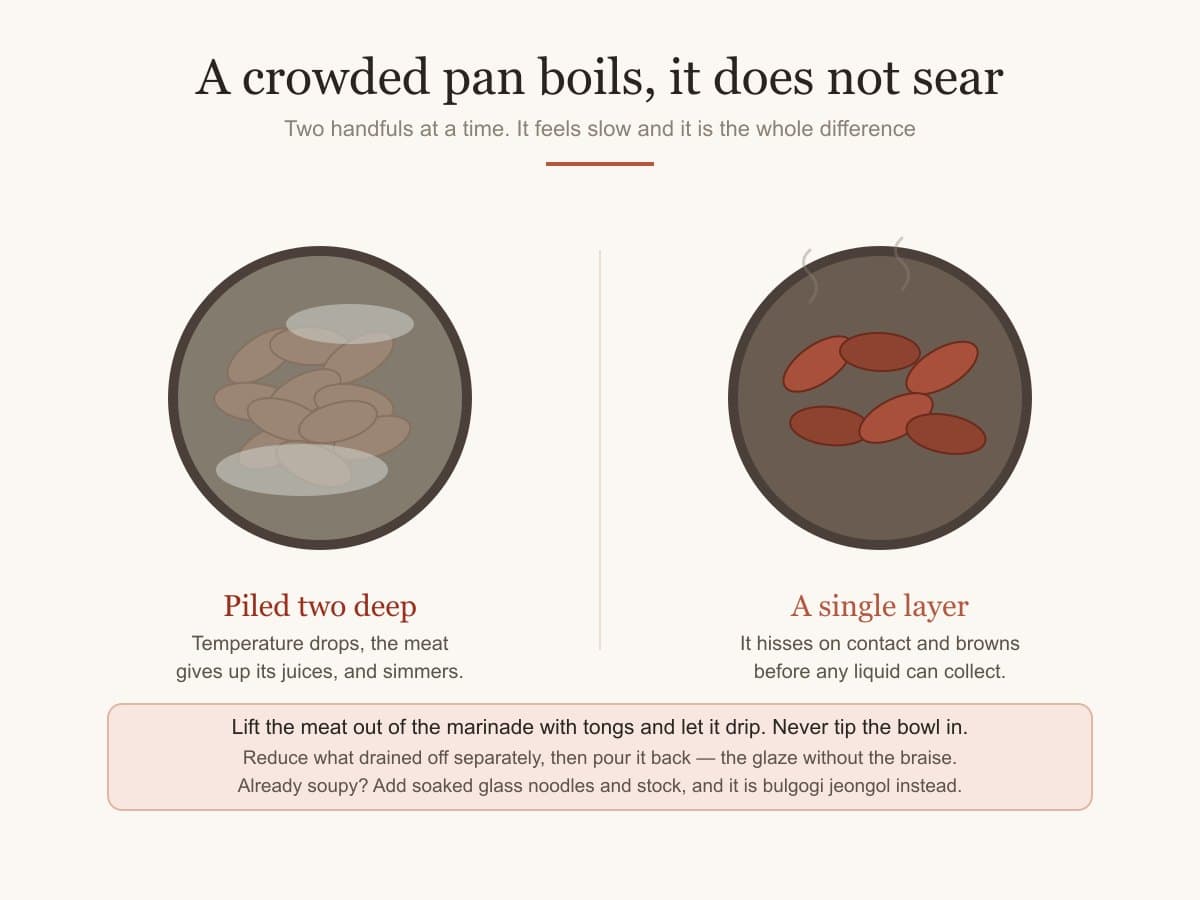
Bulgogi swimming in liquid is a crowded pan and a cold one. How to get a sear instead of a boil, and what to do with the juices.
Why Is My Doenjang Jjigae Bitter?
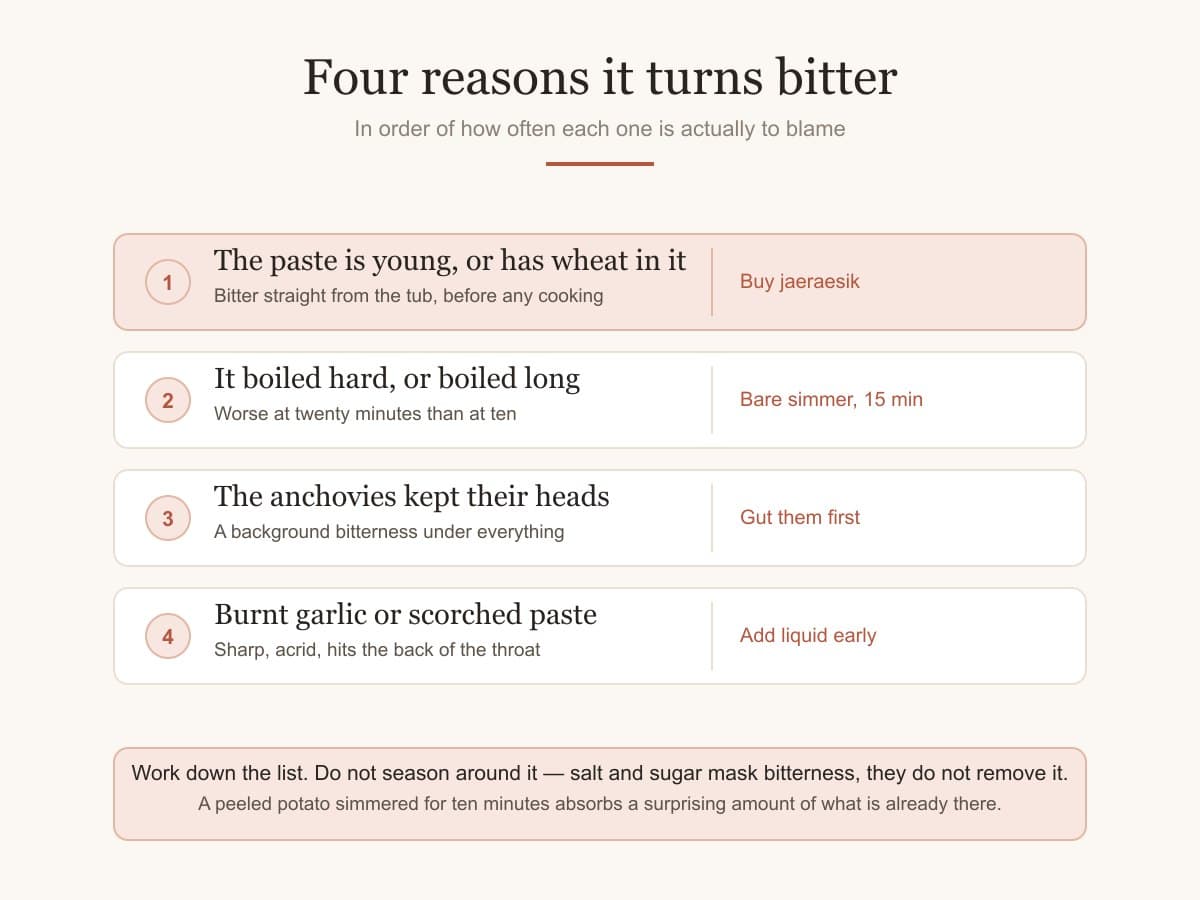
Bitterness in doenjang jjigae almost always comes from the paste or the boil, not the vegetables. How to find which, and how to fix it mid-pot.