Did you know — Korean culture
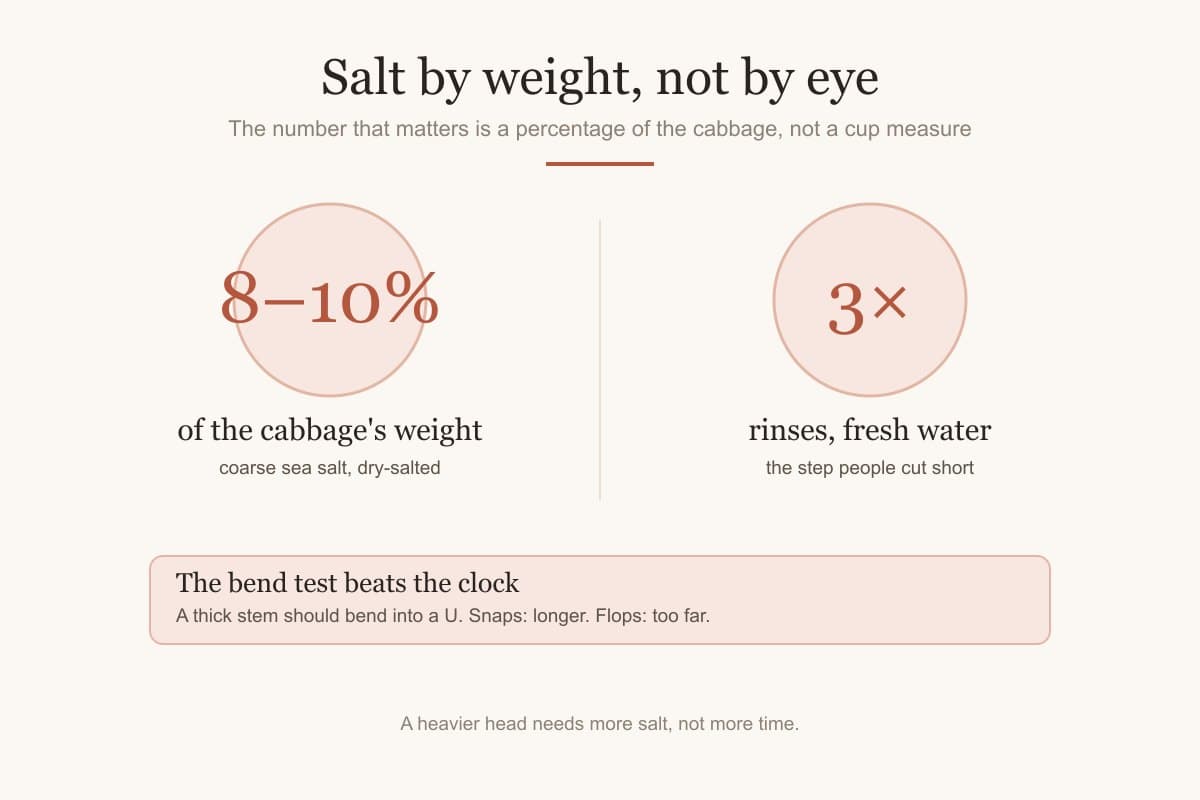
Korean households that still make kimjang in quantity tend to salt by weight rather than by recipe, because cabbage heads vary so much. A dense winter head can weigh half as much again as a light autumn one of the same size, and the same cup of salt produces a very different result in each. The traditional check is physical rather than numerical: bend a thick stem, and if it folds into a U without cracking, the cabbage is ready regardless of what the clock says.
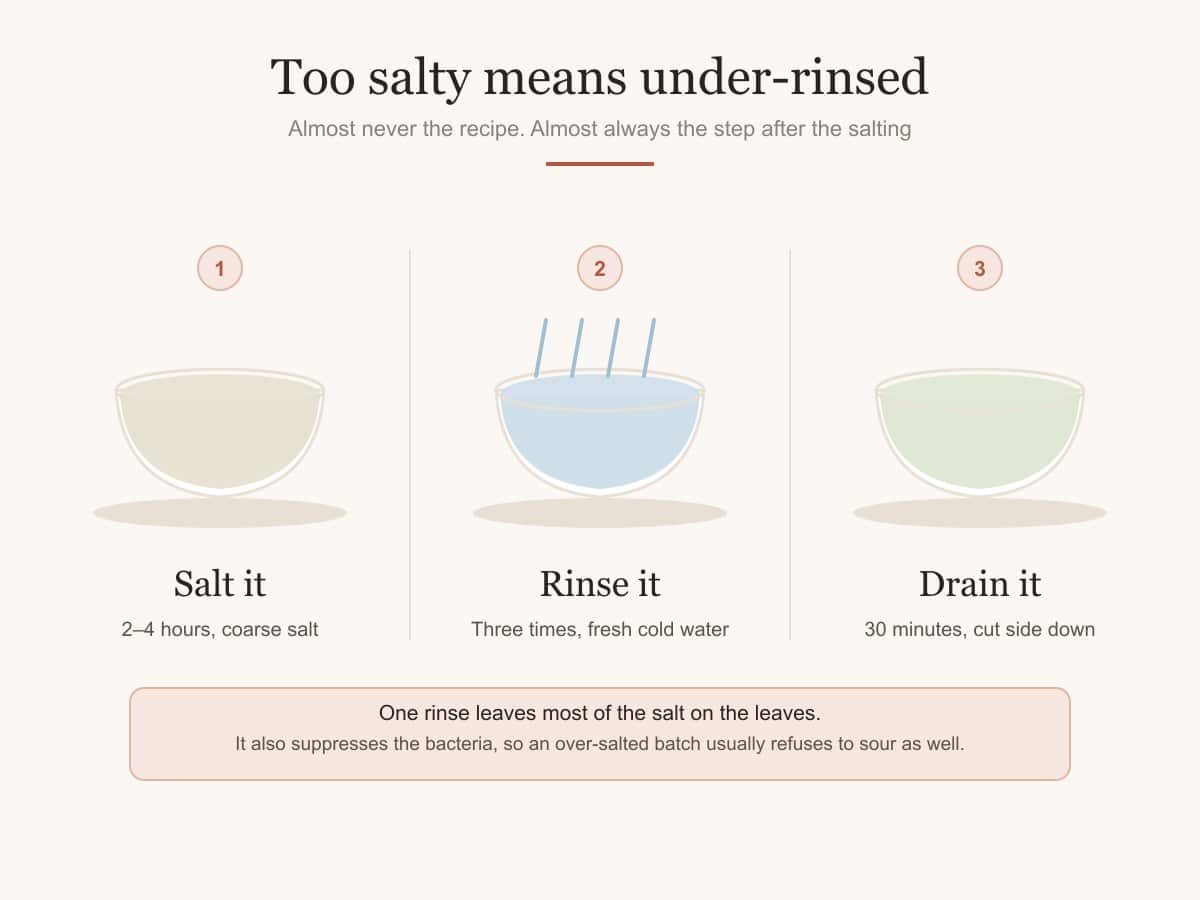
Salty kimchi is the most common thing to go wrong, and the cause is nearly always the same: the cabbage was not rinsed enough after salting.
The recipe is rarely at fault. Salting draws water out of the leaves; rinsing takes the surface salt back off. Skip or shorten the second step and all of it stays in the jar.
Check the rinse first
Three rinses in fresh cold water, agitating each time. Not one pass under the tap. This is the step people cut short, and it is the step that decides how salty the finished kimchi is.
Taste a leaf after the third rinse. It should taste seasoned, not salty — like a well-salted vegetable you would happily eat as it is. If it makes you wince, rinse again.
The full method is in how to salt napa cabbage.
It is probably not fermenting either
Over-salted kimchi usually has a second symptom: it refuses to sour. Salt suppresses the lactic acid bacteria along with everything else, so the batch sits in the fridge staying sweet and raw-tasting for weeks.
If yours is both too salty and not souring, you have one problem rather than two. See why is my kimchi not sour for the other causes.
Saving the batch you already have
You cannot un-salt kimchi, but you can dilute it.
Add more unsalted vegetable. Shred fresh napa cabbage or Korean radish and mix it through. It takes up salt from the brine and lowers the concentration enough for fermentation to start.
Rinse the made kimchi. Crude, and it costs you some of the paste, but a quick rinse of an over-salted batch is better than throwing it out.
Cook it instead. Salty kimchi is fine in kimchi jjigae or kimchi bokkeumbap — just leave the salt out of the rest of the dish.
Getting it right next time
Weigh the salt rather than measuring cups. Around 8–10% of the cabbage's weight for dry salting. A heavy head needs more salt, not more time.
Use coarse sea salt. Fine table salt dissolves too fast and salts unevenly, so parts of the head end up heavily salted while others stay raw.
Use the bend test, not the clock. A thick piece of white stem should bend into a U without snapping. Snapping means longer; flopping limply means you have gone too far.
Then drain properly — at least thirty minutes, cut side down.
Common questions
How do I fix kimchi that is already too salty?
Mix in freshly shredded cabbage or radish to dilute the brine, or rinse the made kimchi and re-dress it lightly. If neither appeals, cook it — salty kimchi is well suited to jjigae and fried rice, where you simply add no other salt.
How much salt should I use for kimchi?
Roughly 8–10% of the cabbage's weight in coarse sea salt for dry salting, or about one cup of coarse salt to eight cups of water for a brine. Weighing beats measuring by volume, because heads vary enormously.
Can over-salted kimchi still ferment?
Slowly, or not at all. Salt suppresses the bacteria that produce the sourness, which is why an over-salted batch often stays sweet and raw-tasting for weeks. Diluting it with fresh vegetable usually restarts things.
Should I rinse kimchi before eating it?
Not normally. If a batch came out too salty, a rinse is a reasonable rescue, but properly made kimchi should not need it — and rinsing washes away paste and flavour along with the salt.
More to cook
All Ingredient & Substitute Guides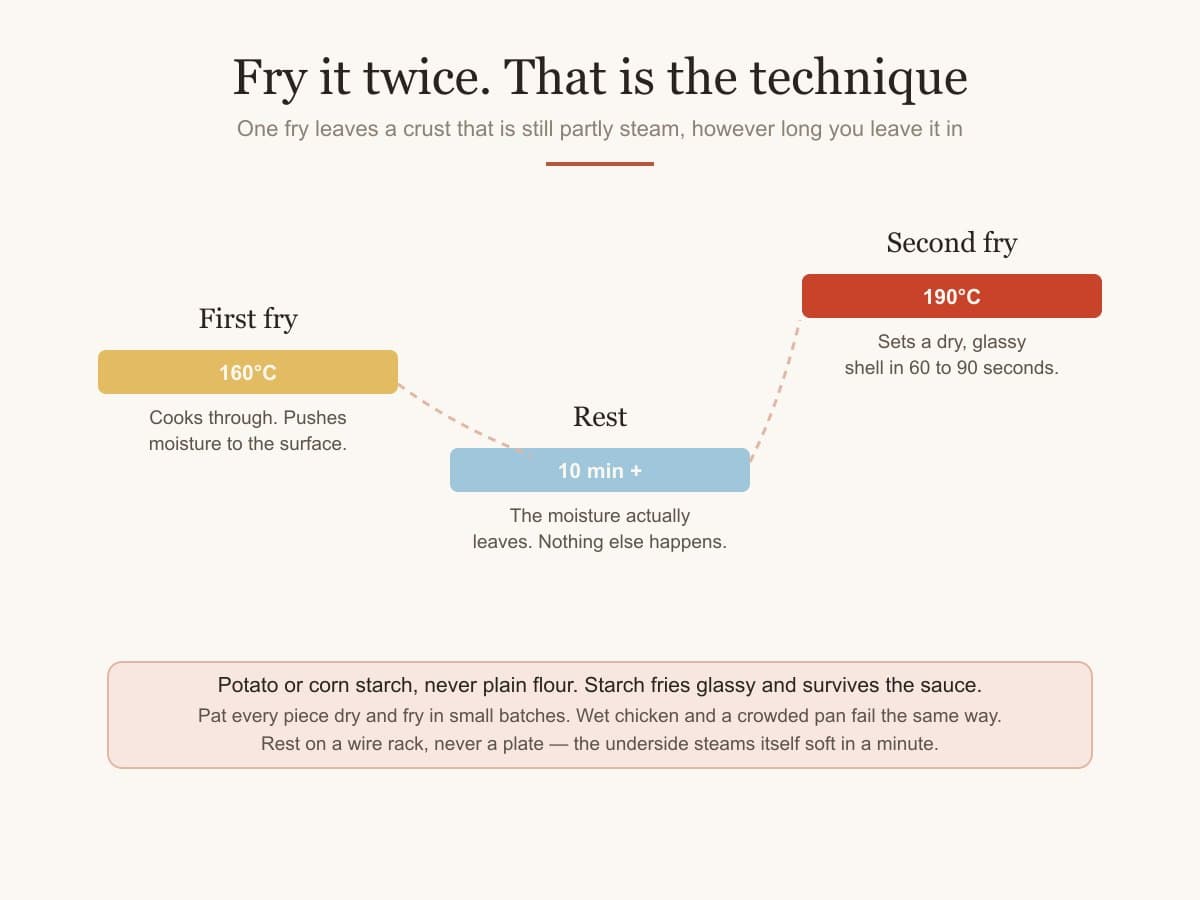
Why Is My Korean Fried Chicken Not Crispy?
Soft Korean fried chicken is nearly always a missing second fry, a wet surface or the wrong starch. The four things that decide the crust.
Why Is My Pajeon Soggy?
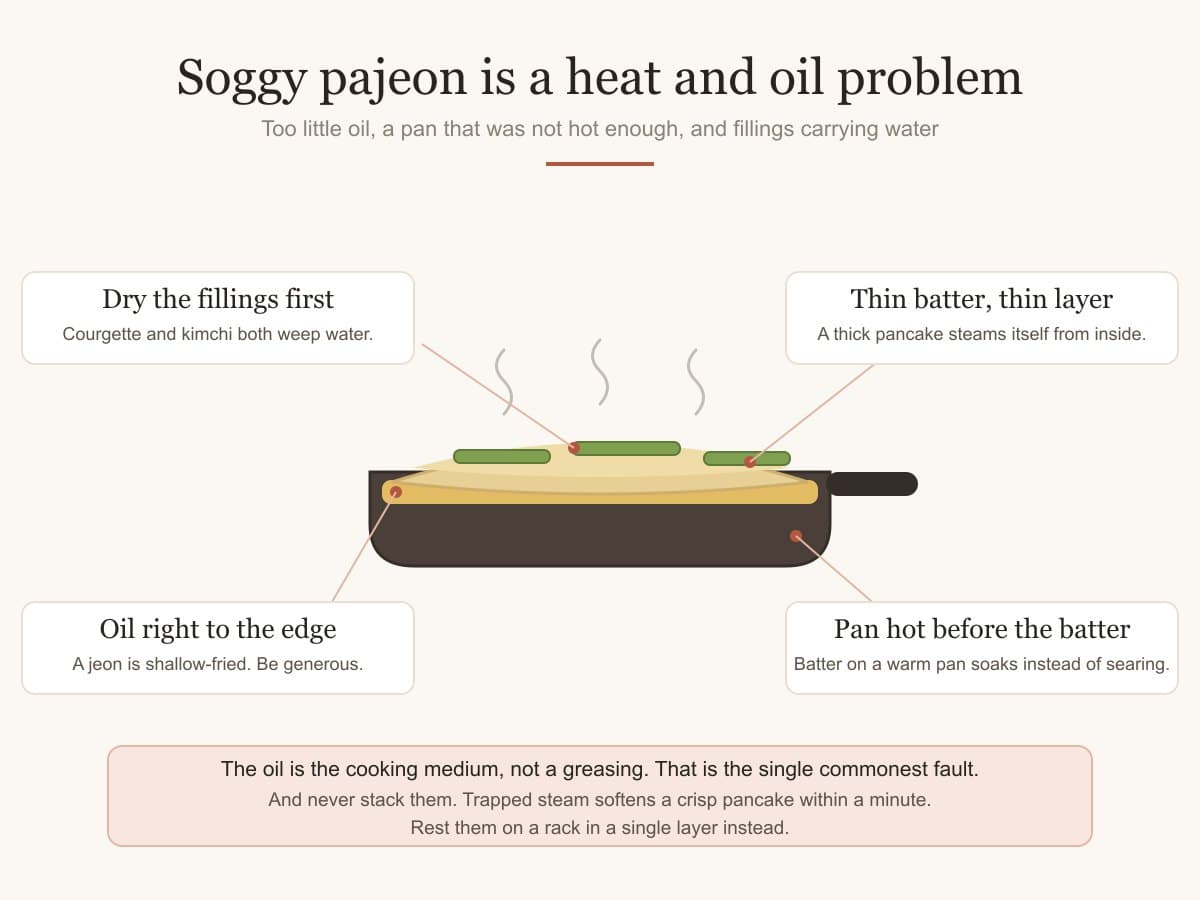
Soggy Korean pancake comes down to oil, batter temperature and wet fillings. The three fixes, and why stacking them undoes all of it.
Why Is My Rice Mushy?
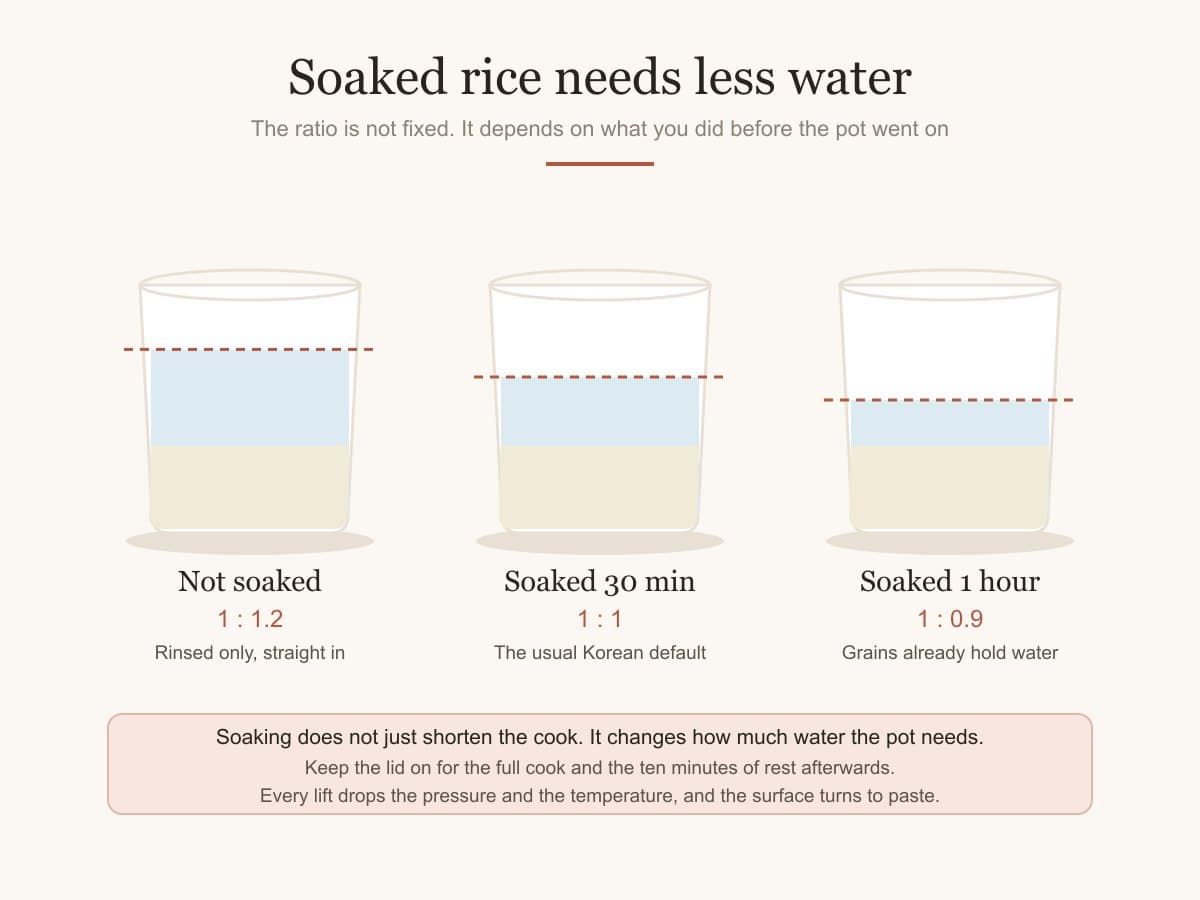
Mushy short-grain rice usually comes from skipped rinsing or water measured before soaking. The ratios that work and how to rescue a wet pot.