Did you know — Korean culture
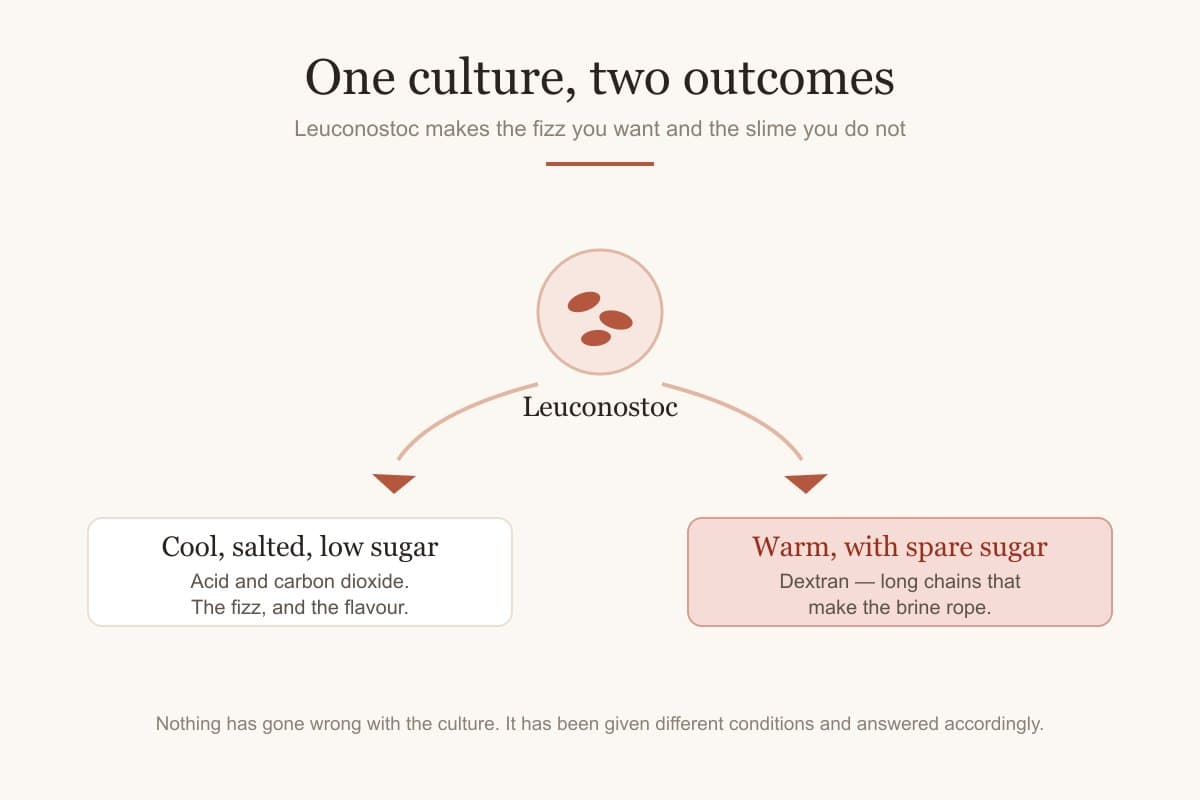
The bacteria that ruin the texture are the ones doing the work. Leuconostoc species dominate the early stage of a kimchi ferment and produce most of the carbon dioxide and much of the characteristic flavour — they are the reason a good jar fizzes. Given warmth and spare sugar, the same organisms switch to making dextran instead, which is the slime. Nothing has gone wrong with the culture; it has simply been given different conditions and answered accordingly.
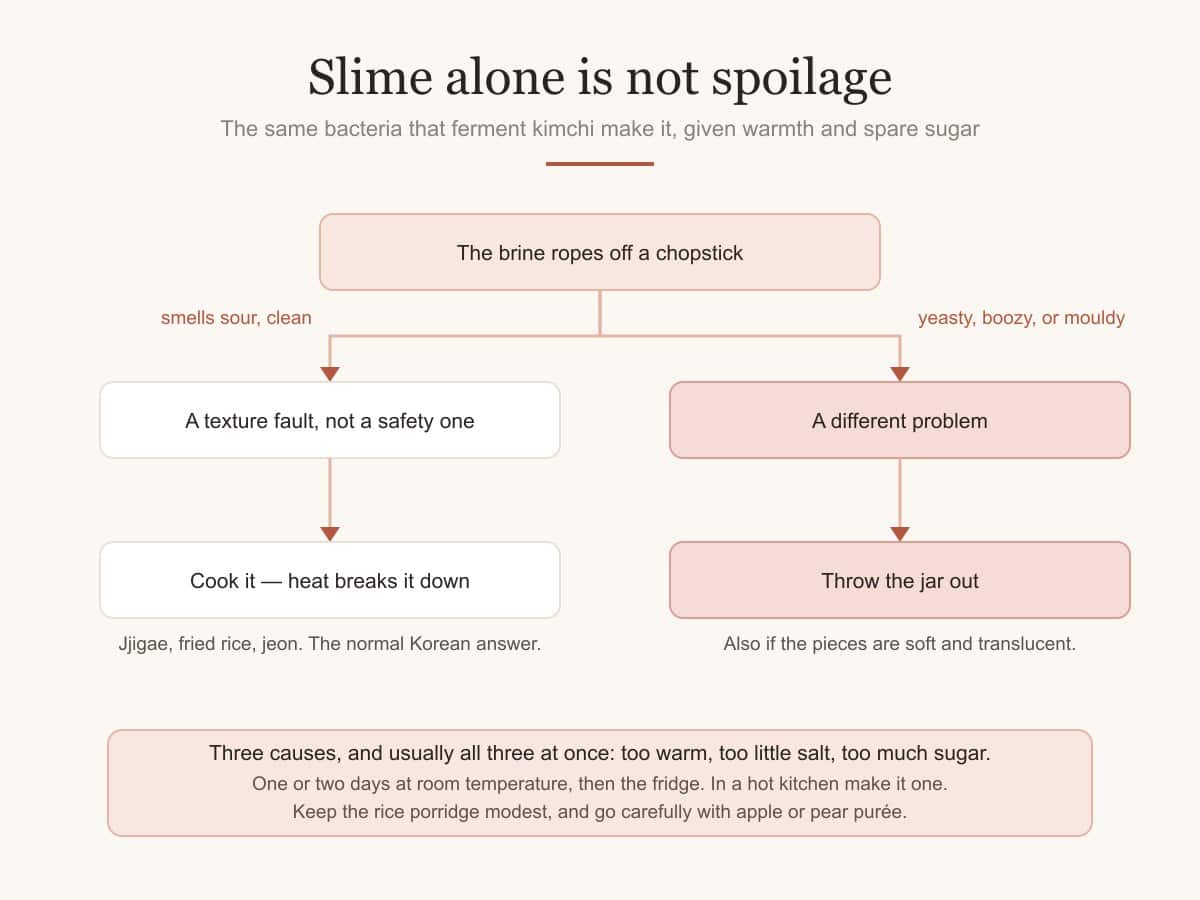
Stringy, slippery brine that trails off a chopstick is alarming and is usually not dangerous. It is a bacterial imbalance rather than spoilage.
The short answer: too warm, too little salt, or too much sugar or flour in the paste. Any of the three lets the wrong bacteria win.
What the slime actually is
Certain lactic acid bacteria — Leuconostoc among them — produce dextran, a long-chain polysaccharide, when they have plenty of sugar to work with. Dextran is what makes the brine rope.
These are the same organisms that ferment kimchi properly. They are not contaminants.
It is a texture fault, not a safety one. If the kimchi smells sour and clean, it is fine to eat, though unpleasant raw.
Too warm is the commonest cause
Dextran-producing strains dominate at higher temperatures. Kimchi left on a 25°C counter for three days will rope far more often than the same batch refrigerated after one.
One to two days at room temperature, then into the fridge, is the rule. In a hot kitchen, make it one.
This is also why slimy kimchi is a summer problem. The same recipe that behaved in March ropes in July.
Too little salt, too much sugar
Under-salted cabbage ferments too fast and too loosely. Salt by weight — see how to salt napa cabbage — rather than by the cup, and do not reduce it to make a milder kimchi.
The rice-flour porridge and any added sugar or fruit are dextran feedstock. Keep the porridge modest, and be careful with apple or pear purée, which some recipes use generously.
If a batch ropes, the next one wants more salt, less sweetener and a shorter warm ferment — all three.
What to do with the jar you have
Cook it. Heat breaks dextran down, and slimy kimchi is perfectly good in kimchi jjigae, kimchi bokkeumbap or kimchi jeon. This is the normal Korean answer.
Rinsing the pieces under cold water and re-dressing them also works for eating raw, at some cost to the flavour.
Throw it out if it smells of yeast, alcohol, or anything other than sour kimchi; if there is fuzzy mould of any colour; or if the pieces have gone soft and translucent. Slime plus a bad smell is a different problem from slime alone.
Common questions
Is slimy kimchi safe to eat?
Usually yes. The slime is dextran produced by the same lactic acid bacteria that ferment kimchi normally. If it smells sour and clean with no mould, it is a texture fault rather than spoilage.
What causes kimchi to go slimy?
Fermenting too warm, too little salt, or too much sugar and rice flour in the paste. Any of the three lets dextran-producing strains dominate.
Can I fix slimy kimchi?
Cook it. Heat breaks the dextran down, so it works fine in jjigae, fried rice or pancakes. Rinsing and re-dressing also works for eating raw, with some loss of flavour.
When should I throw kimchi away?
If it smells yeasty or alcoholic rather than sour, if there is fuzzy mould of any colour, or if the pieces have gone soft and translucent. Slime on its own is not one of those signs.
More to cook
All Ingredient & Substitute Guides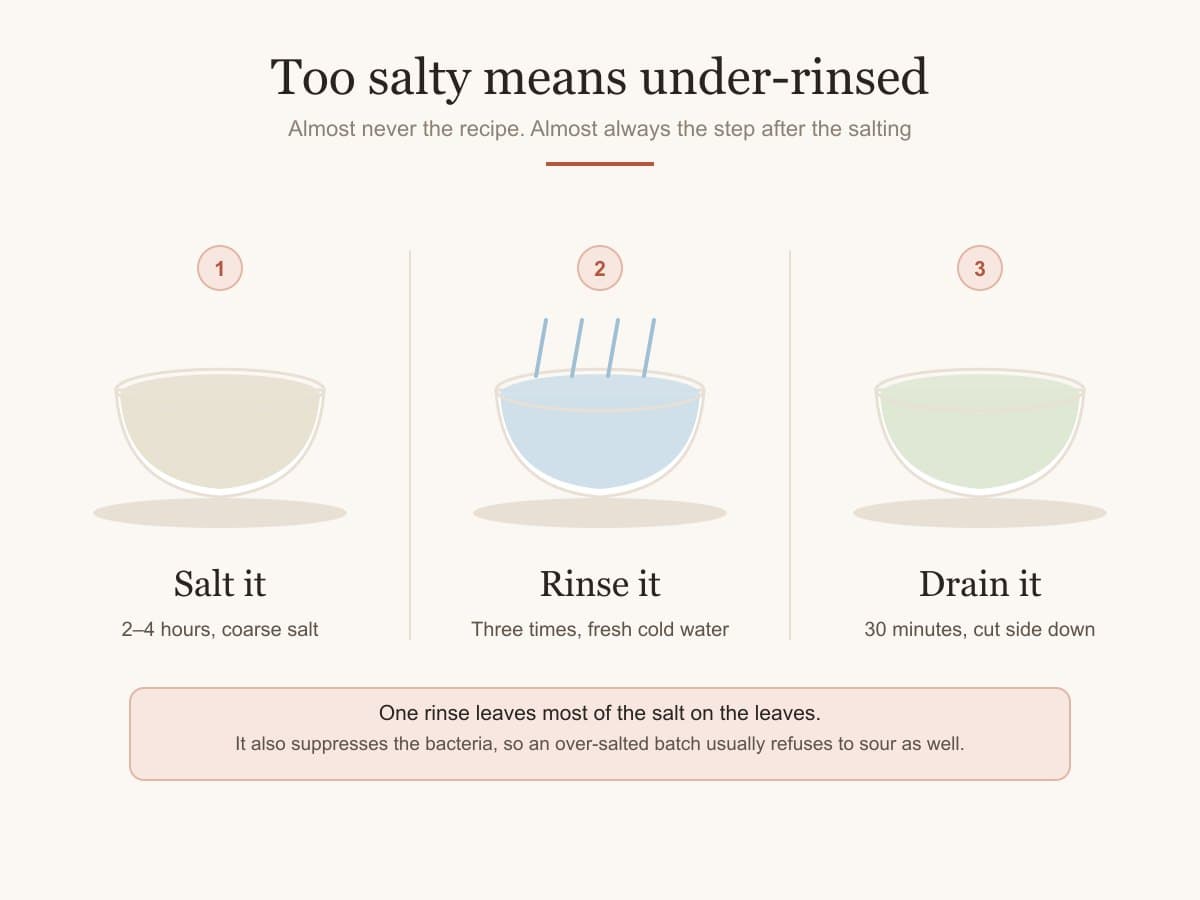
Why Is My Kimchi Too Salty?
Over-salted kimchi almost always comes from the rinse, not the recipe. How to tell, what to do with the batch you have, and how to get it right next time.
Why Is My Korean Fried Chicken Not Crispy?
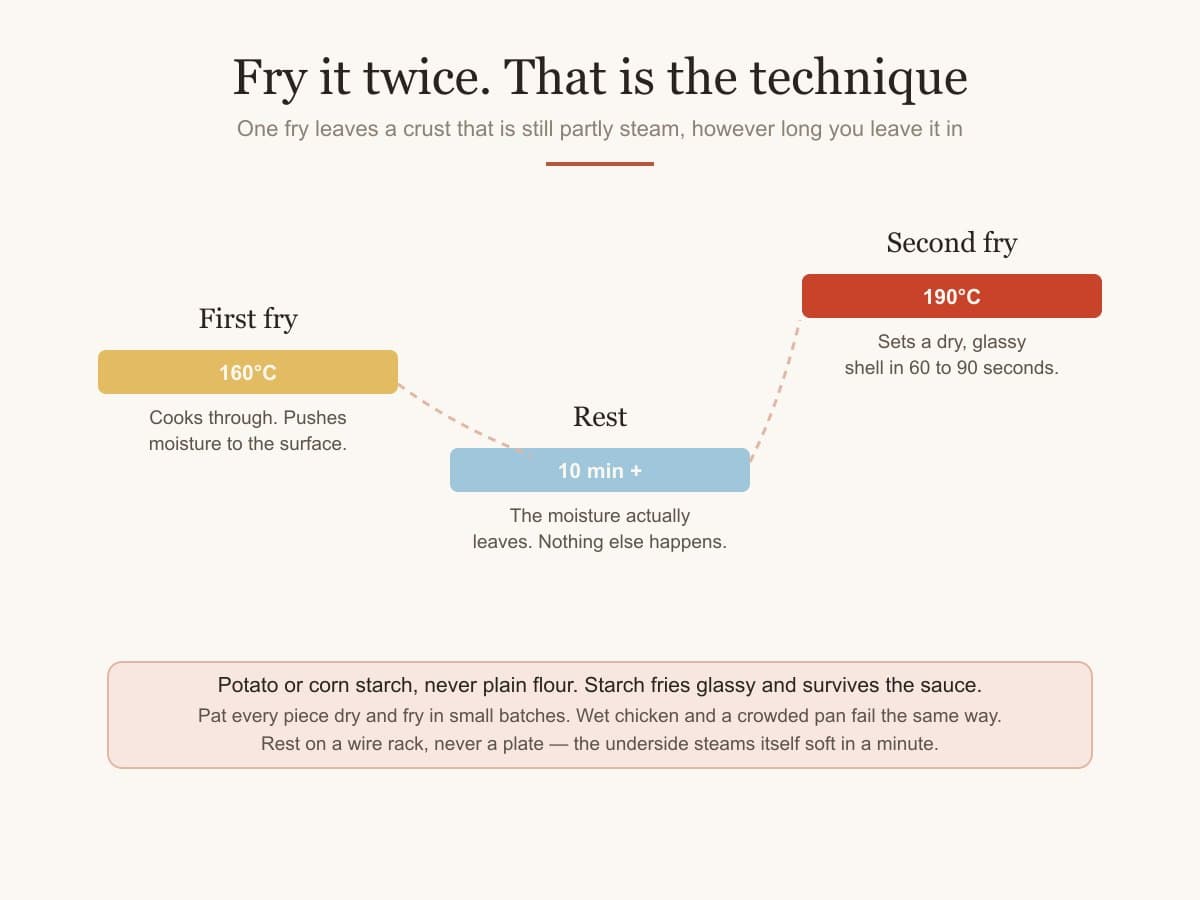
Soft Korean fried chicken is nearly always a missing second fry, a wet surface or the wrong starch. The four things that decide the crust.
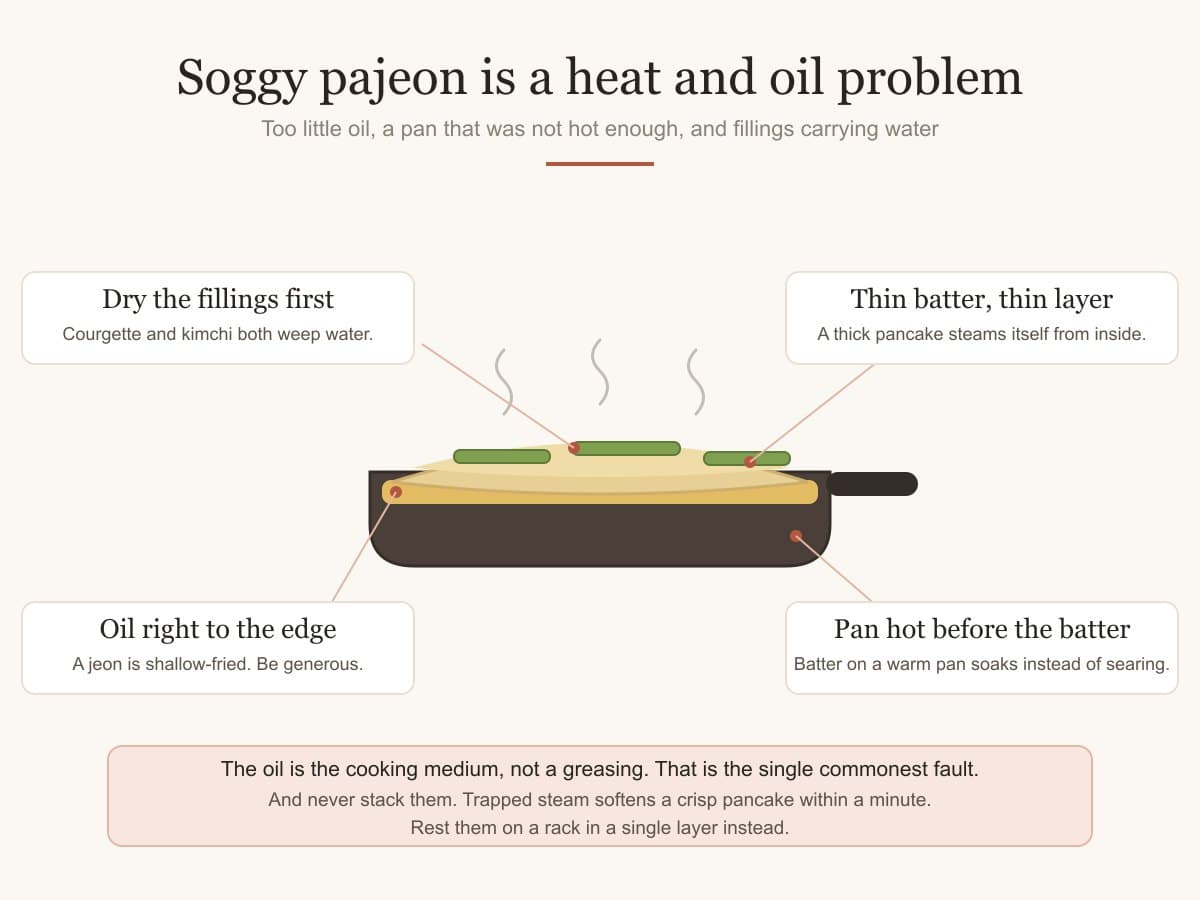
Why Is My Pajeon Soggy?
Soggy Korean pancake comes down to oil, batter temperature and wet fillings. The three fixes, and why stacking them undoes all of it.