Steps
- 1
Soak the trotters in cold water for 2 to 3 hours, changing the water twice, to draw out blood.
- 2
Bring a large pot of water to the boil, add the trotters and the coffee or doenjang water, and boil hard for 10 minutes. Drain and rinse every piece under cold water, scrubbing off any scum.
- 3
Return the trotters to a clean pot with the soy sauce, soju, sugar, onion, garlic, ginger, spring onion, chillies, peppercorns and bay. Add water to cover by about 3 cm.
- 4
Bring to the boil, then drop to a bare simmer, cover, and cook 2 to 2.5 hours. Turn the trotters every 30 minutes so they colour evenly.
- 5
The meat is ready when a skewer slides through the thickest part with no resistance and the skin is glossy and yielding.
- 6
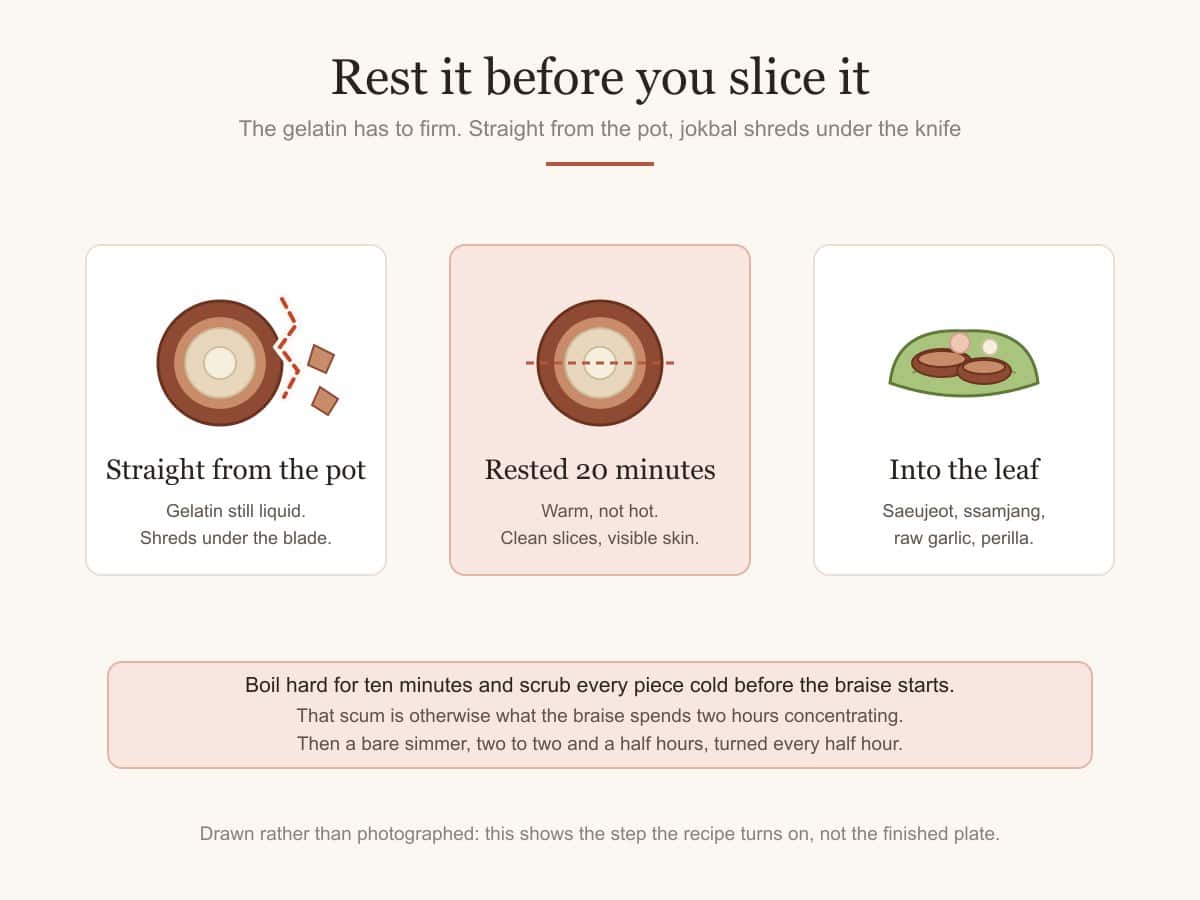
Lift the trotters out and rest them 20 minutes, until they are warm rather than hot — hot jokbal shreds when you slice it.
- 7
Reduce the braising liquid over high heat until it coats a spoon, and brush it over the meat.
- 8
Slice off the bone in thin pieces and serve with lettuce, perilla, saeujeot and ssamjang.
Did you know — Korean culture
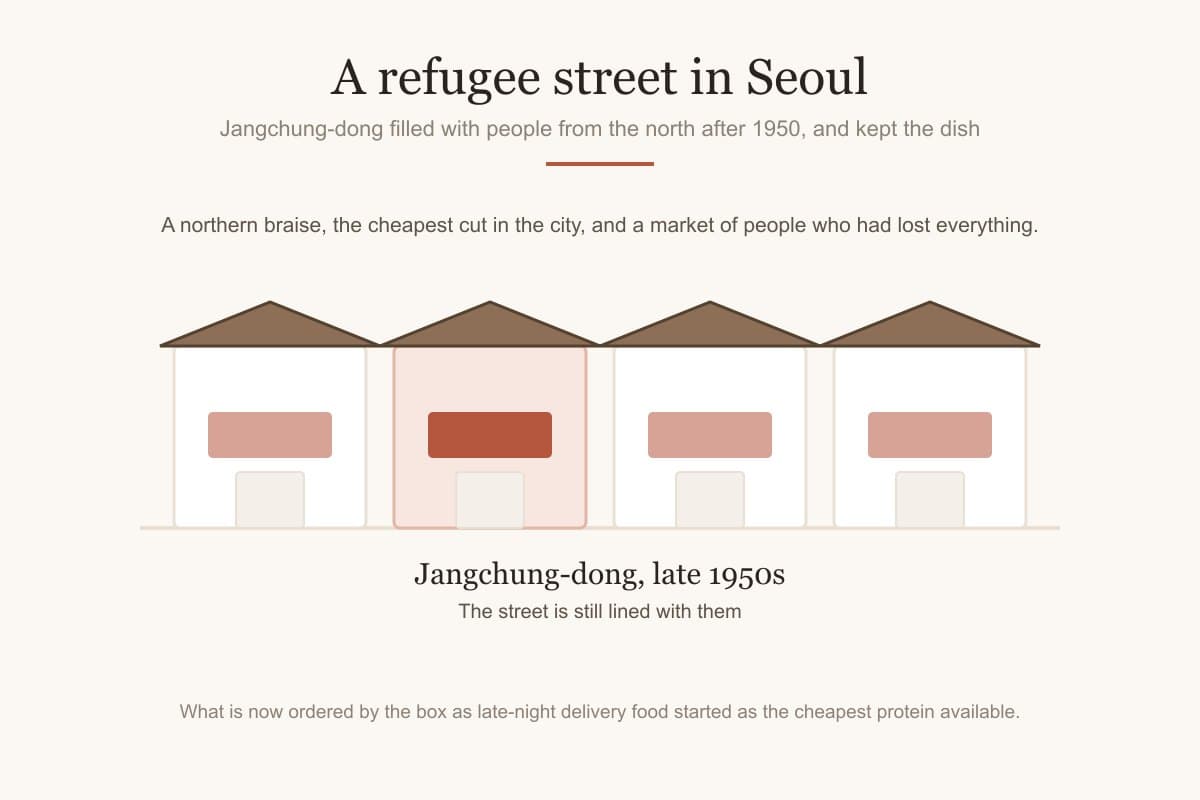
Seoul's jokbal street exists because of the Korean War. Jangchung-dong filled with refugees from the north after 1950, and the dish they brought with them — a soy-braised trotter closer to the Pyongyang style than anything southern — found a market among people who could not afford better cuts. The first shops opened there in the late 1950s, and the street is still lined with them. What is now ordered by the box as late-night delivery food started as the cheapest protein in the city.
Jokbal is a braise, not a roast, and almost everything about it follows from that. The collagen in a trotter needs hours of gentle liquid to turn from rubber into something that melts, and no amount of heat shortens it.
It is also one of the few Korean dishes deliberately served cool rather than hot, and that is a technique rather than an accident.
Why it is served cool
A trotter straight out of the pot is too soft to slice. The gelatin is still liquid, the meat shreds under the knife, and the slices fall apart on the plate.
Rest it twenty minutes and the gelatin firms, so you get clean slices with a visible band of skin and fat. Jokbal shops rest theirs for longer and slice to order.
This is why jokbal is delivery food in Korea. It travels well because it was never meant to arrive hot.
The first boil is not optional
The ten-minute hard boil and rinse before the braise is what separates good jokbal from one that tastes faintly of pig.
Boil, drain, and scrub each piece under cold running water. The scum that comes off is exactly what would otherwise end up in your braising liquid.
The instant coffee is a shop trick and a real one: it darkens the skin and its bitterness covers the last of the smell. A cup of water whisked with a spoon of doenjang does the same job more traditionally.
The aromatics do the heavy lifting
A soy braise this long will flatten out without a serious spice load. Whole garlic, a lot of ginger, spring onion, peppercorn, bay and dried chilli, plus soju for the alcohol.
Use jin ganjang, not soup soy sauce. A cup of guk ganjang in this pot would be inedible.
Some shops add cinnamon or liquorice root. Both work; both are assertive, so start with less than you think.
How it is eaten
In leaves, like bossam. A piece of jokbal, a dab of saeujeot, a smear of ssamjang, a slice of raw garlic, wrapped in lettuce and perilla.
The standard accompaniments are a sharp radish salad and dongchimi or another watery kimchi, both there to cut the fat.
Leftovers set solid in the fridge, which is correct. Bring them back to room temperature rather than reheating — microwaved jokbal turns greasy.
Common questions
How long does jokbal take to cook?
Two to two and a half hours at a bare simmer after the initial cleaning boil, plus a twenty-minute rest. The collagen will not break down faster at higher heat; it only toughens.
Why is jokbal served cold?
Cool rather than cold, and because the gelatin needs to firm up. Straight from the pot the meat shreds under the knife; rested, it slices cleanly with a visible band of skin.
Do I really need to boil and rinse the trotters first?
Yes. The ten-minute hard boil and the cold scrub remove the scum and most of the smell. Skipping it leaves both in the braising liquid, and the braise concentrates them.
What is the coffee for?
Darkening the skin and covering the last of the pork smell. It is a shop trick rather than a traditional one; a cup of water whisked with doenjang does the same job.
More to cook
All Meat & BBQ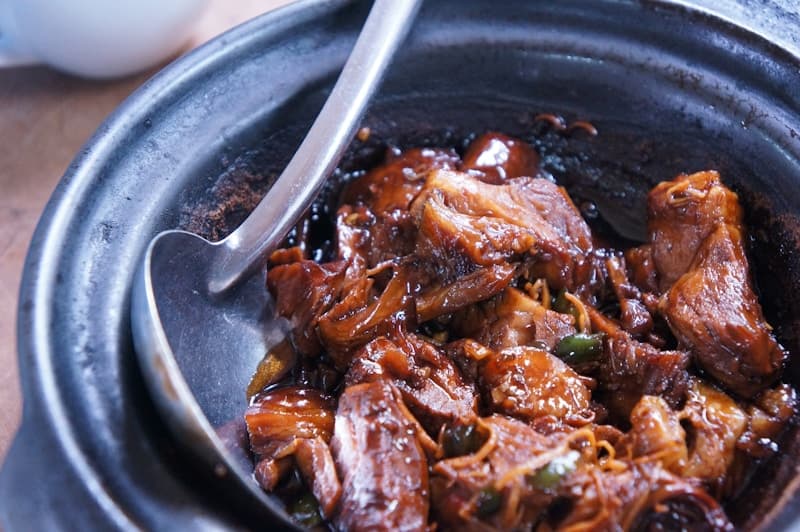
Kalbi Jjim (Braised Short Ribs)
The soaking and simmering technique that turns tough short ribs tender and glossy, plus why the braising liquid needs a second reduction.
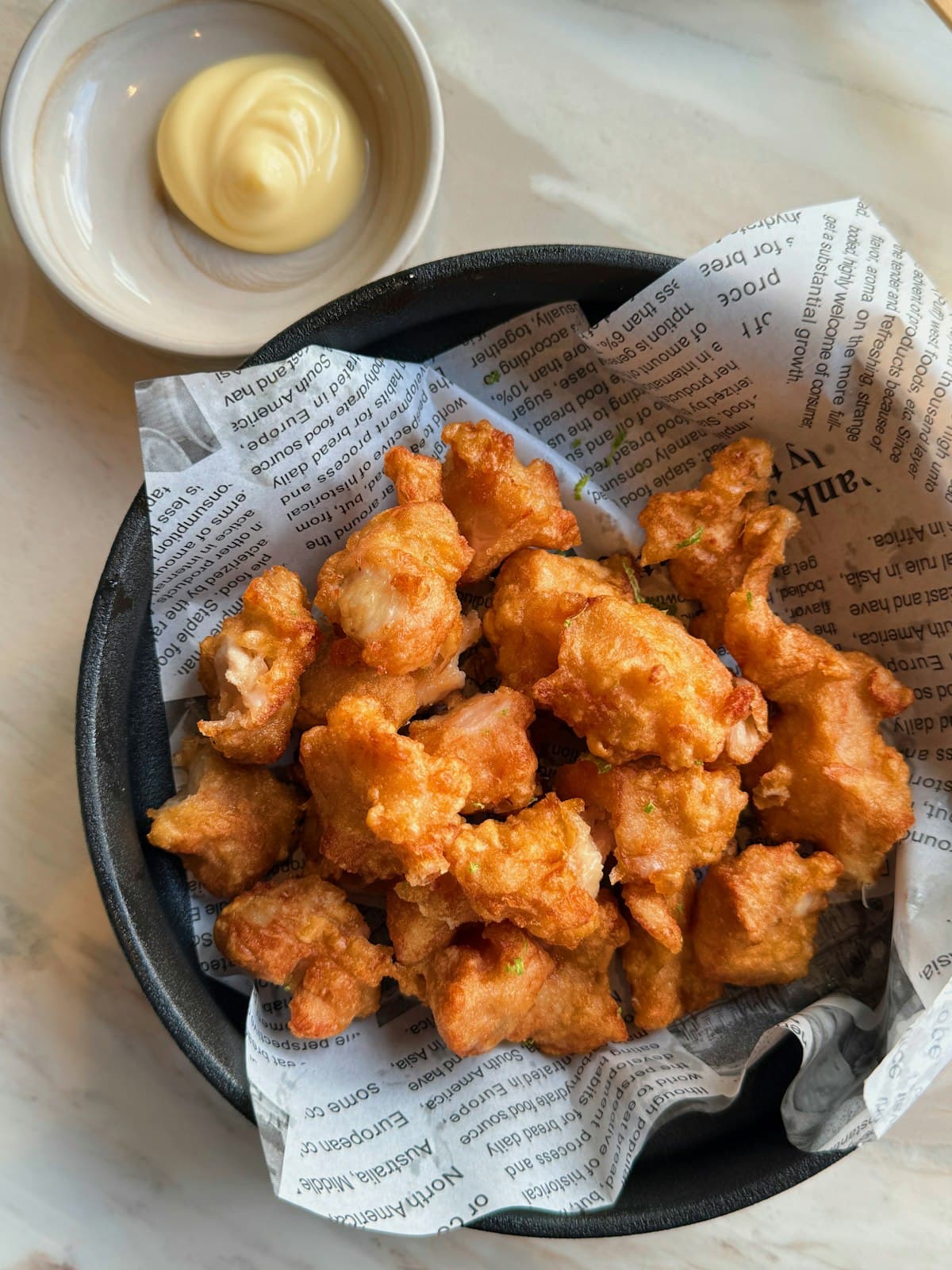
Korean Fried Chicken (Yangnyeom Chicken)
The double-fry technique that makes Korean fried chicken stay crispy under sauce, plus the sweet-spicy yangnyeom glaze most home versions get wrong.
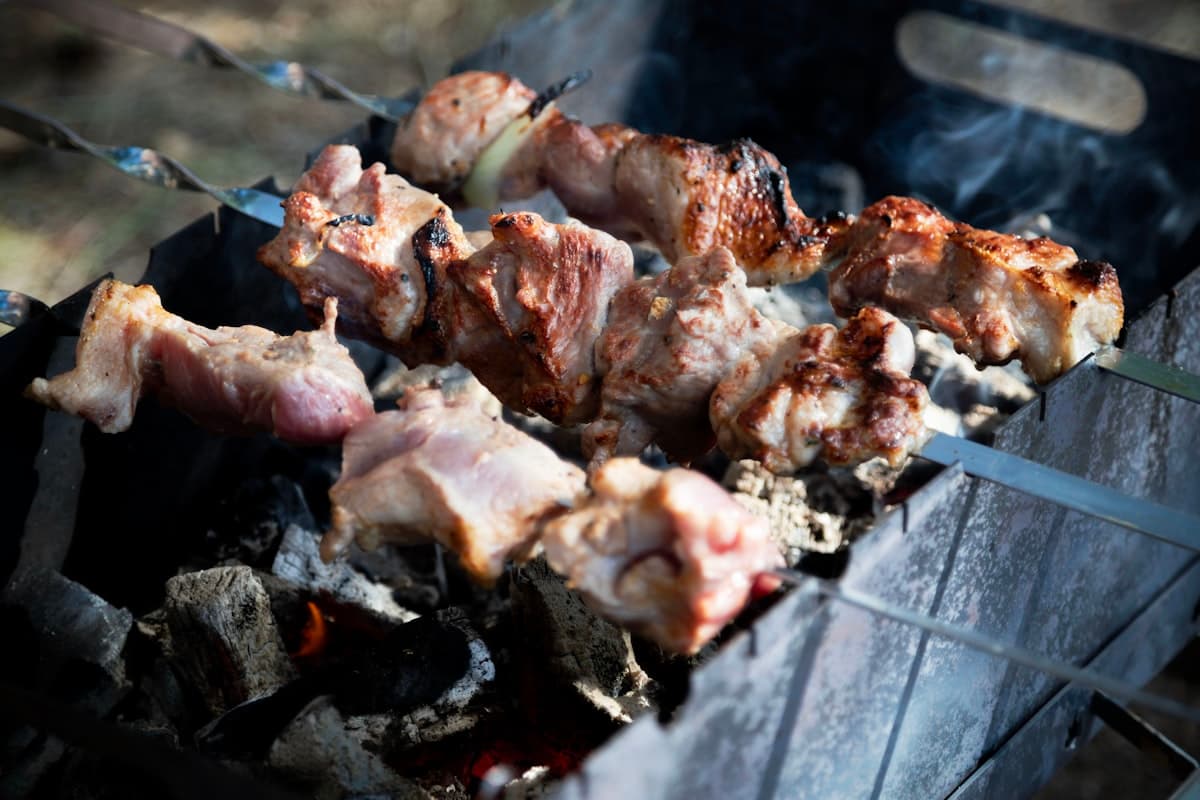
Maekjeok (Skewered Marinated Pork)
The soy-and-garlic marinade behind maekjeok, one of the oldest named dishes in Korean history, and the skewer technique that keeps it from drying out.