Did you know — Korean culture
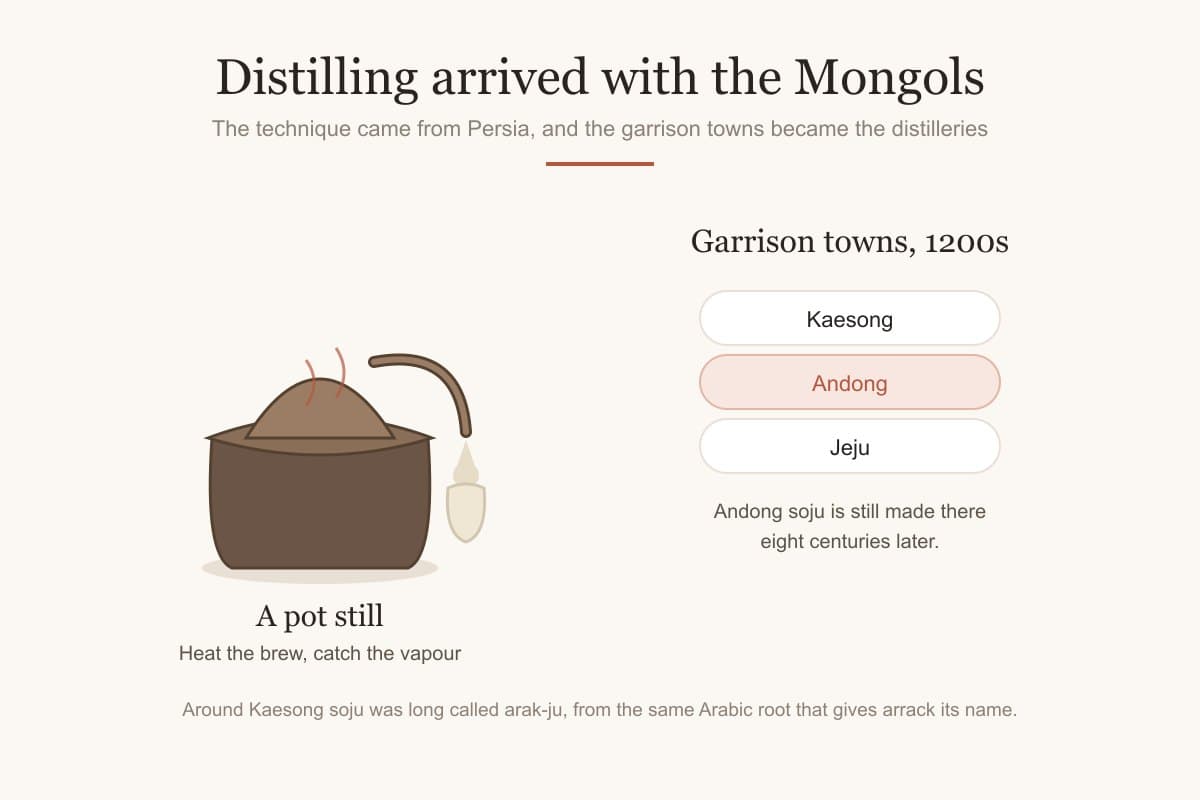
Distilling reached Korea with the Mongols. The technique travelled from Persia through the Mongol empire and arrived during the thirteenth-century invasions, and the cities where the Mongol army kept garrisons — Kaesong, Andong, Jeju — became the places soju was made. Andong soju is still produced there today, and in parts of the Kaesong region soju was long called *arak-ju*, from the same Arabic root that gives arrack its name.
Both are clear, both come in a small bottle, both get poured for you by someone else. They are made by completely different processes and behave differently in a glass and in a pan.
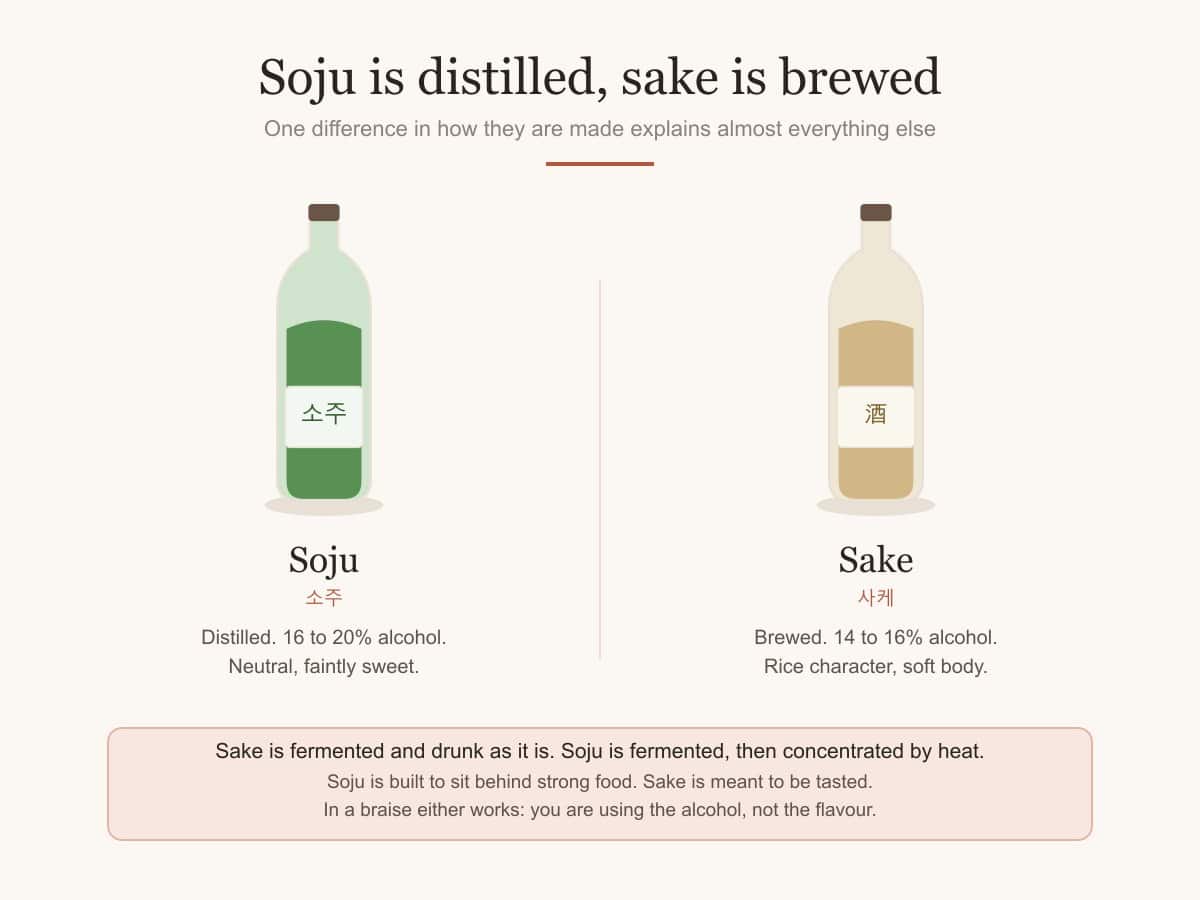
The short version: soju is distilled, sake is brewed. That single difference explains almost everything else about them.
Distilled against brewed
Sake is brewed, like beer: rice is converted by koji mould and fermented, and what you drink is the fermented liquid itself. It lands around 14–16% alcohol.
Soju is distilled, like vodka: the fermented base is heated and the vapour collected, concentrating it, then usually diluted back down. Mass-market green-bottle soju sits around 16–20%, traditional distilled soju considerably higher.
Modern cheap soju is often made from tapioca or sweet potato starch rather than rice, which is why it tastes cleaner and flatter than traditional versions.
How they taste
Sake carries the character of the brew — rice, sometimes fruit or banana notes, a soft body. It is meant to be tasted.
Soju is mostly neutral with a faint sweetness, usually from added sweetener. It is built to disappear behind food rather than compete with it, which is exactly why it suits grilled meat and heavy stews.
Flavoured soju — peach, grape, yoghurt — is a recent and now very large category, usually lower in alcohol.
At the table
Soju goes with food, and specifically with strong food: samgyeopsal, bossam, budae jjigae. The pairing with fried chicken has its own name, chimaek, though that one is beer.
Pouring etiquette matters more than the drink. You do not pour your own; you hold the bottle with two hands for someone older, and turn away slightly when drinking in front of them.
Somaek is soju mixed into beer, and is a standard order rather than a novelty.
Cooking with either
In Korean cooking, a splash of soju goes into braises and poaching liquid to carry off the smell of pork or fish — the bossam pot is the usual example.
Sake substitutes acceptably there, as does dry sherry or plain rice wine. You are using the alcohol, not the flavour.
Where a recipe wants sweetness as well, it means mirin rather than either of these.
Common questions
Is soju stronger than sake?
Usually, yes. Mass-market soju runs 16–20% against sake's 14–16%, and traditional distilled soju is considerably stronger. Soju is distilled, sake is brewed, which is the root of the difference.
Can I use sake instead of soju in cooking?
Yes. In a braise or poaching liquid you are using the alcohol to carry off strong smells, and sake, dry sherry or plain rice wine all do that job.
Is soju made from rice?
Traditionally yes, but most inexpensive modern soju is made from tapioca, sweet potato or other starches and then diluted and sweetened. Traditional rice soju is sold as a premium product.
What do Koreans drink soju with?
Food, almost always — grilled pork, stews, fried chicken. It is built to sit behind strong flavours rather than be tasted on its own, which is why it is rarely drunk without something to eat.
More to cook
All Ingredient & Substitute Guides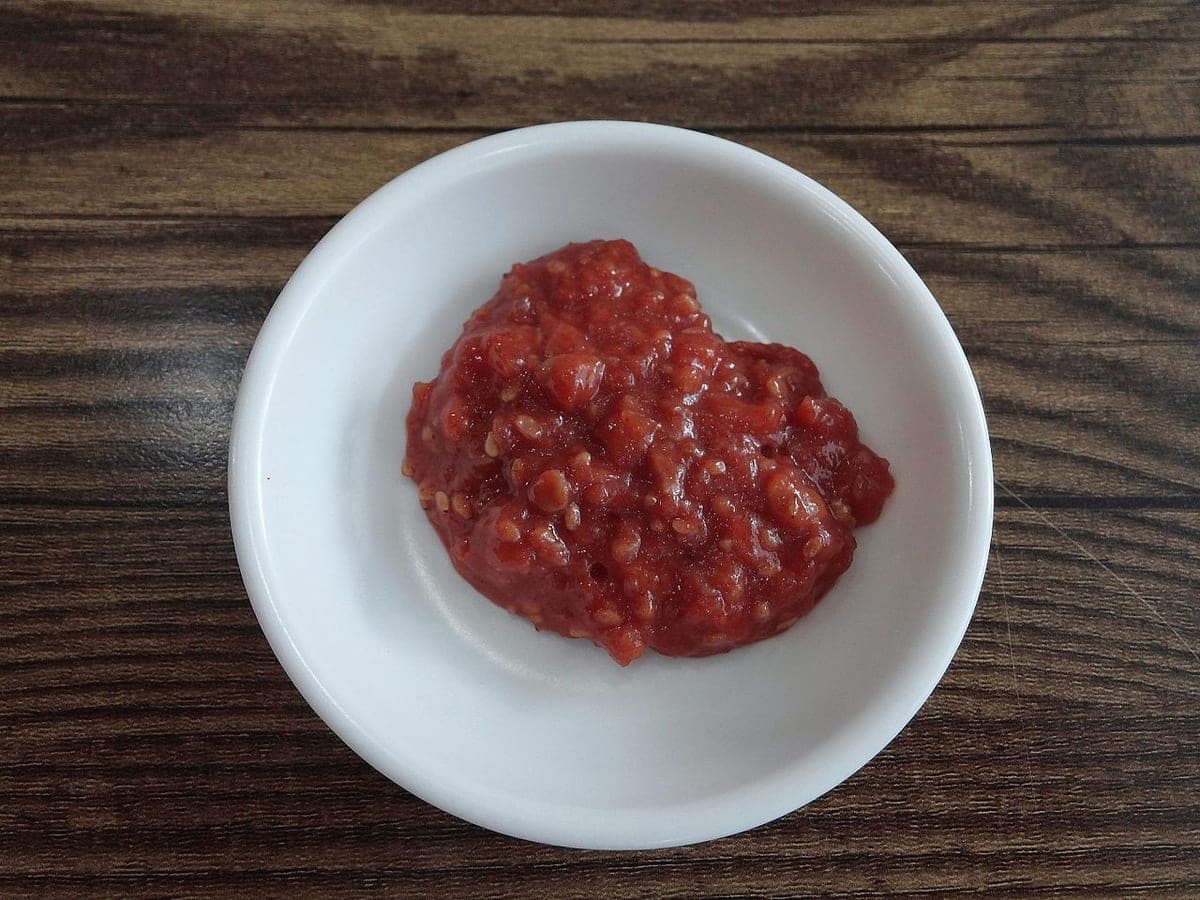
Ssamjang (Korean Wrap Sauce)
What ssamjang is made from, why it's a blend rather than a single paste, and how to use it in lettuce wraps without drowning out the meat it's meant to balance.

Ssukgat (Crown Daisy)
Why crown daisy goes into a Korean stew in the last thirty seconds rather than the last five minutes, and what to use if you can't find it.
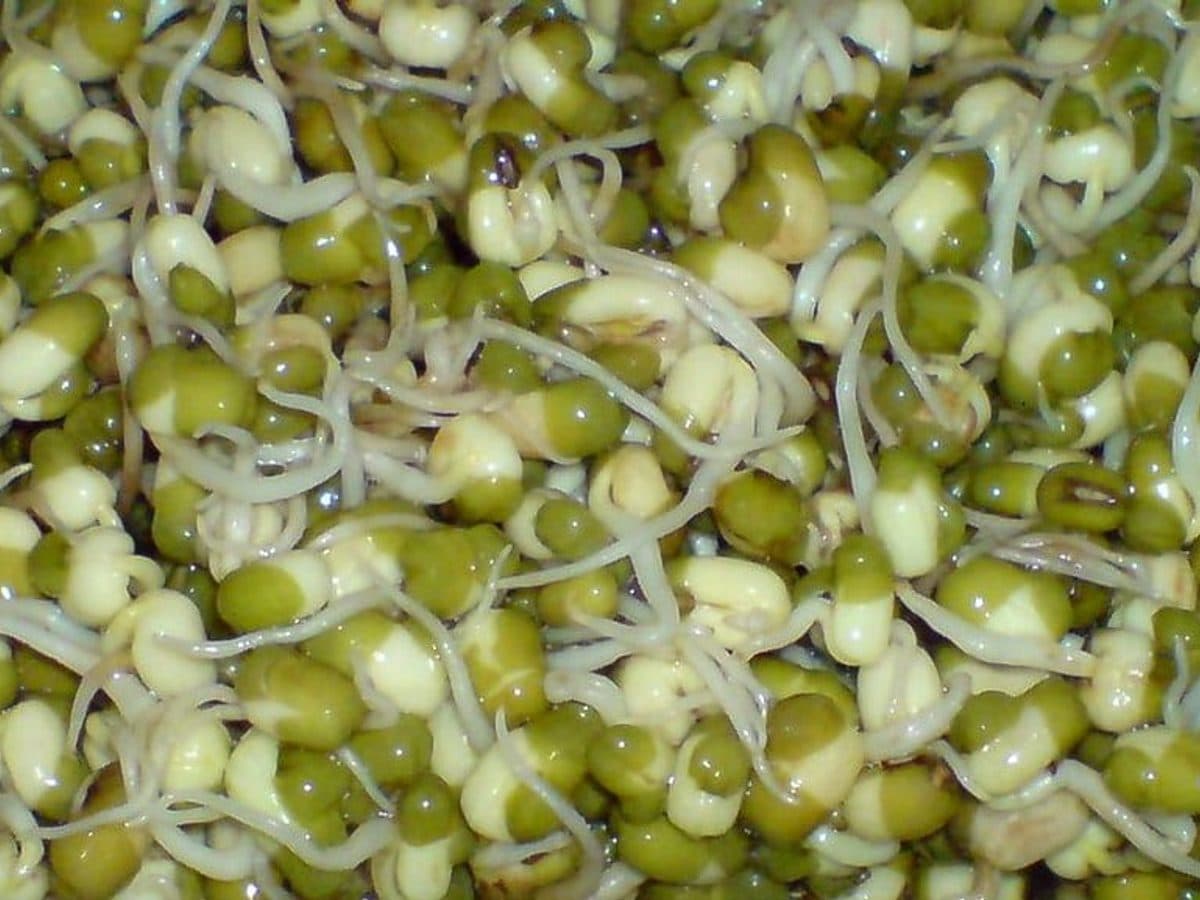
Sukju vs Kongnamul (Bean Sprouts)
Why Korean cooking uses two different bean sprouts, which dishes need which, and why only one of them can survive a long simmer.