Did you know — Korean culture
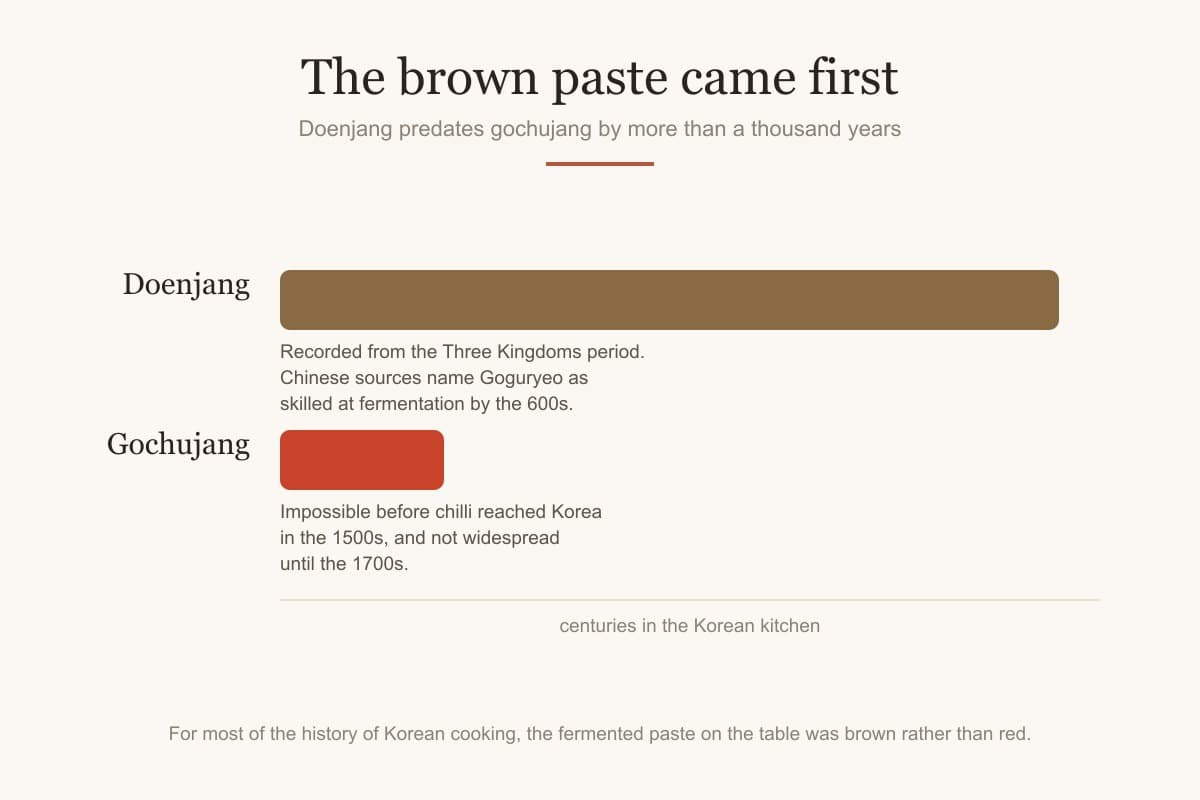
Doenjang predates gochujang by well over a thousand years. Fermented soybean paste is recorded in Korea from the Three Kingdoms period, and Chinese sources describe Goguryeo as skilled at fermentation as early as the seventh century. Gochujang could not exist until chilli arrived in the sixteenth. So for most of the history of Korean cooking, the fermented paste on the table was brown rather than red, and the dishes built around it — jjigae, ssam, namul seasoning — are the older layer of the cuisine.
Miso is the standard substitute for doenjang and it is close enough to work in most dishes. It is not identical, and the differences run in a predictable direction.
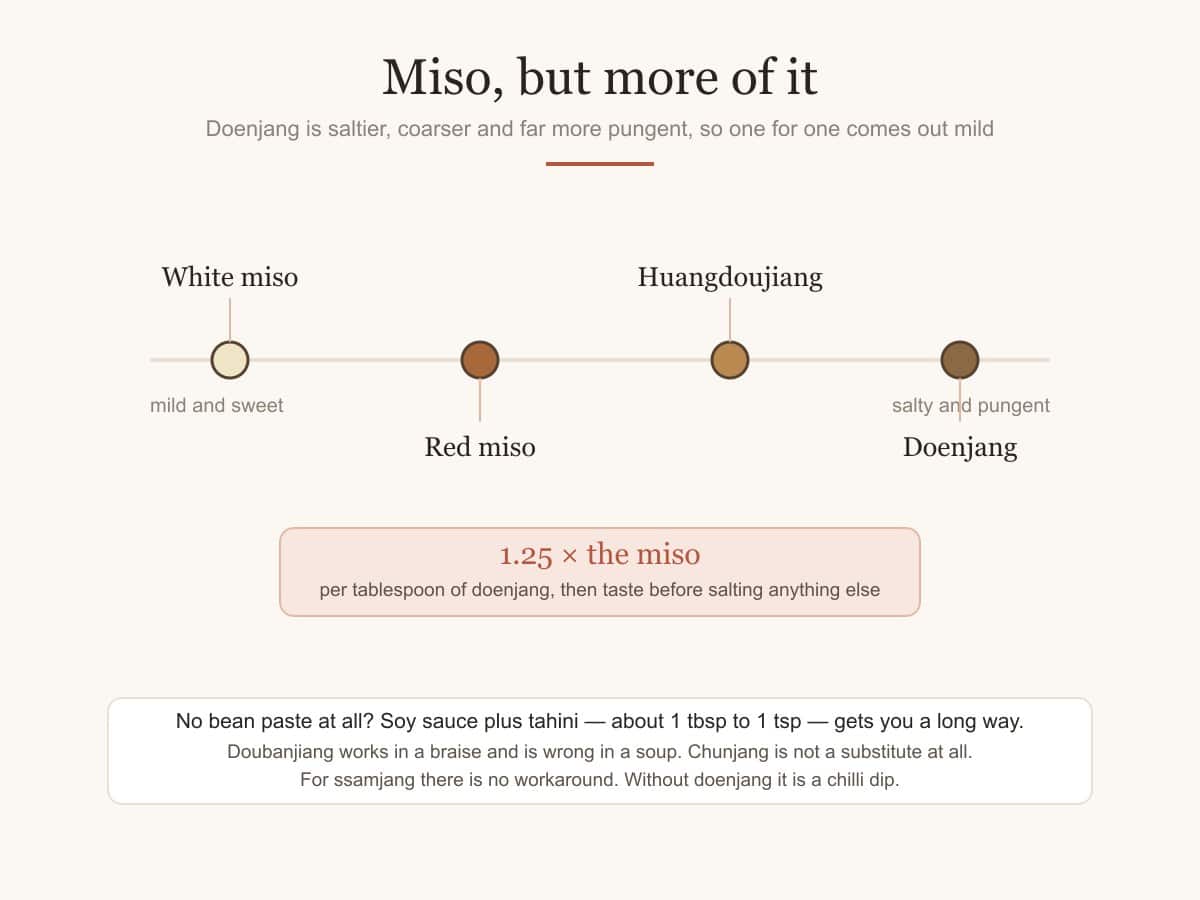
Doenjang is saltier, chunkier and far more pungent. Swap one for one and the dish comes out milder and sweeter than it should.
Miso, and how much
Use about 1.25 times as much miso as the doenjang called for, and taste before adding more salt elsewhere.
Red miso (aka) is the closest — longer fermented, saltier, more assertive. White miso (shiro) is sweet and mild and makes a noticeably different doenjang jjigae.
The texture differs too. Doenjang is coarse, with visible bean fragments; miso is smooth. In a stew this matters less than it looks like it should. Doenjang vs miso covers the full comparison.
Chinese and other bean pastes
Doubanjiang is fermented broad bean rather than soybean, and usually chilli-spiked. It works in a braise and is wrong in a soup — it brings heat the dish did not ask for.
Chunjang, the black bean paste in jjajangmyeon, is not a substitute. Different ferment, different purpose, much darker and sweeter.
Plain Chinese huangdoujiang (yellow soybean paste) is actually the nearest non-Japanese option, and is hard to find outside a Chinese grocer.
When you have neither
For a stew, soy sauce plus tahini gets you a surprising distance: the soy brings the salt and ferment, the sesame paste the body and nuttiness. Roughly 1 tbsp soy to 1 tsp tahini per tablespoon of doenjang.
It will be thinner and will not cloud the broth the way doenjang does.
For ssamjang there is no workaround worth making. The paste is doenjang and gochujang with aromatics, and without the first one it is just a chilli dip.
Buying doenjang instead
It keeps a year or more refrigerated, and most recipes use a tablespoon or two, so a tub outlasts the enthusiasm that bought it.
Look for jaeraesik or traditional doenjang: soybeans, salt, water. The industrial kind lists wheat flour and ferments for weeks rather than months, and is the usual reason a jjigae comes out bitter.
It darkens and sharpens in the fridge over time, which is not spoilage. A two-year-old tub makes a better stew than a new one.
Common questions
Can I use miso instead of doenjang?
Yes, with about 1.25 times as much, because doenjang is saltier. Red miso is closest; white miso is sweet and mild and gives a noticeably different stew.
What is the difference between doenjang and miso?
Doenjang is saltier, coarser and much more pungent, with visible bean fragments. Most miso is smoother, milder and sweeter, and some is made with rice or barley koji rather than soybean alone.
Is doubanjiang a doenjang substitute?
In a braise, at a push. It is fermented broad bean and usually chilli-spiked, so it brings heat a doenjang soup does not want.
What can I use if I have no bean paste at all?
Soy sauce plus tahini — about 1 tbsp soy to 1 tsp tahini per tablespoon of doenjang. It gets the salt, ferment and body, but will not cloud a broth the way doenjang does.
More to cook
All Ingredient & Substitute Guides
Doenjang vs Miso
Both are fermented soybean paste, and swapping one for the other changes a dish more than people expect. What separates them, and when the substitution works.
Fish Sauce vs Saeujeot
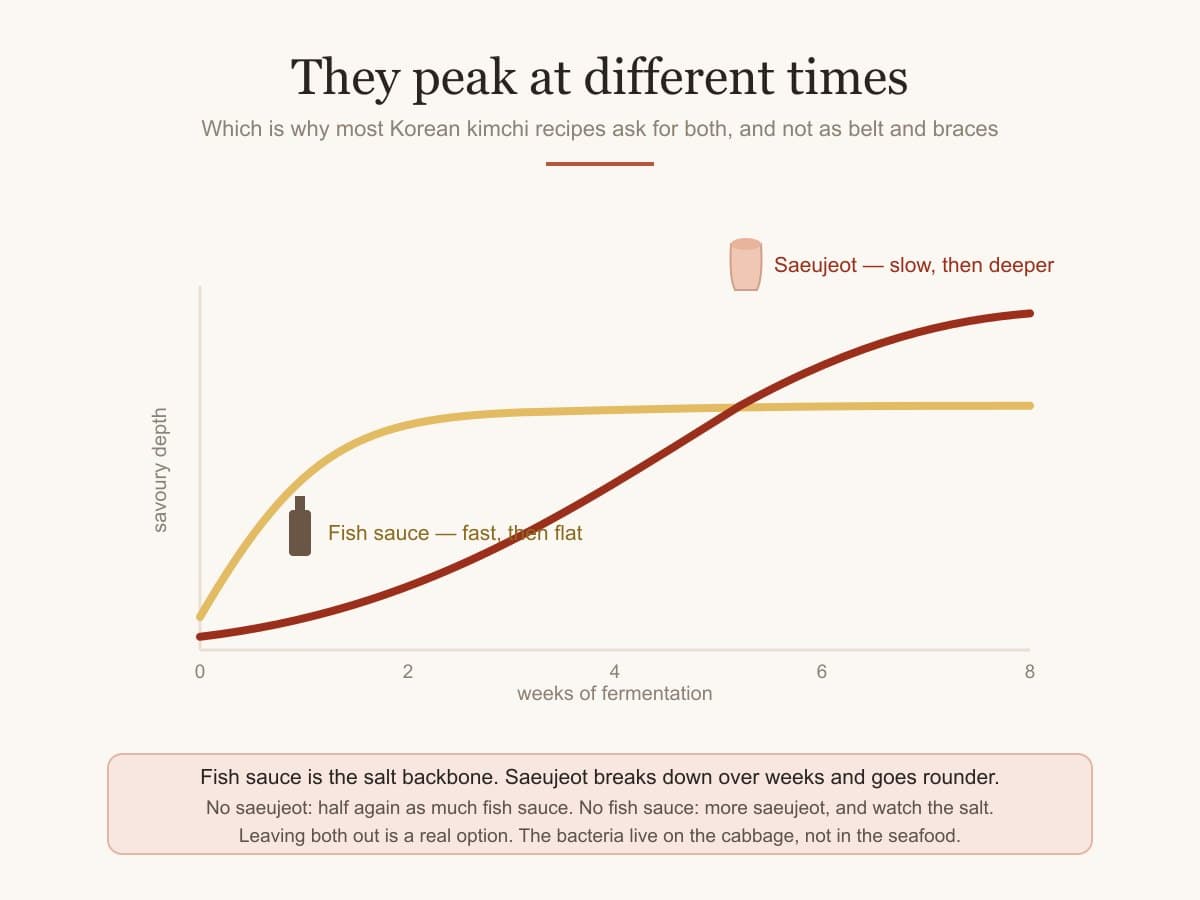
Korean kimchi often uses both, and they do different jobs. What each contributes, how to substitute, and what changes if you leave them out.
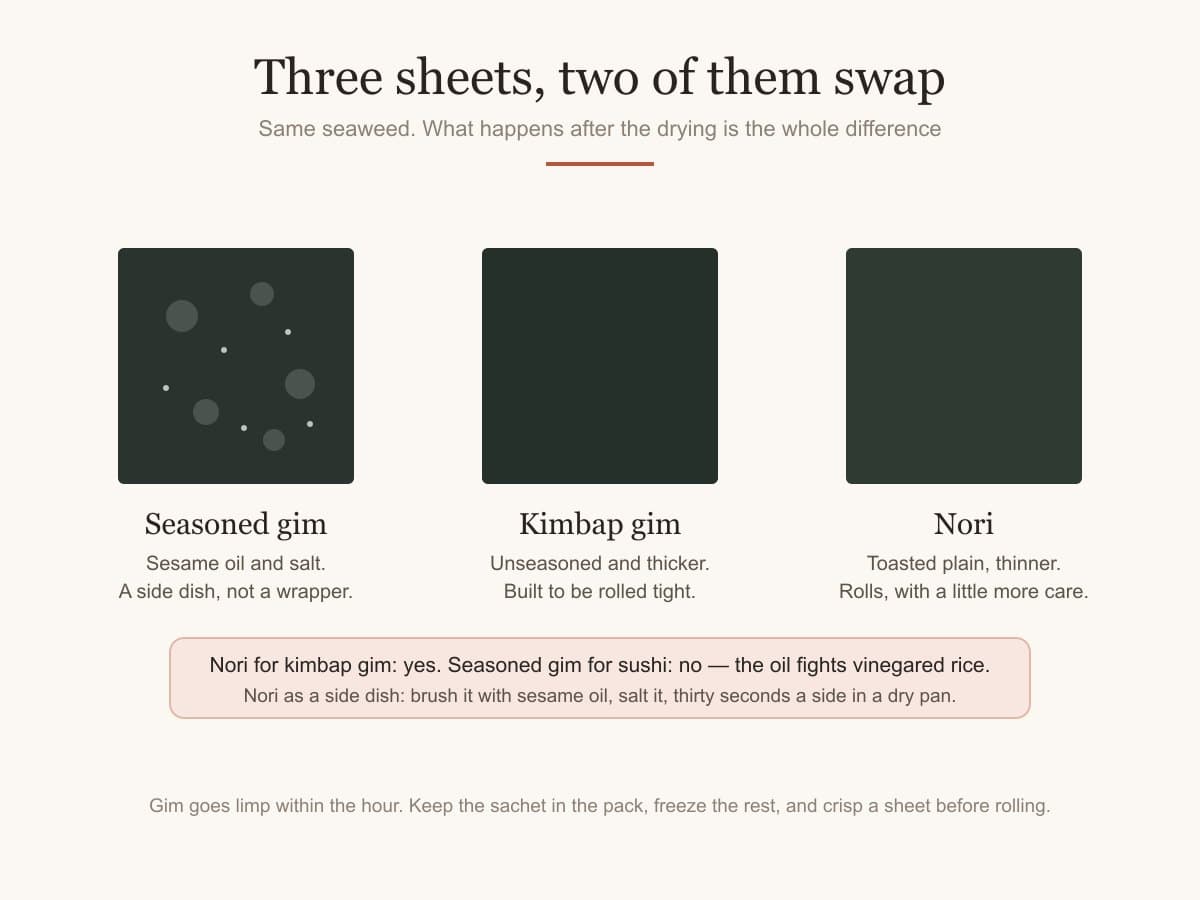
Gim vs Nori
Korean gim and Japanese nori are the same seaweed treated differently. Oil and salt, thickness, and which one a recipe actually wants.