Did you know — Korean culture
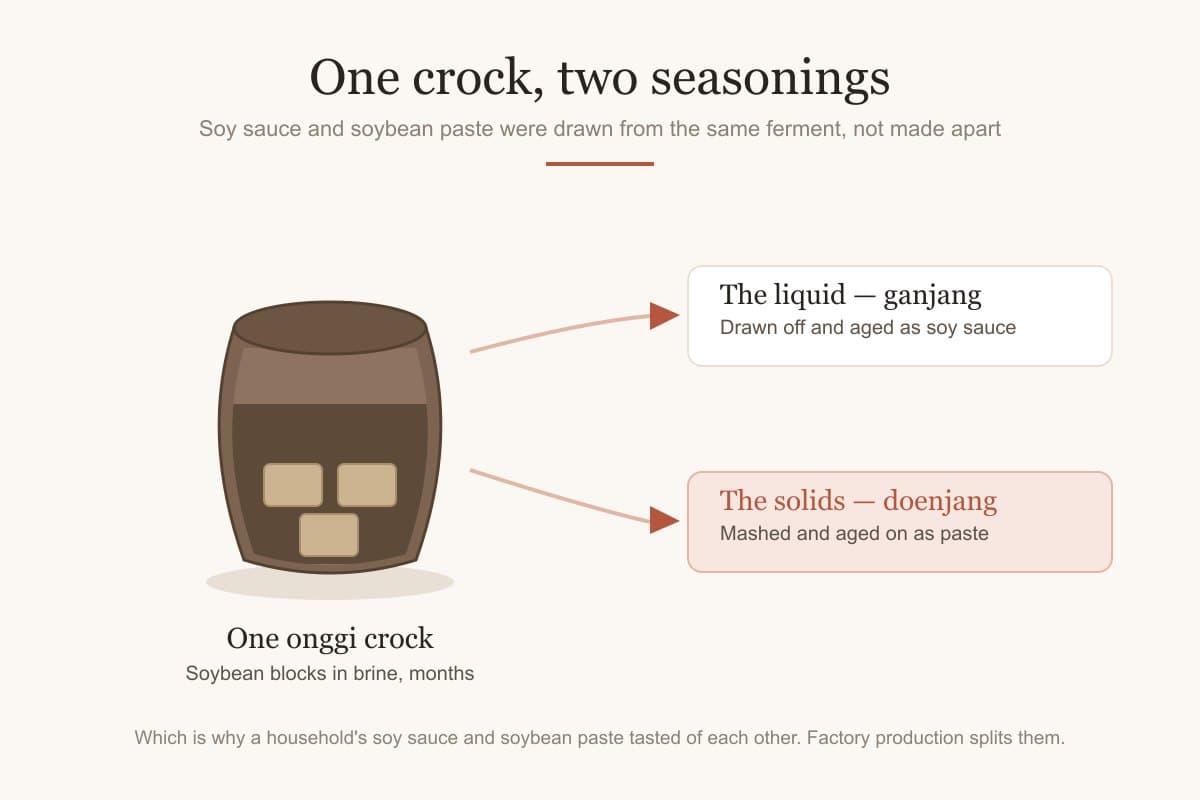
Doenjang and Korean soy sauce were traditionally the same batch. Blocks of fermented soybean were submerged in brine in an onggi crock for months; the liquid drawn off became ganjang, and the solids left behind were mashed and aged on as doenjang. The two were never separate recipes, which is why a household's soy sauce and soybean paste tasted of each other. Modern factory production splits them, and that is one reason the two no longer sit together on the tongue the way they once did.
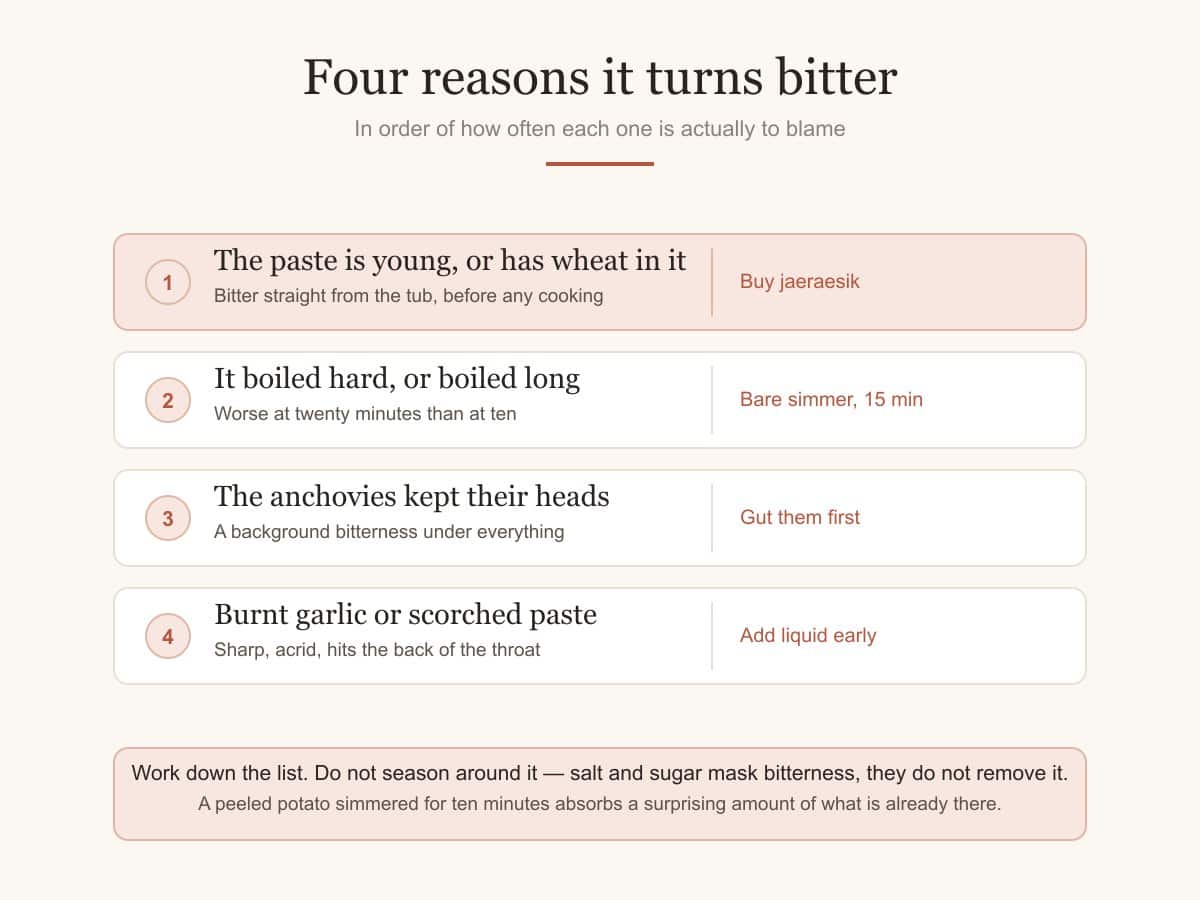
Bitter doenjang jjigae is one of the few Korean faults with a short list of suspects. It is nearly always the paste, the boil, the anchovies or burnt aromatics — in that order of likelihood.
Work down the list rather than adjusting the seasoning. Salt and sugar mask bitterness; they do not remove it.
Your doenjang is young, or it is not doenjang
The commonest cause is the paste itself. Mass-market doenjang made with added wheat and a short ferment carries a raw, bitter edge that longer-aged paste does not.
Look at the label. Traditional jaeraesik doenjang lists soybeans, salt and water, and little else. The industrial kind lists wheat flour and sometimes alcohol.
If what you have is bitter straight from the tub, no amount of simmering improves it. Buy a better paste and the problem disappears in one shop.
You boiled it hard, or boiled it long
Doenjang is a living ferment and it does not like a rolling boil. Hard boiling drives off the aroma compounds and leaves the bitter ones behind, which is why a jjigae tastes worse at twenty minutes than at ten.
Build the stock first — anchovy and kelp — then stir the paste in and hold it at a bare simmer.
Twelve to fifteen minutes from the moment the paste goes in is plenty. Everything else should already be cooked by then.
The anchovies kept their heads
Dried anchovy guts and heads are bitter, and in a long simmer that bitterness goes straight into the broth.
Pull the heads and the black innards out before the anchovies go in. For stock anchovies larger than about 5 cm this is not optional.
And take the kelp out after ten minutes. Dasima left to boil turns slick and faintly bitter — the stock page covers the timing.
Burnt garlic, scorched paste
If you fry the paste or the garlic before adding liquid, a few seconds too long is enough. Burnt garlic is bitter at a level nothing in the pot can cover.
Soften aromatics over medium heat and add liquid while they are still pale.
Rescuing a pot that is already bitter: a peeled potato simmered in it for ten minutes absorbs a surprising amount, and a spoonful of gochujang or a little maesil cheong rebalances the rest. Neither fixes a bad paste.
Common questions
Why does my doenjang jjigae taste bitter and not savoury?
Most often the paste. Short-fermented doenjang with added wheat carries a raw bitterness that no cooking removes. After that: too hard a boil, unprepared anchovies, or burnt garlic.
Can I fix bitter doenjang jjigae?
Partly. A peeled potato simmered in the pot for ten minutes absorbs some of it, and a spoonful of gochujang or a little maesil cheong rebalances the rest. A bad paste cannot be rescued this way.
How long should doenjang jjigae simmer?
Twelve to fifteen minutes after the paste goes in, at a bare simmer. Build the stock first and have everything else nearly cooked; a hard, long boil is what turns it bitter.
Do I need to clean dried anchovies first?
For anything larger than about 5 cm, yes. The head and the black innards are bitter and a long simmer pulls that straight into the broth. Take the kelp out after ten minutes too.
More to cook
All Ingredient & Substitute Guides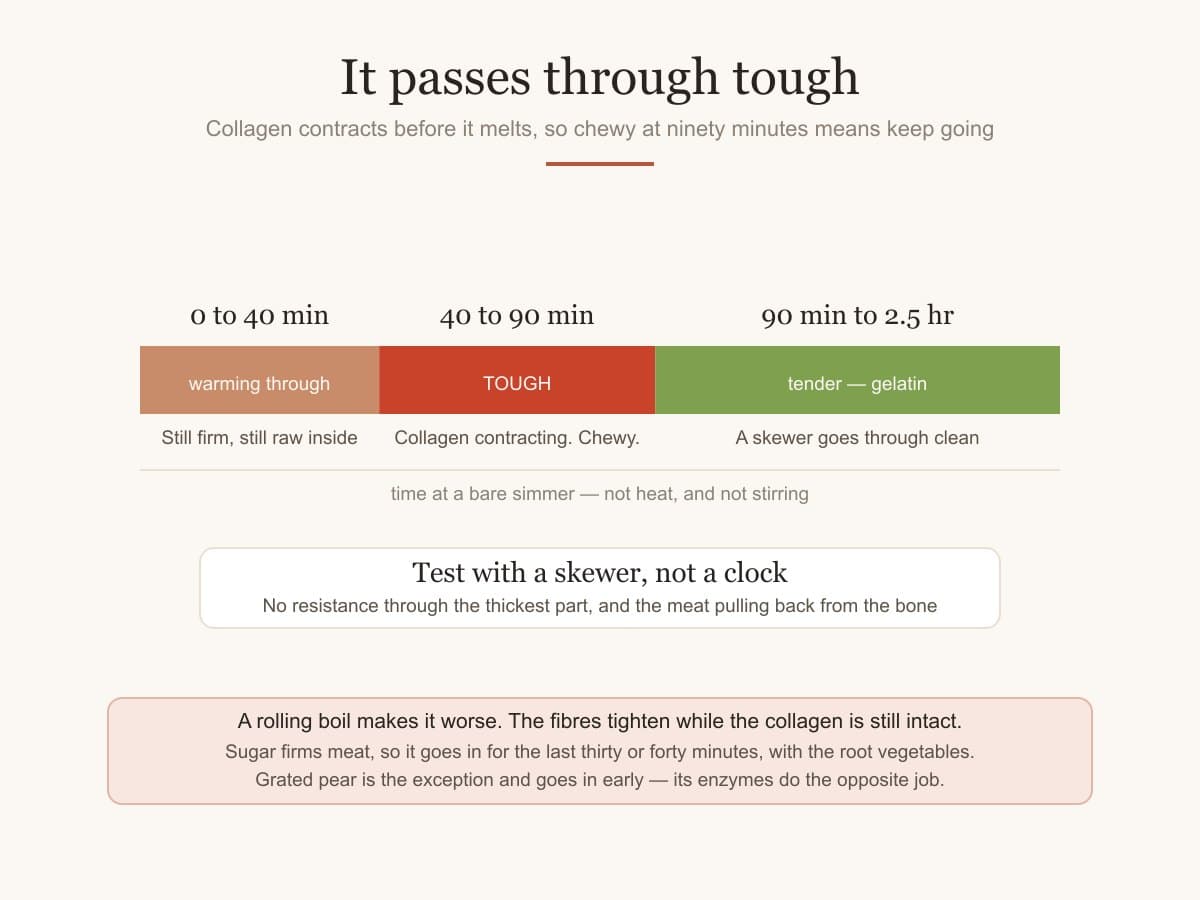
Why Is My Galbijjim Tough?
Tough braised short rib is almost always undercooked, not overcooked. The collagen window, the parboil, and why the sugar goes in late.
Why Is My Gyeranjjim Watery?
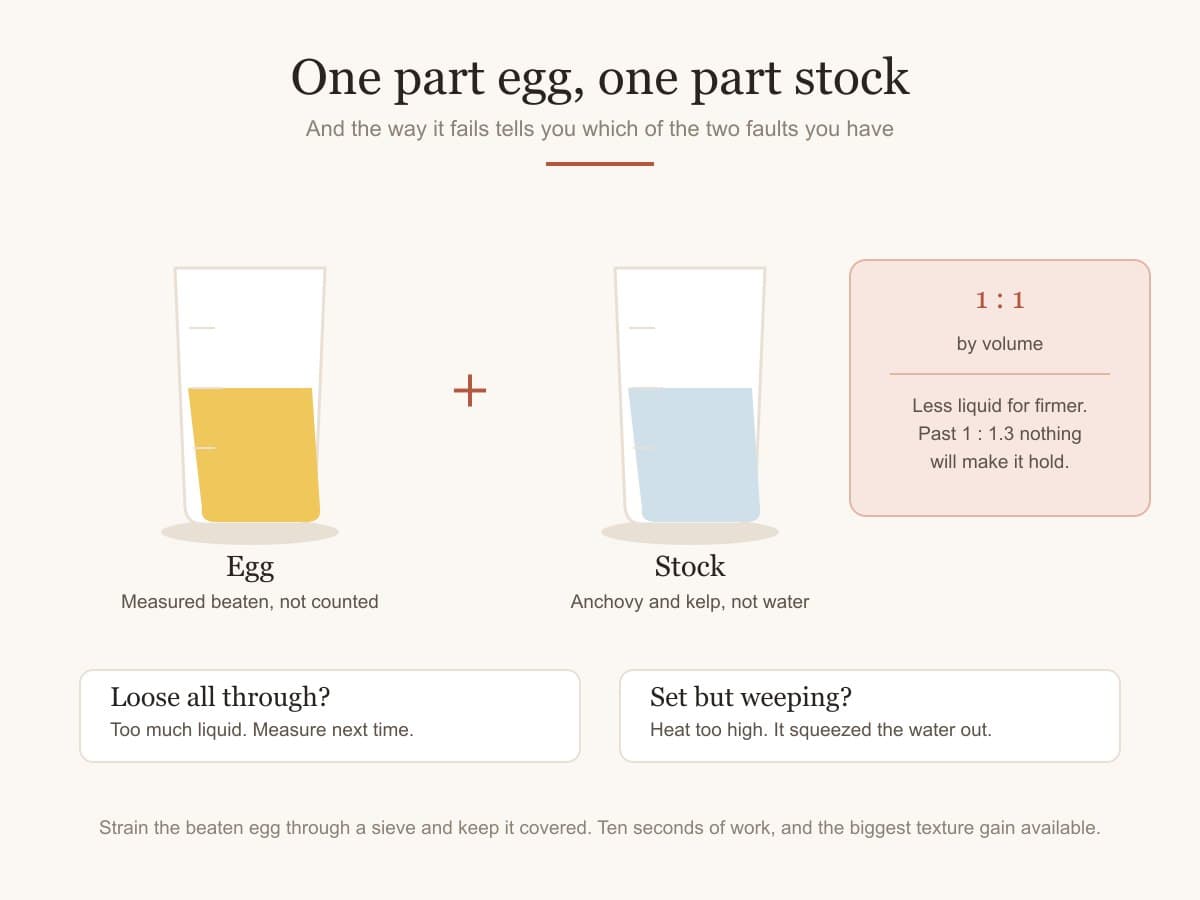
Watery or weeping steamed egg comes down to the liquid ratio and the heat. The numbers that work, and how to tell which one went wrong.
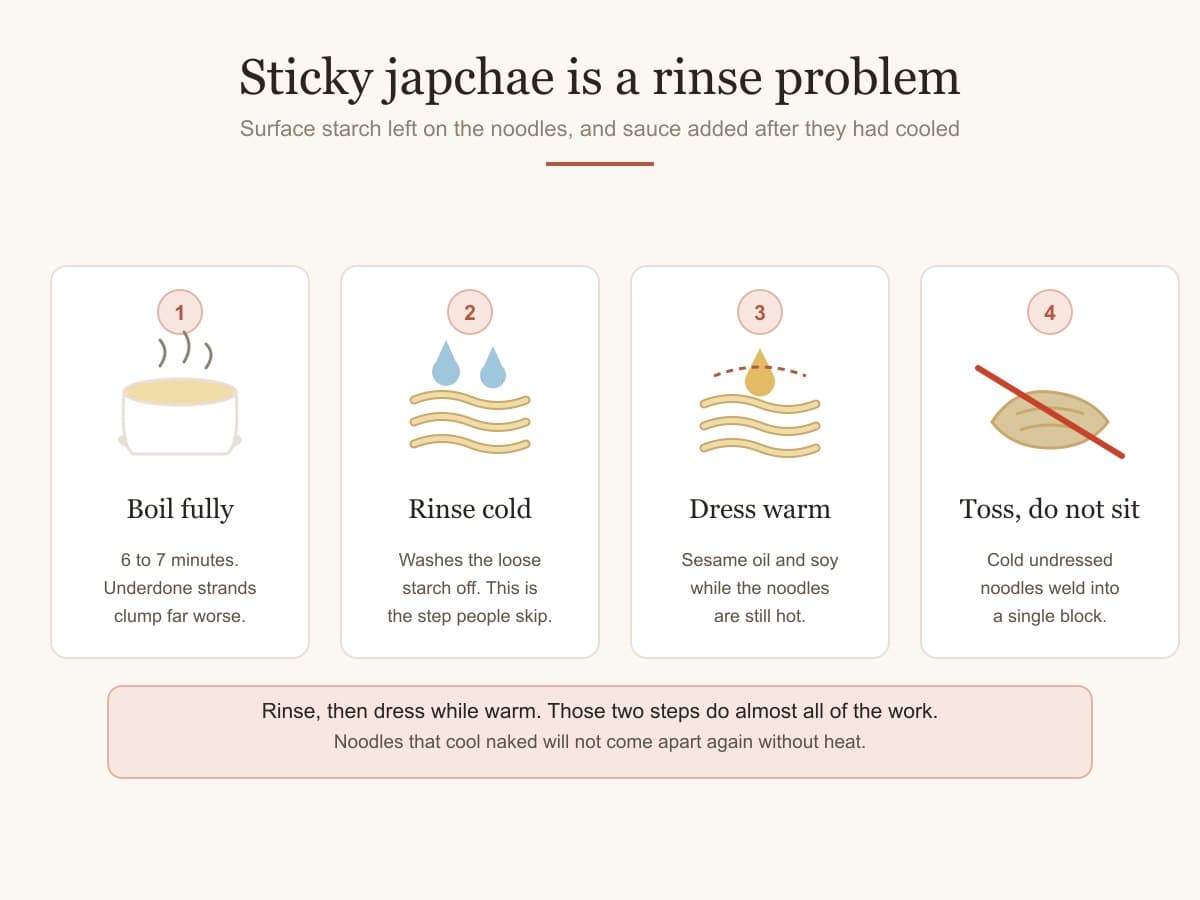
Why Is My Japchae Sticky?
Clumped japchae comes from the rinse and the timing, not the sauce. How to keep dangmyeon separate and springy from pan to plate.