Did you know — Korean culture
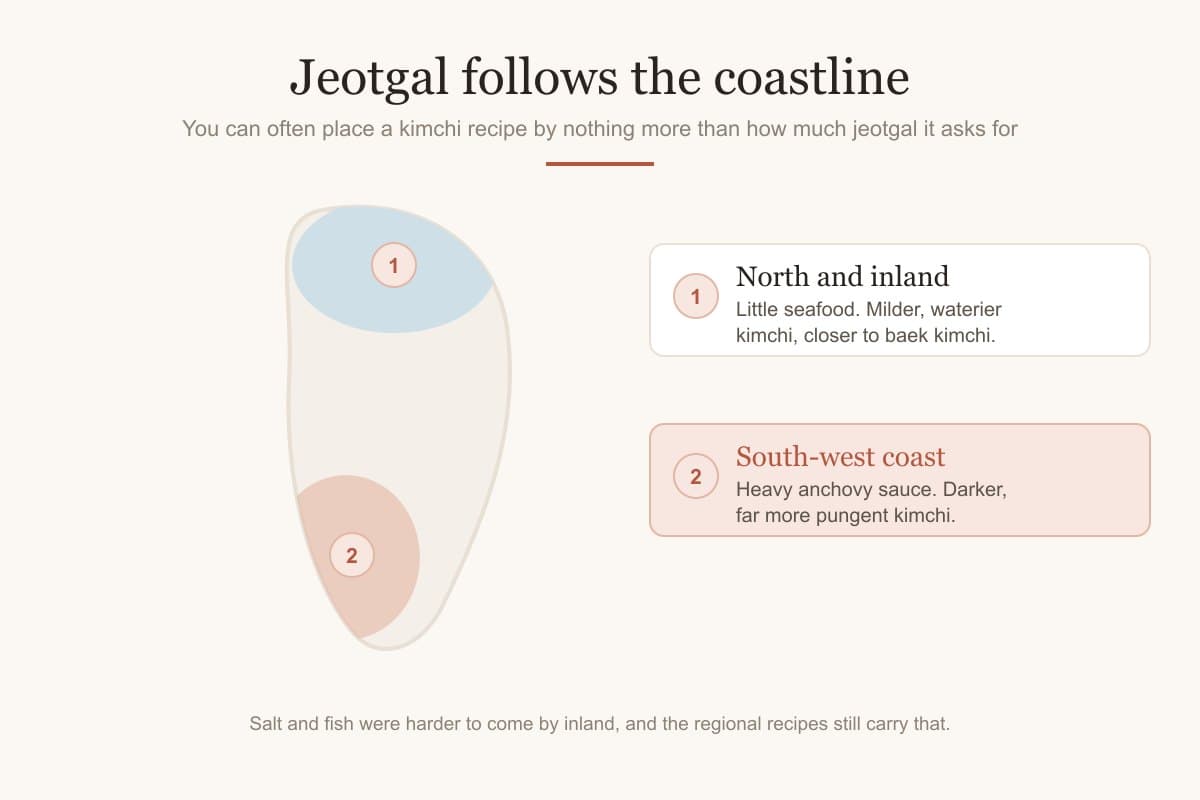
Which jeotgal goes into kimchi is regional, and the map follows the coastline. Coastal provinces in the south-west lean on heavily fermented anchovy sauce and produce kimchi that is darker and more pungent. Northern and inland regions historically used far less seafood and made milder, waterier kimchi — closer to baek kimchi — partly because salt and fish were harder to come by. You can often place a kimchi recipe geographically by nothing more than how much jeotgal it asks for.
Most kimchi recipes list both, which makes it look like belt and braces. It is not — they contribute different things, and dropping either changes the result in a different direction.
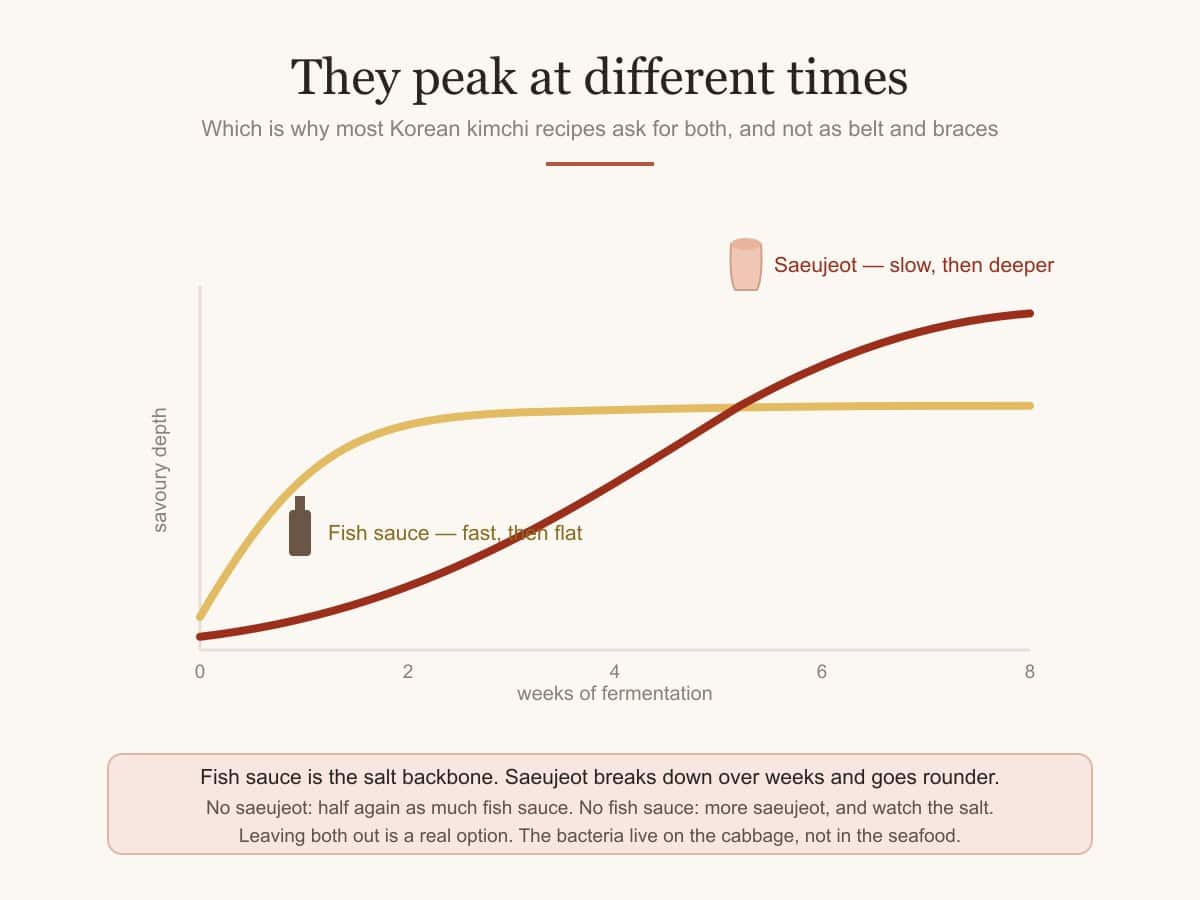
Fish sauce brings salt and a thin savoury depth. Saeujeot brings funk, body and a slower-building umami.
What each one is
Fish sauce (aekjeot) is anchovy or sand lance, salted and fermented until it liquefies, then strained. Korean anchovy sauce is generally heavier and less sweet than Southeast Asian fish sauces.
Saeujeot is tiny salted shrimp, fermented whole and sold as a wet, chunky paste. You can see the shrimp. It is saltier than it tastes and far funkier than fish sauce in the jar, though milder in the finished kimchi.
What each one does in the jar
Fish sauce dissolves straight into the paste and distributes evenly. It is the salt backbone and gives an immediate savouriness.
Saeujeot works more slowly. The shrimp break down over the weeks of fermentation, and what they release is rounder and deeper than fish sauce manages. Kimchi made with saeujeot tastes better at two months than at two weeks; kimchi made with fish sauce alone changes less.
Using both is the normal Korean approach, and the reason is that they peak at different times.
Substituting one for the other
No saeujeot: increase the fish sauce by roughly half as much again. The kimchi will be good and slightly flatter at the long end.
No fish sauce: more saeujeot plus a little extra salt. Watch the salt, because saeujeot is saltier than it tastes — see why is my kimchi too salty.
Neither: this is a real option and not a lesser one. The bacteria that ferment kimchi live on the cabbage, not in the seafood, so a vegan batch ferments on exactly the same timeline. Replace with a spoonful of miso or soy and a piece of dried kelp simmered into the rice porridge.
Buying and keeping them
Fish sauce keeps a year or more in a cupboard. Korean brands are usually labelled myeolchi aekjeot (anchovy) or kkanari aekjeot (sand lance); the second is lighter.
Saeujeot lives in the fridge and keeps for months. It is sold in small tubs, often in the chilled section. Pink-grey and wet is correct; dry or browned means old.
Saeujeot is also the traditional dip for bossam, which is the easiest way to use up a tub.
Common questions
Do I need both fish sauce and saeujeot for kimchi?
Not strictly, but they peak at different times — fish sauce gives immediate savouriness, saeujeot deepens over weeks of fermentation. Using both is the normal Korean approach for that reason.
Can I make kimchi without fish sauce or shrimp?
Yes, and it ferments identically. The bacteria live on the cabbage, not in the seafood. Replace them with miso or soy plus a piece of dried kelp in the rice porridge.
Is saeujeot very salty?
Saltier than it tastes, which catches people out. If you increase the saeujeot to replace fish sauce, reduce the salt elsewhere or the batch may refuse to ferment.
What else is saeujeot used for?
It is the traditional dip for bossam, and it seasons soups and steamed egg. A tub lasts months in the fridge, so it is worth buying even if kimchi is the only reason you started.
More to cook
All Ingredient & Substitute Guides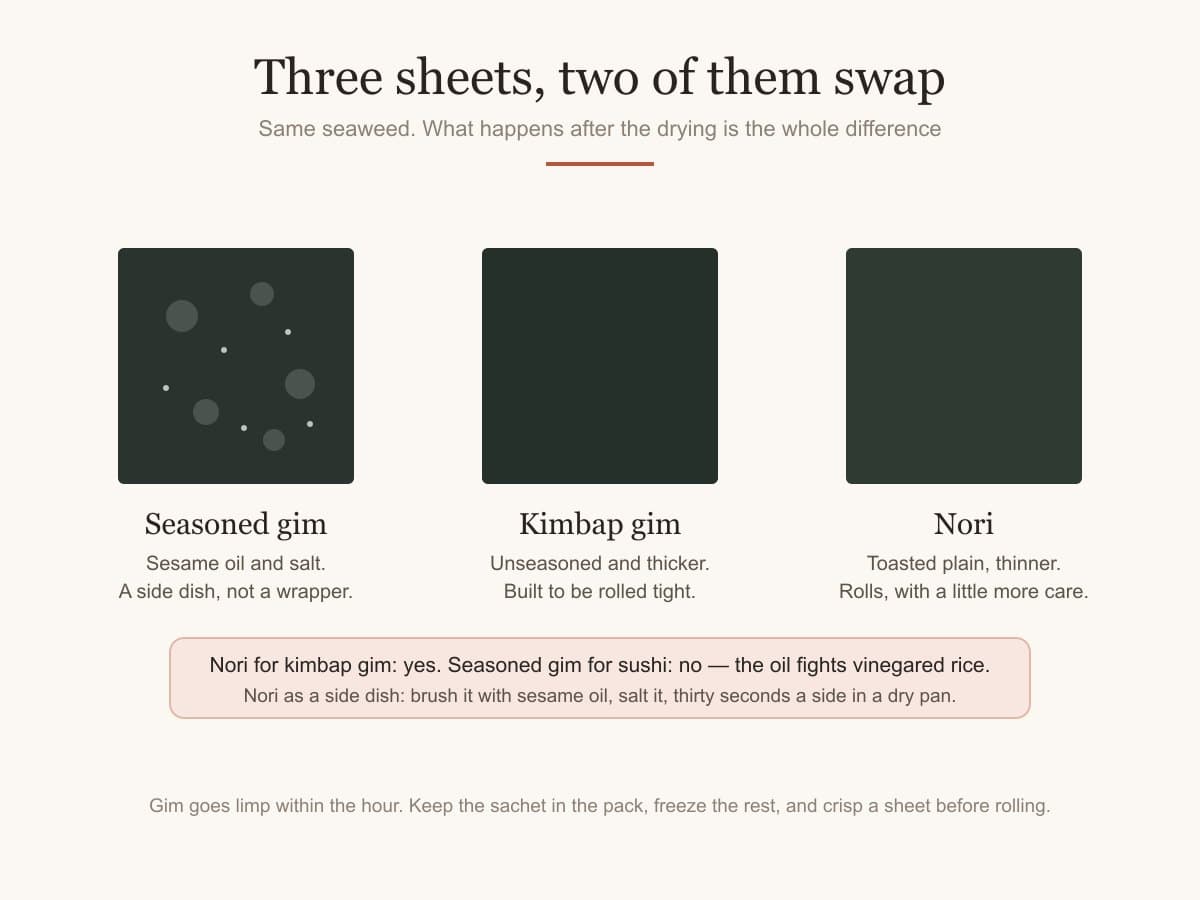
Gim vs Nori
Korean gim and Japanese nori are the same seaweed treated differently. Oil and salt, thickness, and which one a recipe actually wants.
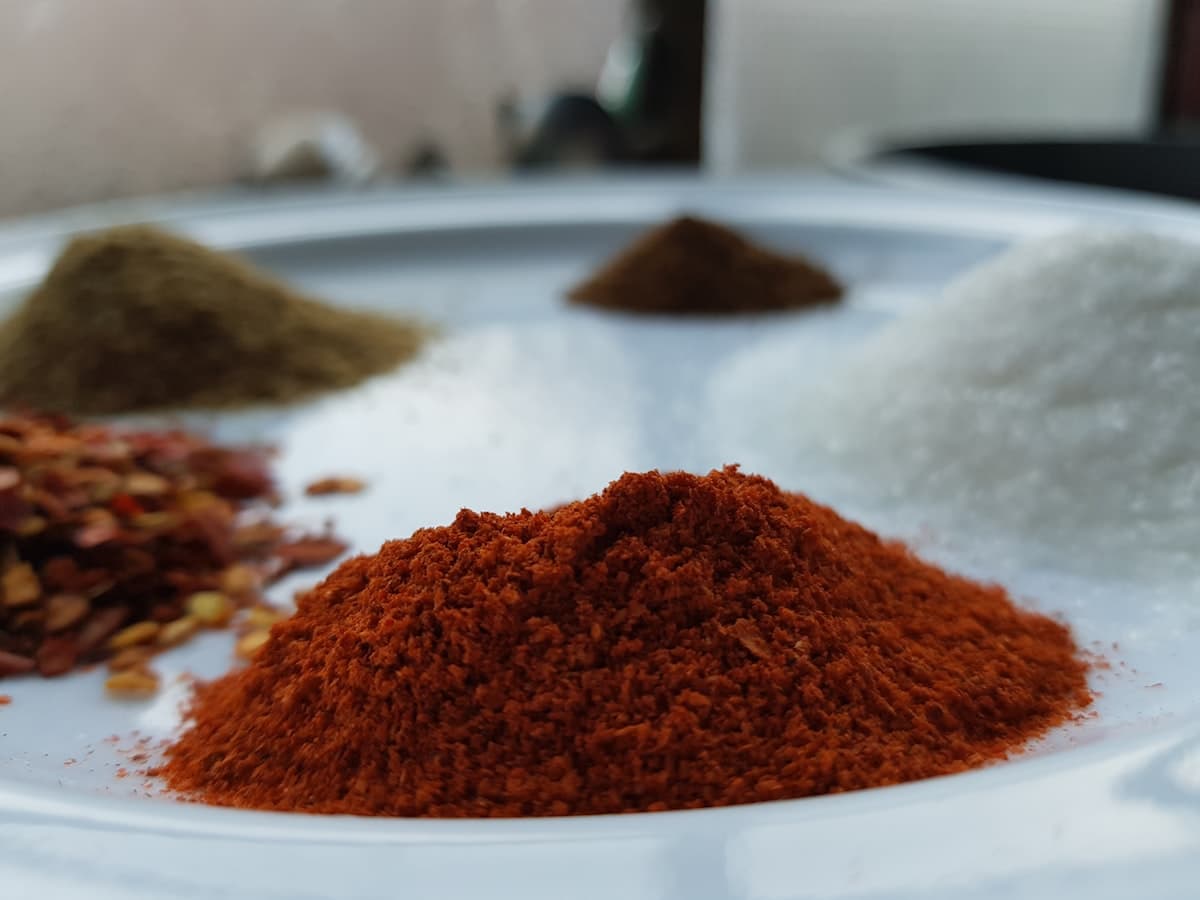
Gochugaru (Korean Red Pepper Flakes)
What gochugaru actually is, why it's not interchangeable with regular chili powder, and how to pick a good one.
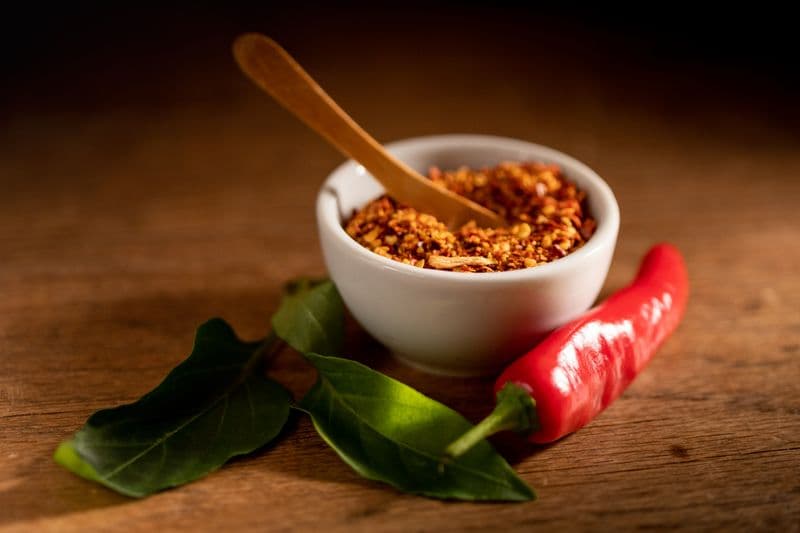
Best Gochugaru Substitute
What to use when you can't find Korean chili flakes, why most substitutes make a dish too hot rather than too mild, and how to adjust the amount.