Did you know — Korean culture
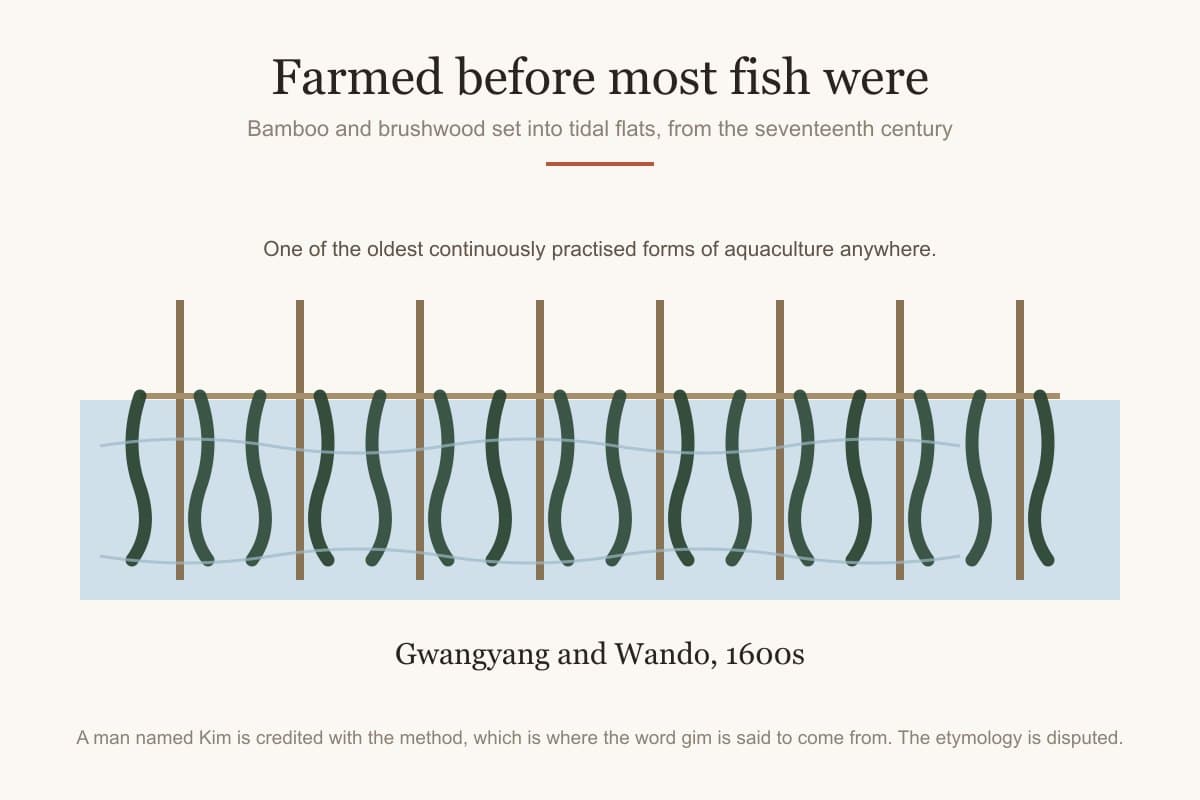
Korea farmed seaweed before most countries farmed fish. Records from the Joseon period describe gim cultivation on bamboo and brushwood set into tidal flats, with the Gwangyang and Wando areas named as producers by the seventeenth century, and one widely repeated account credits a man named Kim with the method — which is where the word gim is said to come from. The etymology is disputed. The farming is not: it is one of the oldest continuously practised forms of aquaculture anywhere.
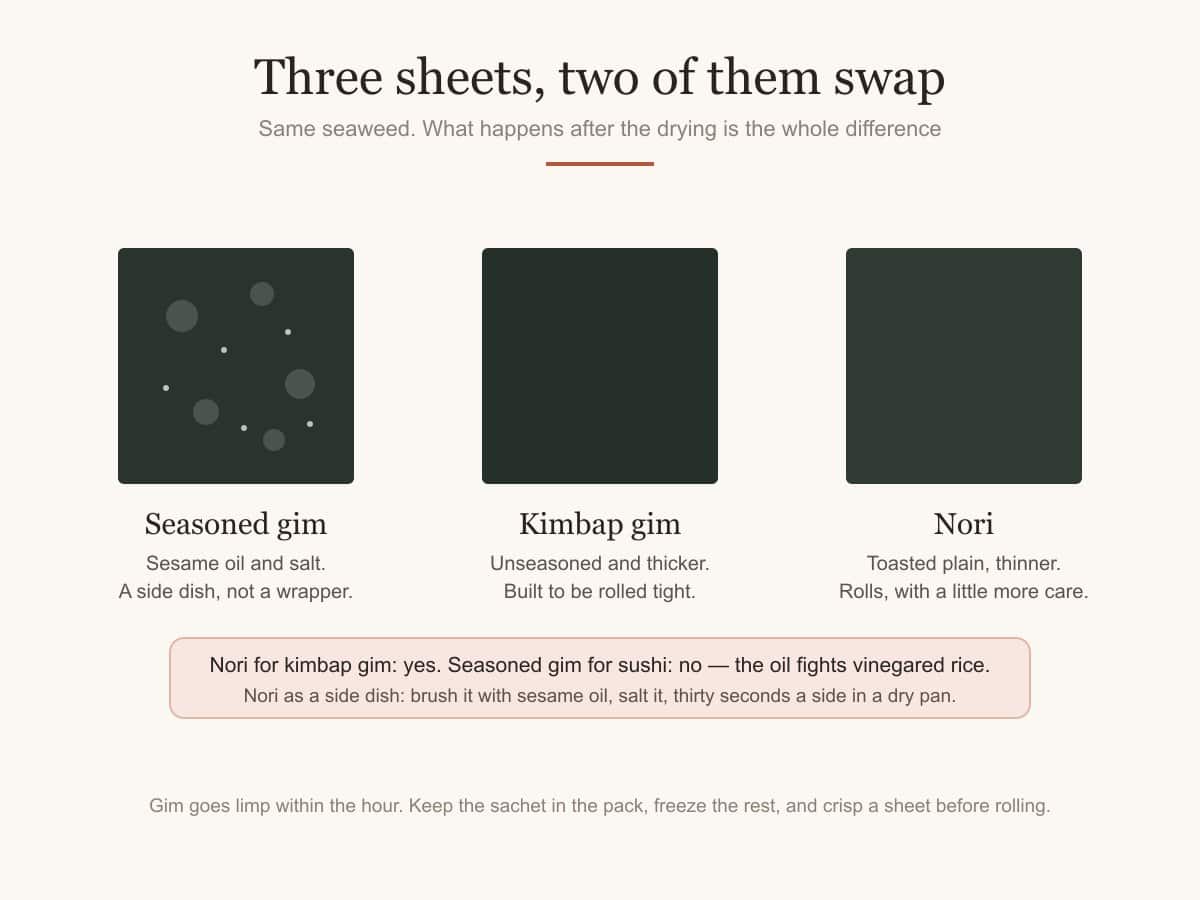
Both are Pyropia seaweed, dried into sheets. The difference is almost entirely in what happens after that.
Nori is toasted and left alone. Gim is usually brushed with sesame oil and salted. That changes what each is good for.
Seasoned gim is a side dish
The sheets sold in small packs of eight or nine — gim gui or jaraegim — are brushed with sesame or perilla oil, salted, and toasted. They are eaten as banchan with rice, not used as a wrapper.
They are thin, shatter easily, and are deliberately savoury on their own.
This is the form most people outside Korea meet first, usually as snack packs, and it is the one that is not interchangeable with nori.
Kimbap gim is the one to buy for rolling
Unseasoned, unoiled, and noticeably thicker and stronger than a nori sheet — it has to survive being rolled tight around wet rice and then sliced.
Sold as kimbap gim, in larger packs of ten or twenty full sheets.
Nori substitutes here acceptably, and is what most people outside Korea use. It is thinner, so it tears more readily — one cause of kimbap falling apart.
Which way the swap works
Nori for kimbap gim: fine, with a little more care when rolling.
Seasoned gim for nori in sushi: no. The oil and salt fight the vinegared rice, and the sheet is too fragile to roll.
Nori for seasoned gim as a side dish: not really, unless you brush and salt it yourself, which takes a minute and works well — sesame oil, a pinch of fine salt, thirty seconds a side in a dry pan.
Storing it, which matters more than it sounds
Gim goes limp fast. It is hygroscopic, and a sheet left out for an hour in a humid kitchen is noticeably softer.
Keep the pack sealed with its silica sachet, and freeze what you will not use within a few weeks. Frozen gim crisps straight from the bag.
Limp sheets revive in a dry pan for twenty or thirty seconds a side. This is worth doing before rolling kimbap even with fresh sheets — the stiffer the gim, the tighter the roll.
Common questions
Is gim the same as nori?
Same seaweed, different treatment. Korean gim is usually brushed with sesame oil and salted; nori is toasted plain. Unseasoned kimbap gim is the one that corresponds to nori.
Can I use nori for kimbap?
Yes. Nori is thinner than kimbap gim so it tears a little more readily, but it works, and it is what most people outside Korea use.
Can I use seasoned gim for sushi?
No. The sesame oil and salt clash with vinegared rice, and the sheets are too fragile to roll. Buy unseasoned sheets for anything you intend to roll.
How do I make gim crisp again?
Twenty or thirty seconds a side in a dry pan. It is worth doing before rolling kimbap even with a fresh pack, because a stiffer sheet makes a tighter roll.
More to cook
All Ingredient & Substitute Guides
Gochugaru (Korean Red Pepper Flakes)
What gochugaru actually is, why it's not interchangeable with regular chili powder, and how to pick a good one.
Best Gochugaru Substitute
What to use when you can't find Korean chili flakes, why most substitutes make a dish too hot rather than too mild, and how to adjust the amount.
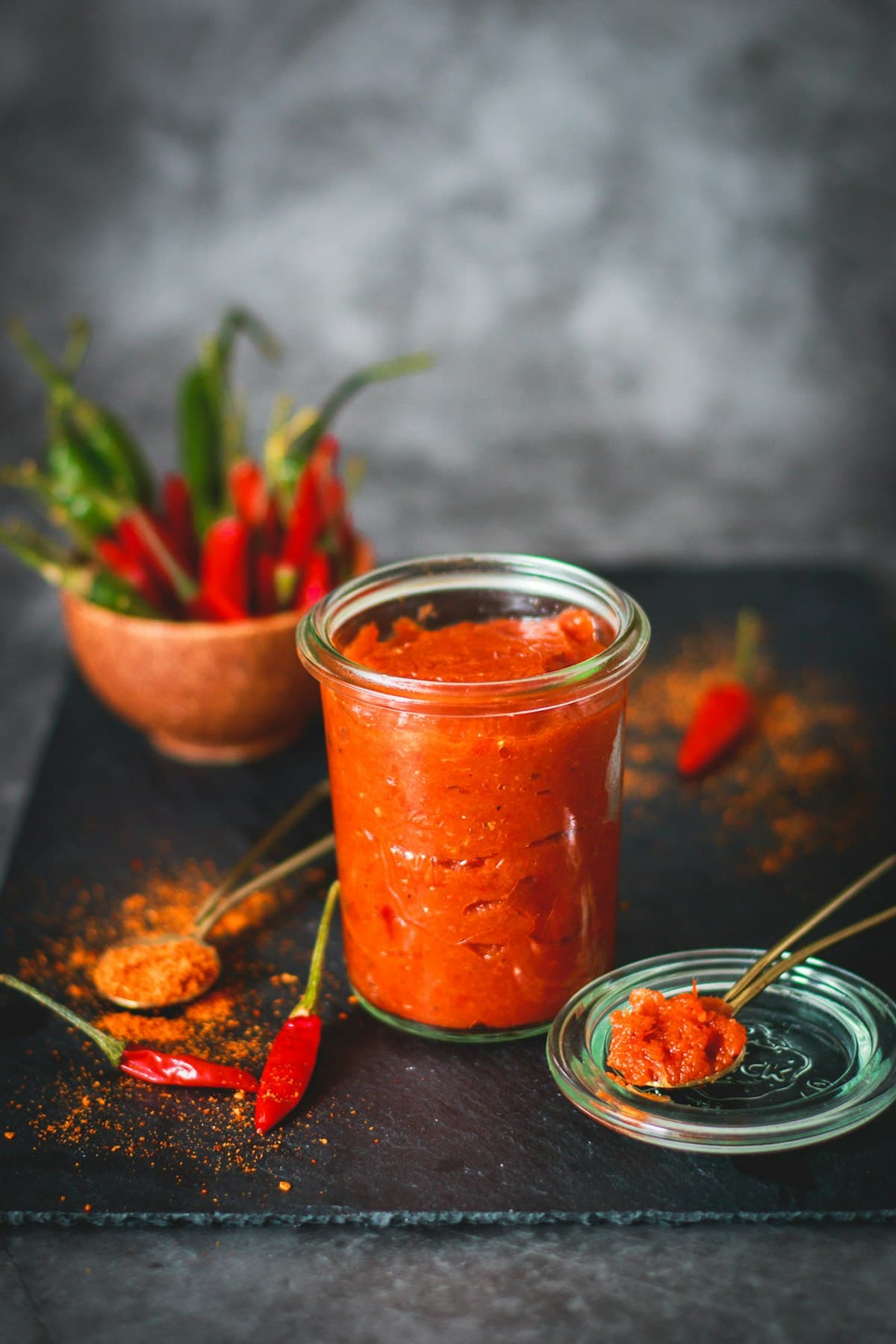
Gochujang (Fermented Chili Paste)
What gochujang is made from, why it's fermented rather than just mixed, and how to use it without overpowering a dish.