Did you know — Korean culture
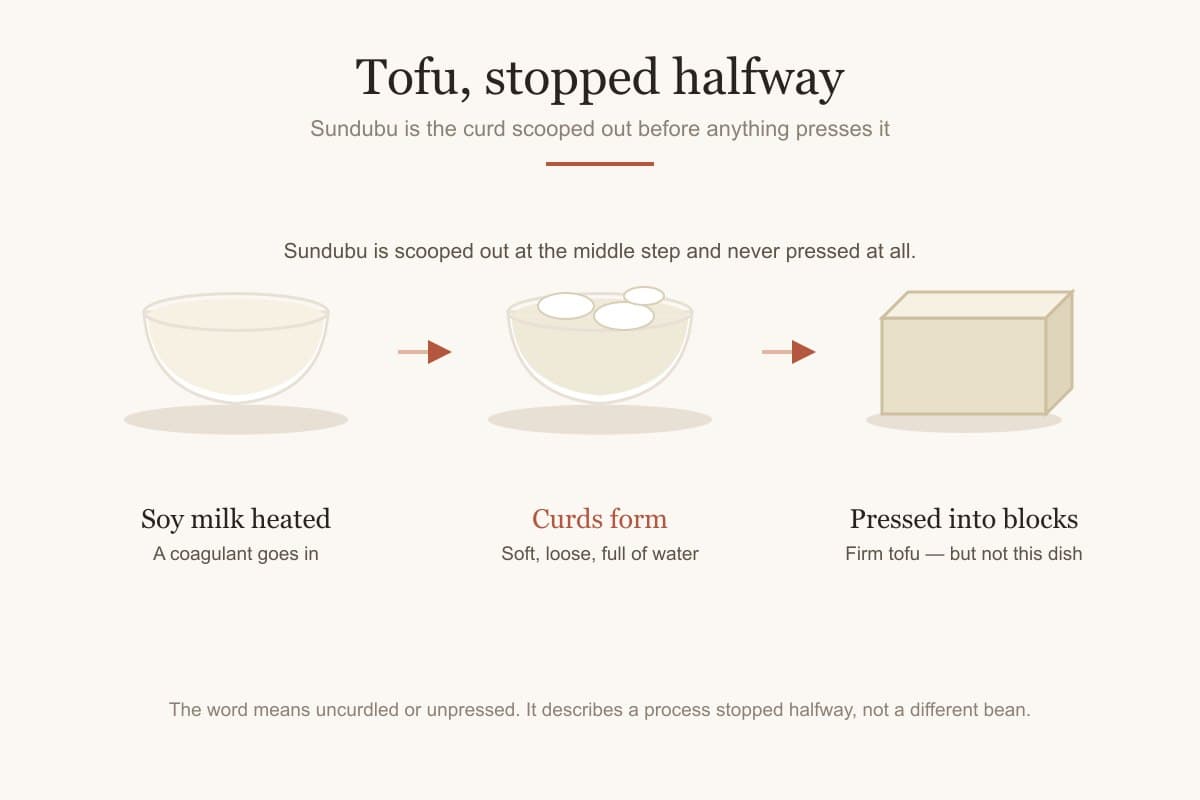
Sundubu is tofu caught before the step that makes tofu. Soy milk is heated and a coagulant added, and the curds that form are normally ladled into cloth-lined moulds and pressed into the firm blocks everyone recognises. Sundubu is scooped out at the curd stage and never pressed at all, which is why it holds so much water and falls apart under a spoon. The word means uncurdled or unpressed, and it describes a process stopped halfway rather than a different bean.
Sundubu jjigae should be glossy, deep red and thick enough to coat a spoon. A thin orange soup with tofu in it is a different dish.
The body comes from a chilli oil base made before any liquid goes in. Almost every thin sundubu has skipped that step.
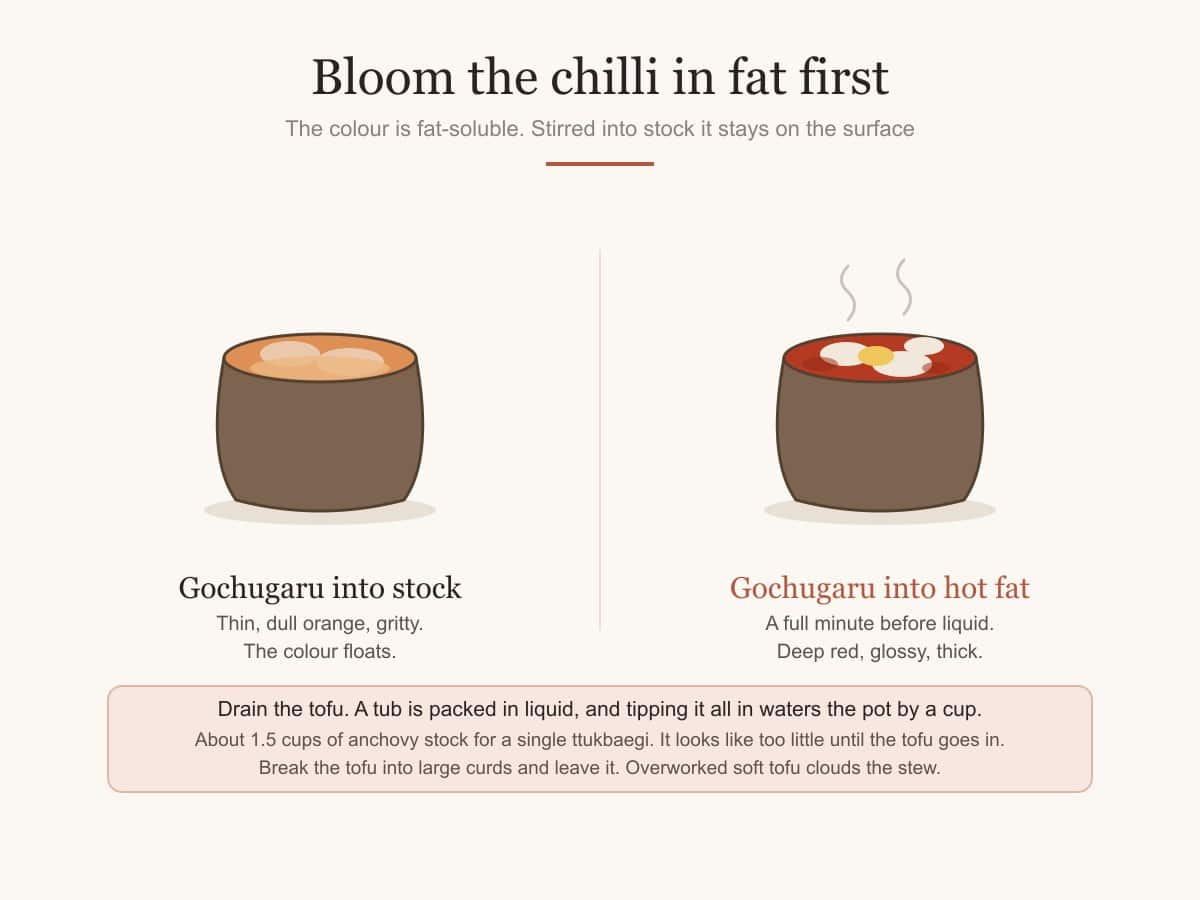
Bloom the gochugaru in fat first
Heat a generous spoonful of oil — neutral oil, or better, rendered pork fat or beef fat — add gochugaru and garlic, and cook them in the fat for a full minute before anything wet goes in.
This does two things. It extracts the colour, which is fat-soluble and will not come out in water. And it makes an emulsion that gives the stew its gloss.
Gochugaru stirred into stock at the end gives you a gritty, dull, thin soup. The colour sits on the surface instead of through it.
The tofu brings water with it
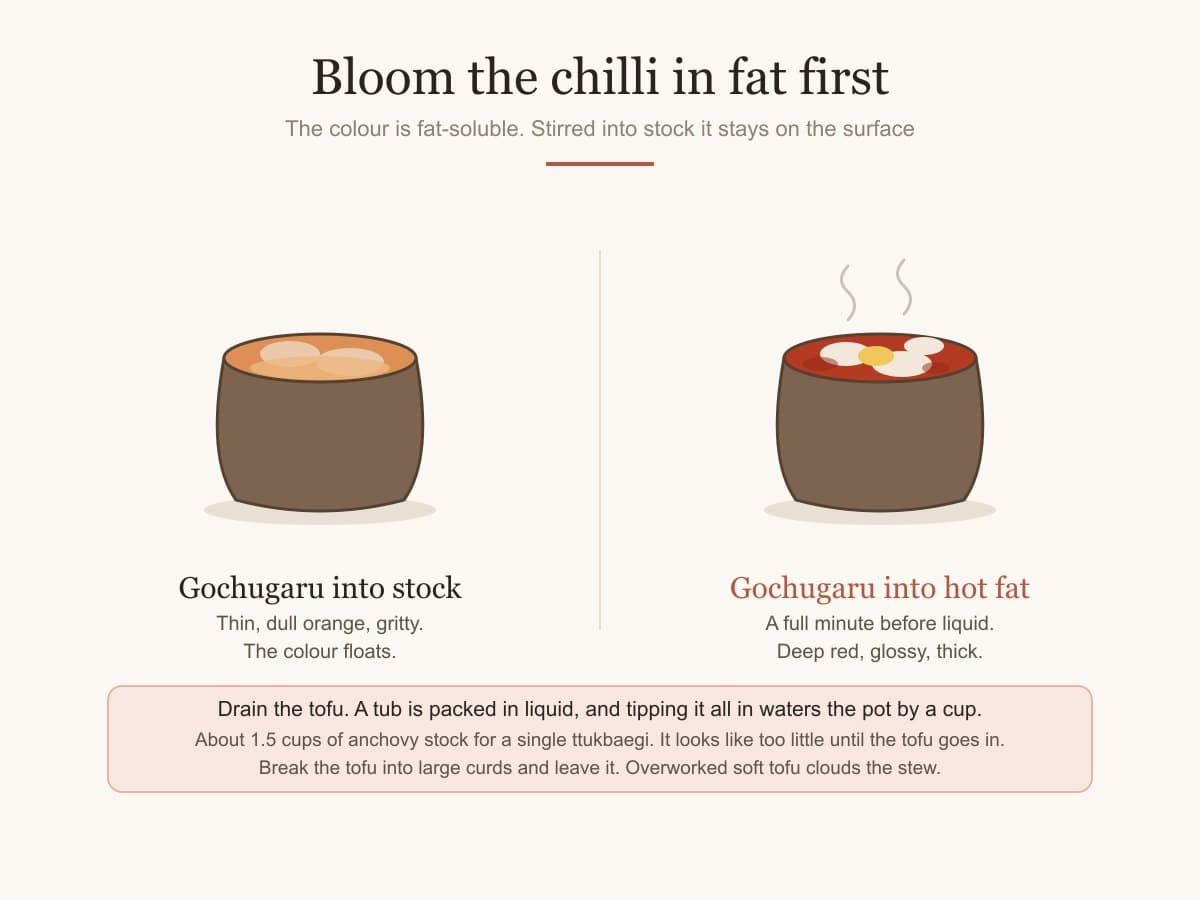
A tub of sundubu is packed in liquid, and tipping the whole tub in waters the stew down by a cup.
Drain it. Slide the block out, let it sit a minute, and discard what runs off.
Do not stir it to pieces either. Break it into large curds with a spoon once it is in the pot and leave it alone — overworked soft tofu collapses into cloudiness and makes the stew look thin even when it is not.
Use stock, and not much of it
Anchovy and kelp stock, not water — see the stock page — and about 1.5 cups for a single-serving ttukbaegi.
It looks too little in the pot. It will not be once the tofu goes in.
Seafood versions get more body again from the clams and prawns themselves. A vegetable version needs a little more help: dried shiitake in the stock, or a spoonful of doenjang with the gochugaru.
Finish hot, and crack the egg at the table
Sundubu is served actively bubbling in a ttukbaegi, and the pot keeps cooking after it leaves the stove.
The egg goes in at the table, into the bubbling stew, and is stirred through or left to set — either is correct.
If it is still thin at that point, the base was the problem and nothing at the end will fix it. Next time, longer in the fat.
Common questions
Why is my sundubu jjigae thin and orange instead of red?
The gochugaru went into liquid rather than into hot fat. The colour is fat-soluble, so blooming the chilli and garlic in oil for a minute first is what makes the stew red and glossy.
Should I drain the soft tofu?
Yes. A tub is packed in liquid and tipping it all in waters the stew down by about a cup. Slide the block out, let it drain a minute, and discard what runs off.
How much stock for sundubu jjigae?
About 1.5 cups for a single-serving ttukbaegi. It looks like too little until the tofu goes in.
When do I add the egg?
At the table, into the bubbling pot. Stirred through or left to set are both correct; the residual heat of the earthenware cooks it either way.
More to cook
All Ingredient & Substitute Guides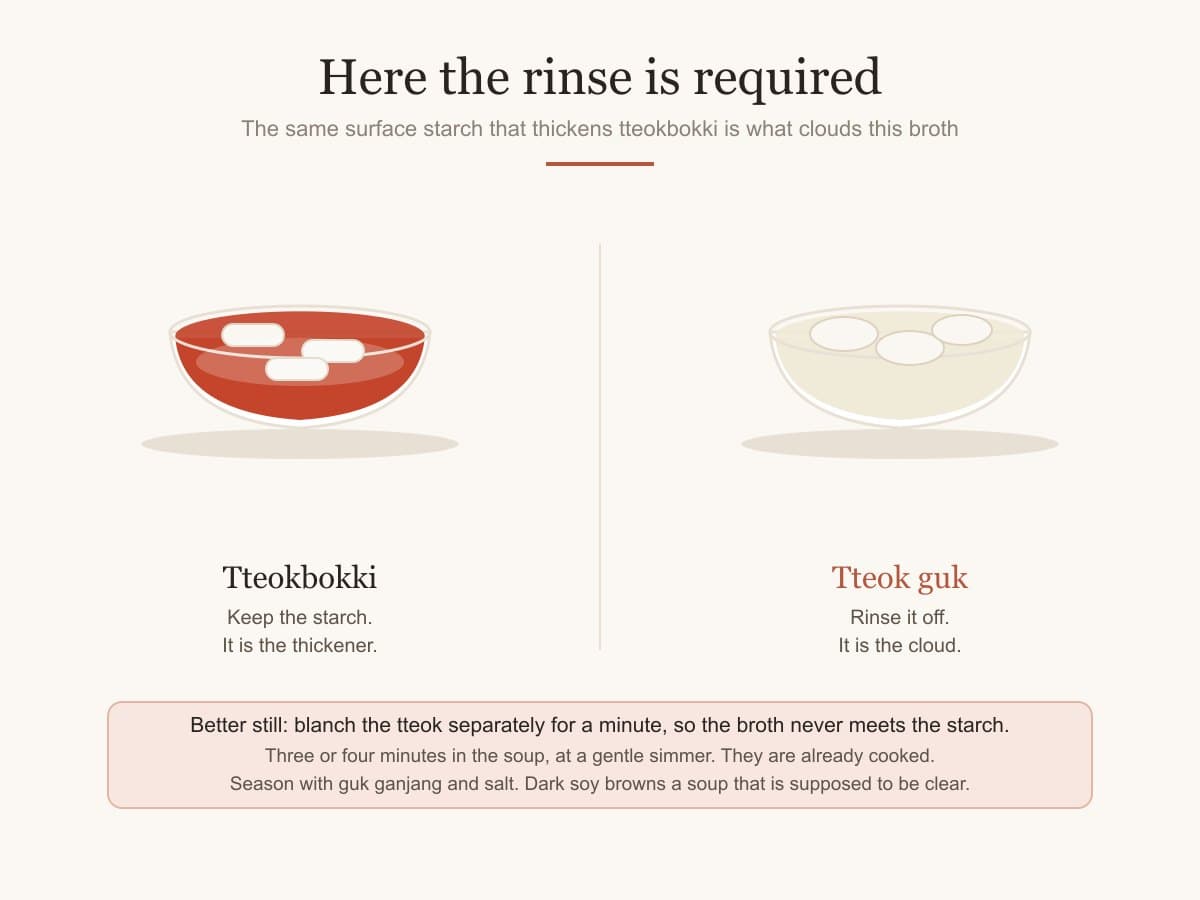
Why Is My Tteok Guk Cloudy?
A clear new-year soup goes murky from tteok starch and a hard boil. Here the rinse is required — the opposite of the tteokbokki rule.
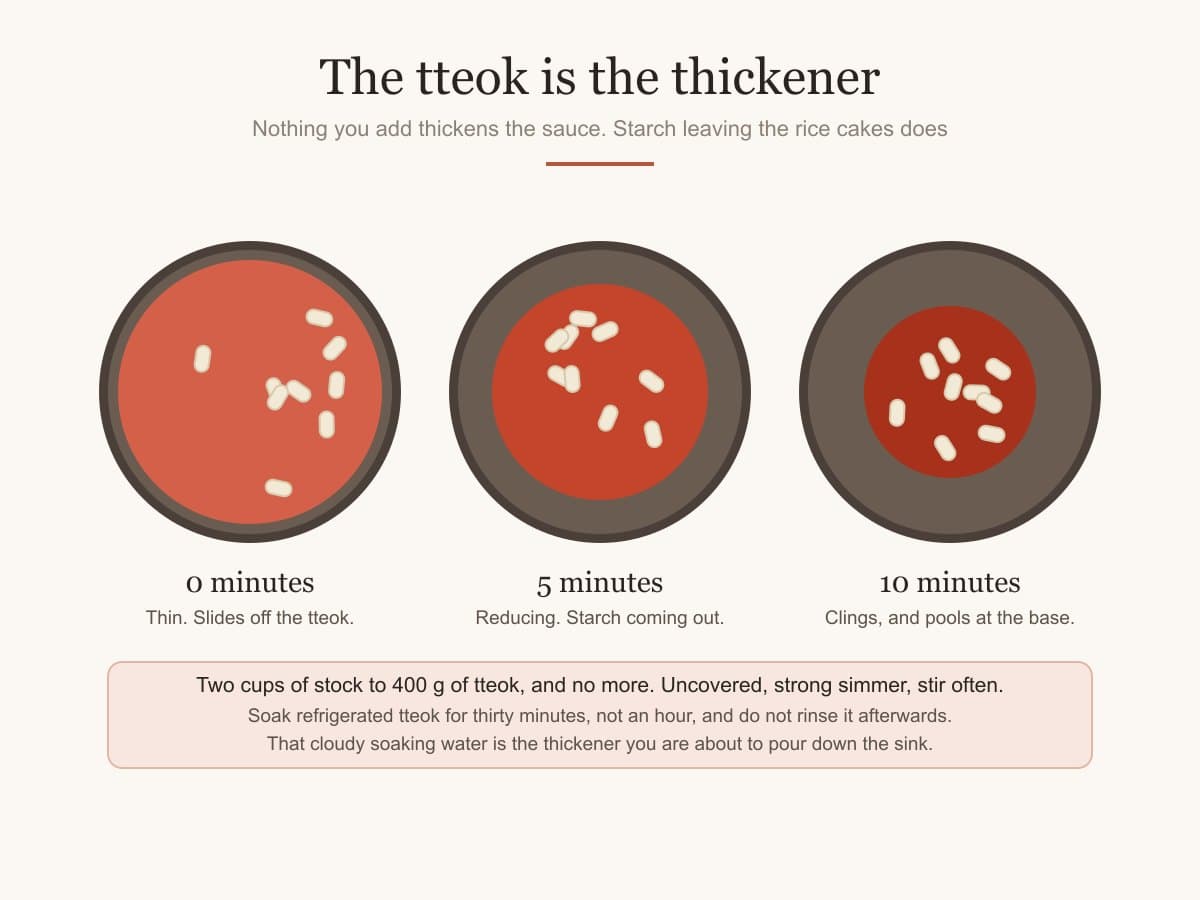
Why Is My Tteokbokki Sauce Watery?
Thin tteokbokki sauce is a starch problem, a liquid problem or a timing problem. Which one you have, and what to do about it.
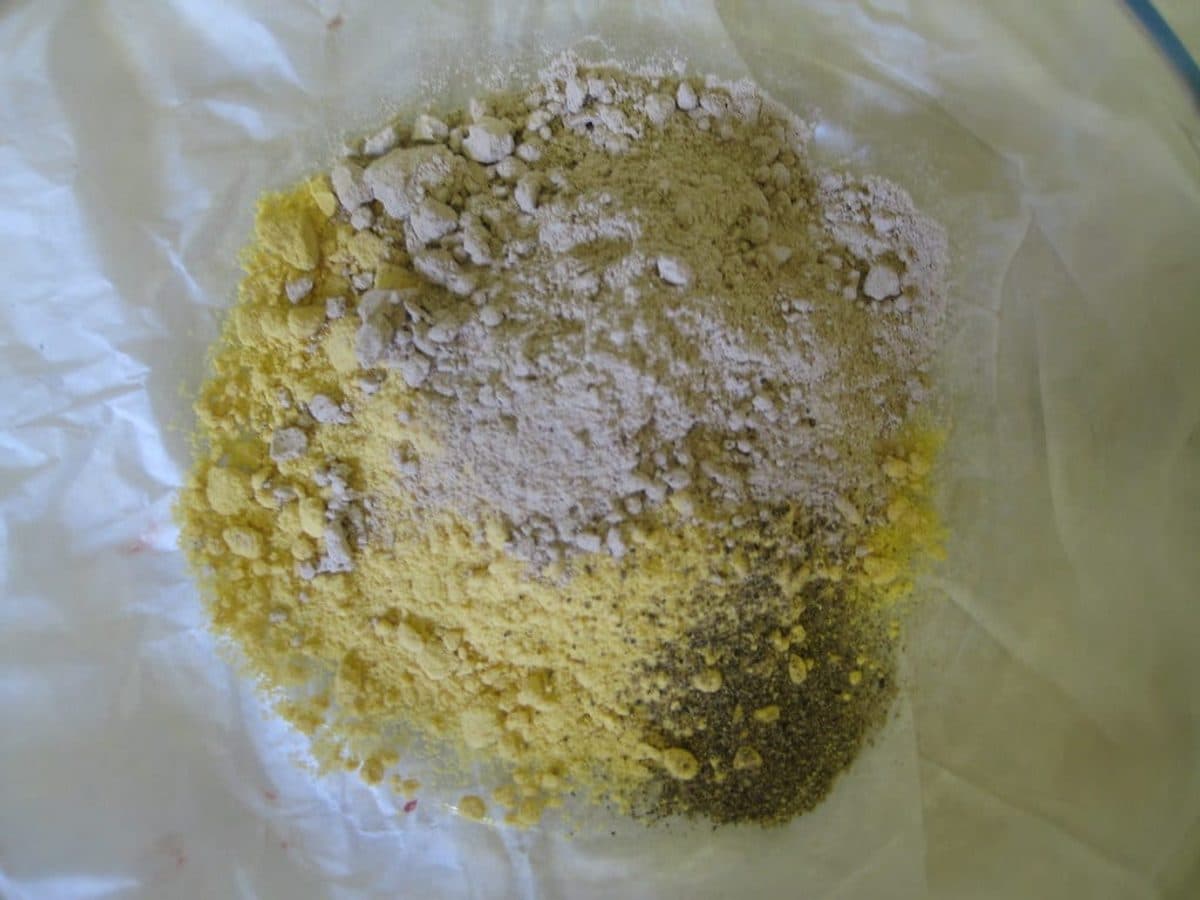
Yeongyeoja (Korean Mustard)
Why Korean mustard powder must be mixed with warm water and rested before use, and why it is nothing like the mustard on a hot dog.