Did you know — Korean culture
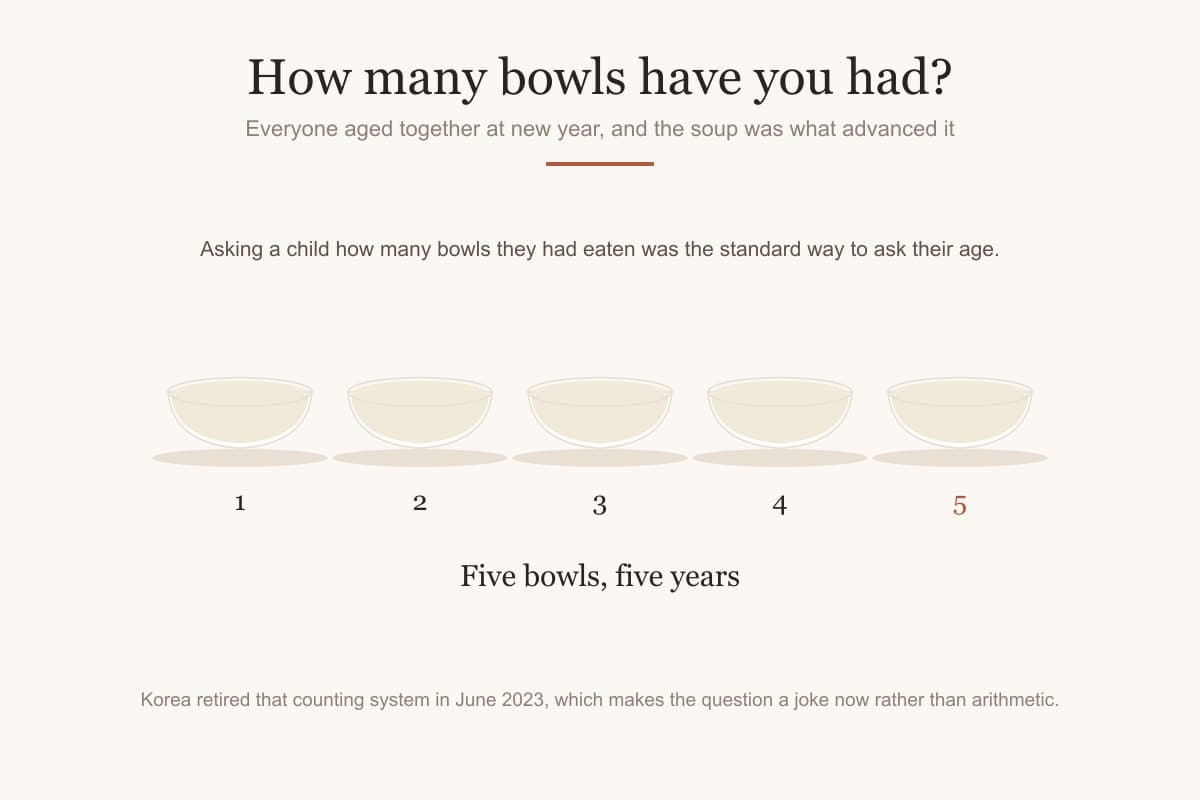
Eating tteok guk is how you gain a year, in a system Korea only recently retired. Under the traditional reckoning everyone aged together at new year rather than on their birthdays, so a bowl of tteok guk was the thing that advanced it — and asking a child how many bowls they had eaten was the standard way to ask their age. Korea formally abandoned that counting system in June 2023 for legal and administrative purposes, which makes the question a joke now rather than arithmetic.
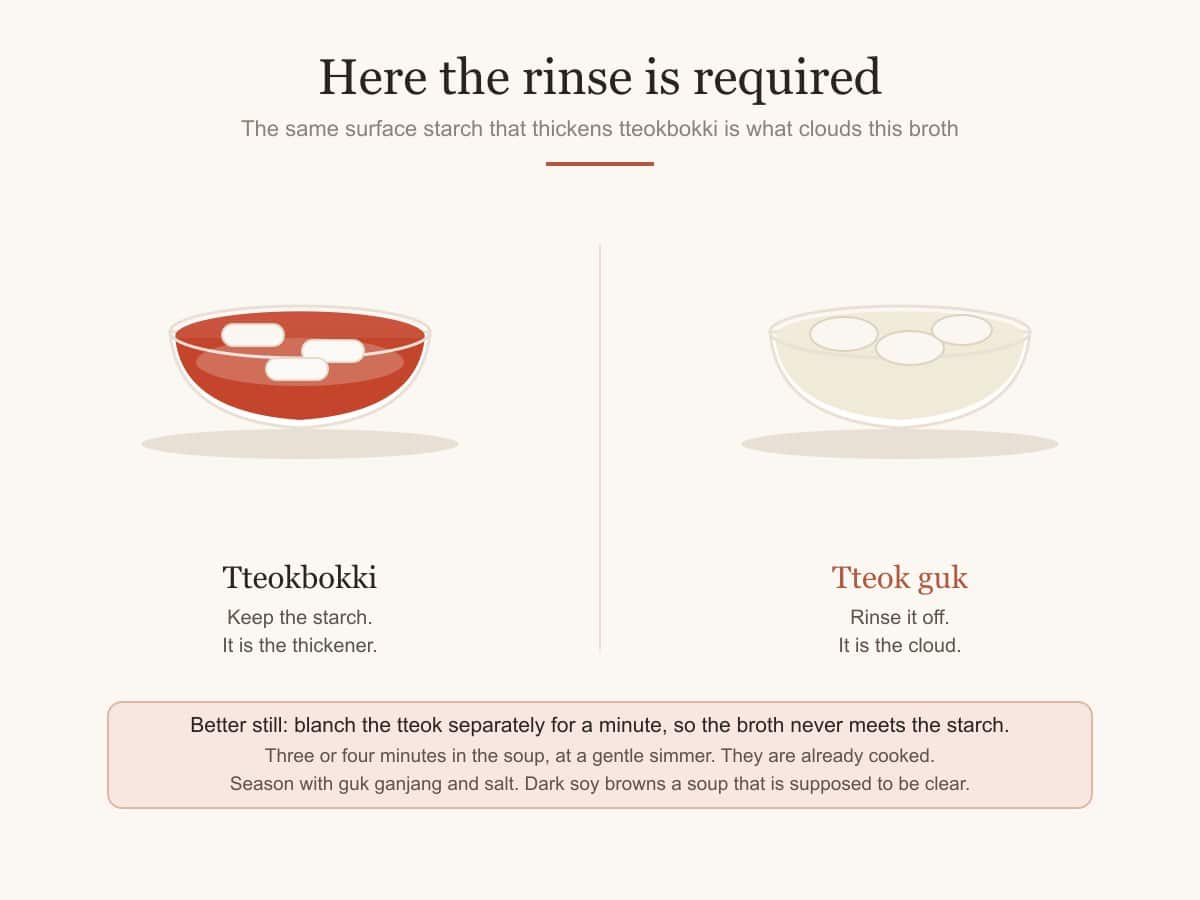
Tteok guk is supposed to be clear, and it clouds for a reason that is the exact reverse of the tteokbokki rule.
In tteokbokki the surface starch is the thickener you want. In tteok guk it is the thing ruining your broth. Same ingredient, opposite handling.
Rinse the rice cakes, and rinse them again
Soak the sliced tteok, then rinse until the water runs clear before it goes anywhere near the soup.
Every bit of loose surface starch that goes into the pot ends up suspended in the broth.
Better still: blanch the tteok separately in plain boiling water for a minute, drain, and add it to the soup near the end. The broth never meets the starch at all.
Add the tteok late, and do not boil it
Three to four minutes in the soup is enough, at a gentle simmer. Rice cakes are already cooked; they only need to soften.
A rolling boil breaks their surfaces down and pushes starch out, which is the second source of cloud.
The same restraint applies to the broth generally: bring it up, then hold it just below a boil for the rest of the cook.
The broth wants to start clear
Brisket or shank simmered gently, skimmed properly, and strained is the traditional base. Skim in the first ten minutes, when most of the scum rises.
A hard boil emulsifies fat into the broth, which is exactly what seolleongtang wants and tteok guk does not.
Anchovy and kelp stock is the quicker route and also stays clear, as long as the kelp comes out after ten minutes.
Season with guk ganjang and salt, not dark soy — soup soy sauce exists precisely so a clear soup stays clear.
What goes on top
Egg is added as a garnish, not stirred in. Traditionally jidan: yolk and white cooked separately into thin sheets and cut into strips.
An egg poured into the pot and stirred clouds the broth immediately. If you want egg drop, accept the cloudiness as the trade.
Shredded beef, toasted gim, and spring onion finish it. Black pepper at the table.
Common questions
Why is my tteok guk cloudy?
Starch from the rice cakes. Rinse the soaked tteok until the water runs clear, or blanch it separately and add it to the soup near the end.
Should I rinse rice cakes for soup?
Yes — the opposite of the tteokbokki rule, where that surface starch is the thickener. In a clear soup it is the thing clouding the broth.
How long do rice cakes need in tteok guk?
Three or four minutes at a gentle simmer. They are already cooked and only need to soften; boiling them breaks their surfaces down.
Can I add egg to tteok guk?
As a garnish, yes — traditionally cooked separately into thin sheets and cut into strips. Pouring egg into the pot and stirring clouds the broth at once.
More to cook
All Ingredient & Substitute Guides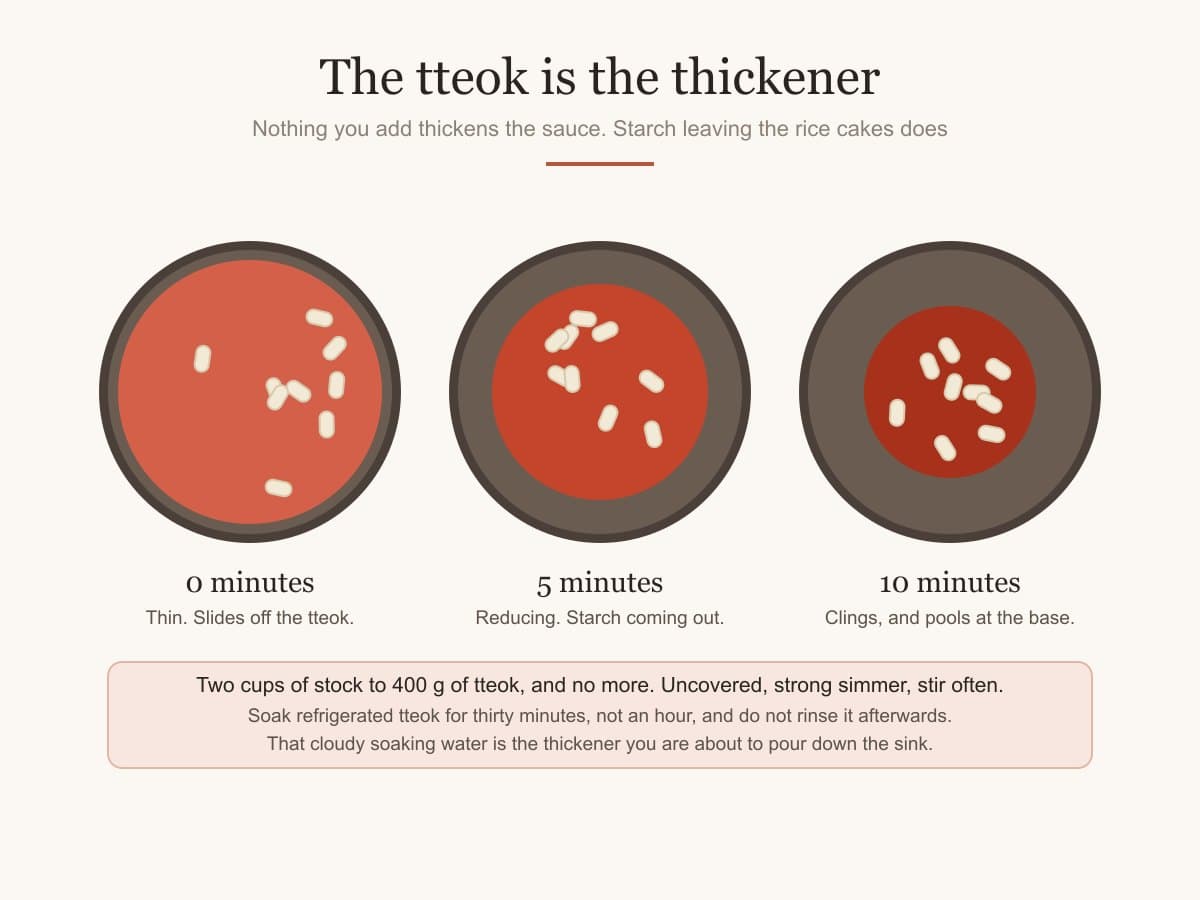
Why Is My Tteokbokki Sauce Watery?
Thin tteokbokki sauce is a starch problem, a liquid problem or a timing problem. Which one you have, and what to do about it.
Yeongyeoja (Korean Mustard)
Why Korean mustard powder must be mixed with warm water and rested before use, and why it is nothing like the mustard on a hot dog.
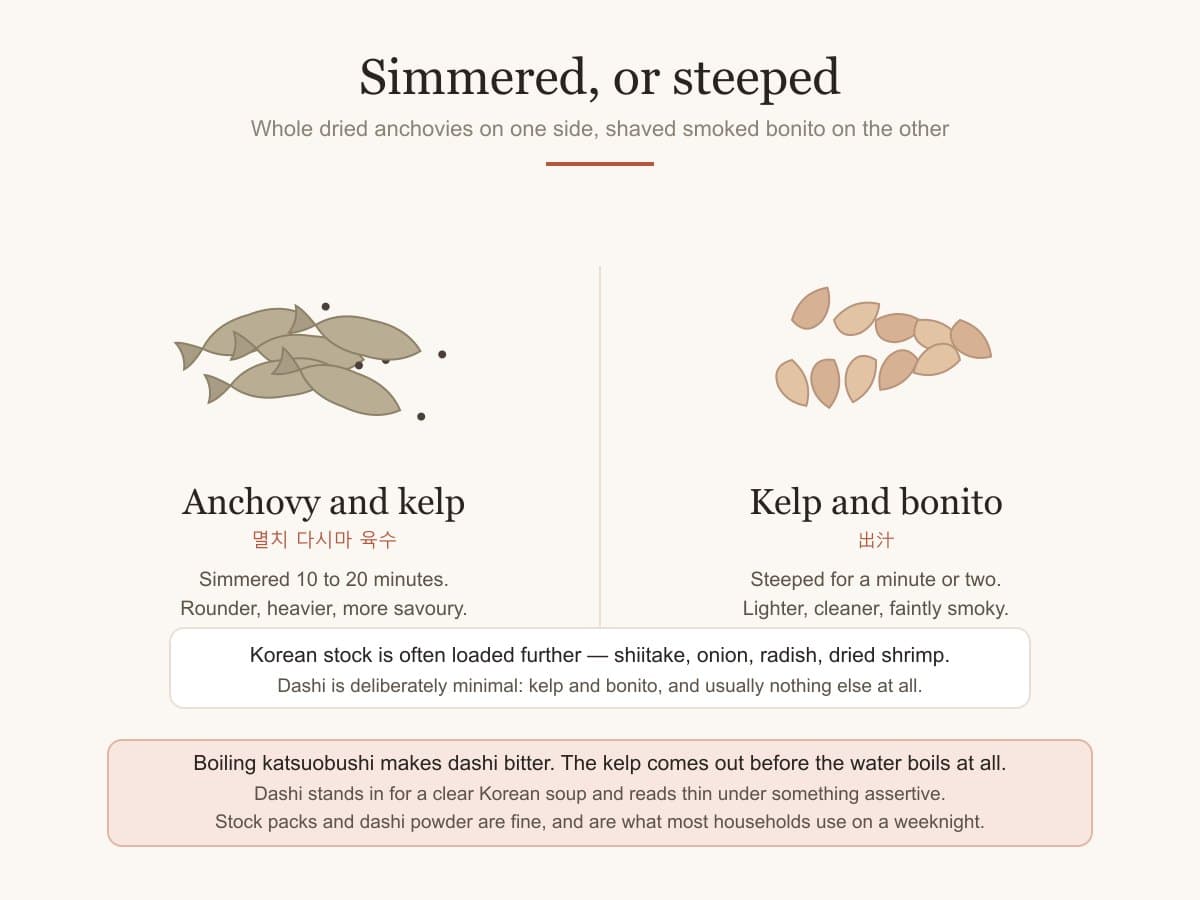
Anchovy Stock vs Dashi
Korean anchovy-kelp stock and Japanese dashi look alike and are not the same. The fish, the method, and whether they substitute.