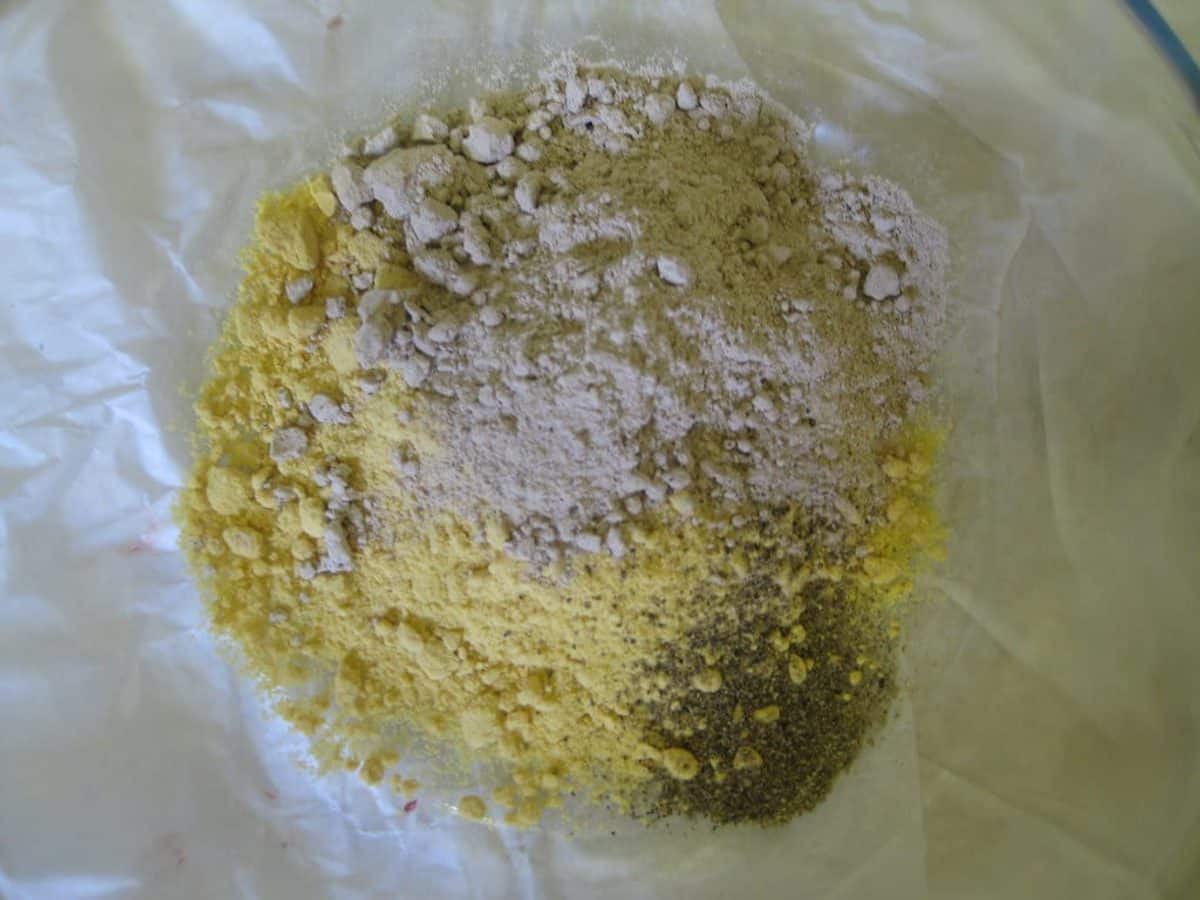
Photo: AndyRobertsPhotos · CC BY
Did you know — Korean culture
Korean food has two unrelated kinds of heat, and they behave in opposite ways. Chili heat comes from capsaicin, which is oil-soluble, sits on the tongue and lingers. Mustard heat comes from a volatile compound created only when the powder meets water — it goes straight to the sinuses, passes in seconds, and evaporates out of the paste within the hour. It is why gochujang keeps for months and yeongyeoja is mixed minutes before the meal.
Yeongyeoja is the sharp, sinus-clearing mustard served with naengmyeon, gujeolpan and cold jellyfish salads. It is closer to wasabi in effect than to the mild, vinegary mustards of Western cooking.
It is usually sold as a powder, sometimes as a ready-made tube. The powder is better and needs one step most people skip.
Mix with warm water, then wait
Mustard powder is not spicy in the bag. The heat is created by an enzyme reaction that only starts when the powder meets liquid.
Mix with an equal volume of warm — not boiling — water into a smooth paste, then leave it 10 to 15 minutes. Boiling water destroys the enzyme and gives you a bland yellow paste; using it immediately gives you a paste that has not developed yet.
Some cooks invert the bowl over the paste while it rests, which traps the volatiles.
It fades, so make it fresh
Once developed, that heat starts to dissipate within an hour or so and is largely gone by the next day.
This is the opposite of most condiments and it is why yeongyeoja is mixed in small amounts right before a meal rather than kept in a jar.
Where it is used
Mul naengmyeon — stirred into the icy broth at the table, along with vinegar. Regulars taste the broth first.
Gujeolpan and ssam platters — as a dipping sauce, often thinned with vinegar and a little sugar.
Cold salads — jellyfish salad in particular, where the sharpness is the whole point.
Substitutes
Colman's English mustard powder behaves almost identically — same plant family, same enzyme reaction, same warm-water-and-rest method. It is the closest easy substitute.
Wasabi paste matches the volatile heat but brings its own flavour. Dijon or yellow mustard do not work: they are vinegar-based, already stabilised, and mild in a completely different direction.
Making the paste, step by step
Mix mustard powder with an equal volume of warm water into a smooth paste. Warm, not boiling — boiling water destroys the enzyme and gives you a bland yellow paste.
Rest 10–15 minutes. This is where the heat is created. Using it immediately gives you a paste that has not developed.
Cover it while it rests, or invert the bowl over it. That traps the volatile compounds instead of letting them escape into the room.
Then season if you want to: a little vinegar, sugar and salt turns it into a dipping sauce. Adding the vinegar after the rest matters — acid added at the start slows the reaction down.
Make small amounts. The heat starts fading within the hour.
Buying and storing it
Powder is better than a ready-made tube. The tube is stabilised, which means the reaction has already happened and largely faded. It is convenient and noticeably milder.
Korean mustard powder (yeongyeoja garu) is sold in Korean shops in small tins or packets.
Colman's English mustard powder is a genuinely good substitute — same plant family, same enzyme reaction, same method.
Storage: the dry powder keeps a year or more in a cool, dark cupboard, sealed. It is the mixed paste that has no shelf life.
Mixed paste: hours, not days. There is no point refrigerating it overnight — by morning it is mild yellow paste.
Common questions
How do you make Korean mustard?
Mix the powder with an equal volume of warm — not boiling — water into a smooth paste, then leave it covered for 10 to 15 minutes. That rest is where the heat develops. Season with vinegar and sugar afterwards, not before.
Why is my Korean mustard not spicy?
Either you used boiling water, which destroys the enzyme, or you used it immediately without resting it. It can also simply be old — the heat fades within an hour of mixing, so a paste made yesterday will be mild.
What can I substitute for Korean mustard?
Colman's English mustard powder behaves almost identically — same plant family, same enzyme reaction, same warm-water-and-rest method. Wasabi matches the volatile heat but brings its own flavour. Dijon and yellow mustard don't work; they're vinegar-based and already stabilised.
What is Korean mustard served with?
Mul naengmyeon above all, stirred into the icy broth at the table along with vinegar. Also gujeolpan, ssam platters, and cold jellyfish salad.
More to cook
All Ingredient & Substitute Guides
Asian Pear Substitute (For Korean Marinades)
Why Korean marinades use grated Asian pear rather than sugar, and which fruits actually reproduce the tenderising effect when you can't find one.
Bori (Barley) in Korean Cooking
Why barley is mixed into Korean rice rather than cooked alone, how much to use, and why it needs a longer soak than the rice it sits with.
Dasima & Dried Anchovy Stock (Yuksu)
What dasima (dried kelp) is, why it's simmered with dried anchovies for Korean soup bases, and how long is actually enough.