Did you know — Korean culture
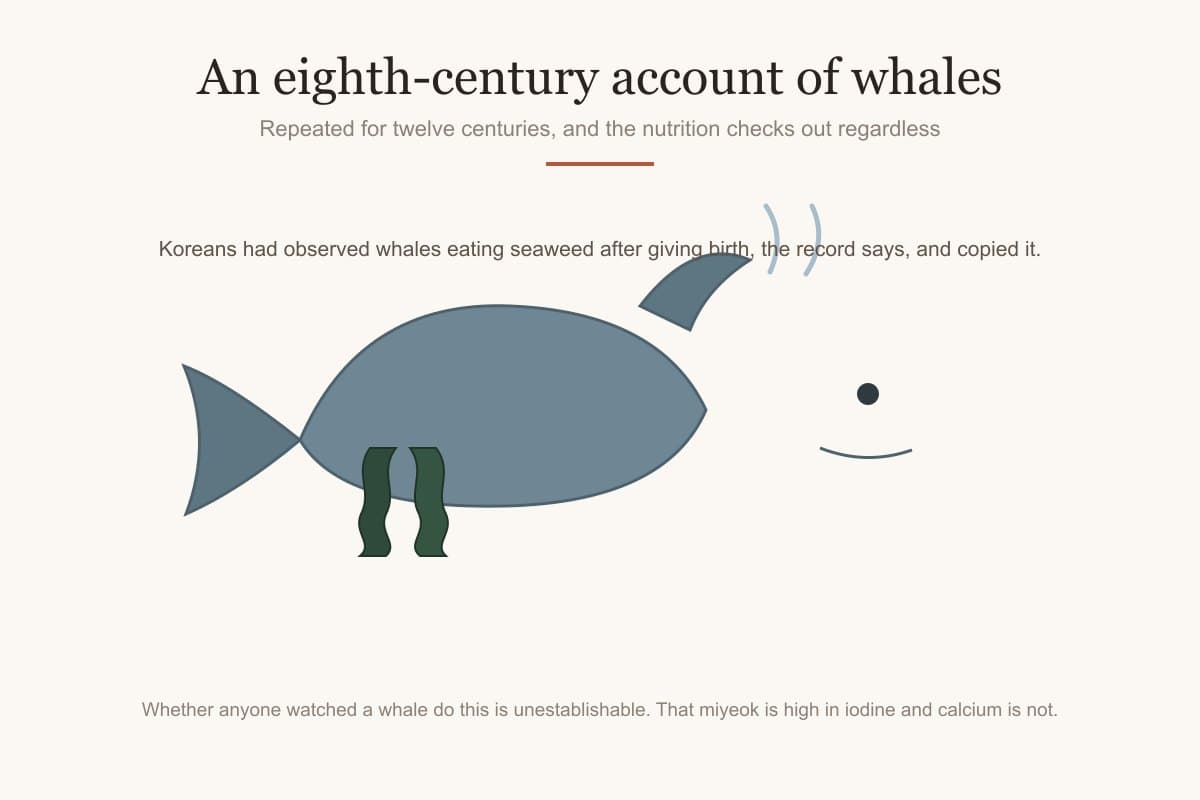
The best-known explanation for miyeok guk after childbirth is an eighth-century Chinese account of Korea, which records that Koreans had observed whales eating seaweed after giving birth and copied the practice. Whether anyone actually watched a whale do this is impossible to establish, and the story has been repeated for twelve centuries. What is checkable is that the soup does what the custom claims: miyeok is unusually high in iodine and calcium, both of which a nursing mother needs in quantity.
Miyeok guk looks like it should be simple enough to be foolproof, and the usual result is grey water with seaweed in it.
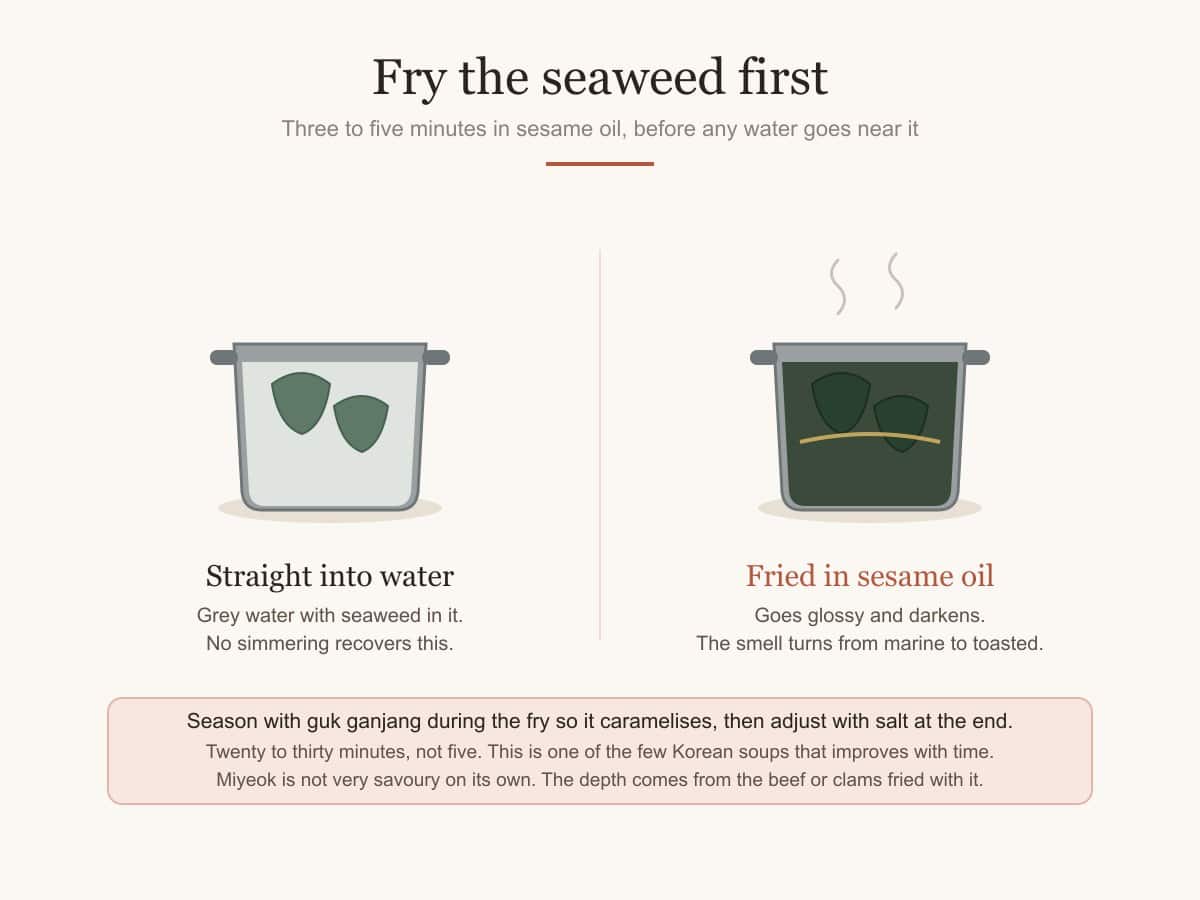
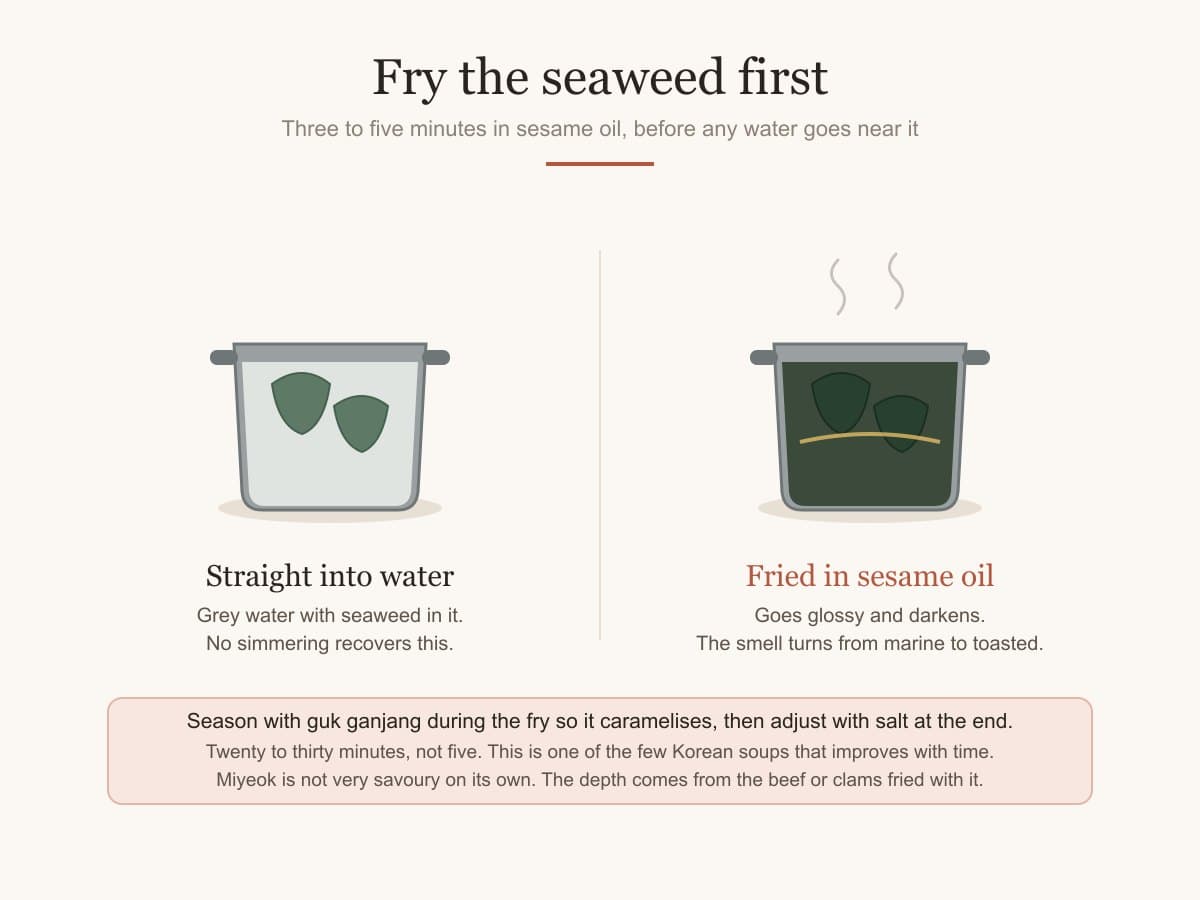
The seaweed is fried in sesame oil before any water goes near it. That step is the entire dish.
Fry the miyeok, for longer than feels right
Soak the dried miyeok, squeeze it out, cut it, and then fry it in sesame oil for three to five minutes with the beef, over medium heat.
It will go glossy and darken, and the smell changes completely — from marine to toasted.
Only then add water. Seaweed dropped into boiling water never develops that flavour, and no amount of simmering afterwards recovers it.
Season with guk ganjang, and enough of it
Soup soy sauce rather than dark soy — it seasons without turning the broth brown, which is the whole reason it exists.
Add a spoonful during the fry, so it hits the hot pan and caramelises slightly, then adjust with salt at the end.
And use more garlic than you think: a tablespoon of minced garlic for a four-person pot is normal here.
It needs twenty minutes, not five
Miyeok guk improves with time in a way most Korean soups do not. Twenty to thirty minutes at a gentle simmer lets the seaweed soften properly and give up its body to the broth.
Five minutes gives you soup with seaweed floating in it. Thirty gives you a broth that has thickened slightly and tastes of the whole pot.
It is also better the next day, reheated, which is partly why it is made in quantity after childbirth.
The protein is doing the savoury work
Miyeok on its own is not very savoury, and that catches people out. The depth comes from what is fried with it.
Brisket or chuck, cut small, is the standard. Mussels or clams make the seafood version, common in the south and in Busan especially.
A vegetarian version needs real help: anchovy stock is out, so use dried shiitake, a piece of dasima, and a spoonful of doenjang, and fry the seaweed in perilla oil instead of sesame.
Common questions
Why does my miyeok guk taste like nothing?
The seaweed went straight into water. Fry it in sesame oil with the beef for three to five minutes first — that is where the flavour of the dish comes from.
How long should miyeok guk simmer?
Twenty to thirty minutes at a gentle simmer. Unlike most Korean soups it genuinely improves with time, and it is better again the next day.
What soy sauce for miyeok guk?
Guk ganjang, soup soy sauce. It seasons without darkening the broth. Add some during the fry so it caramelises, then adjust with salt at the end.
Can I make miyeok guk without meat?
Yes, with help. Dried shiitake, a piece of dasima and a spoonful of doenjang, and fry the seaweed in perilla oil. Miyeok on its own is not very savoury.
More to cook
All Ingredient & Substitute Guides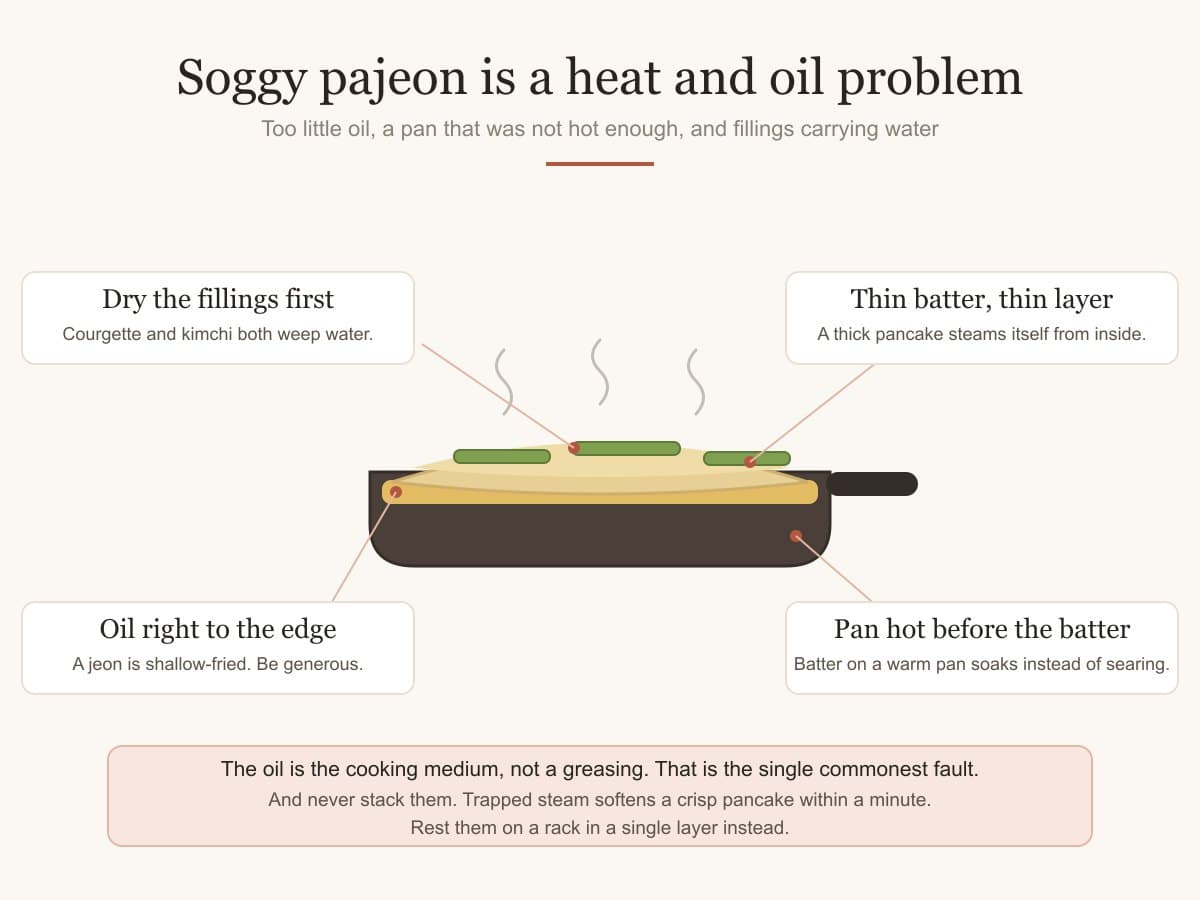
Why Is My Pajeon Soggy?
Soggy Korean pancake comes down to oil, batter temperature and wet fillings. The three fixes, and why stacking them undoes all of it.
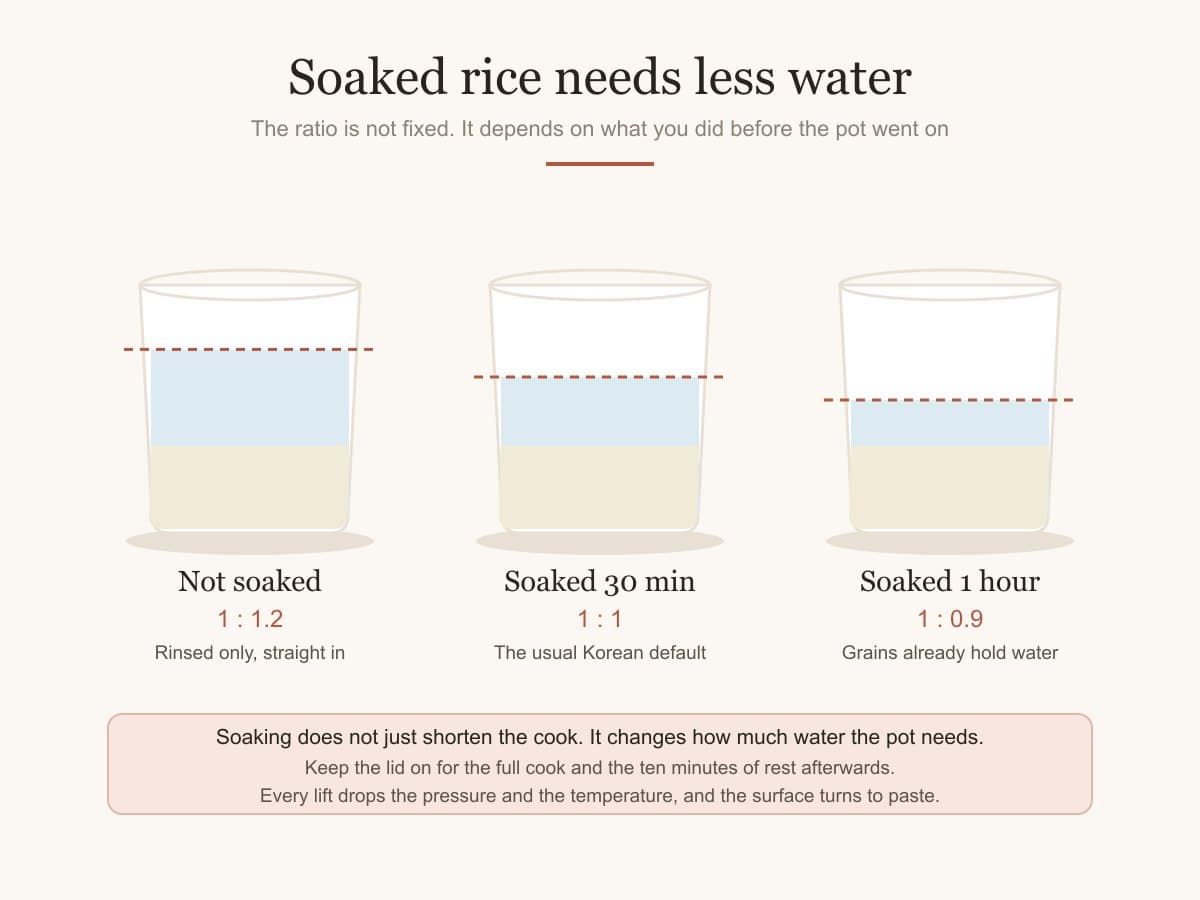
Why Is My Rice Mushy?
Mushy short-grain rice usually comes from skipped rinsing or water measured before soaking. The ratios that work and how to rescue a wet pot.
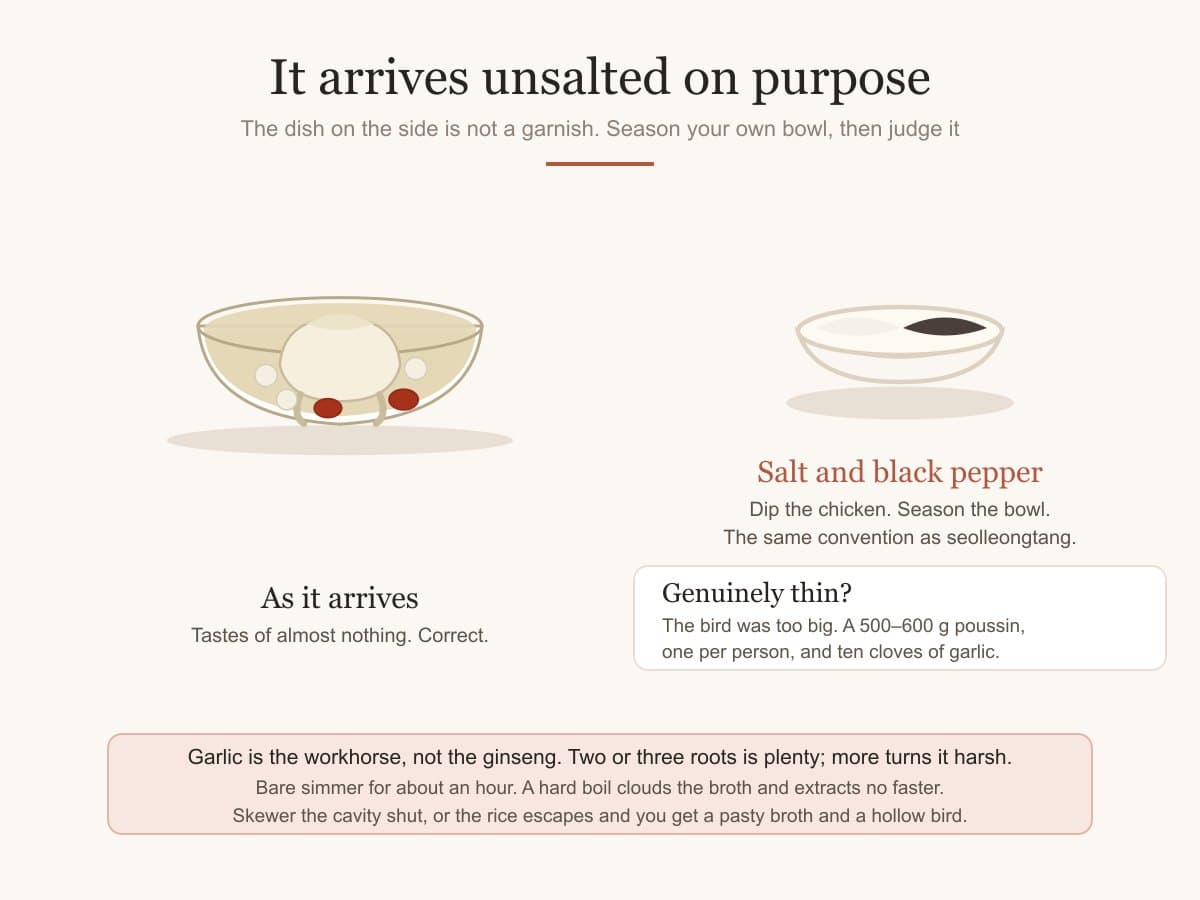
Why Is My Samgyetang Bland?
Ginseng chicken soup is deliberately unsalted, and seasoned at the table. What to do if it is genuinely thin rather than just unsalted.