Did you know — Korean culture
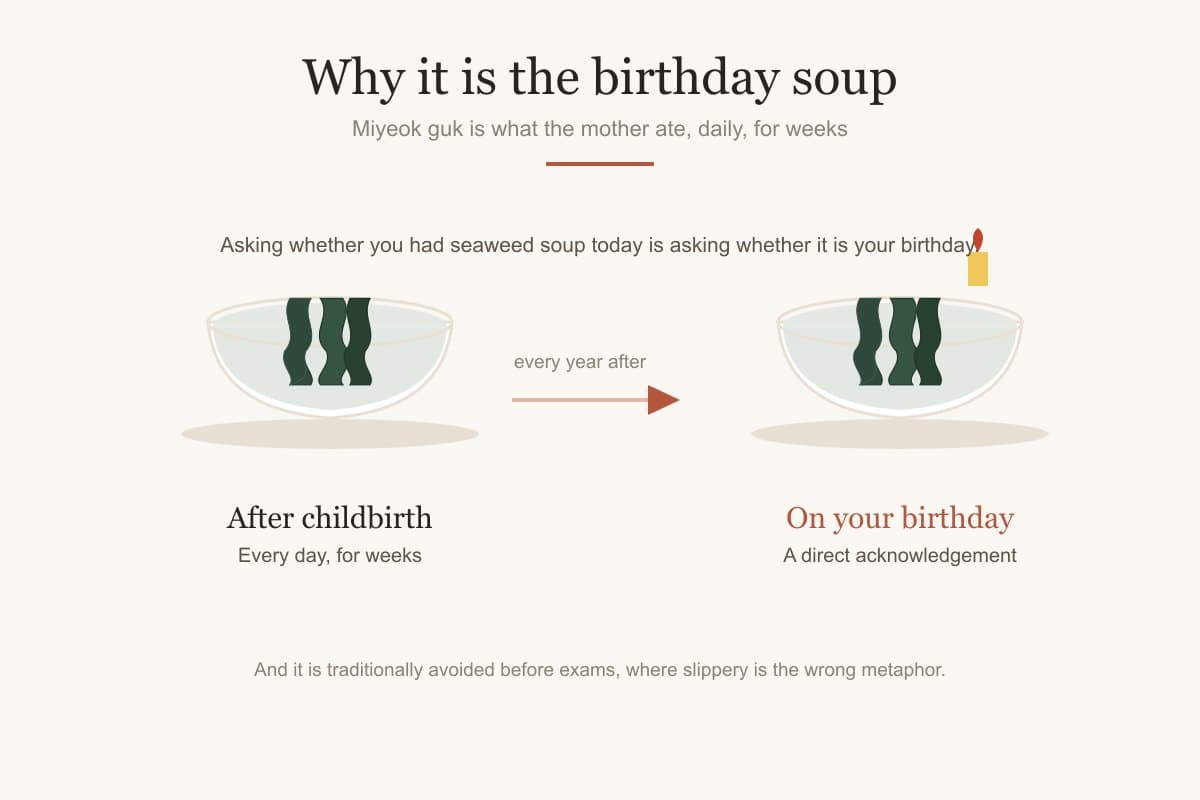
Miyeok guk is eaten on birthdays because it is what the mother ate. Seaweed soup is the standard food after childbirth in Korea, served daily for weeks — it is rich in iodine and iron and was understood as restorative long before anyone measured either — and eating a bowl on your birthday is a direct acknowledgement of that. A Korean asking whether you had seaweed soup today is asking whether it is your birthday, and the association is strong enough that it is traditionally avoided before exams, where slippery is the wrong metaphor.
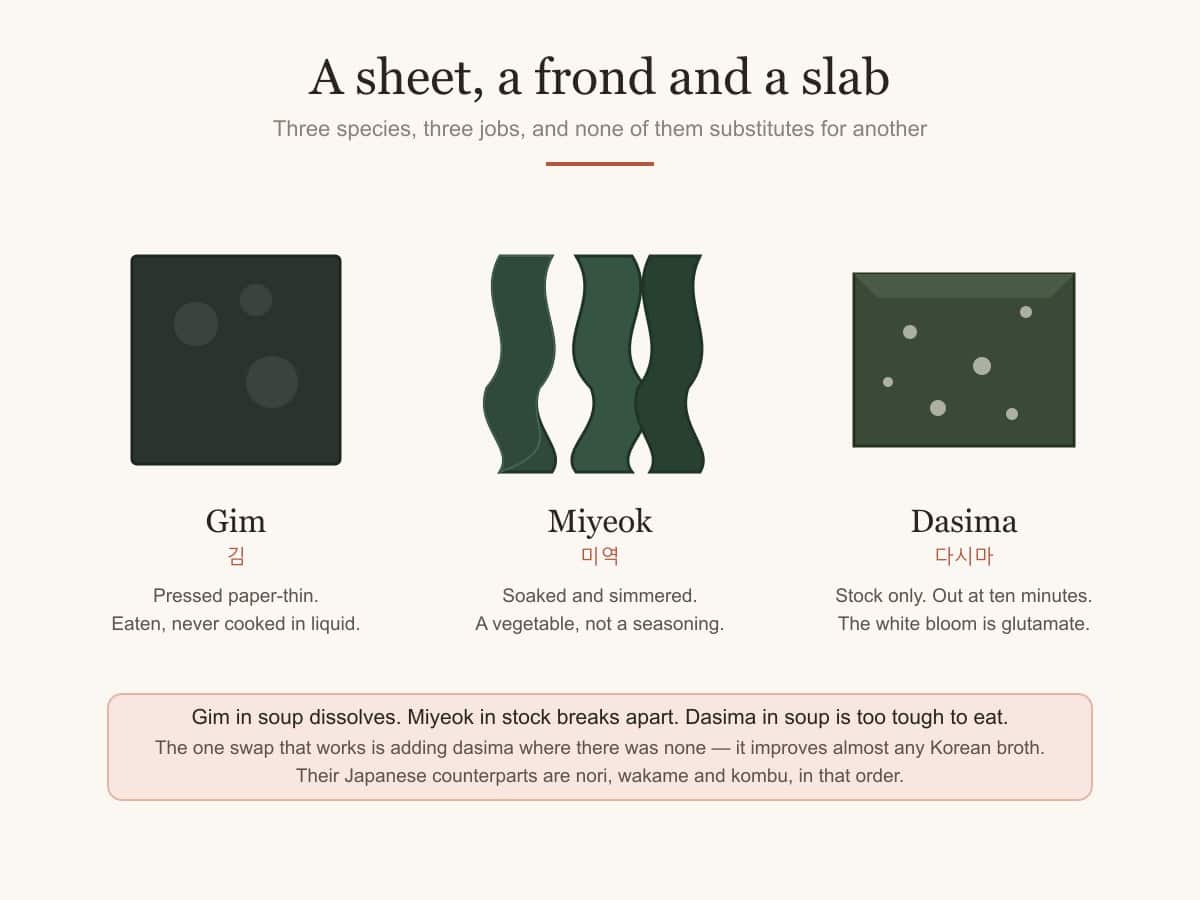
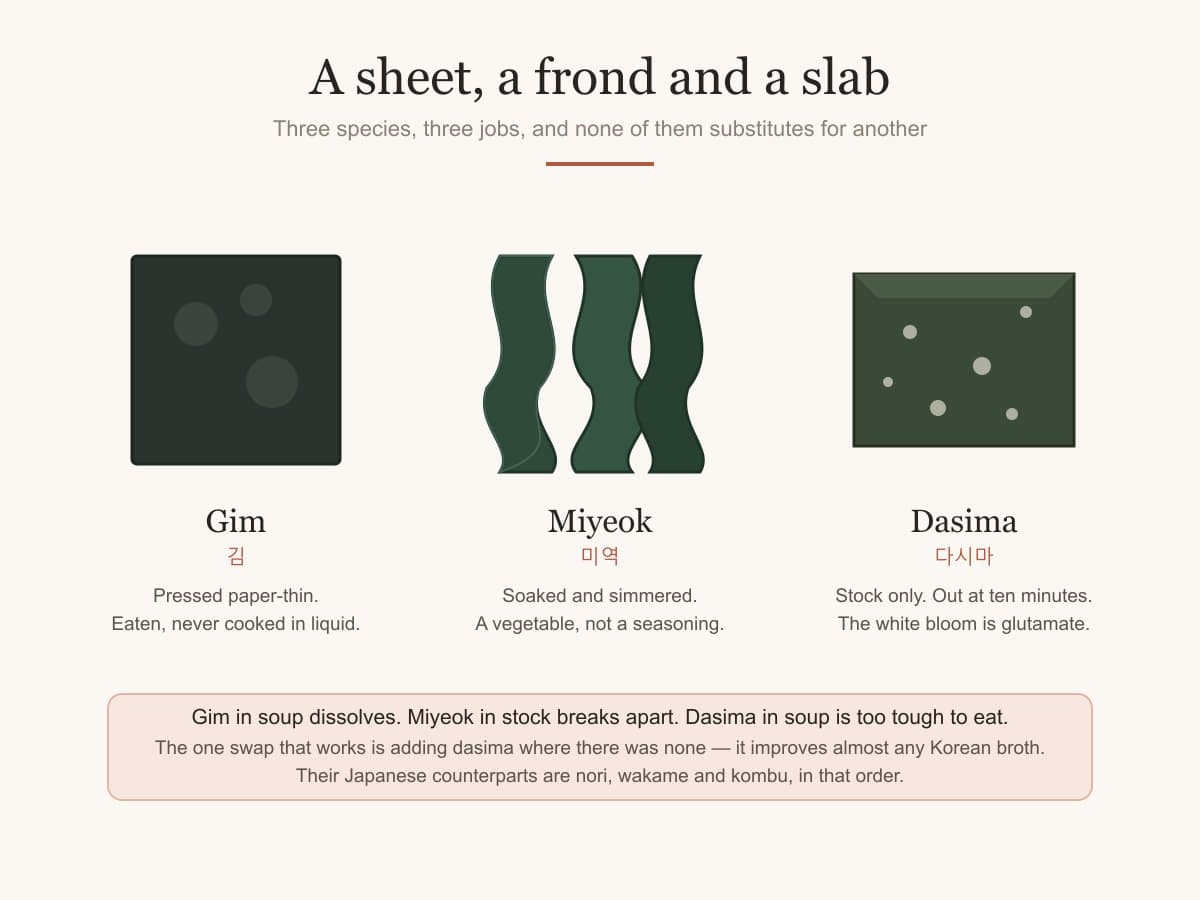
Three seaweeds turn up constantly in Korean recipes and are easy to confuse in a shop, where they all look like dried dark leaves in a bag.
Gim is a pressed sheet. Miyeok is a soft frond. Dasima is a thick stiff slab. They are different species with different jobs.
Gim — the sheet
Pyropia, the same genus as Japanese nori. Harvested, washed, chopped and pressed into paper-thin sheets on a frame.
Eaten rather than cooked with: toasted and salted as a banchan, or wrapped round rice for kimbap.
It disintegrates in liquid, so it is never a soup ingredient. Gim vs nori covers the seasoned and unseasoned kinds.
Miyeok — the frond
Undaria, known elsewhere as wakame. Sold dried in dark curled pieces that swell enormously — a small handful becomes a bowlful.
It is a vegetable, not a seasoning: soaked, rinsed, cut, and simmered into miyeok guk, or dressed cold as a salad.
It goes slippery and soft, and it does not flavour a broth much on its own. The soup's savouriness comes from beef or anchovy alongside it.
Dasima — the slab
Saccharina, the kelp known in Japan as kombu. Thick, stiff, often dusted with white — that bloom is glutamate and is a good sign, not mould.
It is used purely for stock. A piece goes into cold water with dried anchovies, comes up to heat, and is removed after about ten minutes.
Left in longer it turns slick and faintly bitter, which is the commonest dasima mistake. Take it out and discard it, or slice it and dress it as a side.
Why they do not swap
Gim for miyeok in soup: it dissolves into shreds and clouds the broth.
Miyeok for dasima in stock: it softens and breaks apart rather than infusing, and you end up straining a slippery mess for not much flavour.
Dasima for miyeok in soup: too tough to eat at the length the soup cooks for.
The only workable one is dasima in place of nothing — adding a piece to almost any Korean broth improves it, and that is the standard way to deepen a soup that tastes thin.
Common questions
What is the difference between gim, miyeok and dasima?
Gim is a pressed paper-thin sheet eaten as it is; miyeok is a soft frond simmered as a vegetable; dasima is a thick stiff kelp used only for stock and removed before serving.
Is miyeok the same as wakame?
Yes, the same species. Dasima is kombu and gim is the same genus as nori, so all three have close Japanese counterparts under different names.
What is the white dust on dried kelp?
Glutamate crystallised on the surface as it dried. It is a sign of quality rather than mould — wipe it lightly if at all, and do not wash it off.
How long should kelp stay in the stock?
About ten minutes, then take it out. Left in longer it turns slick and faintly bitter, which is the most common mistake with it.
More to cook
All Ingredient & Substitute Guides
Sweeteners in Korean Cooking
When Korean recipes call for jocheong, mullyeot, honey or plain sugar, why they are not interchangeable, and which one gives you the glossy finish.
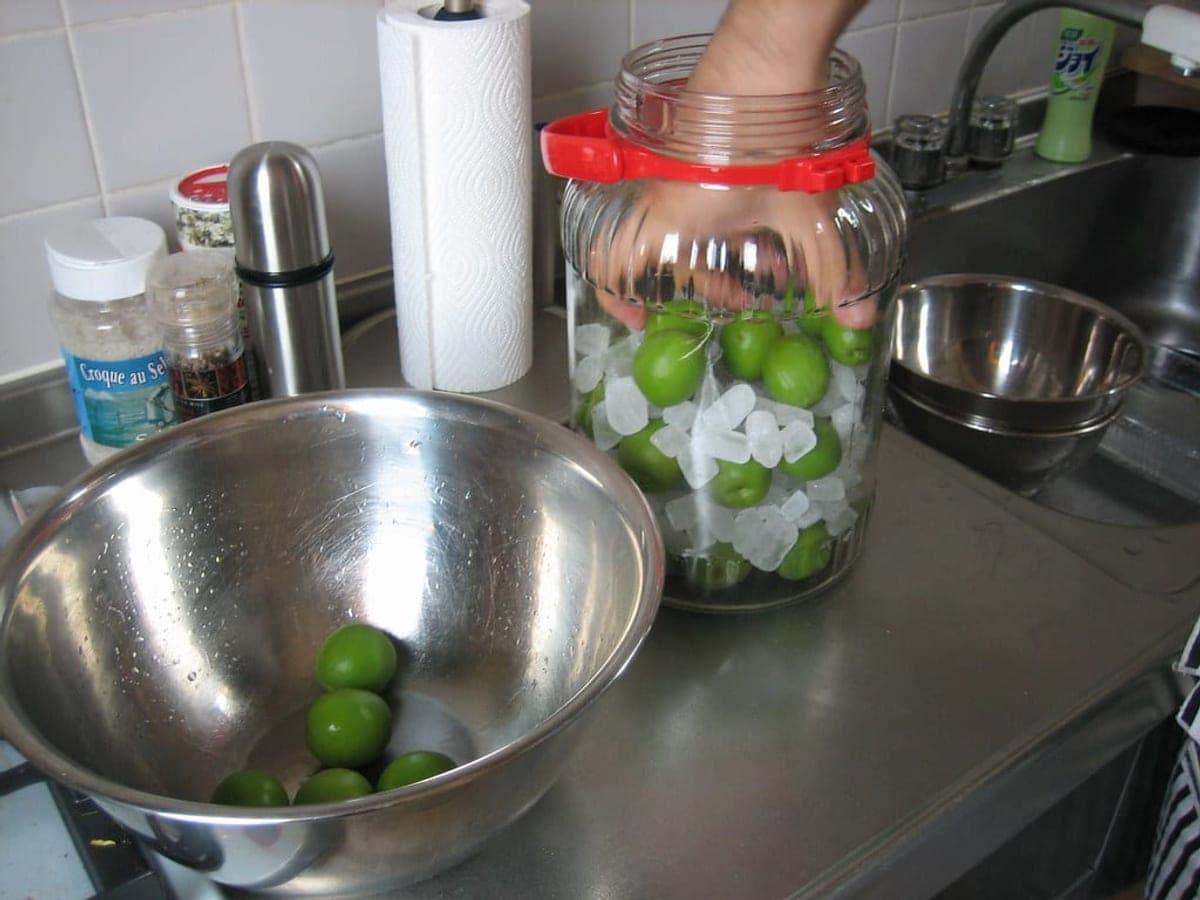
Maesil-cheong (Green Plum Syrup)
What maesil-cheong is used for in savoury Korean cooking, why the plums must be removed after 100 days, and what to substitute if you don't have a jar.
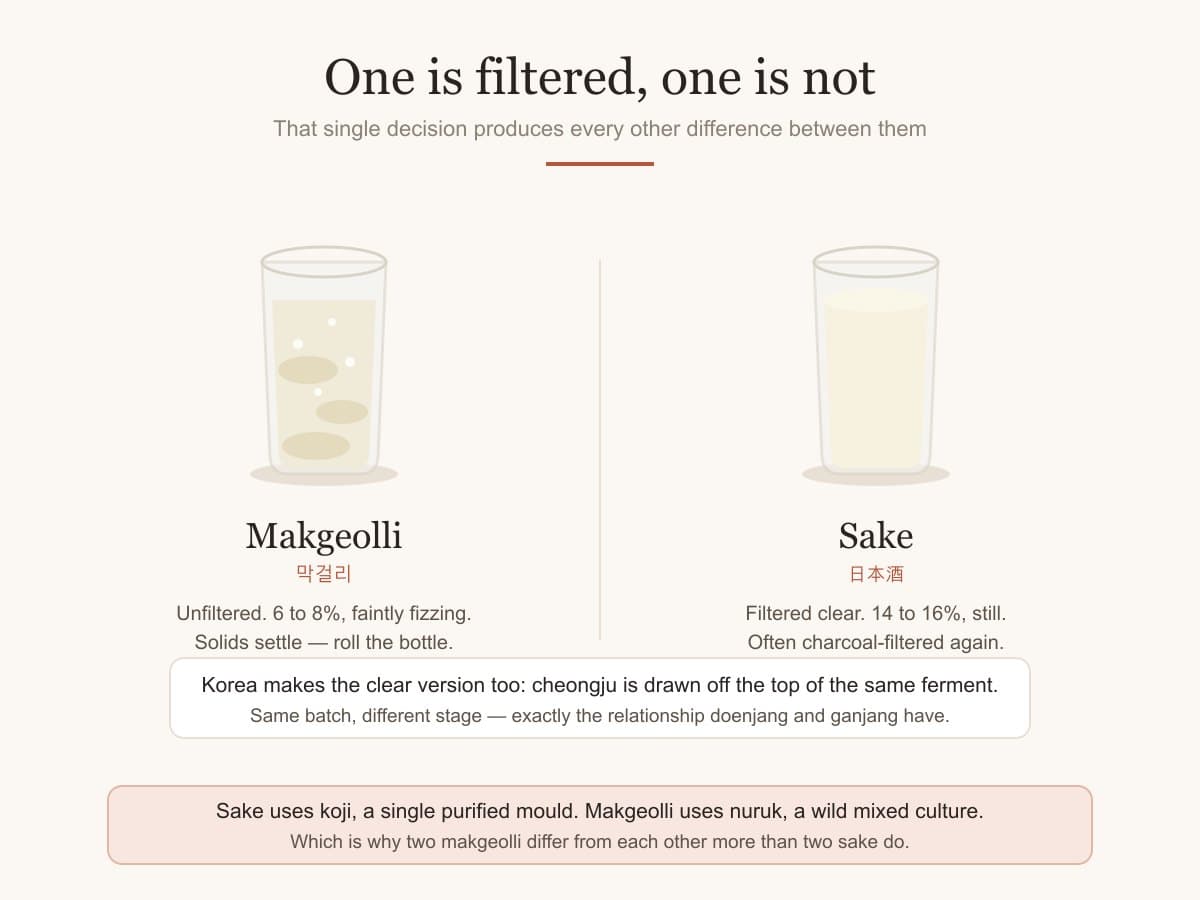
Makgeolli vs Sake
Both are brewed rice alcohol and they could not look less alike. Filtering, strength, fizz and why one has to be shaken.