Did you know — Korean culture
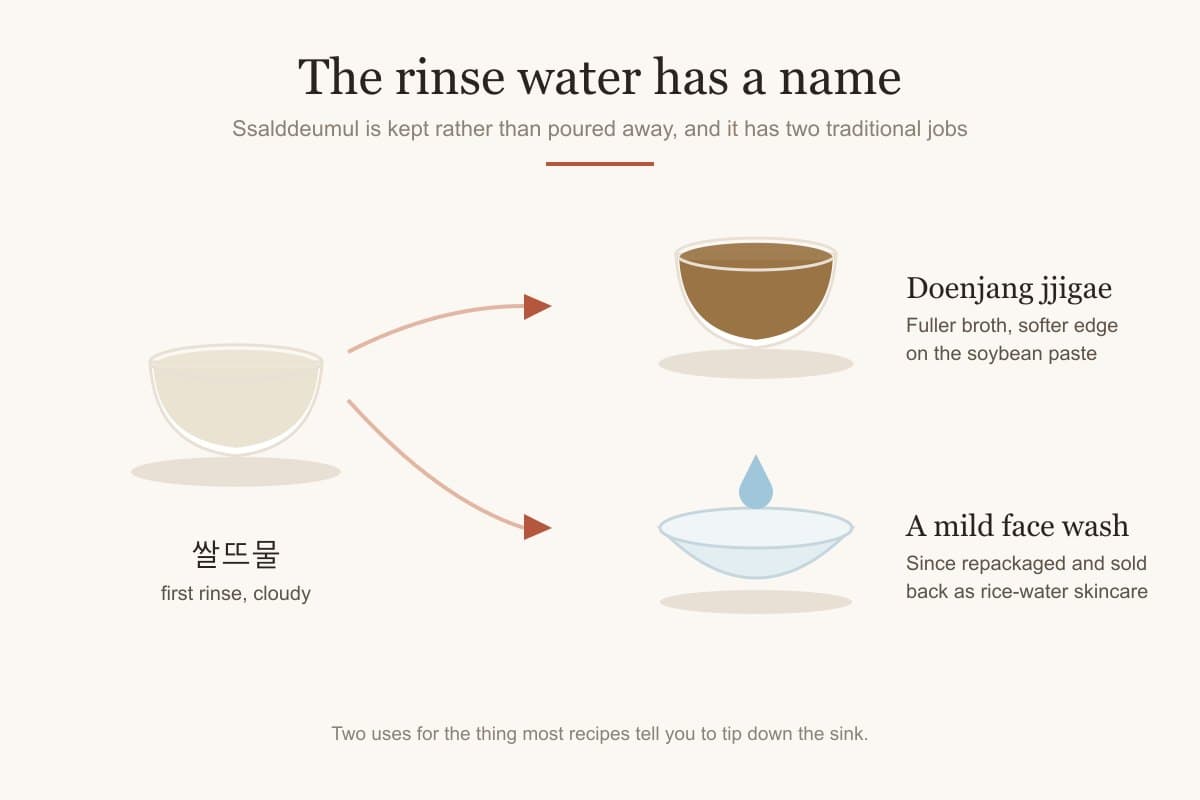
The cloudy water from the first rinse has a name and a job. Ssalddeumul is kept rather than poured away, and used as the liquid for stews — most characteristically doenjang jjigae, where the suspended starch gives the broth a fuller body and is said to soften the edge of the soybean paste. It has also long been used as a mild face wash, a practice that has since been repackaged and sold back as rice-water skincare.
Korean short-grain rice is meant to be sticky, so the line between correct and mushy is narrower than with long-grain rice.
Two things cause most failures: surface starch that was never rinsed off, and water measured as though the grains were dry when they had already been soaking.
Rinse until the water is nearly clear
Three to five changes of water, swirled with the hand. This removes the loose surface starch that otherwise turns the pot gluey.
It will not go perfectly clear and does not need to. Faintly cloudy is the target.
Keep the first rinse water if you are making a stew — ssalddeumul is the traditional base for doenjang jjigae, where the suspended starch gives the broth body.
Soaking changes the water ratio
This is the most common arithmetic error.
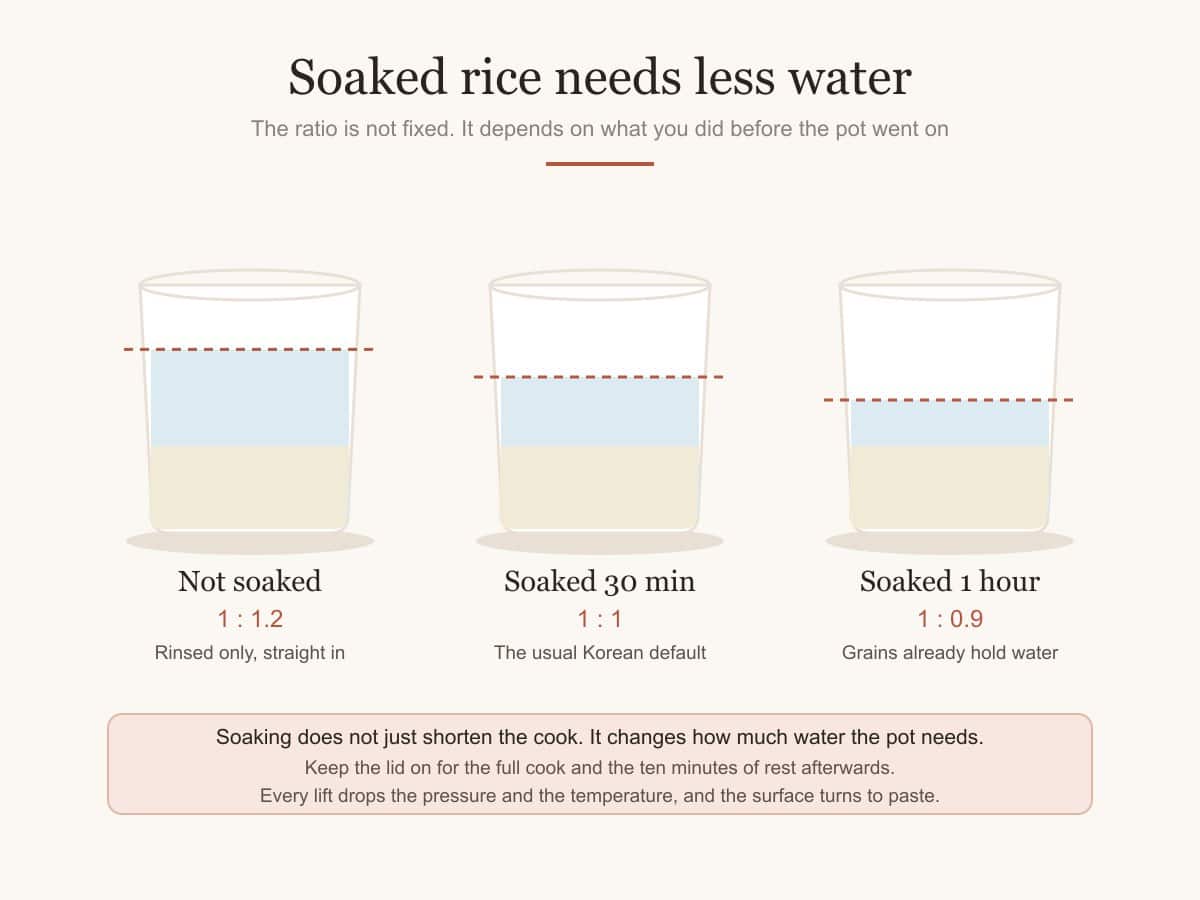
Unsoaked: about 1 : 1.2 rice to water by volume. Soaked 30 minutes: about 1 : 1, because the grains are already carrying water.
Use the packet ratio after soaking and you have added that water twice. Drain the soaked rice properly before measuring — water clinging to the grains counts.
See which rice to buy if you are unsure the grain itself is right.
Lid on, heat low, then leave it
Bring it to a boil uncovered, then lid on and the lowest heat for 12 to 15 minutes.
Do not lift the lid. Each look releases steam the rice needs and changes the timing unpredictably.
Then off the heat, lid still on, ten minutes. That rest is where the grains finish and firm up, and skipping it is the other half of why rice comes out wet.
Rescuing a pot that came out wet
Lid off, lowest heat, five minutes. Some of the excess steams away.
Or spread it on a tray to let steam escape, then fold it back together gently with a paddle.
Or accept it and change the dish. Slightly wet rice makes perfectly good juk or porridge, and genuinely mushy rice is better fried the next day than eaten plain.
Common questions
What is the water ratio for Korean rice?
About 1:1 by volume after a 30-minute soak, or roughly 1:1.2 if you skip the soak. Measuring the packet ratio after soaking is the most common cause of a wet pot.
Do I really need to rinse rice?
For Korean short-grain, yes. Three to five changes of water removes the surface starch that otherwise makes the finished rice gluey. It does not need to run perfectly clear.
Why is my rice mushy on top and hard underneath?
The heat was too high, so the bottom cooked before the steam reached the top. Lowest possible heat with the lid on, then ten minutes off the heat to even out.
Can I fix mushy rice?
Partly. Lid off over low heat for a few minutes drives off some moisture, or spread it on a tray to let steam escape. If it is badly overdone, use it for porridge or fry it the next day.
More to cook
All Ingredient & Substitute Guides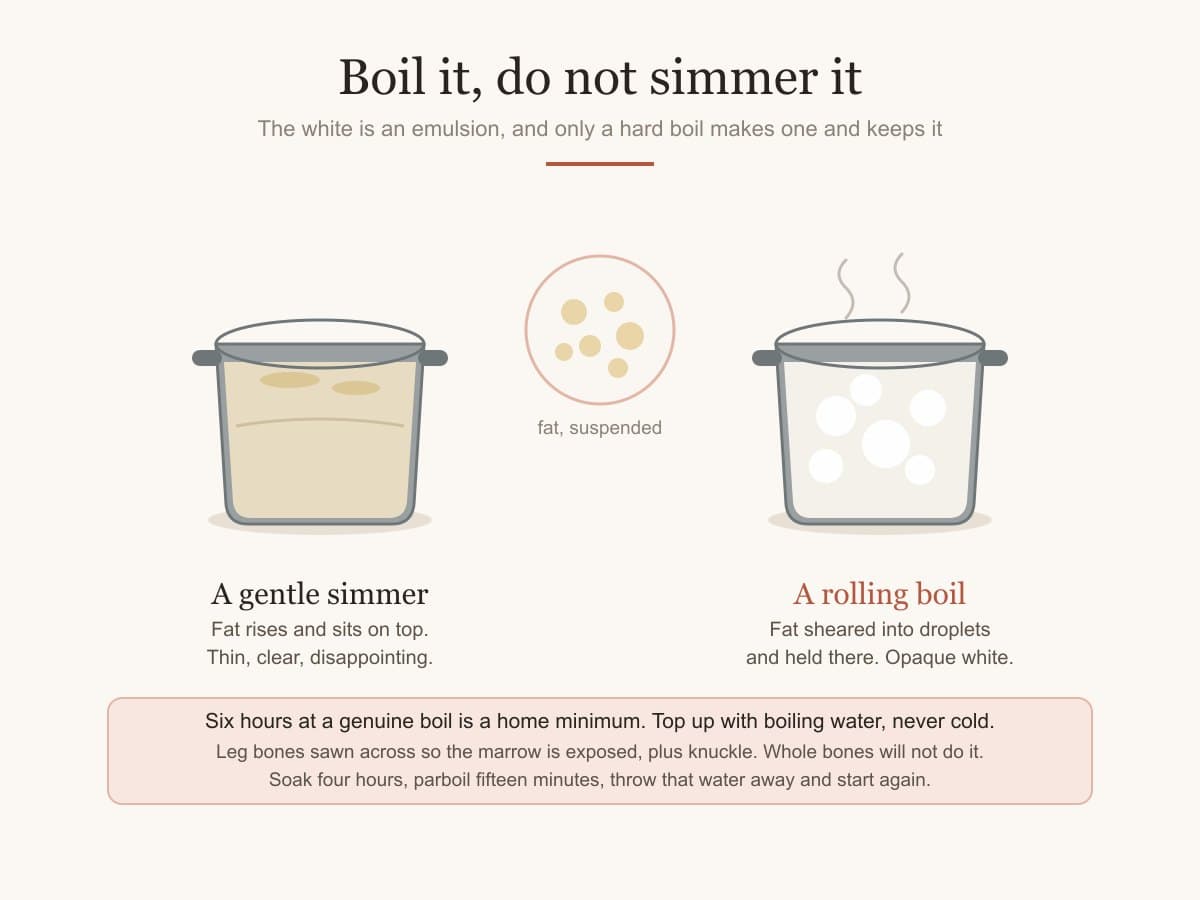
Why Is My Seolleongtang Not Milky?
A clear ox bone broth means you simmered when you should have boiled. The emulsion that makes seolleongtang white, and how to force it.
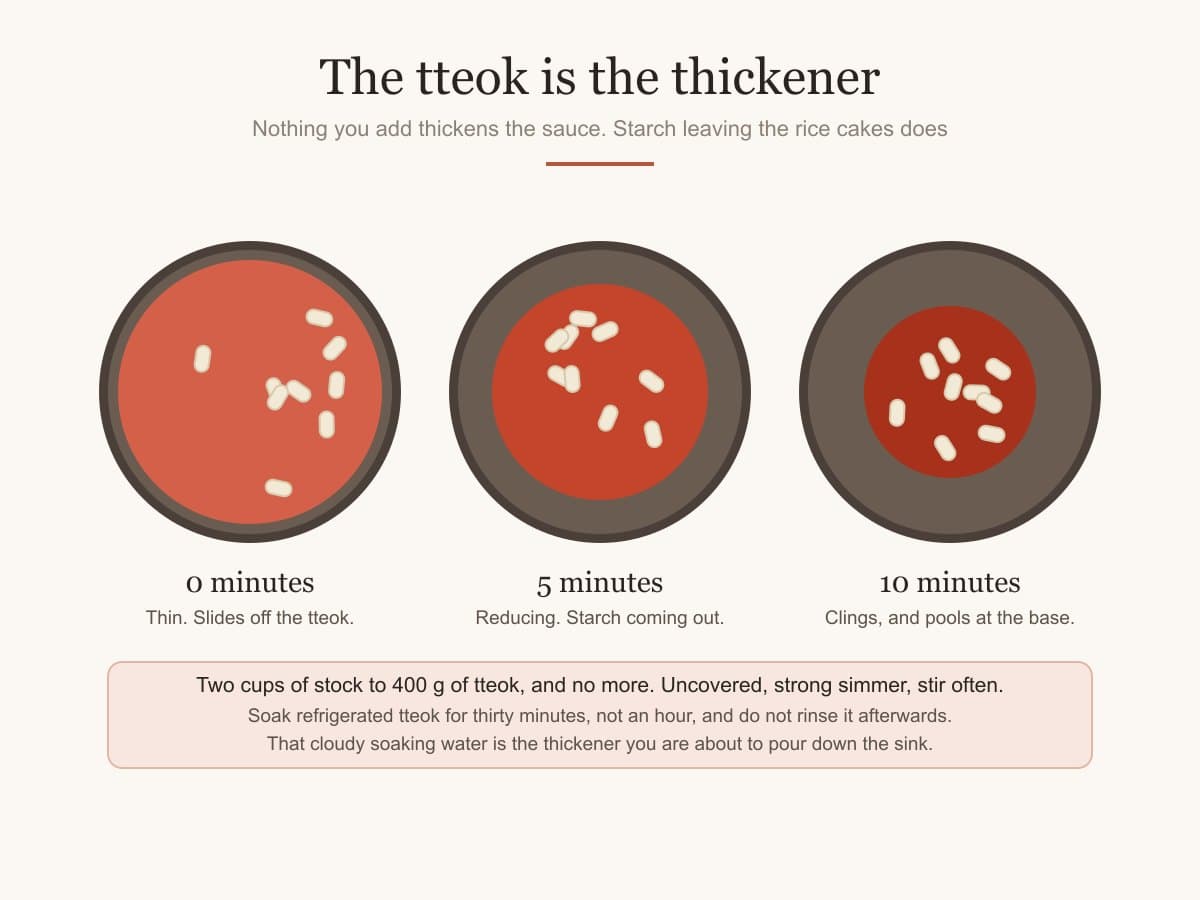
Why Is My Tteokbokki Sauce Watery?
Thin tteokbokki sauce is a starch problem, a liquid problem or a timing problem. Which one you have, and what to do about it.
Yeongyeoja (Korean Mustard)
Why Korean mustard powder must be mixed with warm water and rested before use, and why it is nothing like the mustard on a hot dog.